Introduction to Typica Variety Elephant Bean Pacay - Panama Hartmann Estate Pacamara Coffee Bean Flavor Profile
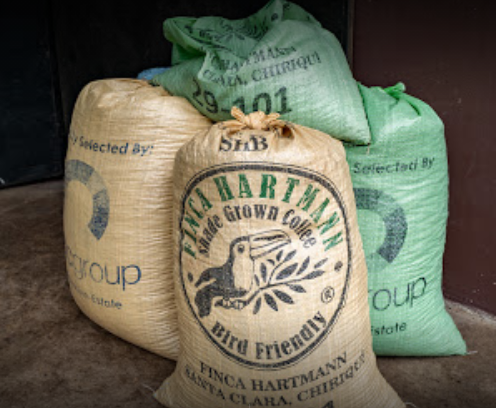
Hartmann Estate sits in the Baru Volcanic region, rooted in nutrient-rich volcanic soil, and towering primeval forests provide the perfect environment for shade growing. Coffee that ripens slowly under shade develops higher sweetness and brighter acidity, and the microclimate of the Chiriqui Volcanic highlands gives Hartmann coffee an excellent foundation. The estate plants an unusually wide range of varieties: Typica, Caturra, Catuaí, Bourbon, Paché, and Pacamara, along with steadily increasing plantings of Geisha in recent years.
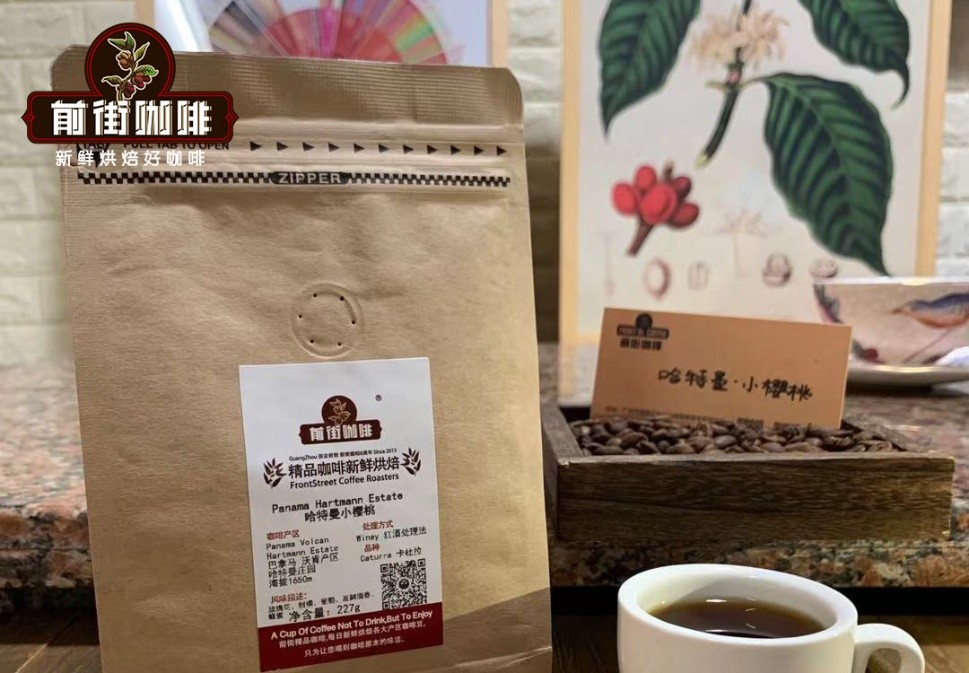
Varieties such as Typica, Caturra, and Catuaí will already be familiar to many coffee drinkers. FrontStreet Coffee offers a Catuai small-cherry bean from Panama's Hartmann Estate that is processed with the red wine method, showing citrus and grape fruit flavors, a fermented wine aroma, and honey-like sweetness.
If you have picked up this coffee, start with FrontStreet Coffee's brewing recommendations below.
Recommended Brewing Method
Brewing Method: Pour-over
Filter: V60 dripper
Water Temperature: 90-92°C
Coffee Dose: 15 grams
Coffee-to-Water Ratio: 1:15
Grind Size: Medium-fine (80% retention on the Chinese standard #20 sieve)
Brewing Technique: Step-by-step extraction
Begin with a 30g bloom for about 30 seconds. With a small water stream, pour in circles from the center until you reach 125g, then pause. Once the water level falls and the coffee bed is about to be exposed, pour again up to a total of 225g. Remove the filter when the level drops and the bed is about to break the surface (timing starts from the bloom). Total extraction time: 2'00".
FrontStreet Coffee would like to shine a light on a few less familiar varieties. Pache is a natural mutation of Typica that causes pronounced dwarfing. It first appeared in Guatemala, and its shorter stature makes harvesting easier for farmers.
Maragogype - often called the "Elephant Bean" - is an outstanding variety, but it is highly susceptible to leaf rust and yields very little. It produces large, elongated beans and has real quality potential at high altitudes, though nematodes and rust remain constant threats. It is another natural Typica mutation, but because of its low productivity it has largely been replaced by Pacamara.
Pacamara is a hybrid created by the Coffee Research Institute (ISIC) in El Salvador in the late 1950s, crossing the Pacas variety (a Salvadoran Bourbon mutation) with Maragogype. The name splices together the first four letters of each parent.
It inherits traits from both sides: its relatively compact stature and high productivity come from Pacas, while, like Maragogype, it is famous for its enormous cherries. It tends to out-yield Maragogype and can produce truly captivating cup profiles.
On the downside, it is highly sensitive to coffee leaf rust, and the variety is uneven - plants do not breed true from one generation to the next.
This particular lot scored 90.5 on the cupping table, with flavor notes of raisin, blueberry, orange, and papaya.
It is a Pacamara lot from near the Chiriqui Volcano in Panama.
The drying process looks deceptively simple: pick the fruit, lay it in the sun until it shifts from red to brown to nearly black, then strip away the thick dried outer layer to reveal the green bean. This is a method built for arid regions, where sun and heat can dry the seeds inside the intact fruit.
It is often called "natural coffee" because the process is simple and the fruit stays whole and undisturbed - much like turning grapes into raisins. With minimal investment required, the dry process is the default for cheap commodity-grade coffee in suitable climates, capable of drying fruit and seed together.
But it fails in humid or damp regions. If drying is not fast enough, the fruit degrades, rots, or molds.
Dry-processed coffee can also be wildly inconsistent. If you want a clean, sweet, complex cup, the dry process (DP) actually demands more manual labor than the wet process. Even the most careful pickers will bring in unripe or semi-ripe cherries along with the red, ripe ones, and if those are not sorted out on the first day of drying, the green turns brown and becomes nearly impossible to distinguish from ripe fruit.
FrontStreet Coffee Recommendation
Craving more from Panama? FrontStreet recommends its Panama Boquete Gesha - an entry-level Gesha that lets you taste the classic Panamanian profile of orange-blossom sweetness and honeyed aroma, with an oolong-tea finish and delicate fruity acidity, at a friendly price. For the ultimate expression, FrontStreet's Esmeralda Red Label Gesha, grown at 1600-1800m and cupping above 90 points, offers jasmine florals, citrus, and bergamot with a clean, long-lasting finish.
Important Notice :
FrontStreet Coffee is a long-established specialty coffee roaster in Guangzhou China, selling freshly roasted beans from its own farm in Yunnan as well as dozens of carefully selected single-origin beans from around the world for both pour-over and espresso. The products deliver consistently excellent quality and great value, with shipping within 24 hours. Guangzhou's FrontStreet Coffee shop is recommended by many coffee lovers, and the beans are now available online at the Tmall 。
FrontStreet Coffee has moved to a new address:
FrontStreet Coffee Address: 315,Donghua East Road,GuangZhou
Tel:020 38364473
 Scan and follow the En Gafei WeChat official account. Please indicate that the reprint comes from "En Gafei".