Kenyan Coffee Bean Procurement and Premium Processing Methods | SL28 and SL34 Flavor Characteristics
African Coffee Excellence: Kenya's Quality Management
African coffee has always ranked among the world's finest producing regions, and Kenya stands out for its attention to cultivation and quality management, so its beans' flavor speaks for itself. What kind of management model enabled such rapid development? Anyone curious will want to look at the coffee fruit procurement and the meticulous processing plan.
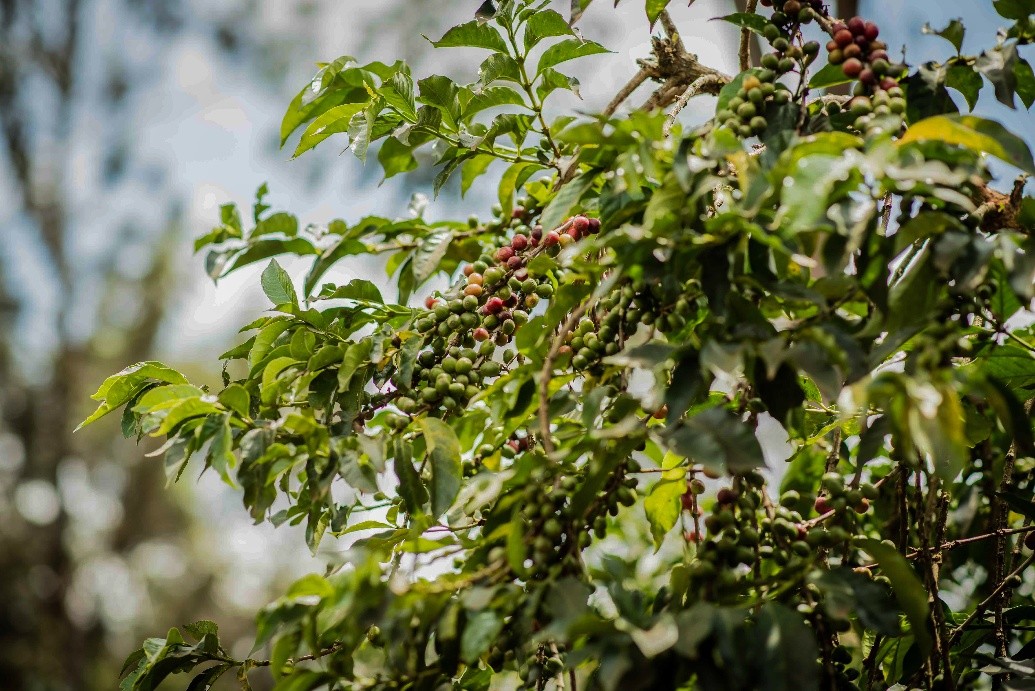
Kenya's Coffee Processing Steps
1. Estate coffee farmers harvest ripe fruits and deliver them to washing stations.
2. Cherry sorting: Before receiving fruit, processing stations provide an open area where farmers classify again, selecting mature red fruits.
3. Five categories of coffee fruits: Farmers are reminded that only checked red fruits will be accepted.
4. Weighing and receiving documentation: Many washing stations have electronic scales that connect directly to a computer, printing the farmer's code and batch weight. Farmers use this document as the basis for future payment.
5. Cherry hopper: A funnel-shaped receiving pool for cherries, connected at the bottom to the depulper. This is where the fruit begins the refined washed-method processing.
6. Depulping and density separation: Fruit flowing from the depulper has already had its pulp removed. At this stage the machine separates the fruit into two different channels by density — highest density P1 and medium density P2, while the lightest P3 flows into different fermentation tanks.
7. Fermentation process: Parchment coffee ferments in the tanks for about 12-36 hours. Fermentation time depends on local weather, and is complete when the mucilage layer has fully detached.
8. Post-fermentation soaking: After fermentation ends, the parchment coffee is transferred to another water tank and soaked in clean water — a static soak. The soaking time depends on whether impurities still appear or the water turns turbid; if it does, the water must be replaced with clean water again. This stage is the highlight of Kenya's famous double fermentation, or Kenya-style washed method, and it lasts 12-36 hours depending on whether the static soak stays clean or the drying racks are crowded.
9. Channel cleaning: Once fermentation and static soaking are complete, the parchment coffee flows into washing channels. Most channels have devices with high and low water levels at the bottom, which block higher-density beans and direct them to separate rack areas, while lower-density beans go to secondary-quality rack areas.
10. Skin dry area reception: Parchment coffee is received from the washing channel outlets in the Skin Dry area racks, part of the water drainage zone. Once most surface moisture has drained, the parchment coffee is moved directly to sun-drying racks.
11. Sun drying stage: Drying time depends on local weather and on the parchment coffee reaching 10.5%-11% moisture content, generally requiring 7-14 days, and sometimes extending to 20 days.
12. Warehouse entry: After sun drying, beans enter the warehouse — the washing station's own, also called a transit warehouse.
13. Dry processing and grading: After hulling, beans are graded by size. The image shows four grades from the Thika dry-processing facility: E, AA, PB, F.
14. Density-based further grading: If AA-grade density is too low, it is reclassified as PB grade at this stage, as shown in the image below (Figure 14).
15. Green bean identification: From top to bottom (Figure 15), this bag of Kenya green beans shows grade AB, batch code 19TK0048, and production year 2016-2017.
Asali Top AA: A Kenyan Coffee Gem
FrontStreet Coffee would like to introduce a coffee bean from Asalia (Asali Top AA).
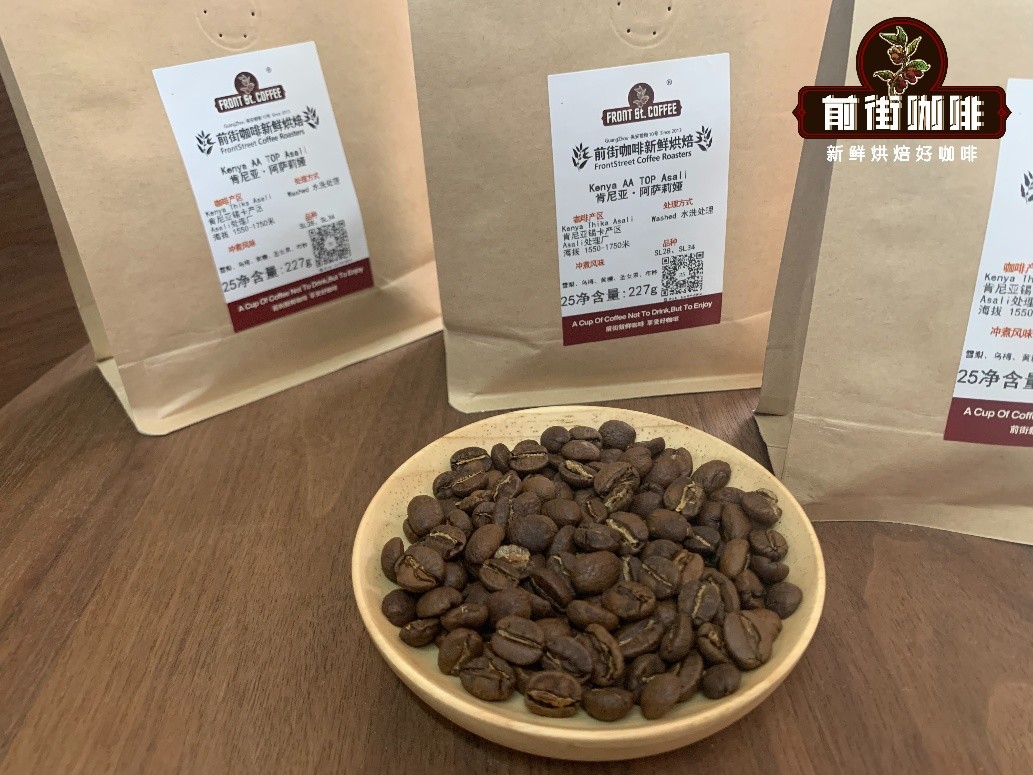
In 1878, the British introduced coffee to Africa. Coffee plantations were established in Kenya in the 19th century, when Ethiopian coffee beverages were brought to Kenya via South Yemen. Located in East Africa, Kenya was importing Ethiopian coffee beverages via South Yemen at the time. Not until the early 20th century, however, were Bourbon coffee trees introduced to Kenya by the St. Austin Mission.
Located in East Africa, Kenya is one of the major coffee-producing countries, with about six million people nationwide engaged in the coffee industry, mostly as small farmers and cooperatives. Kenya's coffee trees are mostly cultivated at 1,400-2,000 meters.
Growing regions include Ruiri, Thika, Kirinyaga, Mt. Kenya West, Nyeri, Kiambu, and Muranga, primarily on the foothills of Mt. Kenya and Aberdare. The central Kirinyaga Peak (Mount Kenya) reaches 5,199 meters. Coffee grows on the eastern slopes of the Kenya mountains at 1,550-1,750 meters in Meru County. The red soil there nurtures Kenya's top-AA coffee, and coffee is the main agricultural crop. Cooperatives formed by small farmers are more common than large estates, and TOP AA seasonal coffee typically has higher quality.
Special Varieties
Bourbon varieties (SL-28) and (SL-34)
SL-28 and SL-34 are two of the 40 experimental varieties developed from a research program led by Guy Gibson at Scott Laboratories. They have consistently been champions in expert cupping and at the Nairobi auctions.
Combined with the large local day-night temperature swing and Kenya's red phosphoric soil, this creates the sweet-sour profile that defines Kenyan coffee.
The beans carry wonderful sweetness, balance, and complex, varied flavors, along with distinctive citrus and plum characteristics.
Kenyan 72-Hour Fermentation Washed Processing Method
The Kenyan method originated in Kenya and uses a cyclic, repeated process of fermentation followed by washing. Processing begins on the day of harvest, selecting high-quality cherries for depulping and fermentation. Fermentation runs for 24 hours, after which clean river water is used for washing. Then fermentation continues another 24 hours in clean river water, followed by washing again. After repeating this cycle 3 times, reaching 72 hours, it is called the Kenyan 72-hour fermentation washed processing method, or K72 for short.
Cupping Profile
Lemon acidity and the sweet-bitterness of dried plums.
The dry aroma has floral notes mixed with fruit flavors like apples.
Processing plum juice and preserved fruits bring a sweet-and-sour aftertaste with caramel sweetness.
FrontStreet Coffee Recommendation
Kenya's washed, bright-fruit style is exactly what these FrontStreet coffees deliver:
FrontStreet Kenya Cherry Tomato
A standout Kenyan washed bean, FrontStreet Kenya Cherry Tomato centers on vivid cherry tomato, smoked plum, and full juice. It comes from Kenya's Thika region, grown at 1,550-1,750 meters from the classic SL28 and SL34 varieties, with plump, rounded beans. Kenya's signature 72-hour double-washed fermentation draws out the fruit while keeping the cup clean and pure, and a light roast preserves lively acidity and layered fruit. The dry aroma shows concentrated dried cherry tomato and florals; the first sip brings clear cherry tomato and smoked plum with bright, solid acidity as full as fresh juice, a sweet mid-palate with pear and black plum, and a clean, long finish with brown-sugar sweetness and light green tea.
FrontStreet Gutingting Cooperative
Because local farmers work at small scale, they deliver their cherries to a cooperative for unified processing, and FrontStreet Gutingting Cooperative is an excellent processing team from Gutingting village. Its washed process shows jasmine florals and bright citrus acidity at their fullest, and a medium-light roast releases green tea and honey notes. It suits pour-over, cold brew, and espresso.
FrontStreet Jamaica Blue Mountain No. 1
For a smoother, more rounded contrast to Kenya's brightness, FrontStreet Jamaica Blue Mountain No. 1 is medium-dark roasted to balance acidity, bitterness, sweetness, and body into one elegant whole, with chocolate, roasted nuts, cream, and caramel from the first sip.
Important Notice :
FrontStreet Coffee is a long-established specialty coffee roaster in Guangzhou China, selling freshly roasted beans from its own farm in Yunnan as well as dozens of carefully selected single-origin beans from around the world for both pour-over and espresso. The products deliver consistently excellent quality and great value, with shipping within 24 hours. Guangzhou's FrontStreet Coffee shop is recommended by many coffee lovers, and the beans are now available online at the Tmall 。
FrontStreet Coffee has moved to a new address:
FrontStreet Coffee Address: 315,Donghua East Road,GuangZhou
Tel:020 38364473
 Scan and follow the En Gafei WeChat official account. Please indicate that the reprint comes from "En Gafei".