Kenya's Annual Coffee Production: Signs of Ongoing Decline in the Country's Coffee Industry
Kenya's Coffee Production Decline Amidst Economic Challenges
In recent years, low returns and poor management have pushed Kenya's coffee production down year after year, and the industry is clearly on a downward trend.
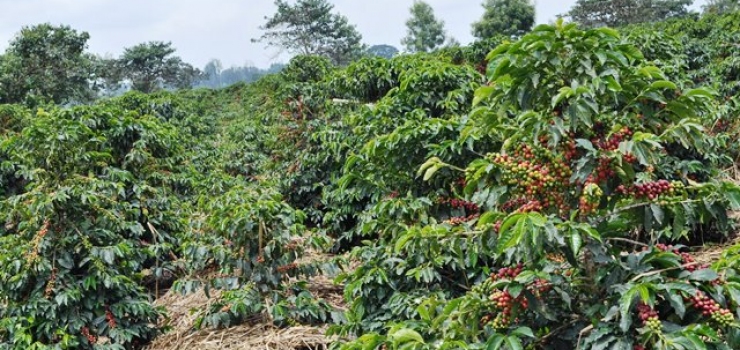
According to the latest data from the Kenya National Bureau of Statistics, Kenya's coffee exports fell from 2,639 metric tons in January 2020 to 2,129 metric tons in January 2021, a sharp decline of 19%.
Because of economic weakness in Kenya, the local currency has weakened against the US dollar, with the highest USD to Kenya shilling exchange rate in January 2021 reaching 1 USD = 110.40 Kenya shillings. That pushed Kenya's export revenue up from 985 million shillings to 1.3 billion shillings, an increase of 36%.
In the late 1980s Kenya's annual coffee production could reach a peak of 130,000 tons, but today it produces only about 40,000 tons a year. The potential annual yield per coffee tree is 35 kilograms, yet most smallholder farmers produce less than 2 kilograms per tree each year. Kenya's coffee production currently accounts for nearly 1% of global output, but the country's coffee volume has trended downward in recent years.
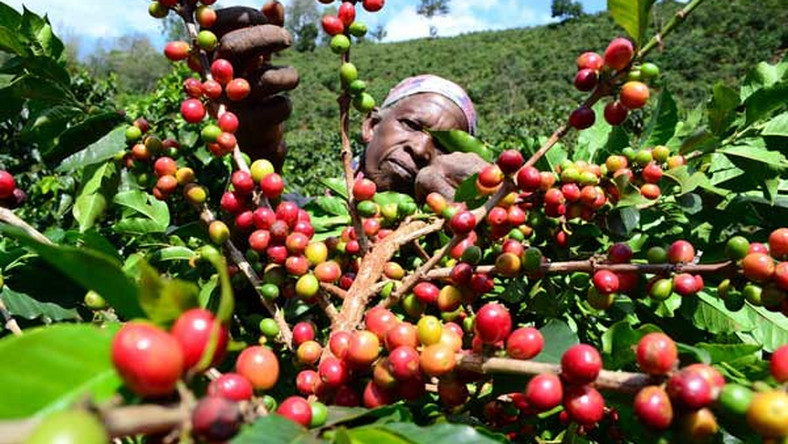
Data from the United States Department of Agriculture shows that Kenya's coffee exports in 2020 were 600,000 bags (60 kilograms per bag), lower than the previous season's 815,000 bags.
Kenya's coffee market share in places such as the United States and South Korea has also been slipping. In 2019, US consumption of Kenyan coffee fell from 13.28% in 2018 to 11.78%. South Korea's share of Kenyan coffee exports rose from 6.43% in 2017 to 9.44% in 2018, but fell again to 6.51% in 2019.
Kenya Launches a Coffee Revitalization Initiative
Kenyan authorities have recently launched a 1.5 billion shilling coffee revitalization program aimed at raising production and quality, protecting farmers from exploitation and rescuing the country's declining coffee industry.
The project, funded by the World Bank, is Kenya's new attempt to revive the sector. It complements the government's earlier 3 billion shilling Cherry Revolving Fund, which is intended to give smallholder coffee farmers access to affordable, sustainable and accessible loans.
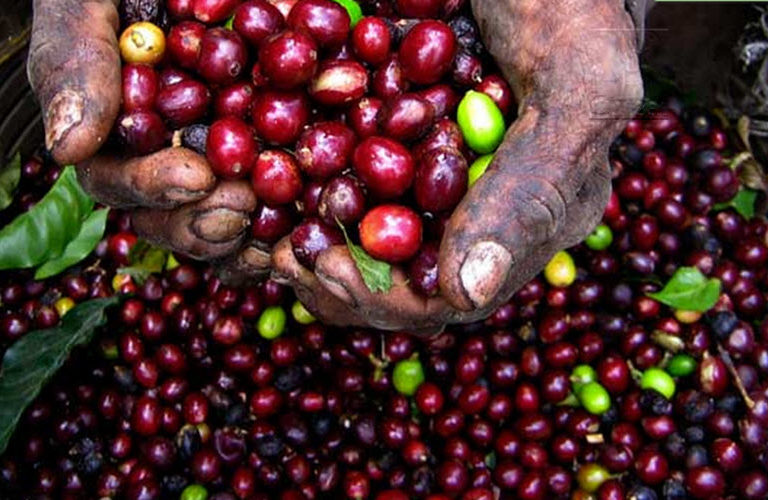
Kenya's president, Uhuru Kenyatta, has also extended the term of the country's coffee sector executive committee so that it can oversee the findings of the reform task force.
The task force further recommended changes to the coffee crop management framework, the promotion of specialty coffee, greater participation by young people, and the transformation of the Nairobi Coffee Exchange into a publicly listed company.
FrontStreet Coffee Recommendation
Kenyan coffee is famous above all for the bright, berry-like acidity of its washed beans, and if that style appeals to you, FrontStreet has easy-drinking African options at every price. FrontStreet Sun-Dried Huakui comes from the Hambella area of Guji in Ethiopia. Grown at close to 2,300 meters with a wide day-to-night temperature swing, the cherries build up aroma slowly, and careful natural processing leaves the fruit notes of guava, strawberry and dried mango alongside a black tea finish. It has long been positioned as an everyday Ethiopian coffee, and its combination of quality and price has made it a favorite substitute for Geisha.
For the washed side of Africa, FrontStreet Yirgacheffe Gerdin Cooperative is a textbook example. Produced by the team at Gerdin village, it carries jasmine florals, lemon acidity and berry notes, with the clean, bright profile that defines washed Yirgacheffe. It brews well as pour-over, cold brew or espresso, and it is a very approachable first stop for anyone moving into single-origin coffee.
Important Notice :
FrontStreet Coffee is a long-established specialty coffee roaster in Guangzhou China, selling freshly roasted beans from its own farm in Yunnan as well as dozens of carefully selected single-origin beans from around the world for both pour-over and espresso. The products deliver consistently excellent quality and great value, with shipping within 24 hours. Guangzhou's FrontStreet Coffee shop is recommended by many coffee lovers, and the beans are now available online at the Tmall 。
FrontStreet Coffee has moved to a new address:
FrontStreet Coffee Address: 315,Donghua East Road,GuangZhou
Tel:020 38364473
 Scan and follow the En Gafei WeChat official account. Please indicate that the reprint comes from "En Gafei".