2023 Coffee Market Status and Outlook Analysis: How Has the Coffee Market Gradually Become "Prominent"?
Since the rise of Luckin Coffee, the promise of "good coffee that isn't actually expensive" has won over a huge wave of frequent consumers, and the coffee industry suddenly became very "prominent." Internet-based coffee chains like Coffee Box and Luckin Coffee, backed by capital, expanded at breakneck speed. There was even talk that "China's coffee market is a trillion-yuan market." As a result, swarms of new coffee brands rushed in to carve up the market share, and even businesses with no prior connection to coffee jumped in, hoping to grab a piece of the pie.
Yet once they entered the coffee market, newcomers faced an immediate problem: for all its potential, the competition is brutally intense. Standing out has become the defining challenge for every coffee shop owner.

The 2020 Coffee Market Downturn
Looking back at that period, the sudden outbreak of the COVID-19 pandemic in 2020 pushed many physical stores to the brink of closure, and China's two largest coffee chains, Starbucks and Luckin Coffee, both found themselves in precarious positions. The 2020 coffee market in one sentence: the entire industry was caught in a "store closure wave" and sank into a depressed state.
On January 28, 2020, Starbucks, the world's largest coffee chain, was the first to announce the suspension of most of its stores in China. It wasn't until early August of that year that Starbucks announced only 1% of its stores in China had yet to reopen. During this period Starbucks also closed many stores overseas: in March it shut 200 stores in Canada, and in June it urgently closed another 200 there to cut operating costs. Under the same pressure, small independent coffee shops were forced to suspend operations too—and for them, small scale meant weak resistance to risk, and a forced suspension often meant outright closure.

Meanwhile Luckin Coffee, the other major domestic chain, was surrounded by negative news for a long stretch because of its financial fraud scandal.
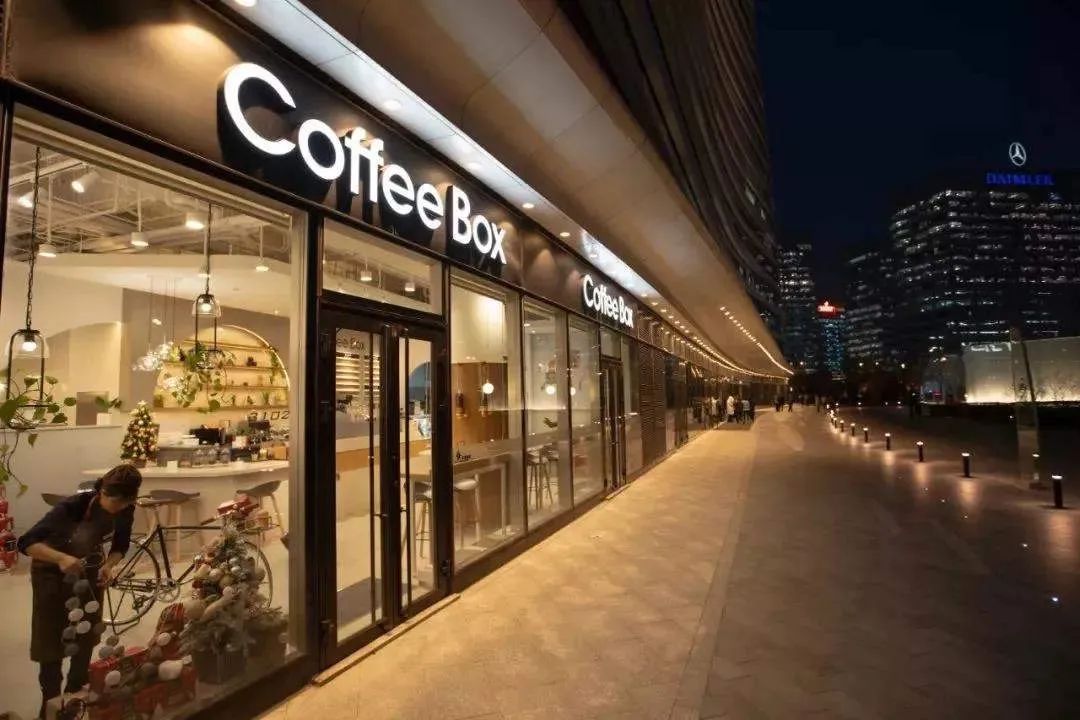
On September 8, 2020, the Chinese internet coffee chain Coffee Box announced the closure of its offline stores. And besides Coffee Box shutting all of its stores nationwide, the chain COSTA also fell into the camp of large-scale closures.
Market Resilience and Growth
Against this backdrop, an unavoidable question arose: is it really impossible to make it in the coffee market?
Amid all the skepticism, what people actually saw was a coffee market that kept growing stronger. So how did it gradually become "prominent"?
1. Support from Consumer Groups
As noted at the start, the "bargain" appeal of Luckin Coffee brought in a mass of high-frequency consumers. Whatever one thinks of the lingering controversy around the company, an undeniable fact is that Luckin's arrival genuinely educated the Chinese coffee market. Combined with the spread of specialty coffee culture, consumers transformed how they drink coffee: they moved from instant to pour-over, from a single purchase scenario to far more diverse coffee experiences, and they began demanding more of the products themselves—better quality, better packaging. Driven by these consumers, the market opened up and more innovative coffee brands emerged.
2. New Blood from Coffee Brands
More than 10 coffee brands received financing in 2020, and the sales revenue of China's coffee market was set to exceed $11.5 billion. With capital's support, entrants from many new fields joined the coffee sector and quickly seized market share. Through different product categories and by continuously breaking with old conventions, the market received fresh injections of new blood that pushed it forward.
3. New Approaches to Sales Channels
According to data from the Forward Industry Research Institute, China's coffee market was expected to reach 3000 billion yuan in sales in 2020 and to break through 1 trillion yuan by 2025. Behind these figures is a clear message: the room for growth is enormous. In today's consumer market, no brand wins broad recognition without breaking with tradition. Brands that want to shine must stand in the most "prominent" position among consumers, which demands new approaches to marketing, product launches, and store operations.
Remember the buzzword from that period, "private domain traffic"—traffic that a brand or individual can control freely? Before it became popular, most online customers of coffee shops were public domain traffic: people simply went wherever the price was better. Perhaps accelerated by the pandemic, sales channels in the coffee industry changed significantly. A coffee shop's model is no longer just a single storefront; the focus has shifted to the relationship chain between brand and consumer—building private domain traffic, creating purchase channels owned by the brand itself, and pursuing digital transformation through mini-programs, app-based purchasing, unmanned retail, and so on.
On digital transformation, Starbucks led the way in coffee by launching a new retail format: opening "Coffee Express" concept stores in the Chinese market, departing from its previously emphasized third-space experience, and predicting a future trend of third and fourth spaces in parallel. In private domain traffic, Luckin's earlier data showed the brand had 1.8 million private domain users, contributing 35,000 cups of direct orders and 100,000 cups of indirect orders daily—making private domain orders its third-largest order source channel after the app and mini-program (Luckin's app and mini-program both feature coupon entrances, which drive this channel). Private domain operations greatly improved Luckin's operational efficiency. The company also ran precise user behavior analysis on this data, carrying out SKU adjustments, store promotion plans, and supply chain adjustments. Beyond these two giants, many brands integrated their app user pools with food delivery platform user pools, breaking through on marketing, new products, and store operations to create their own highlights—e-commerce-style SATURNBIRD, for example.
Compared with traditional offline coffee experience stores, internet-based coffee consumption has become a trend, and the digital transformation approach behind it has proven remarkably successful.
Conclusion
By December of that year, with the pandemic easing, Starbucks stated that its China business had fully recovered by the end of the quarter and the Chinese market had returned to positive growth. Luckin Coffee, for its part, spent $180 million to reach a settlement with the SEC at the end of the year, opened new stores, launched new products, and kept sending coupons, holding lotteries, and live-streaming in its WeChat groups as usual. Luckin's management expected that, based on operational progress, the company could reach overall profitability that year.
But the market is ever-changing, and flexibility is the best response. How the coffee market develops from here, we will have to wait and see.
*Image source: Internet
FrontStreet Coffee Recommendation
If this market boom has you ready to explore better coffee at home, start with an entry-level single origin. For a first taste of Ethiopia, the birthplace of coffee, FrontStreet Coffee's Washed Yirgacheffe is the classic gateway bean: jasmine florals, bright citrus and lemon acidity, and a delicate tea-like finish at a friendly price. If you prefer the sun-dried side of Ethiopia, the Natural Hambella (Hua Kui) delivers strawberry, passionfruit, jackfruit, melon, and honey notes with remarkably low bitterness.
For everyday drinking, FrontStreet Coffee's Brazil Cerrado Red Bourbon is a beloved budget staple from the renowned Cerrado region—creamy peanut, cocoa, and caramel notes, smooth and balanced, easy to enjoy black or with milk.
Important Notice :
FrontStreet Coffee is a long-established specialty coffee roaster in Guangzhou China, selling freshly roasted beans from its own farm in Yunnan as well as dozens of carefully selected single-origin beans from around the world for both pour-over and espresso. The products deliver consistently excellent quality and great value, with shipping within 24 hours. Guangzhou's FrontStreet Coffee shop is recommended by many coffee lovers, and the beans are now available online at the Tmall 。
FrontStreet Coffee has moved to a new address:
FrontStreet Coffee Address: 315,Donghua East Road,GuangZhou
Tel:020 38364473
 Scan and follow the En Gafei WeChat official account. Please indicate that the reprint comes from "En Gafei".