Ethiopia Sidamo's Unique Shakisso Micro-Region | Shakisso Coffee Bean Brewing Flavors

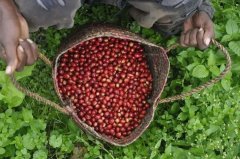
When it comes to the Ethiopia Sidamo region, many people are likely familiar with the Guji zone. The Buku Ansatsu washing station from Guji's Hambela area produced the famous "Horse" coffee beans, which became well known after winning the Ethiopia coffee competition championship in 2017. Although later harvests of Horse beans haven't matched the 2017 vintage, that hasn't diminished people's love for them. Besides the well-known Hambela area in Guji, there is another micro-region called Shakisso that is equally distinctive. FrontStreet Coffee discovered through cupping that although Shakisso lies within the Guji zone, its coffee flavor profile differs from other Guji coffees.
Guji Zone
The Guji zone, formerly part of the Sidamo region, was established as an independent zone by the Ethiopia Commodity Exchange (ECX) in 2010. The Guji zone is located southeast of Yirgacheffe and is a region with complex topography featuring towering mountains, valleys, and plains.

The region's geology consists of fertile black soil (Vertisol) with soil depth reaching nearly two meters, and the average altitude is above 1800 meters. The significant day-night temperature differences created by the geographical conditions provide all the terroir elements necessary for producing high-quality specialty coffee.
Shakisso Micro-region
Shakisso is located in the Guji zone of Sidamo, in the southern part of the Oromia region, bordering Sidama and Gedeo. This area has many mining pits that were previously used for gold mining, which is why this coffee-growing area has so many pits. This makes walking between coffee-growing areas quite dangerous.
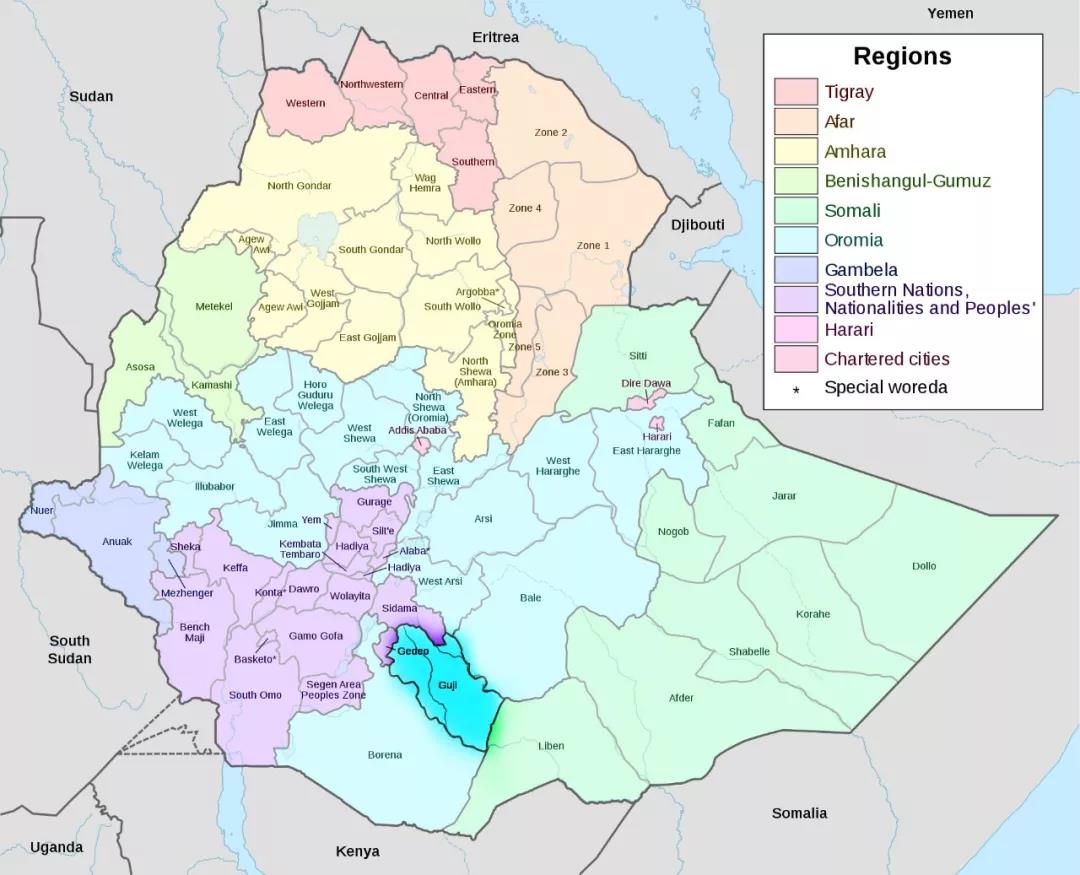
Shakisso is a distinctive region within Guji/Sidamo. Even within Sidamo, it is a remote area far from most coffee-producing regions. Another famous local product is gold. Factors such as miners, land disputes, and ethnic tensions caused instability in the region in 2006. Therefore the biggest challenge facing this area today is the need for manpower to maintain the growing areas and harvest coffee.
Local smallholders began growing organic coffee in 2001 and work closely with medium-sized coffee producers because they know how to grow forest coffee in highland areas. It is one of the micro-regions with very distinctive regional characteristics in the Sidamo zone. Coffee from this area has considerable uniqueness, and the coffee produced has repeatedly drawn market attention.

FrontStreet Coffee discovered through cupping that coffee from this region has the bright acidity of lemon and citrus, white grape juice, and blackcurrant, with an Earl Grey tea sensation in the finish. Compared to the sweetness and body of typical Guji beans, Shakisso's flavor profile is much more vibrant and complex. This is also related to the processing method. Most coffee beans in the Guji region are processed using the natural method. FrontStreet Coffee believes that naturally processed beans have pronounced sweetness, soft acidity, and develop more berry-like flavor notes, while washed beans have cleaner flavor profiles and brighter acidity. The Shakisso beans that FrontStreet Coffee acquired are washed processed.
Washed Processing
The washed method can remove impurities (stones or debris) and defective beans through each step, resulting in a uniform appearance of green beans. It is generally considered to produce high-quality coffee, with trading prices higher than coffee processed by the natural drying method. However, the more detailed the work division, the more procedures are required for operation and hygiene management, and the higher the risk. Therefore, the washed method does not necessarily equate to high quality.

The selected coffee cherries are placed in a depulper to initially remove the skin and pulp; the beans with remaining mucilage are placed in water to ferment for about 18-36 hours; after fermentation the parchment coffee is placed in flowing water channels to wash away the pulp and mucilage; after washing the beans are dried, or dried using a dryer, to reduce moisture content to around 12%. Finally the parchment is removed from the beans.
Heirloom Varieties
FrontStreet Coffee's Shakisso beans use Heirloom varieties. Nearly 2000 coffee varieties have been recorded in Ethiopia, including 1927 native varieties and 128 introduced foreign varieties. Judging by appearance alone, Ethiopia's coffee varieties are like a grand garden: there's everything, long, short, thin, fat.
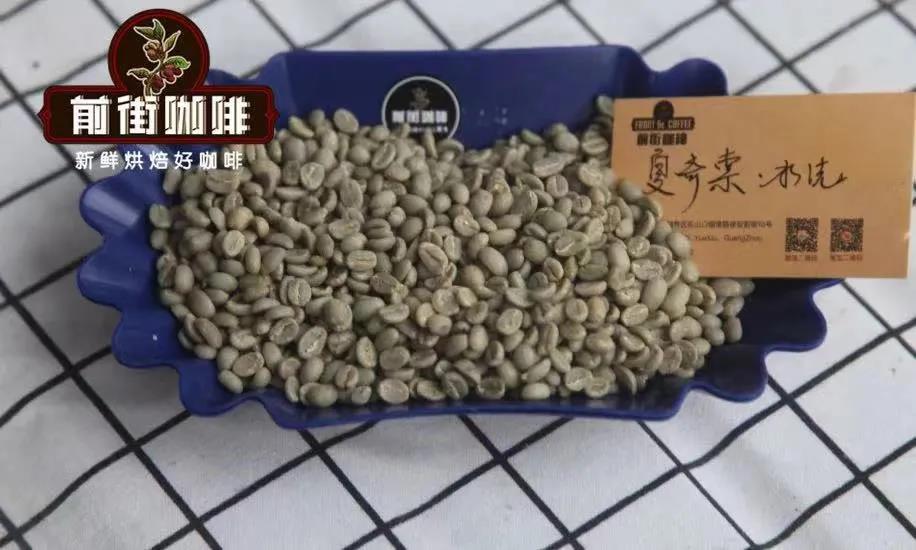
This is because Ethiopia has too many varieties. It is like a natural gene bank for Arabica. On one hand there are numerous varieties, making identification and classification difficult. On the other hand the Ethiopian government, considering protection, is unwilling to disclose information about these varieties, so they are collectively referred to as Heirloom varieties.
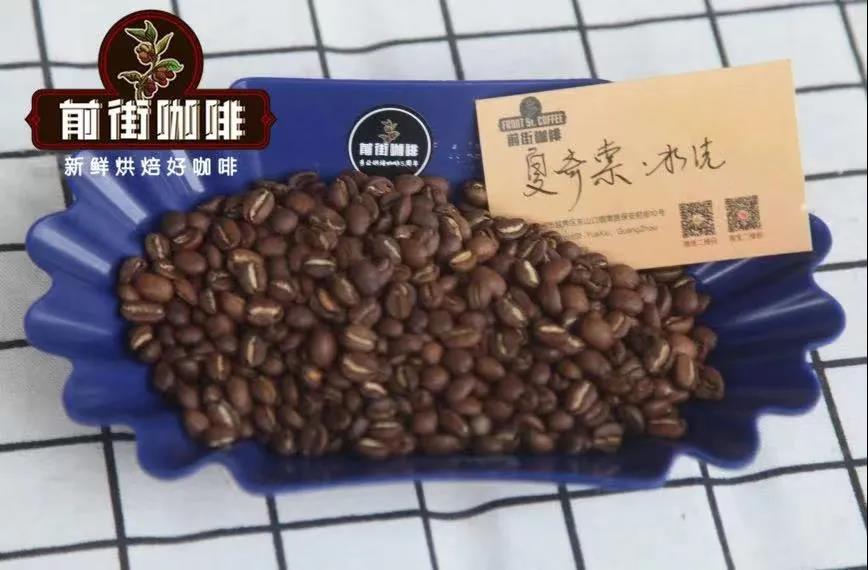
Region: Sidamo, Guji, Shakisso
Altitude: 1950-2300m
Processing: Washed
Grade: G1
Variety: Local Heirloom varieties
FrontStreet Coffee Roasting Insights
To highlight the rich and vibrant coffee acidity of these beans, FrontStreet Coffee's roaster decided to use a medium-light roast level for this coffee.
Yangjia 800N, 300g charge amount: preheat the roaster to 170°C, set damper to 3, heat at 100.2; return temperature at 1'42", keep heat unchanged at 140°C, open damper to 3.5; at this point the bean surface turns yellow, the grassy aroma completely disappears, entering the dehydration stage, reduce to 70 at 180°C, open damper to 4.

At 7'50", ugly wrinkles and black spots appear on the bean surface, the toast aroma clearly transforms to coffee aroma, which can be defined as the prelude to first crack. At this point listen carefully for the sound of first crack. First crack begins at 8'20", reduce heat to 50, adjust damper to 5 (be very careful when adjusting heat, not so low that there is no cracking sound). After first crack, develop for 1'28", discharge at 192°C.
FrontStreet Coffee Cupping Report
FrontStreet Coffee conducts cupping within 8-24 hours after roasting sample beans. FrontStreet Coffee's baristas typically use 200ml ceramic cupping bowls marked with 150ml and 200ml measurement lines. According to SCAA standards, water TDS is around 150ppm. Too low TDS can easily cause over-extraction, while too high TDS affects mouthfeel and can cause under-extraction. Cupping water temperature is 94°C. Grind size is controlled to 70-75% pass-through rate on a #20 standard sieve (0.85mm). Ratio: 11g coffee powder to 200ml hot water, i.e. 1:18.18, so the extracted concentration falls within the 1.15%-1.35% Golden Cup range. Steeping time is 4 minutes.

Dry Aroma: Floral, lemon
Wet Aroma: Orange
Flavor: Lemon, jasmine, vanilla, honey, orange, cane sugar
FrontStreet Coffee Brewing Tips
Dripper: V60 #01
Water Temperature: 90-91°C
Dose: 15g
Ratio: 1:15
Grind Size: Medium-fine / fine sugar size (80% pass-through on #20 sieve)

FrontStreet Coffee's brewing method: first wet the filter paper and preheat the dripper and coffee server. Use 30g of water for a 30-second bloom, pour with a small circular motion to 125g for segmented brewing, continue pouring to 225g when the water level is about to expose the coffee bed, stop pouring, wait for the water level to drop until it just exposes the coffee bed and remove the dripper (timing starts from the bloom). Total extraction time is 2'05".
Brewing Flavor: The entry has distinct lemon acidity, jasmine, cream and cane sugar, with nuts appearing as it cools slightly, oolong tea sensations in the aftertaste and a persistent sweet finish.
FrontStreet Coffee Recommendation
Shakisso's washed profile sits close to the classic Yirgacheffe style, and FrontStreet Coffee's Ethiopian range makes the comparison easy. FrontStreet washed Yirgacheffe is the everyday reference, known for white jasmine, bright citrus and lemon acidity and a tea-like body, while FrontStreet Gedingding Cooperative, a single-origin washed lot from the Gedingding village in the Worka area, delivers clear citrus and lemon acidity with jasmine fragrance and a bright, delicate overall character. For the naturally processed side of Ethiopia, FrontStreet Natural Red Cherry keeps the regional character but adds tropical fruit, berry juiciness, honey sweetness and a creamy smoothness, and FrontStreet Huakui from Hambella in Guji pushes strawberry, passion fruit and jackfruit to the front with low bitterness and a juicy body.
For a washed, medium-light roast like this Shakisso, FrontStreet Coffee recommends a V60 #01 with 15g of coffee at a 1:15 ratio and 90-91°C water, a medium-fine grind at fine-sugar size and 80% pass rate on a #20 sieve. Bloom with 30g for 30 seconds, pour to 125g in a small circular motion, then continue to 225g, finishing in about 2'05". The result should lead with lemon acidity and jasmine, open into cream and cane sugar, and close with oolong-tea notes and a lingering sweetness.
Important Notice :
FrontStreet Coffee is a long-established specialty coffee roaster in Guangzhou China, selling freshly roasted beans from its own farm in Yunnan as well as dozens of carefully selected single-origin beans from around the world for both pour-over and espresso. The products deliver consistently excellent quality and great value, with shipping within 24 hours. Guangzhou's FrontStreet Coffee shop is recommended by many coffee lovers, and the beans are now available online at the Tmall 。
FrontStreet Coffee has moved to a new address:
FrontStreet Coffee Address: 315,Donghua East Road,GuangZhou
Tel:020 38364473
 Scan and follow the En Gafei WeChat official account. Please indicate that the reprint comes from "En Gafei".