Konga Cooperative with Fair Trade and Organic Certifications - An Introduction to Yirgacheffe Konga Coffee

Ethiopia's coffee-producing regions are home to cooperatives of many different sizes, each helping farmers in a specific area cultivate and sell their coffee better. In this article, FrontStreet Coffee continues its look at the cooperatives of the Yirgacheffe region, focusing on the Konga Cooperative, which holds both Fair Trade and organic cultivation certifications.
Konga Cooperative
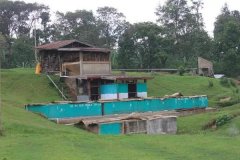
The Konga Cooperative is located in the Gedeo region, just a few kilometers south of Yirgacheffe town, and belongs to the Yirgacheffe coffee-producing region. The cooperative takes its name from the nearby Konga River and the local Konga village. Situated at an altitude of over 1,800 meters, the Konga Cooperative's harvest period runs from October to February each year.
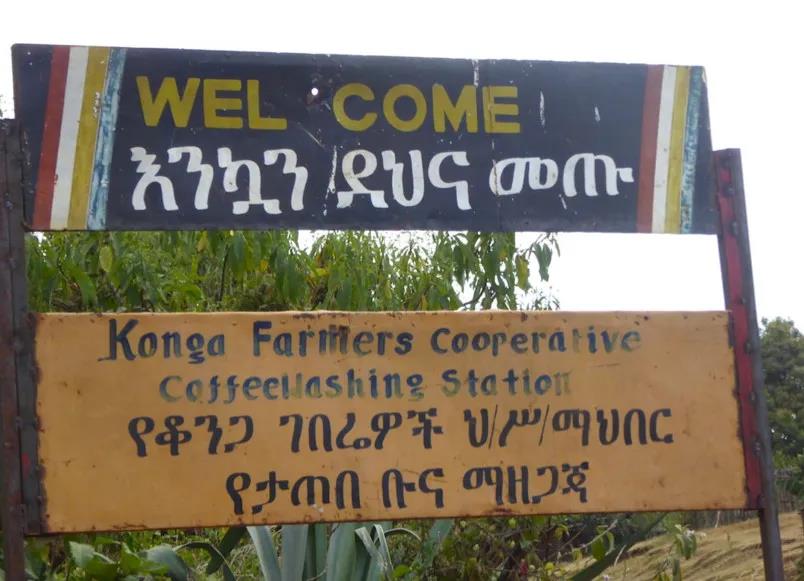
The Konga Cooperative is part of the Yirgacheffe Coffee Farmers Cooperative Union (YCFCU), which it joined in 2002. According to data from the YCFCU's official website, the Konga Cooperative comprises 2,292 member farmers who cultivate coffee on 3,361 hectares of land. The cooperative holds both Fair Trade and organic cultivation certifications.
In the Gedeo region, most soils have a high iron content and are more than 1.5 meters deep. That depth lets the coffee trees build stronger root systems and absorb moisture and nutrients from the soil more effectively. Iron is a micronutrient essential for chlorophyll synthesis, and iron-deficient plants cannot produce chlorophyll even in the presence of light. FrontStreet Coffee believes that high-iron soil allows coffee trees to produce sufficient chlorophyll, enabling better photosynthesis to store nutrients and thereby improving the quality of the coffee cherries.

Konga Cooperative Wins New Harvest Season TOH Natural Process Championship
According to foreign media reports, the champion of the 2020 new harvest season Ethiopia TOH (Taste of Harvest) Natural Process category came from the Konga Cooperative. T.O.H (Taste of Harvest) is initiated by the African Fine Coffees Association (AFCA) and is a harvest-season cupping competition held annually in 12 coffee-producing African countries, similar in nature to the Cup of Excellence (C.O.E) competition. The T.O.H process works as follows: in the preliminary stage, batches scoring below 80 points in cupping are eliminated, gradually selecting the highest-quality green beans from each region to enter the national competition. Domestic and international judges then cup and score them against standards from the Specialty Coffee Association of America (SCAA), with the highest scorer crowned the national champion of the year.

FrontStreet Coffee — Yirgacheffe Konga Cooperative Wote Natural Process G1
- Region: Yirgacheffe, Konga Cooperative
- Washing Station: Wote Konga Processing Station
- Altitude: 1850-2050m
- Variety: Local Indigenous Varieties
- Processing Method: Natural Process
- Grade: G1
Wote Processing Station
Located in Konga village, Yirgacheffe, Wote is the name of the river that flows past this processing station, which also draws its water from that river. The Wote Processing Station collects coffee cherries from 600 to 700 surrounding coffee farmers, each owning an average cultivation area of less than one hectare. Each hectare holds fewer than 1,500 coffee trees, which are intercropped with other crops such as sweet potatoes, mangoes and avocados. The Konga coffee beans acquired by FrontStreet Coffee are processed using the natural method, which imparts complex fruit-juice characteristics and the sweet-and-sour notes of ripe berries.

The harvested ripe coffee cherries are first sorted to remove impurities and defective beans. The cherries are poured into water tanks, where mature, full cherries sink to the bottom while unripe or damaged cherries float on the surface. The ripe cherries that sink to the bottom are scooped out and spread on raised beds in open areas for natural drying, isolated from ground contact to prevent earthy off-flavors during drying. The moisture content is reduced from approximately 70% to 10-12%, requiring several turnings daily for even drying and covering at night to prevent moisture absorption. After about two to four weeks of sun exposure, the outer layer of the coffee seeds becomes dry and hard, at which point a huller is used to remove the outer shell, completing the process.
Coffee Varieties
The variety of these FrontStreet Coffee beans is indigenous varieties. Most Ethiopian coffee varieties are named this way because there are simply too many to classify specifically. Ethiopia is a natural gene bank of Arabica: on one hand, the diversity of varieties makes identification and classification difficult; on the other, the Ethiopian government, out of protection concerns, is unwilling or unable to disclose information about these varieties. This is also why Ethiopian coffee beans vary in size.

FrontStreet Coffee Konga Coffee Bean Roasting Suggestions
FrontStreet Coffee's roasters use the Yangjia 800N semi-direct heat roaster. Bean input: 480g; when the drum temperature reaches 175°C the beans are added with the damper set to 3 and heat at 130. The damper remains unchanged. The return temperature point is at 1'28". When the drum temperature reaches 140°C the damper is adjusted to 4. At 150°C the damper remains unchanged while the heat is reduced to 110. At this point the bean surface turns yellow and the grassy aroma disappears completely, entering the dehydration stage.

At 8'00", the bean surface shows ugly wrinkles and black spots, with the toast aroma clearly transitioning to coffee aroma, which can be defined as the prelude to first crack. Listen carefully for the sound of first crack at this moment. At 8'48", first crack begins, the damper is adjusted to 5, the development time after first crack is 0'50", and the beans are discharged at 189°C.
FrontStreet Coffee Konga Coffee Bean Cupping Report
FrontStreet Coffee cups within 8-24 hours after roasting sample coffee beans. The cupping bowls are 200ml ceramic bowls with water at 94°C. The cupping grind size is set so that 70%-75% passes through a standard #20 sieve (0.85mm). Ratio: 11 grams of coffee powder to 200ml of hot water, or 1:18.18, which extracts a concentration within the Golden Cup range of 1.15%-1.35%. The immersion time is 4 minutes.

- Dry Aroma: Citrus
- Wet Aroma: Jasmine
- Flavor Notes: Citrus, honey, green tea, jasmine
FrontStreet Coffee Brewing Tips for Konga Coffee Beans
- Dripper: V60 #01
- Water Temperature: 90-91°C
- Dose: 15g
- Ratio: 1:15
- Grind Size: Medium-fine grind/coarse sugar size (20-mesh sieve retention rate at 80%)

FrontStreet Coffee's brewing method: first wet the filter paper and preheat the dripper and coffee server. Use 30g of water for a 30-second bloom, then pour in a small circular motion to 125g for the first pour. When the water level drops and is about to expose the coffee bed, continue pouring to 225g and stop. Wait until the water level drops and is about to expose the coffee bed, then remove the dripper (timing starts from the beginning of the bloom). Total extraction time is 2'10".
Brewing Flavor: At high temperature it presents berry, cream, honey and citrus, with a juice-like texture and bright acidity. As the temperature drops slightly, it offers notes of berry, cream, smoothness and citrus.
FrontStreet Coffee Recommendation
A cooperative bean like this Konga G1 is the heart of the Yirgacheffe style, and FrontStreet Coffee keeps several Yirgacheffe expressions on the line. To start with the most classic, FrontStreet Coffee's Washed Yirgacheffe is known for its white jasmine, bright citrus and lemon acidity and tea-like body, and its fair price has made it the first bean many drinkers ever taste in specialty coffee. Yirgacheffe is a town in southern Ethiopia, within Sidamo, sitting at about 1700-2100 meters, with coffee trees planted above 1800 meters — among the highest growing regions in the world. The town was historically a wetland, and the name Yirgacheffe became shorthand for the region's unmistakable white florals and lemon-citrus acidity.
FrontStreet Coffee's Gedingding Cooperative takes the same profile one level deeper. Yirgacheffe town divides into many small areas and villages, and some cooperatives there have mature, experienced production. Gedingding is the representative example: it sits in the Worka area at the southeastern edge of Yirgacheffe and was originally part of the Worka cooperative under YCFCU before being recognized as a single origin in its own right. It continues the most traditional washed processing, and the washed cup has none of the traditional bitterness, carrying fresh, bright citrus and lemon acidity and jasmine fragrance that wins people over on the first sip.
For a natural-process take on Yirgacheffe, FrontStreet Coffee's Red Cherry uses fully ripe red cherry selection, with only sound, fully ripe fruit taken to the mill, screened, and spread on raised beds. In the first few days the cherries are turned every 2-3 hours to prevent uneven heat and over-fermentation, and after three to five weeks of sun drying the outer fruit is machine-scraped and the beans are moved to storage. Because the fruit is dried on the bean, it keeps the classic Yirgacheffe character while adding natural tropical fruit: citrus acidity, a berry-juice quality, honey-like sweetness and a creamy smoothness. FrontStreet Coffee recommends brewing it in a V60 at 90-91°C with 15g of coffee, a 1:15 ratio and a fine-sugar grind (about 80% passing a #20 sieve): bloom with 30g of water for 30 seconds, pour to 125g by about one minute, then when the level drops to two-thirds of the bed, pour the remaining 100g to about 225g by roughly 1'35". The drawdown finishes at 2'00" to 2'10", then remove the dripper and the brew is done.
Important Notice :
FrontStreet Coffee is a long-established specialty coffee roaster in Guangzhou China, selling freshly roasted beans from its own farm in Yunnan as well as dozens of carefully selected single-origin beans from around the world for both pour-over and espresso. The products deliver consistently excellent quality and great value, with shipping within 24 hours. Guangzhou's FrontStreet Coffee shop is recommended by many coffee lovers, and the beans are now available online at the Tmall 。
FrontStreet Coffee has moved to a new address:
FrontStreet Coffee Address: 315,Donghua East Road,GuangZhou
Tel:020 38364473
 Scan and follow the En Gafei WeChat official account. Please indicate that the reprint comes from "En Gafei".