Yirgacheffe Coffee Micro-Region Kochere: Brewing Characteristics of Kochere Region Washed Coffee Beans
Loyal fans of FrontStreet Coffee's Yirgacheffe will certainly have heard of Kochere, a famous micro-region in Ethiopia. Kochere sits in what could be called the most premium part of the wider Yirgacheffe area. In the ECX's regional classification, Kochere stands as an independent region — which says a great deal about its standing. Through cupping, FrontStreet Coffee has found that its Yirgacheffe Kochere differs from ordinary batches of green coffee. Beans from this origin carry strong flavor characteristics, rich aromas and body, with vibrant citrus acidity, a sweet, silk-like texture and fruit flavors.
Kochere Region
Yirgacheffe itself is a small town of about 20,000 people. The three neighboring small regions — Wenago, Kochere and Gelena Abaya — produce coffee with flavors almost identical to FrontStreet Coffee's Yirgacheffe, so they too are classified within the Yirgacheffe area.

Kochere lies 25 kilometers southeast of Yirgacheffe, Ethiopia, a small micro-region with elevations ranging from 1650 to 1800 meters. It's a prosperous coffee-growing area and one of Yirgacheffe's three famous micro-regions. The local population is about 100,000, with coffee beans as their main source of income. Processing and equipment here are very advanced. The renowned coffee review website Coffee Review gave Kochere washed beans a high rating of 94 points.
Kochere is one of the 77 Woredas (Ethiopian administrative regions) in Ethiopia's SNNPR. In the coffee world, Kochere is part of Gediyo within Yirgacheffe and one of the most important producing areas there. Kochere can be divided further into several micro-regions, and coffees produced within it are sometimes named more specifically by their source town (such as Chelelektu or Teklu Dembel), processing station (such as the Teklu Dembel processing station and the Alimu processing station of this batch), or micro-area (such as Banko Gutiti). This matches the current coffee trend toward traceability. Naturally, batches with stronger traceability have more specific origins, higher flavor stability and reproducibility from year to year — and higher prices to match.

Coffee Production Model in Kochere Region
Kochere's production model mainly involves local smallholders delivering their lots to cooperatives for unified processing. The local Chalalacktu village has about 100,000 people who depend on coffee for their livelihood, with related production activities forming their main economic source. Thanks to the income coffee brings, the local standard of living is noticeably better than in many Ethiopian villages, with well-established health facilities, higher education institutions and other amenities. Advanced processing equipment lets Kochere coffee consistently hold high standards in washed processing, bringing a clean sweetness with complex notes of molasses and citrus.

The FrontStreet Coffee Yirgacheffe Kochere selected by FrontStreet Coffee differs from ordinary batches of green coffee: it belongs to the highest specification, the G1 grade. The origin's flavor characteristics are strong, with a clean, fresh lemon aroma, delicate and elegant jasmine florals, and rich aromas and flavors of melon, citrus, ginger and spiced tea.
Washed Processing Method
1. First, coffee farmers pour all the harvested coffee fruit into water. Defective beans float to the surface while the quality-approved fruit sinks to the bottom — an operation that greatly cuts the time wasted on hand-sorting.
2. The selected fruit then goes into a pulping machine to remove the outer skin and pulp. After that, a layer of mucilage still clings to the fruit's surface, so large amounts of clean water are needed to wash away the sticky residue.
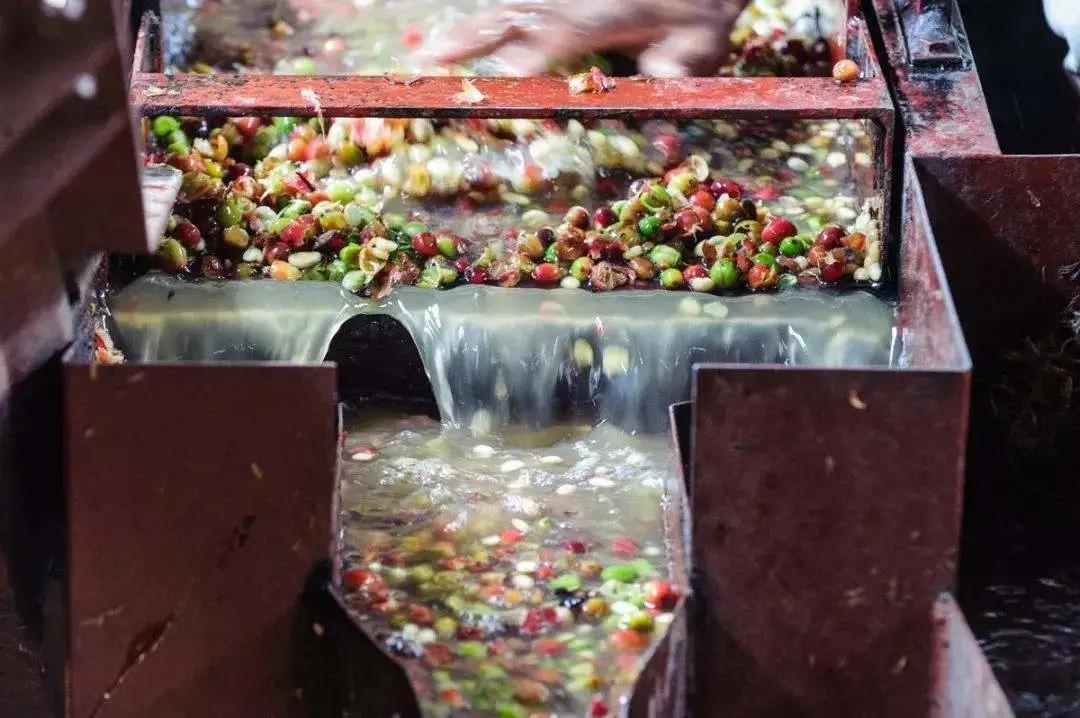
3. Next, fermentation is used to remove the mucilage completely. This takes about 18 hours, but once fermentation is done, fermentation bacteria adhere to the fruit's surface, so another thorough wash with plenty of clean water is required. The whole process consumes a great deal of fresh water.
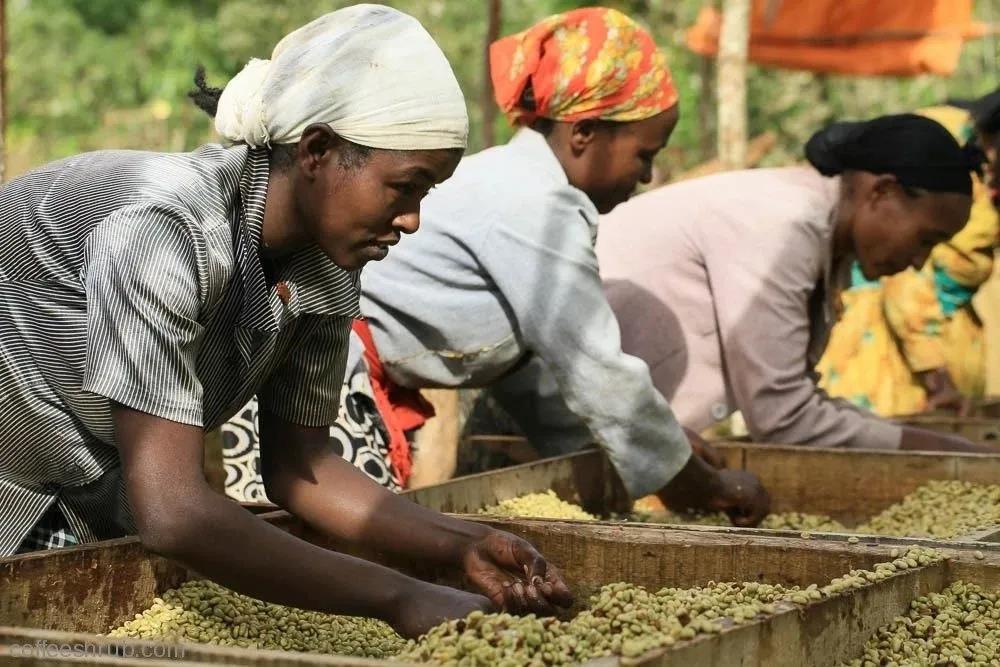
4. Finally, the cleaned beans are taken outdoors and spread on drying beds. In more developed producing areas, they're sent to processing plants to be machine-dried, bringing the coffee's moisture content down to about 11%.

Product Details
Product Name: FrontStreet Coffee Yirgacheffe Kochere Washed
Region: Yirgacheffe Kochere
Variety: Local Indigenous Varietals
Altitude: 1650-1800 meters
Processing Method: Washed Processing
Grade: G1
FrontStreet Coffee Roasting Records
To highlight the clean mouthfeel and bright acidity of this FrontStreet Coffee washed Kochere, the roaster chose a medium-light roast for the bean. Using a Yangjia 800N roaster at a 550g batch size: preheat to 200°C, damper open at 3, heat at 160, damper unchanged. The turnback point comes at 1'32", when the temperature reaches 151°C and the damper is adjusted to 3.5. When the temperature reaches 140°C, heat is adjusted to 180 with the damper unchanged; at this point the bean surface turns yellow, the grassy aroma disappears completely, and the roast enters the dehydration phase.

At 8'35", ugly wrinkles and black spots appear on the bean surface and the toast aroma clearly shifts into coffee aroma — which can be defined as the prelude to first crack. At this moment, one must listen carefully for the sound of first crack. At 8'53", first crack begins. Heat is maintained at 180 and the damper adjusted to 4. After first crack, develop for 1'45", then drop at 195°C.
FrontStreet Coffee Cupping Report
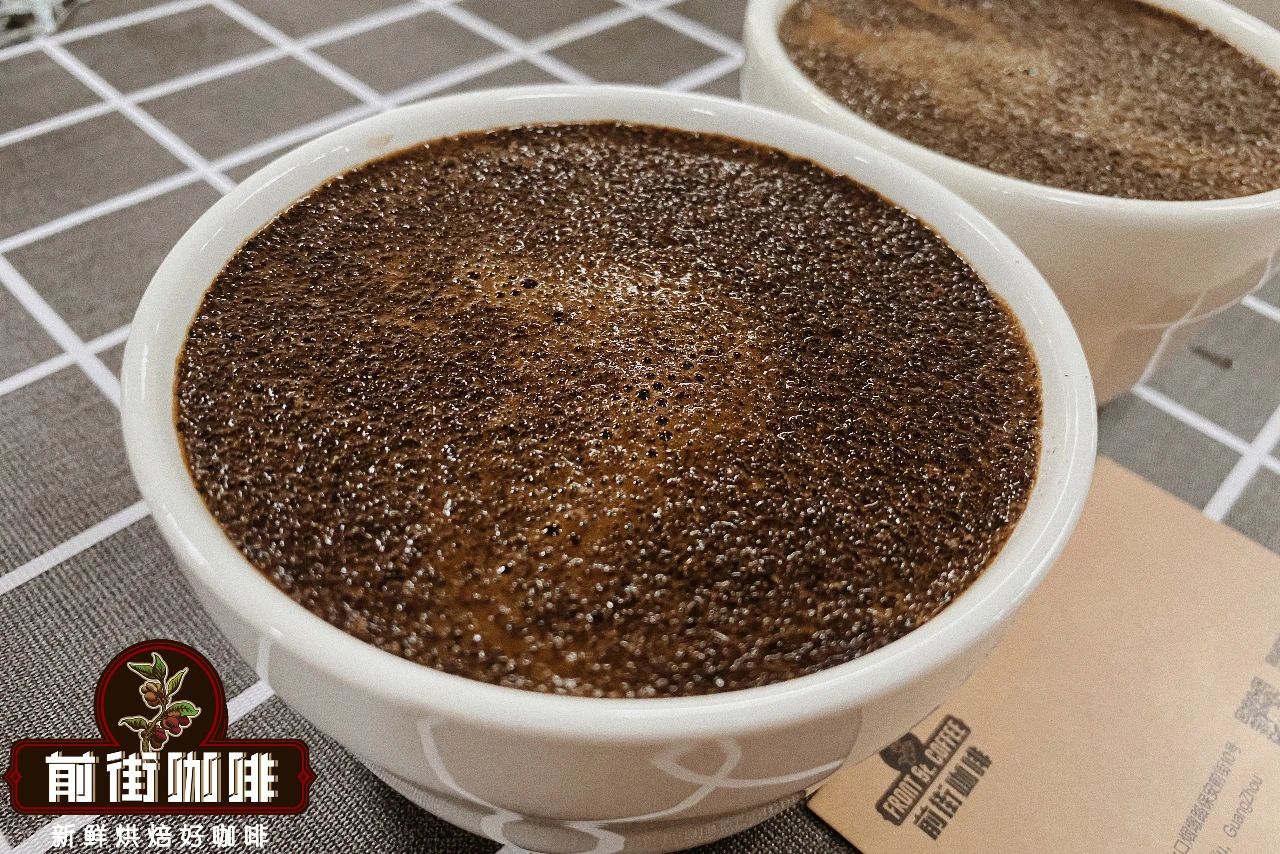
FrontStreet Coffee conducts cupping within 8-24 hours after roasting sample beans. Its baristas typically use 200ml ceramic cupping bowls marked with 150ml and 200ml graduation lines. Following SCAA standards, water TDS is around 150ppm — too low a TDS can easily cause over-extraction, while too high affects mouthfeel and easily causes under-extraction. Cupping water temperature is 94°C. Grind size is controlled to pass through a #20 standard sieve (0.85mm) at a 70%-75% rate. The ratio is 11 grams of coffee powder to 200ml of hot water — that is, 1:18.18 — so the extracted concentration lands precisely within the 1.15%-1.35% Golden Cup range, with an immersion time of 4 minutes.
Tasting Notes
Dry Aroma: Orange blossom
Wet Aroma: Sensation
Flavor: Lemon, black tea, sweet and sour fruit
FrontStreet Coffee Brewing Experience
Dripper: V60 #01
Water Temperature: 90-91°C
Dose: 15g
Ratio: 1:15
Grind Size: BG6m / fine sugar size (sieved to 80% through #20 sieve)

FrontStreet Coffee determines grind size by sieving. It follows the Specialty Coffee Association (SCA) grind recommendations for pour-over and combines them with hands-on verification. If you don't have a sifter at home, FrontStreet Coffee suggests judging by flow rate instead — if the water runs through too quickly, the grind is too coarse; too slowly, and it's too fine.

FrontStreet Coffee Brewing Method: First wet the filter paper and preheat the dripper and server. For the first pour, inject 30g of water for a 30-second bloom, then inject 95g (the scale reads around 125g), completing the pour in about 1 minute. When the water level drops to two-thirds of the coffee bed, inject the remaining 100g (the scale reads around 225g), completing that pour in about 1 minute and 35 seconds. Drip filtration finishes at 2 minutes and 5 seconds. Remove the dripper to complete extraction.
Brewing Flavor:
Lemon, floral notes, orange and cane sugar — overall clean and refreshing, with honey flavors in the aftertaste and an oolong-tea finish.
FrontStreet Coffee Recommendation
If this Kochere has you curious about Yirgacheffe, the best place to start is FrontStreet's washed Yirgacheffe daily bean. Known for white jasmine, bright citrus and lemon acidity and a tea-like quality, it's affordable enough to be many people's very first specialty coffee. Yirgacheffe is a small town in Ethiopia's southern Sidamo province, at roughly 1700-2100 meters, with coffee trees planted above 1800 meters — among the highest coffee-growing regions in the world. The name became so famous that in 2010 the Ethiopia Commodity Exchange finally separated it from Sidamo, giving us the household-name Yirgacheffe we know today.
Within Yirgacheffe there are countless small villages and cooperatives, and FrontStreet's Gedeb Cooperative is one of the most representative. It sits in the Worka region at Yirgacheffe's southeastern edge and was originally part of the Worka cooperative under the Yirgacheffe Coffee Farmers Cooperative Union (YCFCU); as the hunt for traceable green coffee grew, it was singled out worldwide as a single-origin lot. It follows the most traditional washed process, and the cup is clean and bright with citrus and lemon acidity and jasmine fragrance — no traditional bitterness at all.
For a taste of Yirgacheffe processed naturally, try FrontStreet's Red Cherry. Only fully ripe, sound cherries are picked, given a first sorting at the processing station, then laid straight on raised beds to sun-dry; in the first few days they're turned every 2-3 hours to avoid uneven heating and over-fermentation. After three to five weeks of drying, the outer pulp is machine-scraped and the beans are moved to storage. Because the fruit dries with the pulp on, it keeps classic Yirgacheffe character while gaining tropical fruit from the natural process — citrus acidity, berry-juice body, honey sweetness and a creamy smoothness. Brew it in a V60 at 90-91°C with 15g, a 1:15 ratio and a fine-sugar grind (80% through a #20 sieve), and you're set.
Important Notice :
FrontStreet Coffee is a long-established specialty coffee roaster in Guangzhou China, selling freshly roasted beans from its own farm in Yunnan as well as dozens of carefully selected single-origin beans from around the world for both pour-over and espresso. The products deliver consistently excellent quality and great value, with shipping within 24 hours. Guangzhou's FrontStreet Coffee shop is recommended by many coffee lovers, and the beans are now available online at the Tmall 。
FrontStreet Coffee has moved to a new address:
FrontStreet Coffee Address: 315,Donghua East Road,GuangZhou
Tel:020 38364473
 Scan and follow the En Gafei WeChat official account. Please indicate that the reprint comes from "En Gafei".