What Are Coffee Cooperatives? Ethiopia Yirgacheffe Coffee Cooperative Coffee Beans Brewing Parameters
Professional Coffee Knowledge Exchange
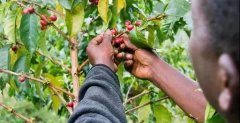
Ethiopia's Yirgacheffe region is dotted with cooperatives large and small. A coffee cooperative is a non-profit organization whose members join voluntarily, formed to help smallholder farmers access the resources they need to grow and sell their coffee. Though the coffees from many Yirgacheffe cooperatives taste similar, each has its own story. This time, FrontStreet Coffee looks at the Banko Gotiti Cooperative behind its Yirgacheffe.
Yirgacheffe
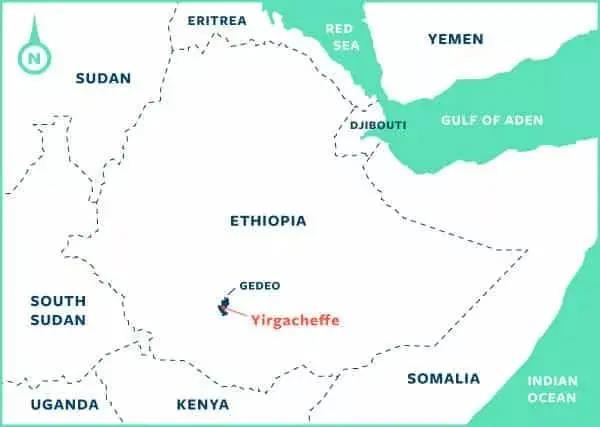
Yirgacheffe has always been one of Ethiopia's most important coffee regions. It was once part of Sidamo but earned independent status thanks to the unmistakable character of its beans - so much so that "Yirgacheffe" is not just a place name but a byword for a specific flavor profile.
The region sits at roughly 2,000 meters, squarely in high-altitude coffee territory, and is home to more than 40 cooperatives, with cultivation largely managed by farming families. Beneath Yirgacheffe sit well-known micro-regions such as Kochere, Fog Valley, and Gedeb, each with excellent cooperatives whose beans carry their own signature flavors.
Banko Gotiti Cooperative
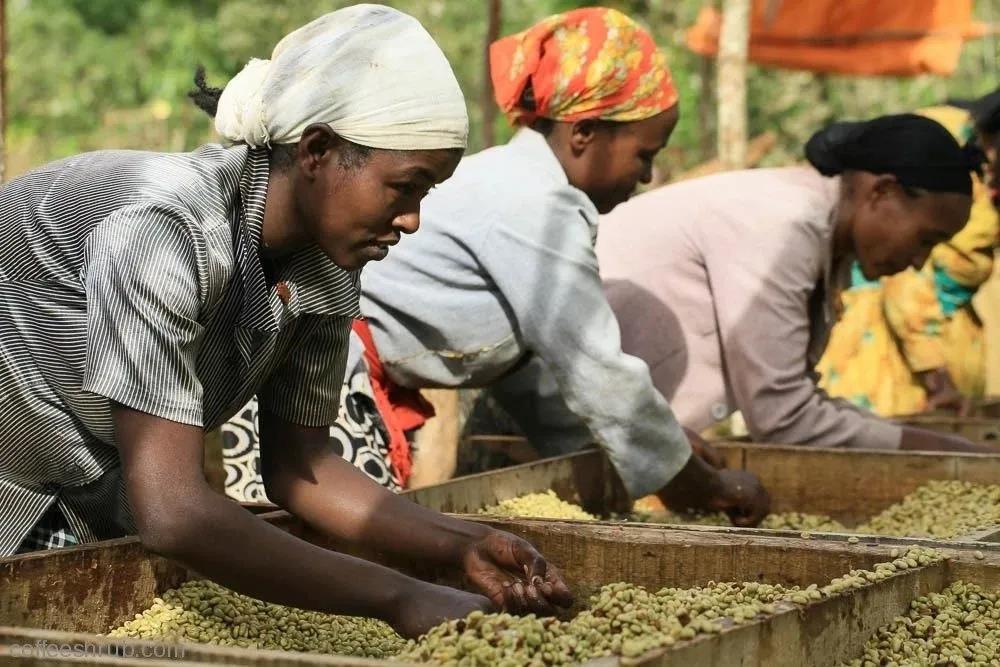
The Banko Gotiti Cooperative lies in the Worka area at Yirgacheffe's southeastern tip. It was originally part of the Worka Cooperative under the Yirgacheffe union YCFCU, until the worldwide pursuit of green-coffee traceability saw these "single-terroir" coffees tracked down and identified one by one.
In 2012, Banko Gotiti - with roughly 300 member farmers - formally established itself as an independent cooperative. The village was among the first to break away, and because many of its smallholders were once Worka Cooperative members, their production skills are superb. Banko Gotiti has been called the last pure land of Yirgacheffe, and it still processes its coffee in the most traditional ways, both washed and natural.
Varieties
Yirgacheffe varieties are local heirlooms: small-grained, rounded, with beans mostly between screen size 14 and 15. FrontStreet has noticed that since Ethiopia began hosting its own COE competition, varieties are being classified more carefully - 13th place that year went to the Kurume variety from Yirgacheffe. Kurume is actually a common non-coffee plant in southern Ethiopia, abundant and small-fruited; because a local coffee variety shares those traits, farmers call coffees with this character "Kurume." The Banko Gotiti beans are local native varieties.
Processing
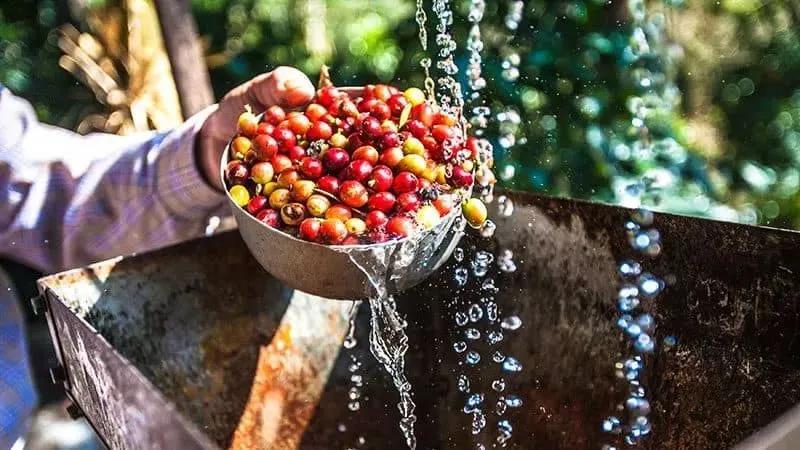
FrontStreet's Banko Gotiti is washed. A pulping machine strips the skin and flesh, then the beans rest in fermentation tanks for 18-36 hours - depending on local temperature and humidity - until the mucilage breaks down. The parchment is then scrubbed in washing channels for 30-60 minutes, where channel design and water flow let low-density, poor-quality beans float off. The best parchment dries on African raised beds for about 14 days, rests in the station's warehouse, and is finally trucked to a dry mill for hulling and a battery of screening: foreign-matter removal, silver-skin polishing, density separation, color sorting, and bagging for export.
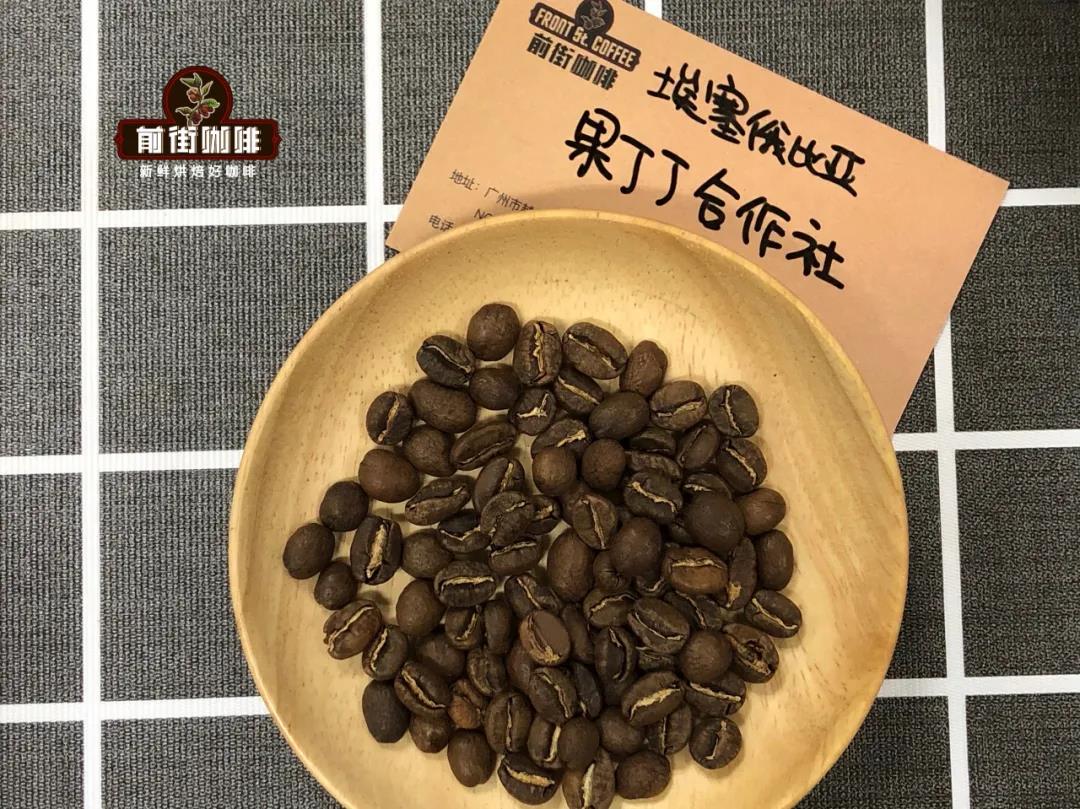
Origin Information
Region: Yirgacheffe, Gedeo Zone
Altitude: 1,900-2,300 m
Variety: Heirloom
Processing Method: Washed
FrontStreet Coffee Roasting Notes

FrontStreet's roaster treats the Banko Gotiti as a fruit-acidity-driven coffee and roasts it light to highlight its clean texture, bright fruit acidity, and clear sweet finish. On the Yangjia 800N with a 480 g charge: preheat to 175 degrees C, charge with the damper at 3 and heat at 120. Turning point at 1'32"; heat up to 140 and damper to 4 as the beans yellow and the grassy smell fades into the drying stage. Heat drops to 100 at 166 degrees C and to 80 at 176 degrees C, damper unchanged. At 8'28" the bean surface shows ugly wrinkles and dark specks and the toast smell gives way to coffee aroma - the prelude to first crack. Listen carefully from here. First crack begins at 9'38"; open the damper to 5 (adjust heat cautiously - cutting it too hard can stall the crack). Develop for 1'30" after crack and drop the batch at 193.5 degrees C.
FrontStreet Coffee Cupping Report

FrontStreet cups within 8-24 hours of roasting the sample, using 200 ml ceramic bowls marked at 150 and 200 ml. Per SCAA practice, water TDS sits around 150 ppm - too low invites over-extraction, too high muddies the mouthfeel and can cause under-extraction. Cupping water is 94 degrees C, ground to a 70-75% pass rate on the #20 standard sieve (0.85 mm). The ratio is 11 g of coffee to 200 ml of hot water (1:18.18), which puts the extraction concentration inside the 1.15-1.35% Gold Cup range after a 4-minute steep.
The washed Banko Gotiti shows a dry aroma of fresh passion fruit, citrus, and berries, with a wet aroma of citrus and berries. In the cup: citrus acidity, berry sweetness, almond, and tea-like notes, finishing on a honeyed sweetness. Light body, bright acidity, clean and refreshing.
FrontStreet Coffee Brewing Notes
Dripper: V60 #01
Water Temperature: 90-91 degrees C
Dose: 15 g
Ratio: 1:15
Grind Size: BG 6m / fine-sugar texture (80% pass on a #20 sieve)
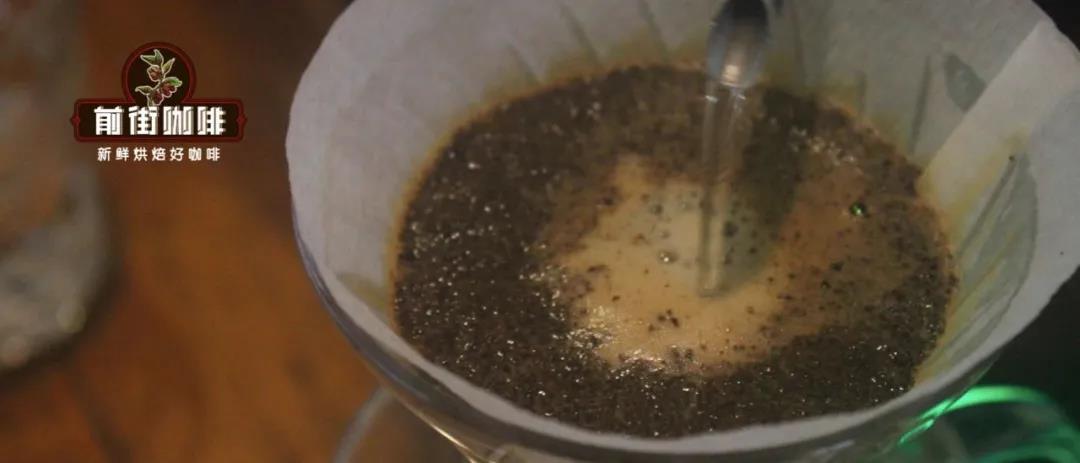
Method: Pour 30 g of water to bloom for 30 seconds, then pour 95 g (about 125 g on the scale) over roughly 1 minute. When the level falls to two-thirds of the bed, pour the final 100 g (about 225 g total), finishing around 1'35". Drawdown completes at 2'10" - remove the dripper and serve.
In the cup: citrus and black tea up front, unfolding into cream, caramel, and almond as the cup cools, with a distinct sweet aftertaste and a clean, sweet mouthfeel.
FrontStreet Coffee Recommendation
Cooperative coffees like Banko Gotiti are the best entry point into Ethiopian flavors. FrontStreet's washed Yirgacheffe everyday beans - white jasmine, bright citrus-lemon acidity, and tea-like cleanliness at a friendly price - remain the classic starting point, and the washed Idido Cooperative from the Worka area shows the same tradition: refined, clean processing that lets jasmine florals and lively citrus acidity shine, with green-tea and honey tones after a medium-light roast.
For the natural side of Yirgacheffe, try FrontStreet's Red Cherry lot: only fully ripe cherries are picked, sun-dried whole on raised beds and turned every 2-3 hours in the first days to prevent uneven fermentation, for three to five weeks in total. The cup pairs classic Yirgacheffe citrus with berry-juice vibrance, honeyed sweetness, and a creamy smoothness - proof that the same village can express two entirely different personalities depending on the process.
Important Notice :
FrontStreet Coffee is a long-established specialty coffee roaster in Guangzhou China, selling freshly roasted beans from its own farm in Yunnan as well as dozens of carefully selected single-origin beans from around the world for both pour-over and espresso. The products deliver consistently excellent quality and great value, with shipping within 24 hours. Guangzhou's FrontStreet Coffee shop is recommended by many coffee lovers, and the beans are now available online at the Tmall 。
FrontStreet Coffee has moved to a new address:
FrontStreet Coffee Address: 315,Donghua East Road,GuangZhou
Tel:020 38364473
 Scan and follow the En Gafei WeChat official account. Please indicate that the reprint comes from "En Gafei".