Is Catimor Coffee Bean Arabica? Characteristics and Flavor Profile of Yunnan Catimor Coffee Variety
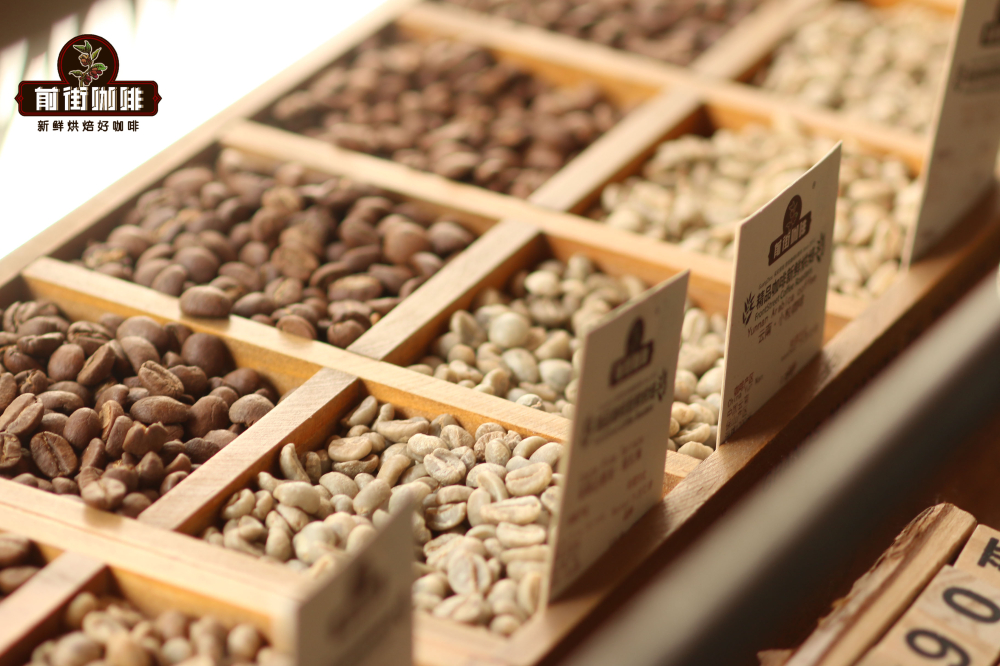
Arabica varieties are known for their excellent aroma and acidity, which is why so many sellers emphasise that their beans are Arabica. In recent years the Catimor variety has appeared frequently, and the question is whether it belongs to the Arabica species. FrontStreet Coffee explains the origins of Catimor below.
Arabica
Among the world's three major coffee varieties, Arabica is the small-fruited one, accounting for over 70% of global cultivation. For caffeine, Arabica has the lowest content, between 0.9% and 1.2%, which is half that of Robusta, whose beans contain 2% to 4%. Because of its relatively rich fat and sugar content, Arabica offers a delicate aroma and a pleasant sweet-sour taste, and it is favoured by more coffee lovers.
Arabica suits high-altitude sloped terrain and generally thrives between 600 and 1,800 metres. It needs specific microclimates, with an average annual temperature around 20°C, and is distributed near the equator between the Tropic of Cancer and the Tropic of Capricorn. Arabica has relatively weak pest and disease resistance, which lowers yields. The higher the altitude, the better the flavour, so Arabica requires more investment than other varieties, and the coffee commands a higher price.
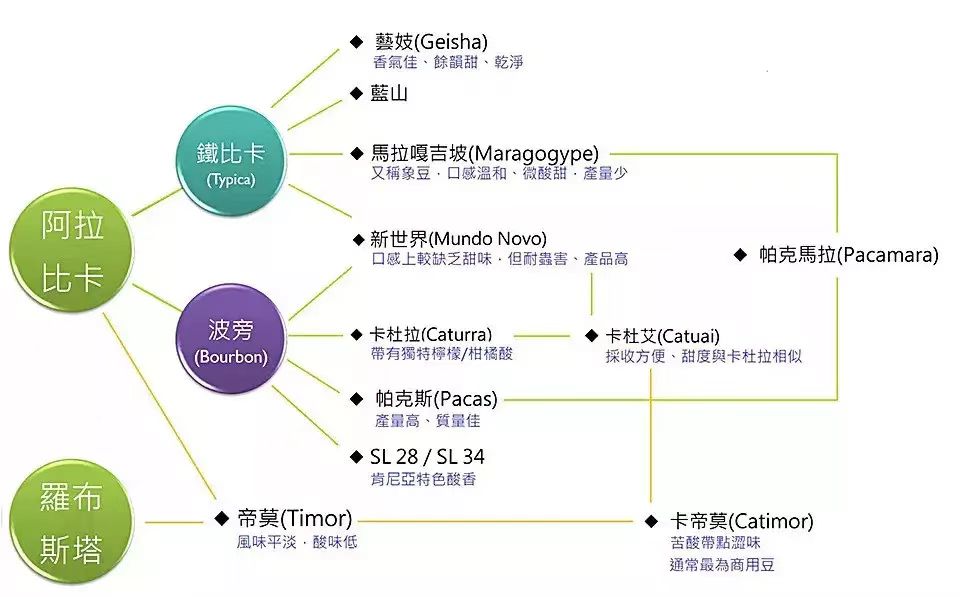
Common Arabica varieties include Ethiopian heirloom types and older heirloom varieties such as Typica, Bourbon, Caturra, Pacas, Catuai, Mundo Novo and Maragogipe, also called Elephant Bean.
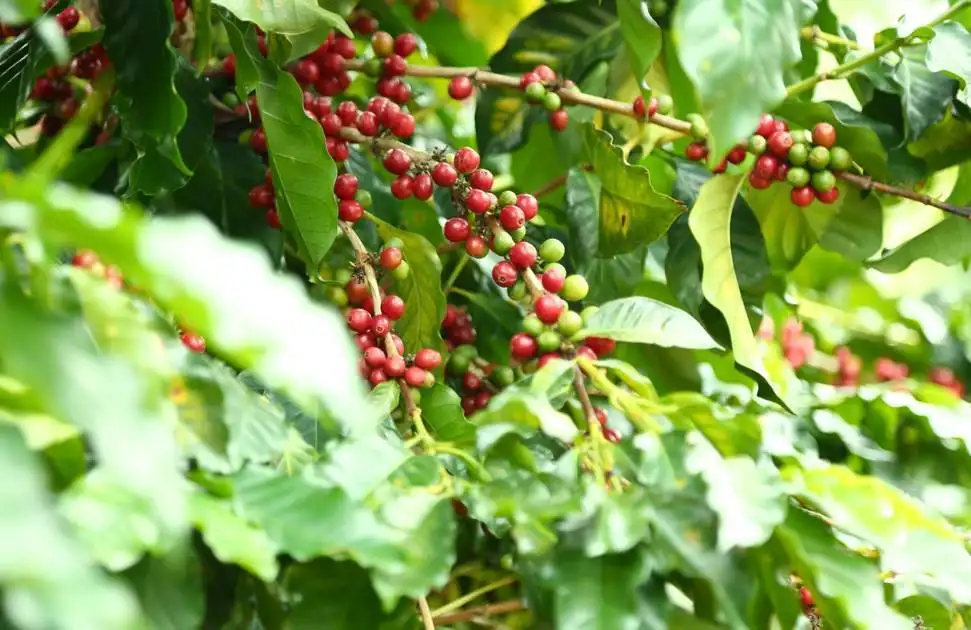
Catimor
In 1959, the Portuguese created Catimor by hybridising Brazil's Caturra with Timor Hybrid, producing a variety with strong disease resistance. Caturra is a natural mutation of the Arabica variety Bourbon, discovered by Brazilians in 1937. It inherits Bourbon's lineage, has relatively weak disease resistance but higher yields than Bourbon, and when grown at high altitude it delivers bright acidity and a pure aroma. Timor Hybrid is an interspecific natural hybrid of Arabica and Robusta, discovered in the 1940s on Timor Island in Indonesia, with strong leaf rust resistance and high yields. Its descendant Catimor therefore inherited both exceptional disease resistance and high production capacity.

Between 1970 and 1990, leaf rust epidemics struck coffee-producing countries worldwide. With help from international organisations, many countries promoted Catimor cultivation to resist leaf rust and raise production. These highly disease-resistant plants can withstand coffee leaf rust and were widely planted across Central and South America in the 1980s. However, because Timor Hybrid is a natural hybrid of Arabica and Robusta, although the latter grants disease resistance, the delicate taste of Arabica disappears. Catimor inherits Robusta's strong disease resistance but also its genes for poorer flavour. Early Catimor also had high yields yet needed shade trees to thrive, otherwise it withered easily.
Yunnan Catimor
In the 1970s and 1980s, with leaf rust damaging coffee cultivation worldwide, international organisations vigorously promoted Catimor varieties to many countries.
In 1988, Nestlé set up a joint venture in Yunnan, China, aiming to launch coffee cultivation projects, and began experimental cultivation in Pu'er. From 1992, Nestlé established a Coffee Agriculture Department dedicated to researching Yunnan coffee cultivation and improvement, guiding local farmers and introducing the highly disease-resistant Catimor. Nestlé also promised to buy the coffee produced at prices equivalent to the US spot market, which greatly advanced Yunnan's coffee industry.

As noted above, Catimor is not of pure Arabica lineage. It carries 25% Robusta heritage, which affects its flavour. It lacks sufficient aroma, has noticeable bitterness and can easily develop negative astringency and a stimulating musty flavour. Grown at low altitude, Catimor shows no significant advantages or disadvantages in the cup compared with other commercial varieties. Grown above 1,200 metres, its shorter harvest time compared with traditional Arabica means it accumulates fewer nutrients, making its cup noticeably inferior to Bourbon, Caturra and Catuai.
To improve Catimor's negative flavours, Yunnan has steadily refined its cultivation management and green bean processing. In recent years, premium Yunnan Catimor has performed well on the international market, with aromas of nuts and black tea and a plum-like sweet-sour sensation that have won over some coffee professionals. Because Yunnan is China's coffee-growing region, FrontStreet Coffee has included Yunnan Catimor in its line of seven regional daily coffee beans, so everyone can experience Catimor's flavour at an affordable price.
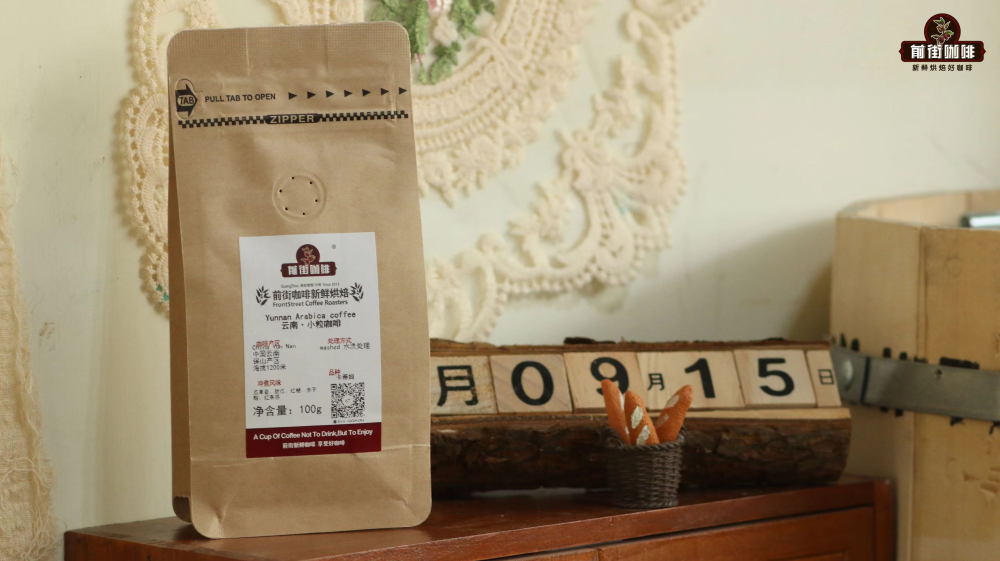
FrontStreet Coffee: Yunnan Small Bean Coffee
- Region: Baoshan, China
- Altitude: 1200 meters
- Processing: Washed
- Variety: Catimor
- Flavor: Nuts, melon and fruit aroma, brown sugar, plum acidity
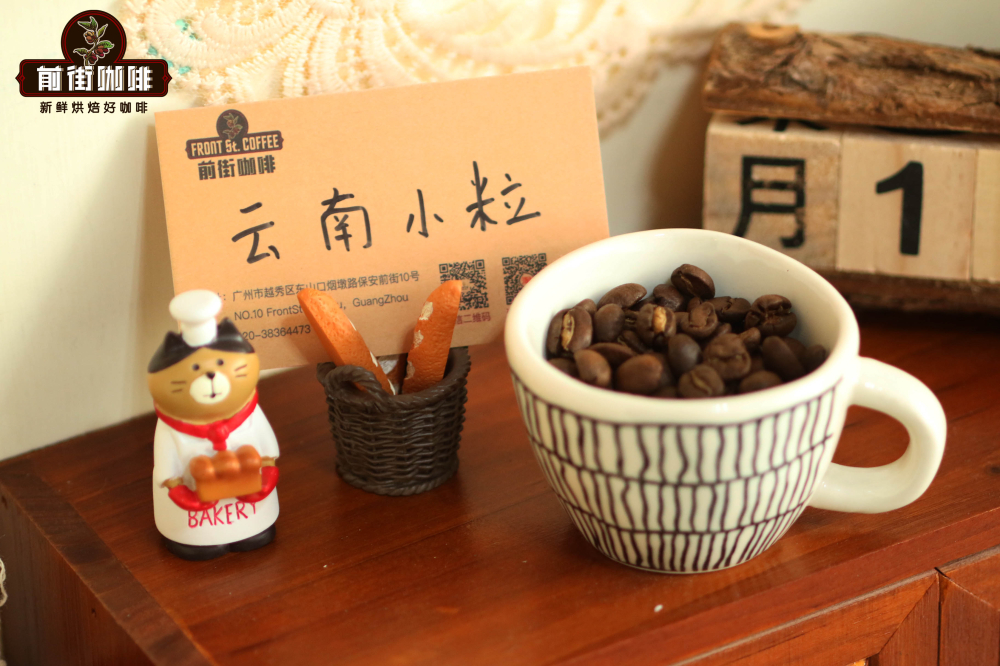
Brewing Flavor
For brewing, FrontStreet Coffee uses freshly roasted Yunnan small bean coffee. Coffee reaches its optimal tasting window four to seven days after roasting, and beyond that the aroma evaporates faster and the flavour declines. FrontStreet Coffee understands how much freshness matters, so the beans it ships are freshly roasted within five days, arriving at their peak when customers receive them.
FrontStreet Coffee believes Yunnan small bean coffee should be balanced, neither overly acidic nor heavily bitter. It therefore uses a V60 dripper with a medium-fine grind and water that is not too hot.
- Dripper: V60
- Water Temperature: 90°C
- Grind Size: 80% passing through a standard No. 20 sieve
- Coffee-to-Water Ratio: 1:15
- Coffee Dose: 15 grams
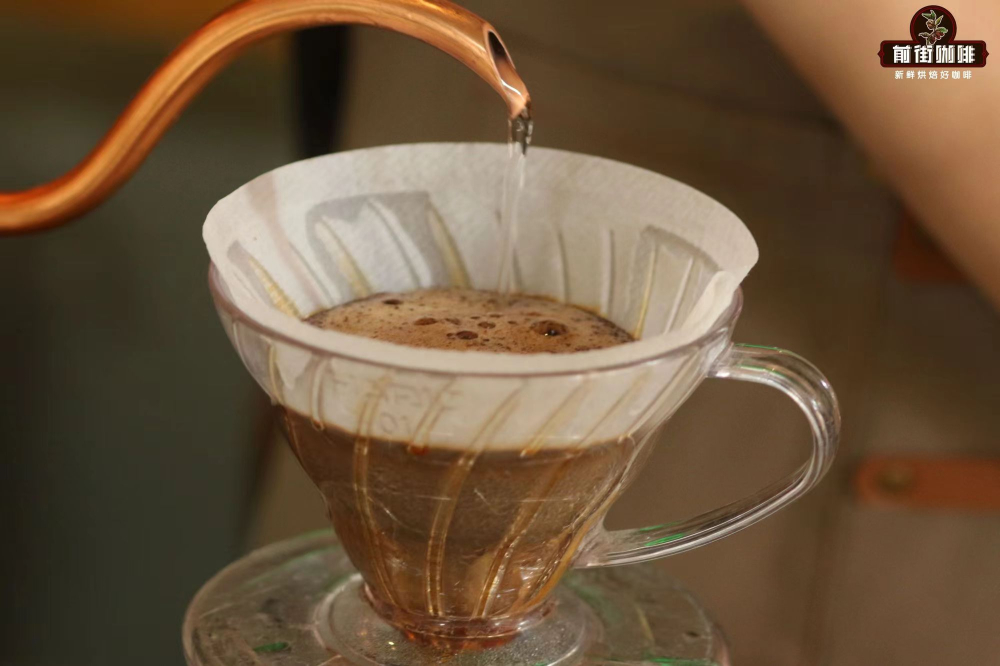
The brew uses a three-stage extraction. After grinding, place the coffee in the filter paper and start pouring from the centre with 30g of water for a 30-second bloom, keeping the stream small and steady and spiralling from the inside out throughout. For the second stage, pour 95g, and when the coffee has nearly finished dripping, begin the third stage with 100g until all the coffee has filtered through. Total time should be about 2 minutes, give or take 10 seconds.
The small-bean Catimor has dry aromas of nuts and berries. In the cup you taste the sweetness of nuts, herbs, chocolate and brown sugar, with balanced plum-like acidity and a finish carrying light fruity acidity.
FrontStreet Coffee Recommendation
Yunnan is China's own coffee-growing region, and FrontStreet Coffee's Yunnan range is a good place to start with Yunnan's flavours. The FrontStreet Yunnan Small Bean comes from the Baoshan region, washed and medium roasted, and shows a soft nutty and chocolate sweetness with a light plum acidity at a friendly price, making it the first taste of Yunnan coffee for many drinkers. If you want a clearer expression of the region, the FrontStreet 2013 Yunnan Sun-Dried Typica is a step up: Typica is one of the oldest and purest Arabica varieties, and after natural processing and a medium roast it has a fuller body, brighter sweet-sour balance, citrus and berry notes, a hint of fermented wine aroma, caramel sweetness and a creamy finish.
For espresso, FrontStreet Coffee pairs Yunnan with Brazil in the FrontStreet Black Cocoa Blend. The Brazilian coffee supplies mixed nut aromas and a balanced body, while the Yunnan small bean contributes chocolate and citrus, so the blend pulls an Americano with balanced acidity, bitterness and sweetness plus nutty, brown-sugar sweetness, and a latte with almond and creamy smoothness.
Important Notice :
FrontStreet Coffee is a long-established specialty coffee roaster in Guangzhou China, selling freshly roasted beans from its own farm in Yunnan as well as dozens of carefully selected single-origin beans from around the world for both pour-over and espresso. The products deliver consistently excellent quality and great value, with shipping within 24 hours. Guangzhou's FrontStreet Coffee shop is recommended by many coffee lovers, and the beans are now available online at the Tmall 。
FrontStreet Coffee has moved to a new address:
FrontStreet Coffee Address: 315,Donghua East Road,GuangZhou
Tel:020 38364473
 Scan and follow the En Gafei WeChat official account. Please indicate that the reprint comes from "En Gafei".