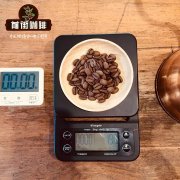
Peruvian Coffee Region Pour-Over Coffee Bean Recommendations: What Makes Peruvian Geisha Special

Compared with the big names of the coffee world, Peru can feel unfamiliar — it lacks the instant recognition of the mainstream origins and has long flown under the radar. But a low profile says nothing about quality; Peruvian coffee is simply modest.
Complex, diverse flavors and a mild, balanced cup are the two traits that set Peruvian coffee apart from other South American coffees — and that is not the whole story. In recent years its exceptional cleanliness has won it a large following, allowing it to rise quickly in the international market as a genuine rising star. Today, FrontStreet Coffee takes a closer look at this star: Peruvian coffee.

Country Overview of Peru
In the ancient indigenous languages, Peru means "land of abundance" or "granary," a nod to its flourishing agriculture. The country sits on the western edge of South America and borders five neighbors: Brazil to the east, Chile to the south, Colombia and Ecuador to the north, Bolivia to the southeast, and the Pacific Ocean to the west, with a coastline of about 2,414 km.
Peru's territory may not be vast, but it packs highlands, mountains, deserts, and coastline into one country. This rich natural endowment and varied climate make Peru, like Colombia, a superb home for coffee. Cultivation is concentrated in the high-altitude reaches of the Andes, which run north to south through the country, with coffee areas averaging 1,200-2,000 meters in altitude. Abundant rainfall, big day-night temperature swings, and fertile volcanic soil lay a solid foundation for quality coffee.

As the map shows, Peru's coffee growing areas fall into three broad zones: north, center, and south.
The northern region accounts for 43% of Peru's coffee cultivation, at an average altitude of 1,250-1,950m; the central region accounts for 34% of production, averaging 1,200-2,000m; and the southern region accounts for 23%, averaging 900-2,050m.
History of Peruvian Coffee Development
Coffee is Peru's second largest agricultural export (asparagus is first) and holds an important place in the national economy and rural life. According to the Peruvian Coffee Chamber (Junta Nacional del Café), Peru's coffee exports reached 220,000 tons in 2024, ranking ninth in the world in total production, while its organic coffee production ranks first globally, with an output value of approximately $1.103 billion. Peruvian coffee is exported mainly to the United States, Germany, and other Nordic countries.

None of this happened overnight, though. The industry's rise is tightly woven into the country's colonial legacy, land reform, international market swings, and environmental movements. Here is a brief history.
At the end of the 18th century, Spanish colonists brought coffee to Peru, where it was first grown purely as an ornamental garden plant. After Peru's independence in 1821, the government began encouraging cash crops to replace the declining silver mining industry. By 1850, spurred by the Brazilian coffee boom and leaf rust sweeping other origins, European immigrants began opening coffee plantations in the Cajamarca region of central and northern Peru. They brought advanced cultivation techniques, while the labor force was made up of indigenous people and contracted Chinese workers. From that point on, the gears of Peruvian coffee's destiny began to turn.

By the late 19th century, large estates dominated Peruvian coffee production. Historical research shows that in 1890, nearly 80% of Peru's coffee came from large estates. The weakness of this model was heavy dependence on international markets: when the Great Depression hit in 1929 and coffee prices plummeted by 60%, severe social unrest followed.
Change came only after Juan Velasco's military government took power in 1968 and enacted land reform (Ley de Reforma Agraria). The government redistributed millions of hectares to individual farmers, the great estates broke apart, and production gradually shifted from estates to smallholders.

Like most farmers in Africa, Peru's smallholder coffee farmers cultivate an average of about 2 hectares. The reform improved social equity, but it also made technology transfer harder: with so many scattered farmers, organizing training is difficult and production efficiency suffered as a result.
It was not until 1980, with support from the German church organization (MISEREOR) and fair trade groups, that coffee cooperatives emerged in northern Peru and broke the industry's stagnation. Cooperatives lower production costs through centralized purchasing of agricultural supplies and shared processing equipment. The model strengthened after the North American Free Trade Agreement was signed in 1994, and Peruvian coffee began entering high-end markets under labels such as "organic cultivation" and "Rainforest Alliance certified."

(A quick note from FrontStreet Coffee: organic cultivation means growing crops without chemical fertilizers and pesticides, while the Rainforest Alliance is an international non-profit working at the intersection of agriculture, forestry, and commerce. Only farms meeting organic standards can earn its authoritative third-party certification. The "frog beans" we often mention are beans certified by the Rainforest Alliance. See our earlier article for details → "Portal")
By 2003, Peru had become the world's largest organic coffee producer, its organic certified area reaching 110,000 hectares. That achievement owed much to the unique geography of the Andes (high altitude, few pests) and to technical support from non-governmental organizations. At this point Peru's coffee industry finally stepped into the light and became visible to specialty coffee lovers everywhere.

Peruvian Coffee
Like most South American countries, Peru grows mainly Arabica. Uniquely, however, its grading system is based primarily on altitude and bean hardness, supplemented by other methods.
Altitude grading classifies beans by the elevation at which they were grown: the higher the altitude, the harder the bean. High-altitude climates slow bean development, giving the coffee more time to accumulate nutrients. That mild balance mentioned at the start is precisely the hallmark of high-altitude Peruvian beans — the richer their internal composition, the more impressive their flavor in the cup.

Water is abundant in Peru, so washed processing dominates. Traditional washed processing starts by floating the harvested cherries in water to skim off the defective fruit, then a depulper removes skin and pulp; the mucilage-covered parchment beans go into fermentation tanks to break down the mucilage; next they are sun-dried on drying grounds; finally the dried parchment is fed through a huller, and processing is complete.
Because washing effectively screens out defects and bad fruit, and because the fermentation is shallower and easier to control, washed coffee achieves exceptional cleanliness. Washed Peruvian coffee is not only clean but also carries delicate, soft fruity acidity and a rich, silky mouthfeel — the very reasons it has gained so many fans in recent years.

At this point FrontStreet Coffee can hardly contain itself. To taste Peruvian coffee at its best, we specially acquired a washed Geisha from Cajamarca, the country's most important specialty coffee region in the north.
Cajamarca sits near the Ecuadorian border in the high Andes. It combines fertile volcanic soil and diverse microclimates with towering altitudes that create sharp day-night temperature differences — an ideal coffee region. It is easy to see why the early European immigrants chose it as their main base when opening plantations in Peru.

Over a long period of development, coffee has become central to the local economy and culture of Cajamarca. Its smallholders possess experience and technique ahead of other regions, and the resulting quality has made the area a "rising star" of the specialty coffee scene.
Besides old varieties like Typica, Cajamarca also grows popular varieties such as Geisha — which is exactly why FrontStreet Coffee selected this washed Geisha from Cajamarca for our Peruvian lineup! To highlight its floral aroma and regional character, we roasted it with a medium-light profile.

FrontStreet Coffee: Peru · Cajamarca Geisha
Country: Peru
Region: Cajamarca
Altitude: 1,800~1,950 meters
Variety: Geisha
Processing Method: Washed
Grade: SHB
Flavor: White floral aroma, plum, citrus, juicy feeling, black tea
On the cupping table, this Peruvian Geisha showed a rich dry aroma with clearly perceptible white florals, berries, preserved plums, and citrus. After hot water was added, sweet fragrances of peach and caramel rose from the cup.

On tasting, an elegant white floral note came first, followed by the full acidity of grapes, citrus, and plum juice. The finish left black tea and a caramel-like sweetness, with a thick yet remarkably clean mouthfeel — a texture like holding a preserved plum candy in your mouth. As the cup cooled, bright acidity emerged, the juiciness intensified, and the rounded sweetness of apricots appeared. Very comfortable indeed!
FrontStreet Coffee Recommendation
If this Cajamarca Geisha sparks your Geisha curiosity, the classic next step is Panama. FrontStreet Boquete Gesha is our entry-level recommendation — an affordable way to taste the signature orange-blossom honeyed sweetness, oolong-tea texture, and delicate fruity acidity of classic high-quality Panamanian Geisha.
To brew any Geisha, remember the beans are dense and medium-light roasted, so they sink and clog the dripper easily. FrontStreet suggests a grind size that passes 78% through a #20 sieve (about fine granulated sugar), water at 91°C, and 15g of coffee in a small Hario V60 at a 1:16 ratio. Pour in three stages: 30g of water for a 30-second bloom, then to 125g, then to 225g once the bed drains halfway, finishing around 2 minutes 10 seconds to 2 minutes 20 seconds.
Important Notice :
FrontStreet Coffee is a long-established specialty coffee roaster in Guangzhou China, selling freshly roasted beans from its own farm in Yunnan as well as dozens of carefully selected single-origin beans from around the world for both pour-over and espresso. The products deliver consistently excellent quality and great value, with shipping within 24 hours. Guangzhou's FrontStreet Coffee shop is recommended by many coffee lovers, and the beans are now available online at the Tmall 。
FrontStreet Coffee has moved to a new address:
FrontStreet Coffee Address: 315,Donghua East Road,GuangZhou
Tel:020 38364473
 Scan and follow the En Gafei WeChat official account. Please indicate that the reprint comes from "En Gafei".