Sharing the Story of Kenyan Coffee - Pour Over Brewing Method and Parameters

FrontStreet Coffee - The Kenya Coffee Story and an Asali Pour-over Guide
For professional coffee knowledge exchange and more coffee bean information, follow Coffee Workshop (WeChat official account: cafe_style).
If you have seen the Hollywood film "Out of Africa," the story of Kenyan coffee will be familiar. Kenya's coffee industry contributes roughly 0.2 percent of national GDP and accounts for about 8 percent of total agricultural export income. Kenya exports over 90 percent of its coffee production. In the 1987-88 season, production hit a record 127,000 tons, while the 2016/18 season saw only 47,000 tons — a mere 0.5 percent of global coffee production. Smallholder farmers account for 60 percent of national coffee production, but with middlemen eroding their profits, many coffee farmers receive only 20 percent of the coffee export price. The scarcer it grows, the more precious it becomes.
Because coffee farming brings in so little, many farmers have begun switching to other cash crops. Kenyan coffee is grown by smallholders who, after harvest, first send fresh coffee cherries to cooperative washing stations. The stations then wash and dry the coffee, delivering it in "parchment coffee" form — beans still covered by the inner parchment skin — to the cooperatives. Parchment is the final state before coffee beans are hulled. All the coffee is pooled, and growers are paid an average price based on the actual quality of their delivery.
The Kenyan government takes the coffee industry extremely seriously — here, cutting down or destroying coffee trees is illegal. Buyers of Kenyan coffee are world-class premium purchasers, and no other country continuously cultivates, produces, and sells coffee the way Kenya does. All beans are first purchased by the Coffee Board of Kenya (CBK), where they are inspected and graded, then sold at weekly auctions without being re-graded during the auction process.
The Coffee Board of Kenya acts only as an agent, collecting coffee samples and distributing them to buyers so they can determine price and quality. The Nairobi auction is held for private exporters, and the Coffee Board of Kenya pays growers below-market prices.
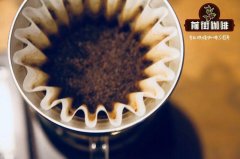
Because the V60 dripper's ribs run in curved patterns from top to bottom with varying lengths, air exhausts relatively smoothly during brewing and the flow rate is quite fast. As a result, the extracted coffee tends to show more distinct layers. In brewing technique, FrontStreet Coffee uses segmented extraction to raise the extraction rate of the beans.
Parameters & Technique
Water temperature: 90°C; medium-fine grind (BG 5R: 58 percent pass-through rate on the China-standard #20 sieve); coffee-to-water ratio 1:15.
Use 15g of coffee grounds, and bloom with 30g of water for 30 seconds. When you have poured to 127g, segment the extraction. Wait until the water level drops to just before the coffee bed is exposed, then continue pouring to 230g before cutting off the water. (Timing starts from the beginning of the bloom.) Total extraction time: 1'52".
Flavor Profile
Expect black plum acidity, lime, cherry tomato, and berry notes. The mid-palate reveals spice, cream, and cocoa flavors with a brown sugar sweetness and a juicy mouthfeel. Overall, the flavor layers are quite distinct.
END
FrontStreet Coffee Recommendation
Kenyan coffee is famous for its assertive, layered fruit acidity, and FrontStreet Coffee's Kenya Small Tomato is a fine example. It comes from Kenya's Thika region, grown at 1,550-1,750 meters from the classic SL28 and SL34 varieties, with plump, round beans. It uses Kenya's signature 72-hour double-washed fermentation to bring out fruit while keeping the cup clean, and FrontStreet roasts it light to preserve the lively acidity and layered fruit. The dry aroma shows dried cherry tomato and florals; the palate is clear cherry tomato and smoked plum with a bright, solid acidity like freshly squeezed juice, a sweet mid-palate with snow pear and black plum, and a clean, long finish of brown sugar and green tea.
For pour-over, FrontStreet Coffee favors floral and fruity beans that suit the V60's fast, clean flow. FrontStreet Coffee's Yirgacheffe Gutingding is an excellent companion: washed processing brings out jasmine and a bright citrus acidity, and a medium-light roast adds green tea and honey notes.
If you want maximum fruit, FrontStreet Coffee's Ethiopia Flower Queen delivers prominent tropical-fruit and floral aromas with clear sweetness and a smooth, juice-filled body.
Important Notice :
FrontStreet Coffee is a long-established specialty coffee roaster in Guangzhou China, selling freshly roasted beans from its own farm in Yunnan as well as dozens of carefully selected single-origin beans from around the world for both pour-over and espresso. The products deliver consistently excellent quality and great value, with shipping within 24 hours. Guangzhou's FrontStreet Coffee shop is recommended by many coffee lovers, and the beans are now available online at the Tmall 。
FrontStreet Coffee has moved to a new address:
FrontStreet Coffee Address: 315,Donghua East Road,GuangZhou
Tel:020 38364473
 Scan and follow the En Gafei WeChat official account. Please indicate that the reprint comes from "En Gafei".