Understanding the Origins of Kenya Coffee Beans and Their Unique Flavors
Kenya has been growing coffee for barely a century, yet its beans outsell and outscore far older origins in the specialty market. The reasons come down to geography and processing, and both are worth understanding before you brew.
FrontStreet Coffee - Kenya Coffee History and Flavor Introduction
Kenya's coffee history stretches back only about a hundred years. Large-scale cultivation did not begin until the 20th century, under the direction of British and German colonizers, and today the country's production is dominated by smallholdings averaging just half an acre.
Kenya produces 49,980 metric tons of coffee beans a year, a volume far smaller than that of the world's leading producers, yet its beans have a devoted following in the specialty community. Most of the crop is exported to developed countries in Europe and Asia, where the buyers are among the world's most demanding quality purchasers.
Kenyan coffee is renowned for its aroma, richness, fruit flavors, and full, well-structured texture. It carries a wonderful fruit character, with blackberry and grapefruit appearing in the cup, which is why so many coffee connoisseurs count it among their favorites. The clarity is excellent, sitting at a medium level, with a crisp and refreshing mouthfeel.
For its distinctive taste, Kenyan coffee was honored as one of the "Top 30 Best Coffees in the World 2017" on the well-known tasting site Coffee Review, where Kenya occupied three of the spots, standing alongside origins such as Panama, Colombia, Ethiopia, Sumatra, Hawaii, Rwanda, and El Salvador.
Why It's Called a Premium Coffee
Growing Environment
Most of Kenya's coffee grows in the fertile, loose, acidic volcanic red soil of the highlands north and east of Nairobi. The area receives abundant sunlight and has good drainage, and the altitude ranges from 1,400 to 2,000 meters. Because the temperature swing between day and night is greater at higher altitudes, Kenyan coffee matures more slowly than coffee grown lower down, which gives it higher density and richer flavor. Coffee cultivated in these conditions is known as the connoisseur's cup, famous for its rich aroma, vibrant acidity, full body, and elegant red-wine character.
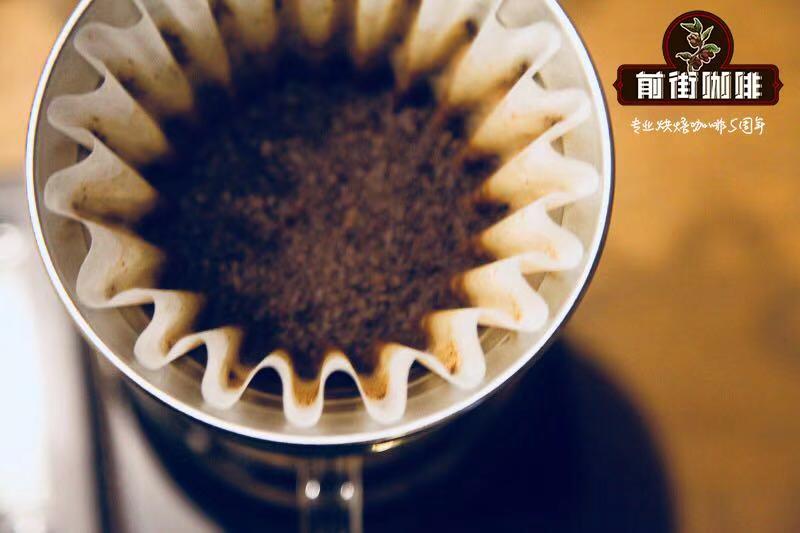
That density and clarity also explain why Kenyan coffee is so often paired with a slow-drawing brewer. The KONO dripper's ribs are relatively short, stopping at less than half the height of the cone, a design meant to keep the filter paper pressed tight against the wall once it absorbs water. This limits the exhaust space, naturally restricting airflow and slowing the flow rate, so the grounds steep for longer, absorb more water, and extract more evenly, which reduces the chance of an under-extracted cup. It is a natural match for the dense, high-grown beans described above.
Parameters & Techniques
Water temperature: 90°C; medium-fine grind (BG 5R: 58% pass rate through a China standard No. 20 sieve); coffee-to-water ratio 1:15.
Using 15 grams of coffee, steam with 32 grams of water for 30 seconds. When the water in the brewer reaches 129 grams, segment the pour. Continue adding water until it reaches 228 grams, timing from the start of the steam. Extraction time: 2'03".
Flavor: The acidity of cherry tomatoes, lemon, grapefruit, and berries, with cream and chocolate through the middle section. Caramel sweetness is noticeable, and the overall mouthfeel is rich and mellow.
FrontStreet Coffee Recommendation
Kenya's crisp fruit acidity and medium clarity have a natural parallel in Colombia, where washed coffees deliver the same structure with a gentler temperament, and the FrontStreet Colombia lineup is a good place to keep exploring. The FrontStreet Washed Huila comes from Huila Province in the southern Central Cordillera, the country's most famous specialty region, a ring of hills at altitudes above 1,500 meters where Colombia's most important rivers converge and provide abundant water and humidity. Roasted medium-dark, it emphasizes black chocolate, nutty sweetness, moderate oil, and a full body, and it works as a pour-over, in a French press, or as the base of a moka pot or espresso drink, in an Americano or a latte.
For a more modern expression, the FrontStreet Colombia Finca La Divisa Xizhua uses an anaerobic natural process, meaning the cherries ferment in a low-oxygen environment inside a pressure-resistant stainless steel tank where temperature, time, and pH can all be controlled. Anaerobic fermentation transforms the fruit character into richer tropical aromas, and at a medium-light roast it yields passionfruit, grape, apricot, and candied-fruit complexity whether you brew it as a pour-over, a cold brew, a drip bag, or in a moka pot. If you want Colombian flavor in an espresso without a single-origin's intensity, the FrontStreet Signature Blend is the baristas' pick for home machines and moka pots, combining Brazil's creamy nut character with Colombia's dark chocolate bittersweetness. It pulls with a fine golden crema, stands up beautifully to milk in a latte, and is forgiving enough for newcomers, while also serving as the base for an Americano, cappuccino, or mocha.
Important Notice :
FrontStreet Coffee is a long-established specialty coffee roaster in Guangzhou China, selling freshly roasted beans from its own farm in Yunnan as well as dozens of carefully selected single-origin beans from around the world for both pour-over and espresso. The products deliver consistently excellent quality and great value, with shipping within 24 hours. Guangzhou's FrontStreet Coffee shop is recommended by many coffee lovers, and the beans are now available online at the Tmall 。
FrontStreet Coffee has moved to a new address:
FrontStreet Coffee Address: 315,Donghua East Road,GuangZhou
Tel:020 38364473
 Scan and follow the En Gafei WeChat official account. Please indicate that the reprint comes from "En Gafei".