Colombia Isabella Pink Bourbon Coffee Bean Profile Fine-Tuning Share - Pink Bourbon Characteristics and Story
Introduction to Pink Bourbon
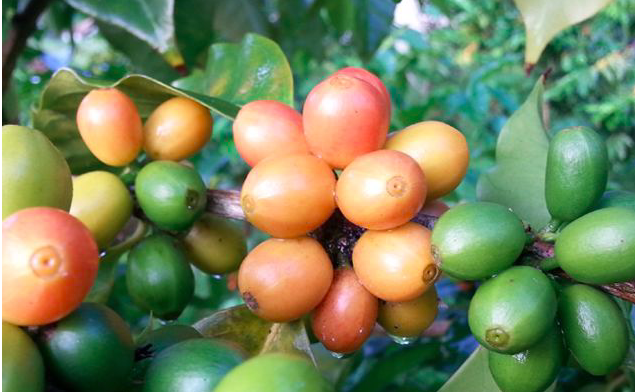
Pink Bourbon was first planted in the Huila region. At first it grew mixed in with other Bourbon and Caturra trees, and was only later harvested and processed separately. When the cherries ripen they display a romantic pink colour. Maintaining that pink is extremely difficult, because the final colour of the fruit is determined by recessive genes in the pollen grains. The pollen used for hybridisation carries both the yellow genes that tend toward Yellow Bourbon and the red genes that tend toward Red Bourbon, all recessive and easily interfering with one another. Pink Bourbon is therefore a very rare variety.
This rare Pink Bourbon also shows special qualities in the cup. Unlike the relatively flat profile of typical Bourbon varieties, it has a fresh floral aroma, blueberry and green-grape-juice sweetness, cherry notes in the middle and a brown-sugar-like sweetness in the finish. In acidity it more often presents a complex expression of citrus and berries.
Because Pink Bourbon has such a unique profile, we previously shared a detailed introduction to this bean: [FrontStreet Coffee's Bean Hunting Journal] Rare Variety Pink Bourbon - Colombia La Minita Estate Special Feature. To explore its potential further, FrontStreet Coffee's roaster made micro-adjustments to the previous roasting curve. Today let us share what this Pink Bourbon shows with the adjusted curve.
Before Curve Adjustment
Roaster: Yangjia 800N (300g batch size)
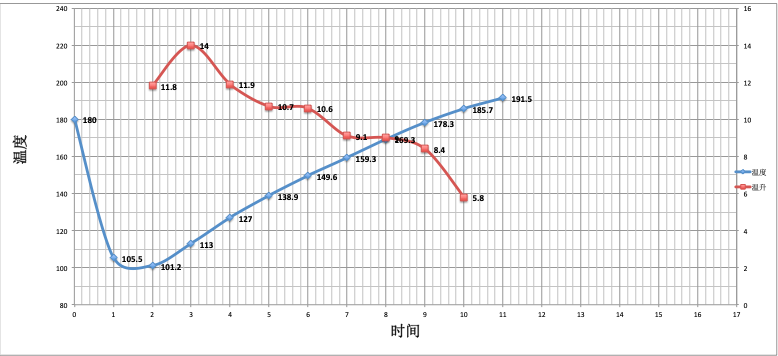
Charge at 180°C with the damper at 3 and heat at 120. Return temperature at 1'42", maintain heat at 140°C with the damper at 4. At this point the bean surface turns yellow, the grassy aroma disappears completely and dehydration begins. At 176°C reduce heat to 100, and at 180°C reduce heat to 70, keeping the damper unchanged.
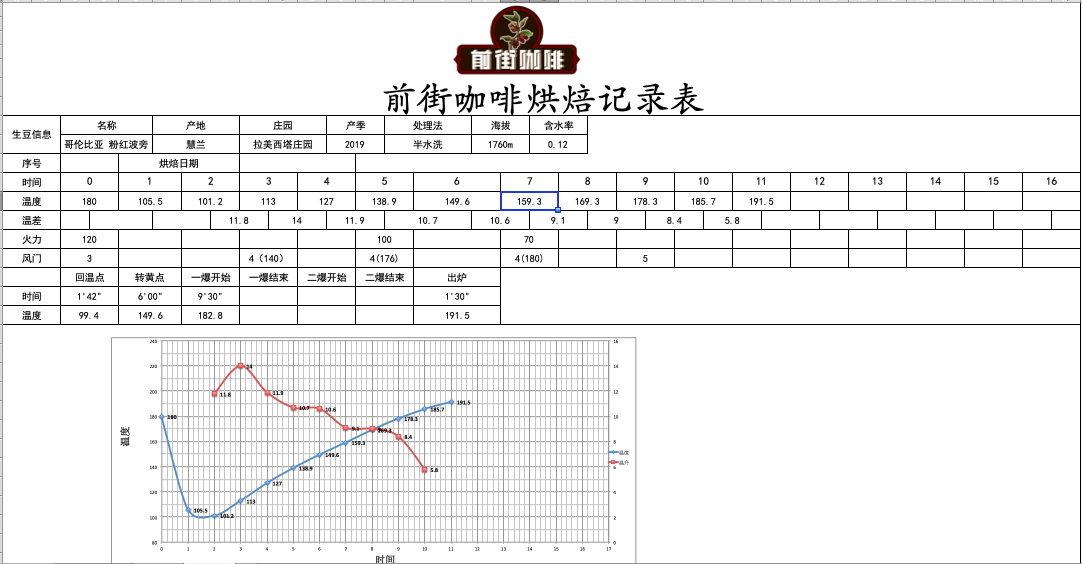
At 8'17" the bean surface shows ugly wrinkles and black spots, and the toast aroma clearly shifts to coffee aroma, which can be defined as the prelude to first crack. At this moment, listen carefully for the sound of first crack. At 9'30" first crack begins: adjust the damper to 5 (adjust heat very carefully, not so low that the crackling stops). After first crack, develop for 1'30", then drop at 191.5°C.
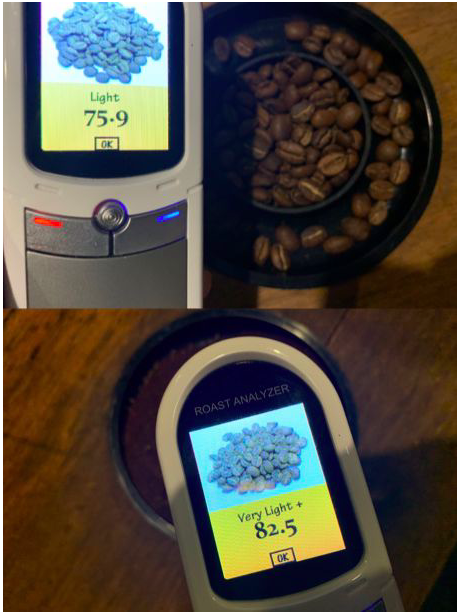
Agtron bean colour value 75.9 (upper image), Agtron ground colour value 82.5 (lower image), Roast Delta value 6.6.
Cupping results: citrus, floral, honey, berries, nuts, cream.
After Curve Adjustment
Curve One
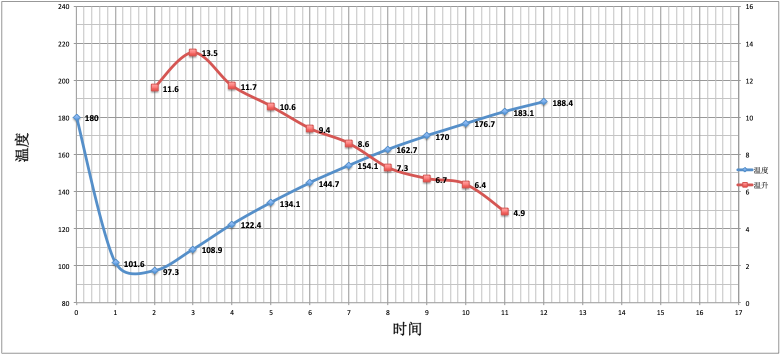
Charge at 180°C with the damper at 3 and heat at 100. Return temperature at 1'43", maintain heat at 140°C with the damper at 4. At this point the bean surface turns yellow, the grassy aroma disappears completely and dehydration begins. At 151°C reduce heat to 80, and at 166°C reduce heat to 65, keeping the damper unchanged.
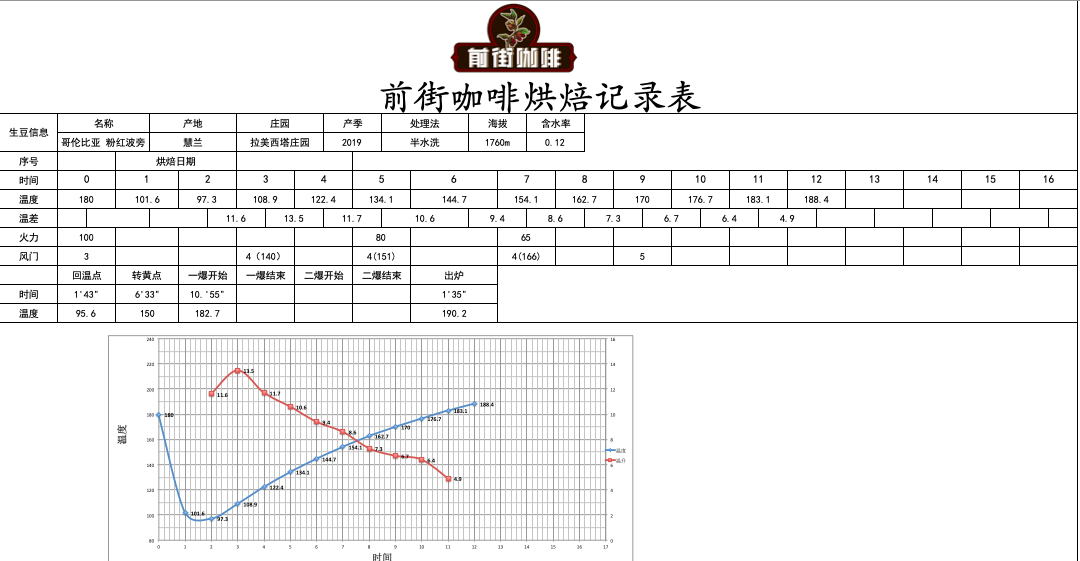
At 9'07" the bean surface shows ugly wrinkles and black spots, and the toast aroma clearly shifts to coffee aroma, which can be defined as the prelude to first crack. At this moment, listen carefully for first crack. At 10'55" first crack begins: adjust the damper to 5 (adjust heat very carefully, not so low that the crackling stops). After first crack, develop for 1'35", then drop at 190.2°C.
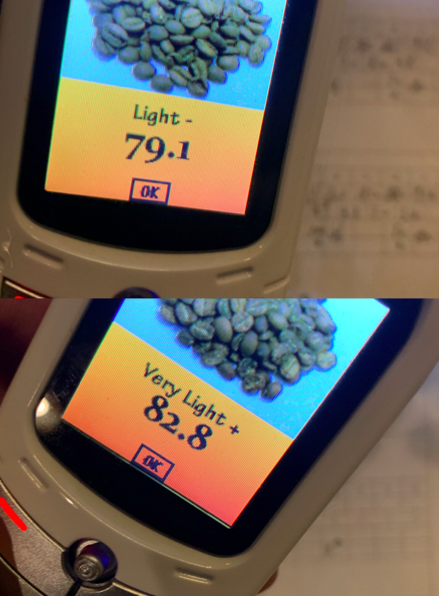
Agtron bean colour value 79.1 (upper image), Agtron ground colour value 82.8 (lower image), Roast Delta value 3.7.
Cupping results: citrus, tea aroma, honey, floral, berries, nuts.
Curve Two
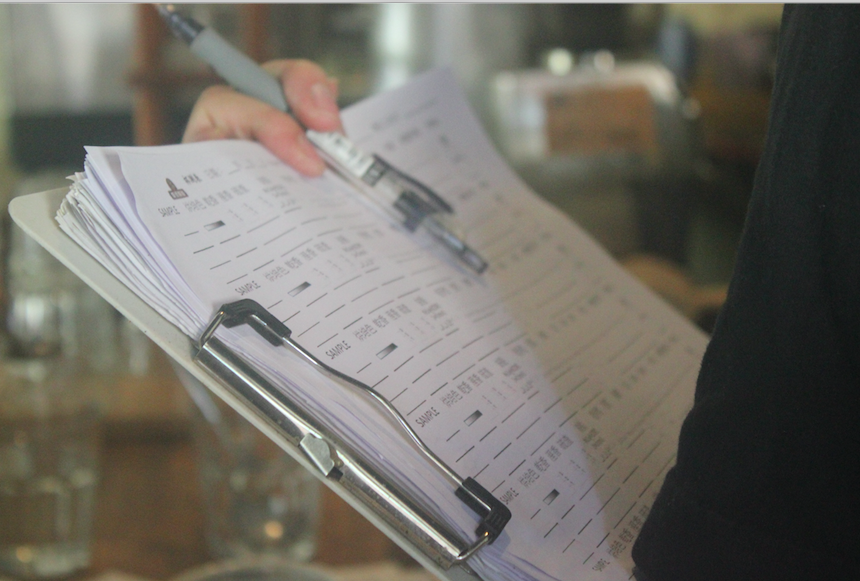
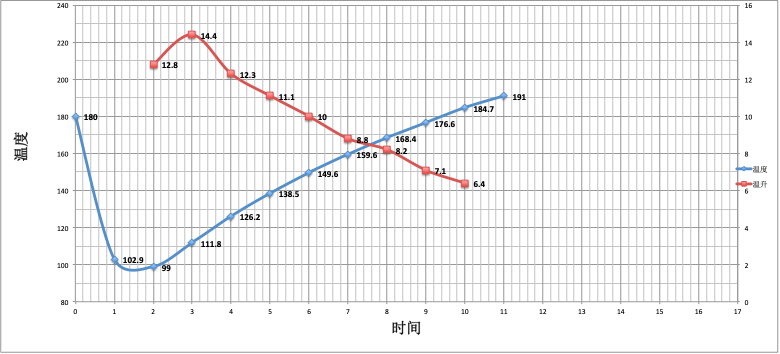
Charge at 180°C with the damper at 3 and heat at 100. Return temperature at 1'40", maintain heat at 140°C with the damper at 4. At this point the bean surface turns yellow, the grassy aroma disappears completely and dehydration begins. At 151°C reduce heat to 80, and at 166°C reduce heat to 65, keeping the damper unchanged.
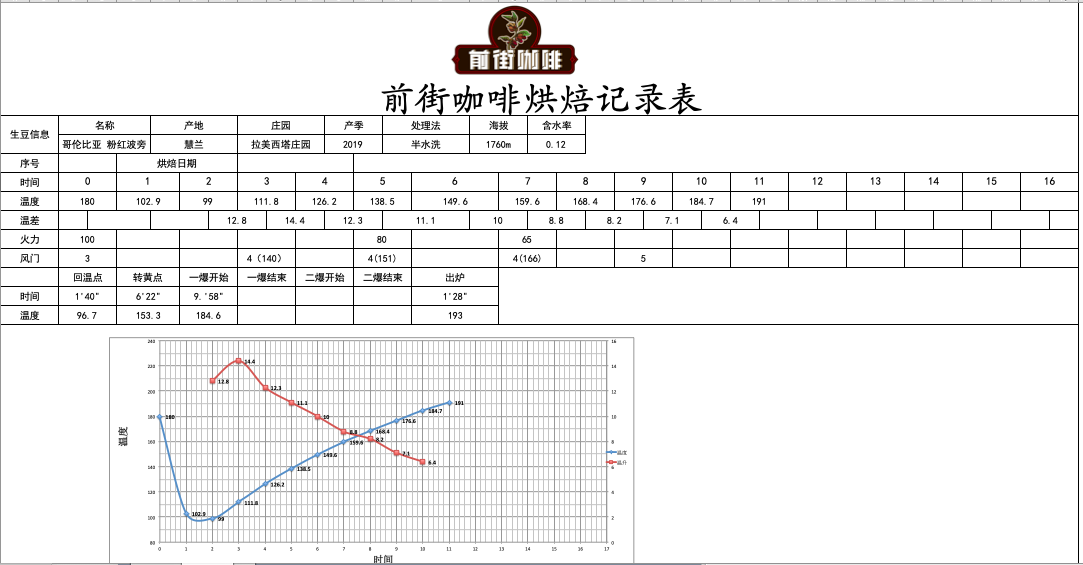
At 8'35" the bean surface shows ugly wrinkles and black spots, and the toast aroma clearly shifts to coffee aroma, which can be defined as the prelude to first crack. At this moment, listen carefully for first crack. At 9'58" first crack begins: adjust the damper to 5 (adjust heat very carefully, not so low that the crackling stops). After first crack, develop for 1'28", then drop at 193°C.
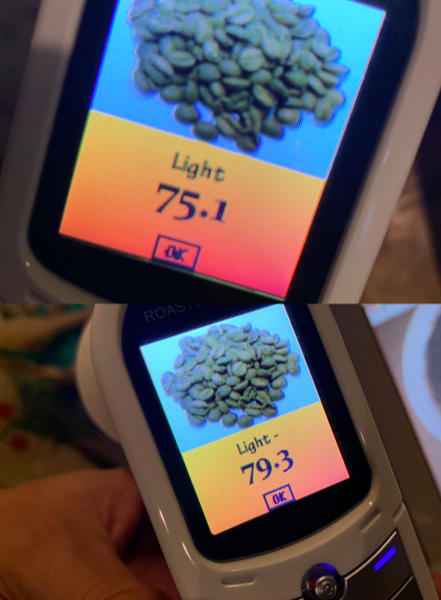
Agtron bean colour value 75.1 (upper image), Agtron ground colour value 79.3 (lower image), Roast Delta value 4.2.
Cupping results: floral, caramel, lemon, honey, nuts, chocolate.
Curve Analysis
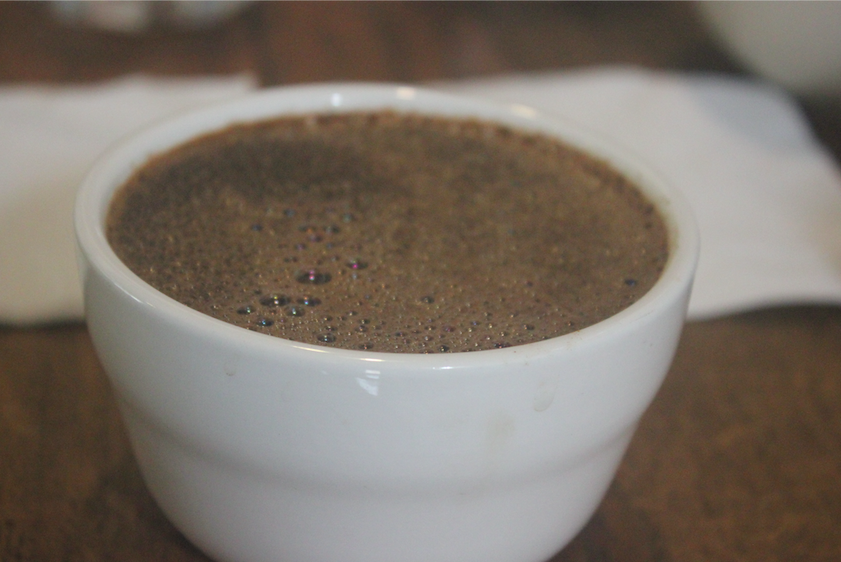
Both adjusted curves show prominent floral, fruit acidity and sweet-sour character in overall cupping. For Curve One, the initial floral aroma was relatively weak when slurping. As temperature changed, the middle section's sweet-sour sensation and flavour layers gradually became more apparent, and in the later section tea characteristics and honey sweetness could be clearly detected. From start to finish, however, the overall curve showed acidity that was overly prominent in the mouthfeel. For Curve Two, the initial floral aroma and flavours were more prominent when slurping. As temperature changed, the middle section's acidity was weaker, with caramel sweetness instead, and in the later section nutty and cocoa aromas were more clearly detected. The overall presentation showed distinct flavour layers with a solid, balanced mouthfeel.
Brewing Guide
After cupping, we felt both curves performed quite well. We brewed one pot with each curve to see whether they would perform similarly in pour-over.
Recommended brewing method: pour-over
Filter: Hario V60
Water temperature: 90°C
Dose: 15 grams
Ratio: 1:16
Grind: medium-fine (BG 6k: China standard 20-mesh sieve pass rate 58%)
Brewing method: segmented extraction
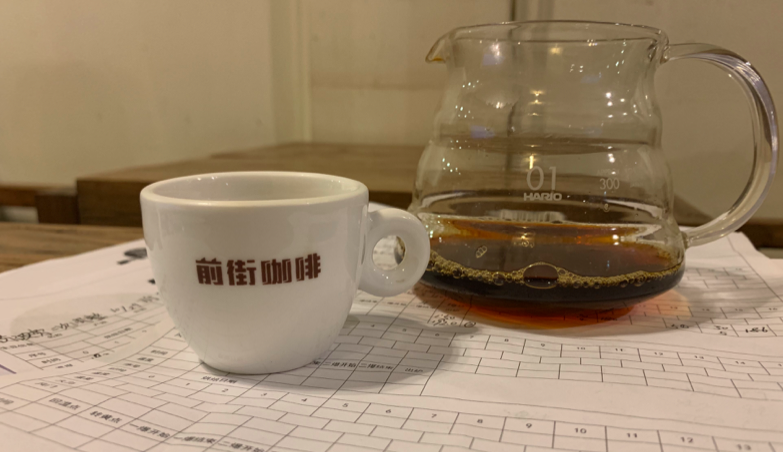
Bloom with 34g of water for 40 seconds. Using small circular pours, continue to 127g for the second segment. When the water level drops and is about to expose the coffee bed, continue pouring to 240g and stop. When the water level again drops and is about to expose the bed, remove the filter. (Timing starts from the bloom.) Total extraction time is 2'00".
Flavor Profile
Curve One: the initial taste shows dark plum acidity and berries. As temperature changes, nutty aroma, caramel and cream emerge. Lemon acidity is prominent in the mouthfeel.
Curve Two: the initial taste shows citrus, berries and cherry tomatoes. As temperature changes, caramel sweetness and subtle fermentation notes appear. The finish has floral and nutty cream aromas. The mouthfeel is smooth and clean.
Through cupping and brewing we all felt that Curve Two after adjustment better showcases this Pink Bourbon. Of course, flavour descriptions vary by individual and are influenced by water temperature and brewing method. This cupping report is limited to the flavour wheel under the same brewing equipment and parameters, and is intended for reference.
FrontStreet Coffee Recommendation
To explore Colombian flavour alongside this Pink Bourbon, FrontStreet Coffee has two contrasting lots. FrontStreet Colombia Huila is the classic washed route: Huila is the country's most famous specialty region, its mountains and valleys sitting above 1,500 meters and hosting the confluence of Colombia's most important rivers. Roasted medium-dark, it emphasises black chocolate and nutty sweetness, balanced body and moderate oil, and works for pour-over, French press, moka pot or espresso machine - Americano and latte included. FrontStreet Colombia Frontera Sidra is the modern side: a competition-winning lot from the Frontera estate, grown at 1,650-1,800 meters, given a double anaerobic natural process and roasted medium-light, with jasmine and citrus in the dry aroma and a juicy passion-fruit, blueberry, grape and apricot palate. Both are supported by the espresso-ready FrontStreet Fine Blend, whose Brazil-and-Colombia recipe brings creamy nut aroma and dark chocolate bitterness, a fine golden crema and excellent results with milk.
Important Notice :
FrontStreet Coffee is a long-established specialty coffee roaster in Guangzhou China, selling freshly roasted beans from its own farm in Yunnan as well as dozens of carefully selected single-origin beans from around the world for both pour-over and espresso. The products deliver consistently excellent quality and great value, with shipping within 24 hours. Guangzhou's FrontStreet Coffee shop is recommended by many coffee lovers, and the beans are now available online at the Tmall 。
FrontStreet Coffee has moved to a new address:
FrontStreet Coffee Address: 315,Donghua East Road,GuangZhou
Tel:020 38364473
 Scan and follow the En Gafei WeChat official account. Please indicate that the reprint comes from "En Gafei".