How to Describe Coffee Flavors? The Sensory Characteristics of Premium Guji Coffee
For more premium coffee knowledge, follow the WeChat official account: FrontStreet Coffee
Specialty coffee enthusiasts have likely heard of the Queen of Coffee (Huakui) bean. So what exactly is Queen of Coffee? From the beans that entered competitions in 2017 to the Queen 5.0 beans of 2021, each year's crop has offered different flavors. Over the past few years Queen of Coffee has also drawn its share of controversy — coffee is, after all, an agricultural product, and its flavors shift year to year with the environment. That is precisely why DW company splits the coffee into multiple X.0 series.
Why are there so many versions of Queen of Coffee? Where does the authentic bean come from?
Let's return to 2017, when a natural processed coffee from DW company's Buku Abel processing station won the TOH natural process championship. A Chinese green coffee importer then brought the champion bean to China and named it "Huakui" — Queen of Coffee. At that time the bean carried intense strawberry and cream aromas. What's more, Li Jianfei of Beijing used this Queen of Coffee to take runner-up at the 2017 World Brewers Cup China competition (while other competitors were brewing Geisha), which made the bean's reputation considerable. Note that at this stage, Queen of Coffee still carried the title of 2017 TOH champion bean.
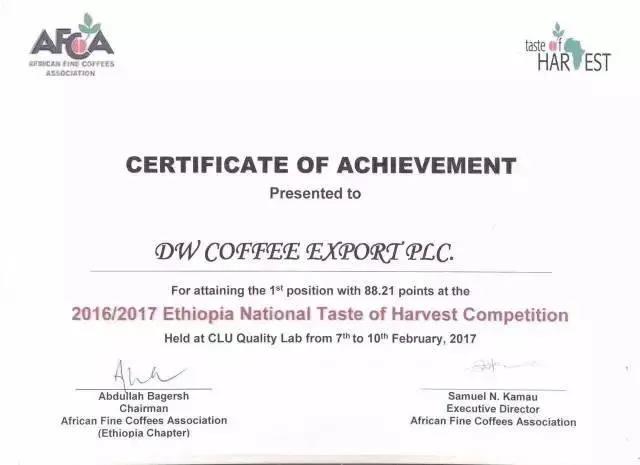
DW company subsequently expanded to 4 processing plants in the Hambela region: Buku Abel, Buku Saysay, Haro Soresa, and Tirtiro Goye. Then came Queen 2.0 in 2018, Queen 3.0 and 3.1 in 2019, Queen 4.0 in 2020, and Queen 8.0 in 2024.
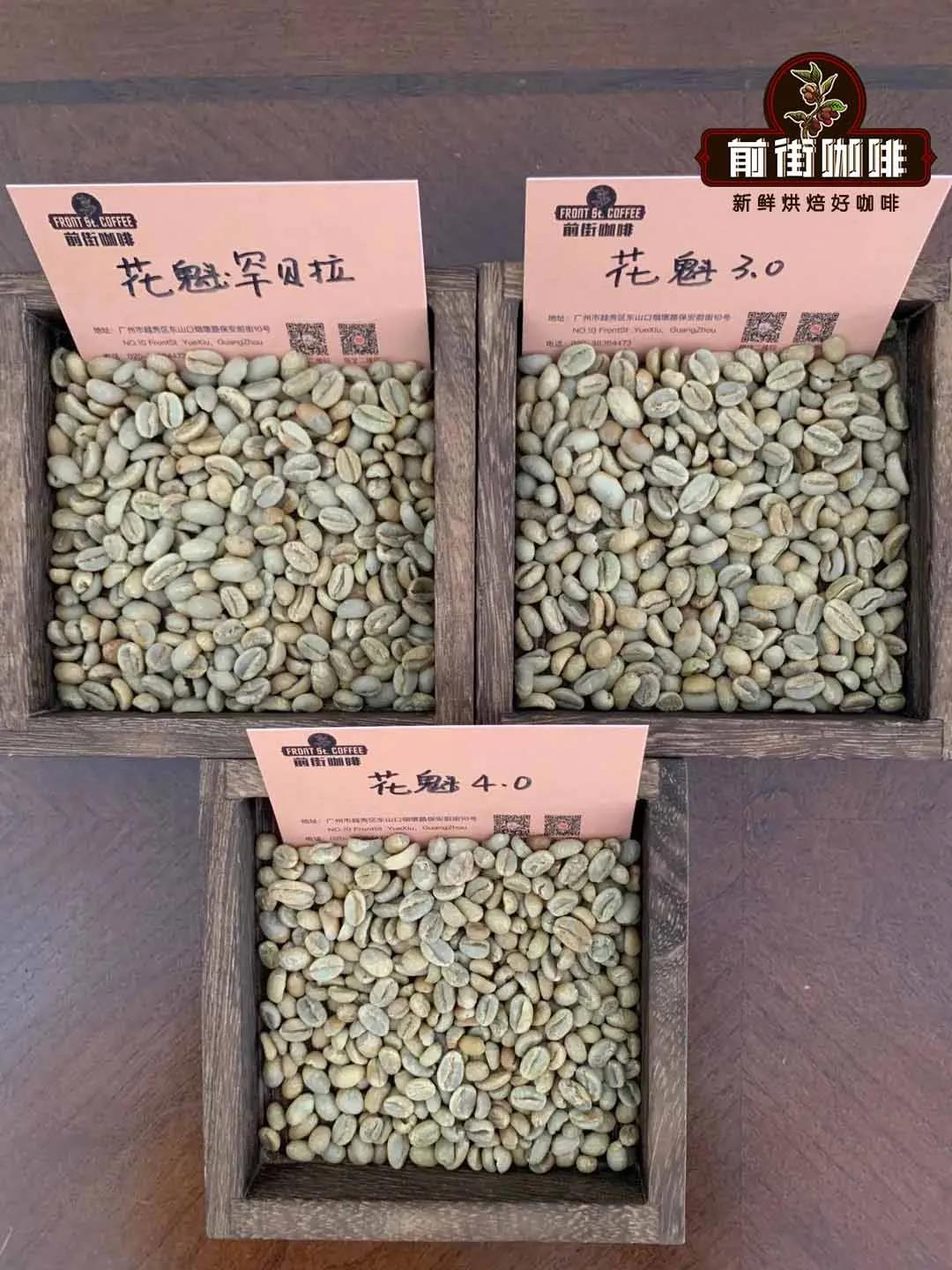
So the X.0 naming system is simply the year: Queen 3.0 is coffee from the 2019 harvest, Queen 4.0 from the 2020 harvest, and Queen 8.0 from the 2024 harvest. Strictly speaking, only natural processed beans from the Buku Abel plant truly deserve the name Queen of Coffee.
What are small bean Queen of Coffee beans?
FrontStreet Coffee noticed that the 2018 and 2019 batches tasted very close to the original Queen, but the body and aftertaste couldn't match the original 2017 lot. Surprisingly, FrontStreet Coffee could still identify in these batches the same small green beans that had appeared in the original Queen. The 2017 beans contained some particularly small-bean varieties, and those small beans were the main source of the coffee's signature aroma. Lots that include these old small-bean varieties are therefore called small bean Queen of Coffee. The beans in Queen 4.0 run generally smaller, which is why Queen 4.0 performed better than the two years before it.

Queen of Coffee Processing
Whatever the year, the Buku Abel plant processes Queen of Coffee as a natural. Because of that method, FrontStreet Coffee finds — year after year of cupping the new harvest — that while the flavors shift, certain characteristics never change: a full berry-juice sensation, fermented ripe-fruit notes, and a moderately prominent sweetness. That consistency is one reason FrontStreet Coffee is so fond of this bean.
How does the new harvest season taste?
The first batch of the new season arrived at port this April. As loyal fans of Queen of Coffee, FrontStreet Coffee roasted it immediately on arrival and cupped it side by side against the Queen lots already on the shelf.

Cupping takes place 8-24 hours after roasting the samples. FrontStreet Coffee baristas typically use 200ml ceramic cups, water at 94°C, and a grind set to pass a No. 20 standard sieve (0.85mm) at 70%-75%. The ratio is 11.1 grams of coffee to 200ml of hot water — 1:18.18 — which extracts a coffee concentration squarely within the 1.15%-1.35% Gold Cup range, with an immersion time of 4 minutes.
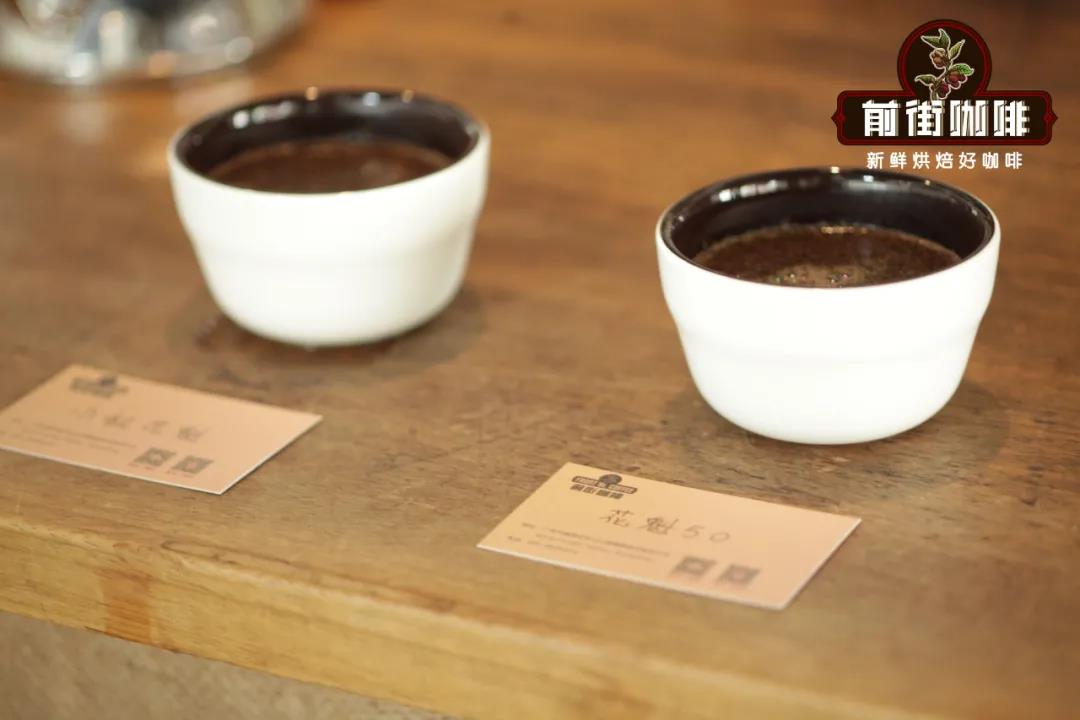
The small bean Queen of Coffee shows strawberry cream, citrus, passion fruit, and fermented wine aroma, while Queen 5.0 shows berries, citrus, honey, mango, and florals. The small bean's flavor is indeed remarkably close to the original 2017 champion — especially the strawberry cream, a note absent from the entire 2018-2021 X.0 series.
How to brew Queen of Coffee?
To pull out the bean's rich layers, FrontStreet Coffee brews it at a higher temperature with a finer grind — but to avoid the over-extraction that high temperatures invite, it uses a fast-flow dripper like the V60. The V60's 60-degree cone concentrates the grounds, and when you pour, the flow naturally converges toward the center, ensuring enough contact time between water and grounds to extract a proper cup. The spiral ribs inside the dripper run clockwise from bottom to top, holding the filter paper off the walls so water flows freely, and the large bottom hole makes the flow faster than most drippers.

Dripper: V60#01
Water temperature: 90-91°C
Coffee amount: 15g
Coffee-to-water ratio: 1:15
Grind size: Medium-fine (80% pass-through rate with China standard No. 20 sieve)
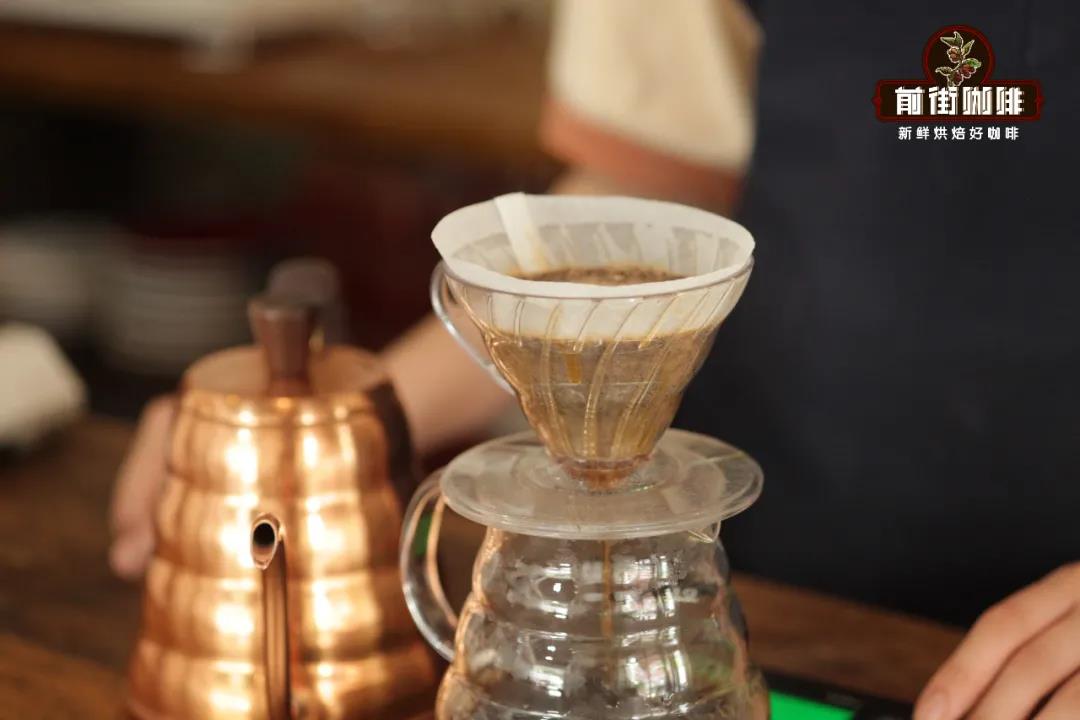
FrontStreet Coffee's method: three-stage extraction. Bloom with 30g of water for 30 seconds. Pour in a small stream to 125g and pause. When the level drops and the coffee bed is about to show, pour on to 225g and stop. When the bed is about to surface again, remove the dripper. Extraction time is about 2 minutes, counted from the start of the bloom.

FrontStreet Coffee's Queen of Coffee: floral notes, berries, citrus, sweet-sour plum, mango juice, honey, and a sweet black-tea aftertaste.
How to judge whether a cup of coffee is good?
Whether coffee tastes good depends largely on personal preference. Once, while FrontStreet Coffee was sharing a coffee with customers in the shop, some found it so sour their teeth chattered, while others found it full of sweetness and delicious. Judged from each person's perspective, both were right — taste thresholds simply differ from person to person.
Even if you dislike sour coffee, flavors like lemon, passion fruit, and grape acidity are positive flavors. The same goes for bitterness: the bitterness of dark chocolate is a positive flavor too. (Anyone who has eaten pure dark chocolate knows that kind of bitterness is extraordinary.)

So what are negative flavors? Generally, uncomfortable tastes: harsh acidity, harsh bitterness, sharp acidity, burnt bitterness, astringency, a bitter aftertaste, a long bitter finish. And some non-taste negatives: hollowness, blandness, rough texture, short aftertaste.
These negatives can stem from bean quality, roasting quality, or brewing problems. Choosing a reliable coffee brand basically rules out the first two, leaving negative flavors caused by brewing.

Brewing problems fall roughly into under-extraction and over-extraction. Under-extraction produces harsh acidity, sharp acidity, astringency, a light saltiness, thin texture, a watery feel, and a short aftertaste. Over-extraction produces burnt bitterness, astringency, a long bitter aftertaste, and rough texture. Learn to recognize these flavors, and you can infer the brewing problem behind them — using taste to diagnose your extraction.
Under-extraction
Under-extraction generally means the sweet and bitter compounds never made it into the cup, leaving acidity dominant — sometimes sharply so. Harsh acidity may mean too little water was used. Sharp sourness, a watery feel, and thin texture may come from a coarse grind combined with fast pouring, which shortens contact time.

An occasional hint of light saltiness is also a sign of under-extraction. Normally saltiness is nearly impossible to taste in coffee because acidity and sweetness mask it. In under-extracted coffee, with less sweetness to cover it, the saltiness shows through — usually in cups whose acidity is not prominent.
Under-extracted coffee often shows a short aftertaste, too. Aftertaste comes mainly from the middle and late stages of extraction; miss those, and the finish is brief.
What situations easily cause under-extraction?
When you clearly perceive under-extraction, the usual suspects are too coarse a grind, too low a water temperature, too large a coffee-to-water ratio, or too short a contact time — all producing low flavor concentration. But high concentration is itself a sign of under-extraction: some people brew a lot of grounds with little water, extracting only the first half of the flavor while the rest stays locked in the grounds. Combined with the high concentration, the cup tastes both strong and sour.
Channeling is another culprit: if the water level rises too high during pouring and breaks over the grounds wall, water races down the ribs at the dripper's edge, and what lands in the pot is under-extracted. Blooming, meanwhile, primes the grounds for extraction, so an uneven bloom leaves some particles unwetted, needing more time to release their flavors.

Over-extraction, how to tell?
Over-extraction means too much coffee material has dissolved out — including the unpleasant bitterness. Bitterness and astringency from too fine a grind or too long an immersion don't just taste bitter; they make the whole mouth feel rough, because over-extracted coffee carries more polyphenols, which bind with proteins in saliva. Water that is too hot creates burnt bitterness — stimulating and long-lasting. From FrontStreet Coffee's experience, these flavors almost always trace back to too many fines, too fine a pour causing the coffee to soak too long, or water that is simply too hot. The fix: grind coarser or lower the temperature.

Properly extracted coffee, by contrast, shows fruit-like acidity — the lively acidity of lemon and citrus, or fruit flavors with balanced sweet and sour like strawberries and plums — full sweetness like honey and fructose, moderate concentration with clear flavors and rich layers, and a persistent aftertaste of light florals and tea.
FrontStreet Coffee Recommendation
FrontStreet Coffee carries Queen of Coffee alongside a full Geisha lineup, spanning the variety's two homelands: Panama, where Geisha rose to fame, and Ethiopia, where it was born. Panama's high altitude, microclimates, and soil shape an especially seductive Geisha — the one Esmeralda Estate famously entered into the Best of Panama competition, stunning the judges with an average cupping score of 94.6 and a BOP record. Top-tier choices are FrontStreet Coffee Esmeralda Red Label and Green Label Geisha, whose intoxicating fragrance unfolds beautifully in a pour-over.
For an easier first taste of Geisha, the entry-level Panama Boquete Geisha delivers the classic orange-blossom, honeyed character with an oolong-tea feel and delicate fruit acidity at a friendlier price. Geisha is a medium-light, floral-fruity coffee with hard, dense beans that tend to sink and clog the dripper, so use a grind with a 78% pass rate on the China #20 sieve (about fine granulated sugar), water at 91°C, 15g of coffee in a small Hario V60 at 1:16, and a three-stage pour — 30g bloom for 30 seconds, small circles to 125g, wait for the bed to drain halfway, then continue to 225g, finishing in about 2 minutes 10 seconds to 2 minutes 20 seconds.
Geisha also makes a striking single-origin espresso. Choose a medium roast like FrontStreet Coffee's Genji Chela Estate Geisha SOE from Ethiopia, which keeps the floral-fruity character and mature dried-fruit sweetness while adding white florals and a bright lemon acidity; pulled as espresso it turns toward apricot, caramel, and nuts. A workable recipe: 20g of coffee, a 1:2 coffee-to-liquid ratio, 25 seconds for 40g of espresso — then extend it 1:5 with 200g of hot water for an Americano with orange, nut, and blueberry notes, or add 200g of milk for a latte with a silky cream-cookie texture.
And for everyday value, FrontStreet Coffee's Strawberry Candy blend pairs Costa Rica honey process with Panama Geisha — delicate florals plus sweet fruit in one cup. It works as pour-over, moka pot, or espresso, and even as a refreshing cold brew: grind 30g to fine granulated sugar, add 360g of room-temperature water at 1:12, refrigerate for 8 hours, filter, then rest the liquid 3 more hours — and enjoy grape juice, rose, sweet orange, and fruit-wine flavors in every sip.
Important Notice :
FrontStreet Coffee is a long-established specialty coffee roaster in Guangzhou China, selling freshly roasted beans from its own farm in Yunnan as well as dozens of carefully selected single-origin beans from around the world for both pour-over and espresso. The products deliver consistently excellent quality and great value, with shipping within 24 hours. Guangzhou's FrontStreet Coffee shop is recommended by many coffee lovers, and the beans are now available online at the Tmall 。
FrontStreet Coffee has moved to a new address:
FrontStreet Coffee Address: 315,Donghua East Road,GuangZhou
Tel:020 38364473
 Scan and follow the En Gafei WeChat official account. Please indicate that the reprint comes from "En Gafei".