
Flavor Profile of African Washed Kenya Coffee Beans Characteristics of Kenya K72 Processing Method

A few days ago, FrontStreet Coffee received washed Kenya lots from three different cooperatives. Kenyan coffee is unforgettable for its intense fruit acidity, distinctive fruity aroma, rich body, and beautiful balance. Today, let's compare these three beans—Blackberry Muse, Timani Girl, and Komatina—to see how their flavors differ despite all being washed Kenyan coffee.
Kenya
Kenya, officially the Republic of Kenya, sits in eastern Africa with the equator crossing its central part and the East African Rift Valley running north to south. It borders Somalia to the east, Tanzania to the south, Uganda to the west, and Ethiopia and Sudan to the north, while facing the Indian Ocean to the southeast. Most of the country is plateau with an average altitude of 1500 meters. Mount Kirinyaga in the central region peaks at 5199 meters with snow on top, making it the second highest peak in Africa.
Altitude, Latitude, and Geology
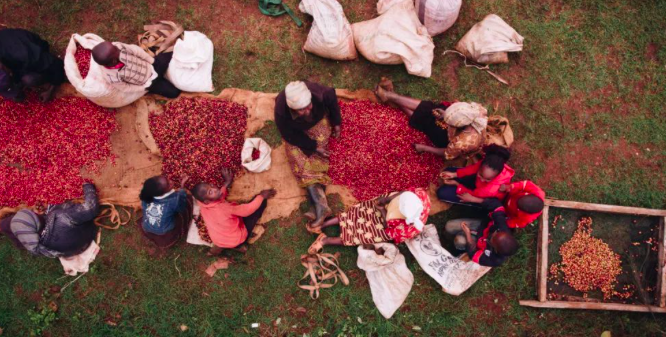
The equator runs through Kenya, placing the country within ten degrees of latitude on either side. This tropical region has two rainy seasons annually, allowing for two harvests: 60% concentrated from October to December, and the remaining 40% from June to August. Coffee is grown mainly in volcanic areas at altitudes of 1600-2100 meters, from around the capital Nairobi to the Mount Kenya region, with most cultivation above 1500 meters. This altitude is ideal for flavor development: cooler mountain temperatures slow growth, letting the beans' aromatic components fully develop, which produces more pronounced fruit acidity and harder beans. This crescent-shaped, fertile coffee belt is the main production area for Kenya's specialty beans, and coffee is Kenya's second largest export after tea.
Seven regions dominate Kenyan production: Thika, Kirinyaga, Mt. Kenya West, Nyeri, Kiambu, Ruiri, and Muranga. Among these, the foothills of Mt. Kenya and the Aberdares are the main producing areas.
Region Introduction
Kenya Blackberry Muse
The Kenya Blackberry Muse batch is produced in Nyeri, central Kenya, home to the extinct volcano Mount Kenya. The region's red soil nurtures Kenya's finest coffee; agriculture is extremely important here, with coffee as the main crop. Cooperatives formed by smallholder farmers are more common than large estates, and although the region has two harvests, coffee from the main season usually shows higher quality. Nyeri is famous for its blackberry-like rich acidity and floral-fruity aromas.
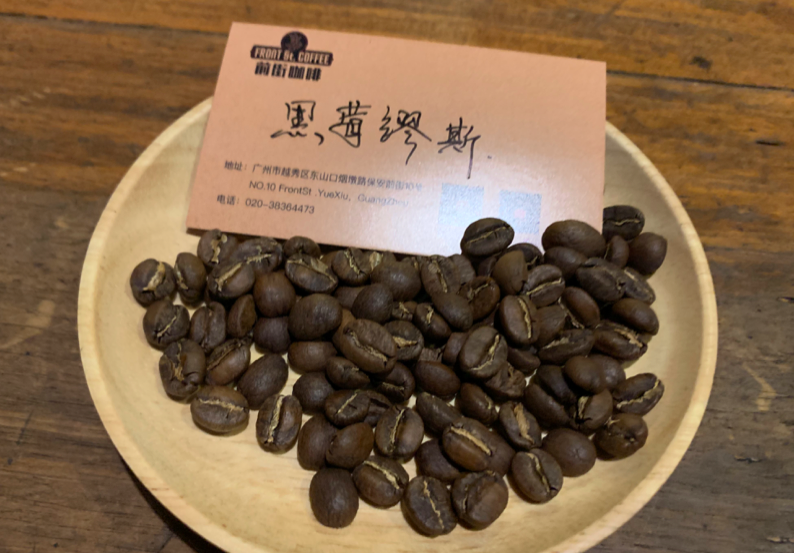
The Blackberry Muse batch is made from specially selected red cherries picked at peak ripeness and delivered to the washing station the same day. Before pulping, an additional manual selection removes unripe cherries. After pulping, the beans soak and ferment for 72 hours, then dry naturally on raised beds. All processing water comes from the clean source of the Langdu River.
Kenya Timani Girl
Kenya Timani Girl comes from Karatina, a micro-region within Nyeri. The Ndima-ini processing factory belongs to the Gakuyu cooperative, which separated from the large Mathera cooperative in 1996 to become independent. Gakuyu runs only two factories—Ndima-ini and Kirigu—employing 1800 people. The Kirigu factory takes its name from the nearby Kirigu River, which supplies water for processing cherries.
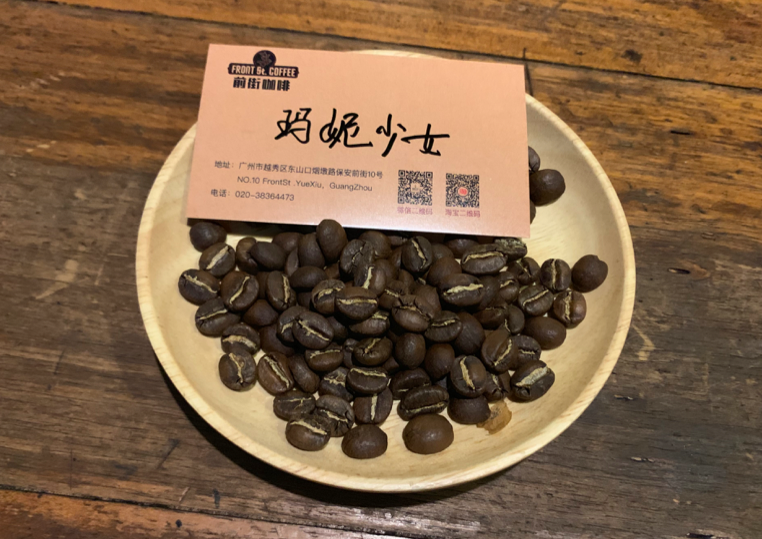
For the past 20 years, approximately 850 smallholder farm owners have delivered ripe cherries to Ndima-ini for processing under factory manager John Kamau. Unlike the usual 72-hour fermentation typical of Kenyan washed coffee, Timani Girl undergoes 80 hours of soaking and fermentation after pulping, then dries naturally on raised beds.
Kenya Komatina
Kenya Komatina is produced in Kiambu, a central Kenyan region that holds the highest-altitude coffee growing areas in the area; Thika also belongs to this producing region. Some coffee trees at high altitudes suffer from dieback disease, which halts their growth. This producing area is named after Nakuru town.
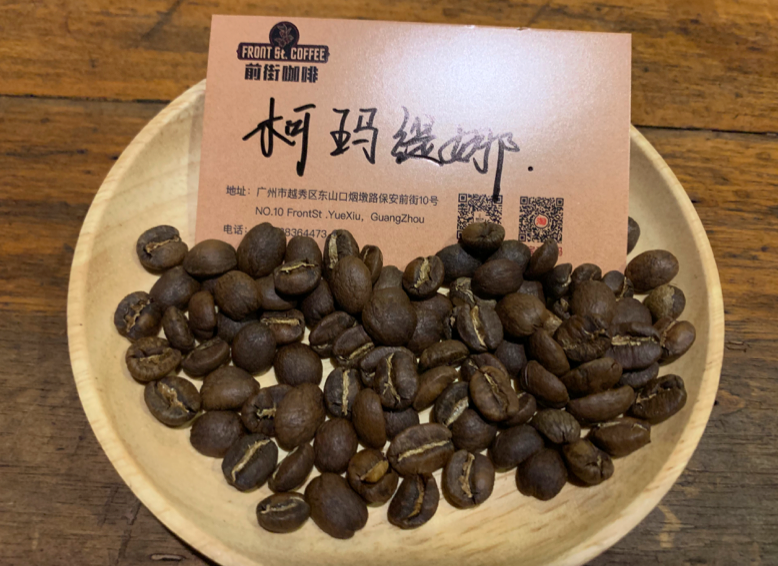
Coffee cultivation here includes both estates and smallholders, though production is relatively small. The region is traditionally a tea growing area, and its coffee beans carry vanilla and floral aromas.
Varieties (SL28, SL34)
As early as the 1930s, the Kenyan government commissioned the newly established Scott Labs to select varieties suited to the country. After screening 42 candidate varieties one by one and numbering them, they arrived at SL-28 and SL-34. The former traces back to Bourbon, while SL-34 comes from Typica—these two are not from the same series at all.
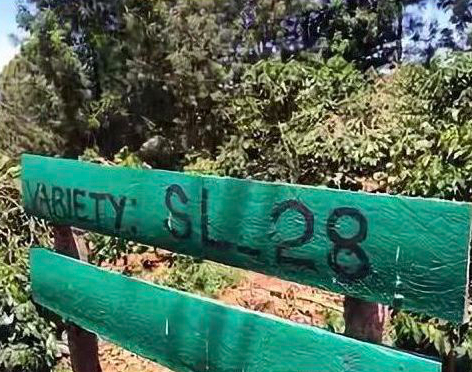
SL28 was originally bred to produce large quantities of high-quality beans with pest and disease resistance, though in some regions the goals were mainly yield and disease resistance rather than pest resistance.
Thanks to its Bourbon genetics, SL28's yield later fell short of expectations, but its copper-colored leaves and broad, bean-shaped cherries deliver wonderful sweetness, balance, and complex, varied flavors, along with prominent citrus and black plum characteristics.
SL34 tastes similar to SL28, but with a cleaner, smoother mouthfeel on top of the complex acidity and sweet finish. It carries French Mission, Bourbon, and more Typica bloodlines. The beans resemble SL28's, but the variety adapts better to rainforest conditions.
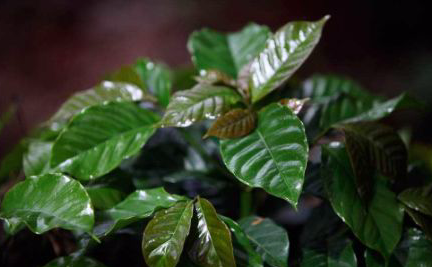
Time has proven SL28 the more celebrated of the two, typically showing blackcurrant-like acidity with complex flavor; SL34 is slightly behind but still impressively fruity. Together they now account for 90% of Kenya's production and are the universally recognized representatives of Kenyan coffee. South America is also actively introducing SL28 as a cultivated variety.
Processing Method (72-Hour Fermentation Washed)
The 72-hour fermentation washed method—known as K72—is a cyclical process of washing and fermentation repeated after harvest. On picking day, the highest quality cherries are selected, pulped, and fermented for 24 hours, then washed with clean river water.
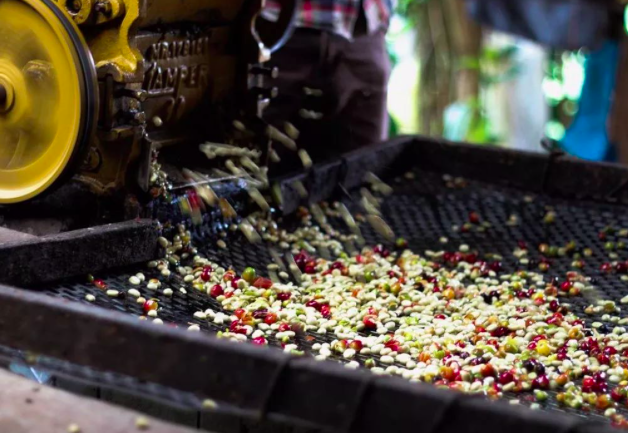
The beans then ferment for another 24 hours in clean river water and are washed again. Repeating this cycle three times reaches 72 hours, hence the name: the Kenyan 72-hour fermentation washed process, or K72.
Cupping Chart
Kenya Blackberry Muse
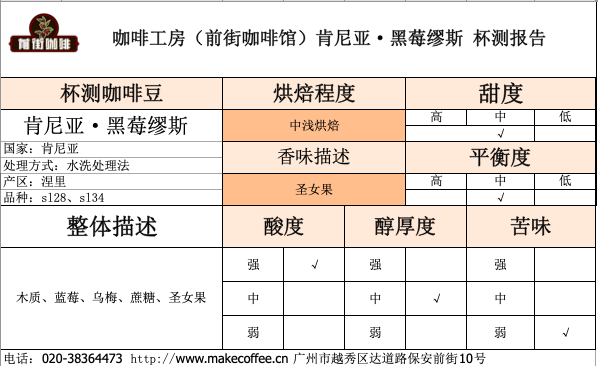
Flavor: Woody, blueberry, black plum, cane sugar, cherry tomato.
Kenya Timani Girl
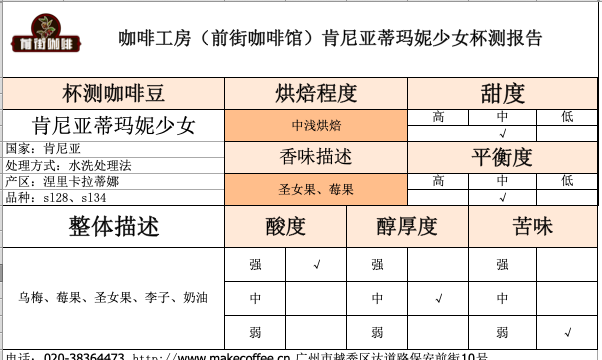
Flavor: Black plum, berries, cherry tomato, plum, cream.
Kenya Komatina
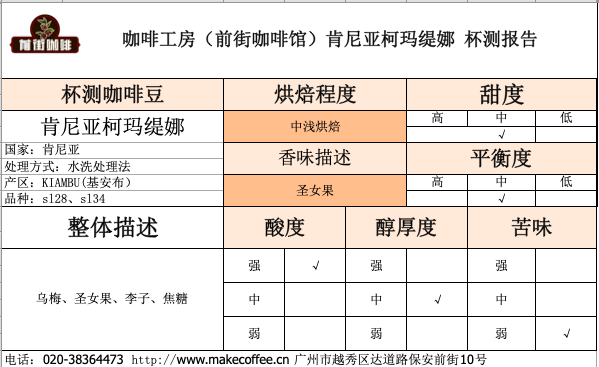
Flavor: Black plum, cherry tomato, plum, caramel.
Brewing Comparison
FrontStreet Coffee shares its brewing parameters:
Recommended brewing method: Pour-over
Dripper: Hario V60
Water temperature: 90°C
Dose: 15g
Ratio: 1:15/1:16
Grind size: Medium-fine (BG 7T: 58% pass-through rate on the China standard #20 sieve)
Brewing technique: Segmented extraction
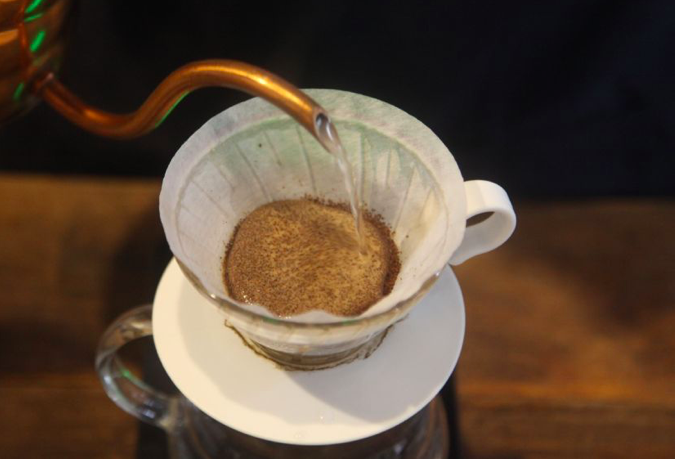
Bloom with 30g of water for 30 seconds. Continue pouring in small circular motions to 124g, then pause. When the water level drops and the coffee bed is about to be exposed, pour again to 227g and stop. Remove the dripper once the bed is about to be exposed again (timing starts from the bloom). Total extraction time: 2'00".
Flavors:
Kenya Blackberry Muse: Herbal notes, black plum, cherry tomato, and cream at entry, with blueberry and a honey-like sweet aftertaste.
Kenya Timani Girl: Berry, nut, black plum, and cream at entry, with woody notes and a hint of tomato in the finish.
Kenya Komatina: Noticeable tomato and black plum acidity at entry, with plum, honey, and cream, finishing on a cane-sugar sweetness.
Conclusion
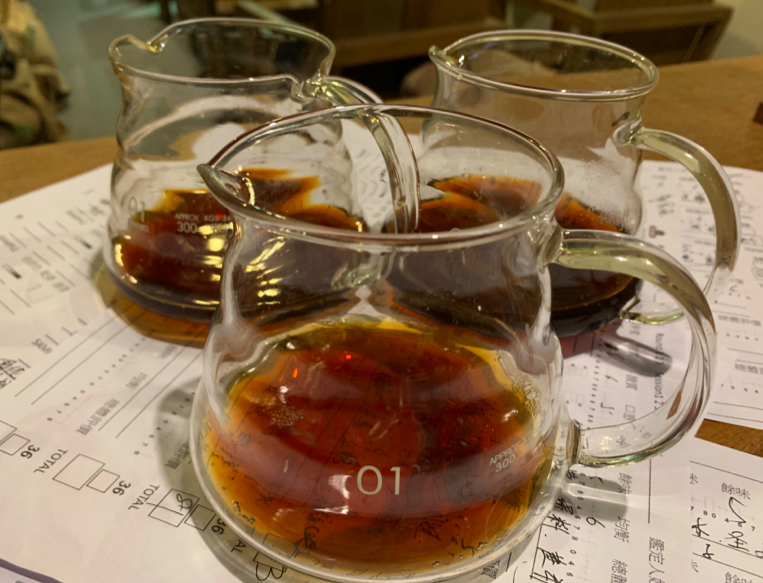
Compared side by side, all three Kenyan coffees share cherry tomato, black plum, and cream flavors with a noticeable, sweet aftertaste—but their acidity profiles differ. Blackberry Muse's acidity leans blueberry, with obvious woody notes and a lighter cherry tomato impression. Timani Girl's acidity is strawberry-like, with nutty and creamy aromas, and cherry tomato emerging only in the finish. Komatina brings tomato and black plum acidity with a very clear cane-sugar sweetness in the aftertaste.
FrontStreet Coffee Recommendation
If these bright, fruit-forward Kenyans appeal to you, FrontStreet Coffee also suggests exploring Ethiopia, the birthplace of Arabica with countless heirloom varieties. The entry-level washed Yirgacheffe offers clear jasmine florals and bright citrus acidity—light, elegant, tea-like, and as refreshing as a clean lemon tea—while the natural Red Cherry Project lot, sun-dried for about two weeks until moisture falls to 12%, shows peach, cocoa, honey, and lemon with the rich, captivating fruit aroma that careful natural processing brings.
Important Notice :
FrontStreet Coffee is a long-established specialty coffee roaster in Guangzhou China, selling freshly roasted beans from its own farm in Yunnan as well as dozens of carefully selected single-origin beans from around the world for both pour-over and espresso. The products deliver consistently excellent quality and great value, with shipping within 24 hours. Guangzhou's FrontStreet Coffee shop is recommended by many coffee lovers, and the beans are now available online at the Tmall 。
FrontStreet Coffee has moved to a new address:
FrontStreet Coffee Address: 315,Donghua East Road,GuangZhou
Tel:020 38364473
 Scan and follow the En Gafei WeChat official account. Please indicate that the reprint comes from "En Gafei".

