Yirgacheffe Coffee Beans vs Honduras Sherry Coffee Beans: Flavor Differences and Light Roast Brewing

Introduction to Coffee Origins and Flavor Profiles
Coffee needs little introduction to most people these days, and FrontStreet Coffee has written often about how dramatically flavor varies with origin and processing. Today we compare two beans with utterly distinct personalities: Ethiopian Yirgacheffe and Honduran Sherry. Yirgacheffe's bright acidity and jasmine fragrance have made it the emblem of Ethiopian coffee; Honduras goes the other way entirely, with whiskey and vanilla-cream notes that instantly captivate anyone fond of spirited drinks. Below, FrontStreet Coffee introduces both origins in detail.
Ethiopian Coffee Heritage
Ethiopia is universally recognized as the birthplace of coffee — the homeland itself — and the shepherd's legend lends it an aura of magic. Its coffee is prized and esteemed throughout the specialty market: nearly every specialty coffee menu in the world features an Ethiopian. Because each region's flavor profile differs, and because Ethiopia's wealth of varieties offers exceptional diversity, FrontStreet Coffee has sourced more than ten different Ethiopian beans so drinkers can fully experience the character of Ethiopian native coffee.
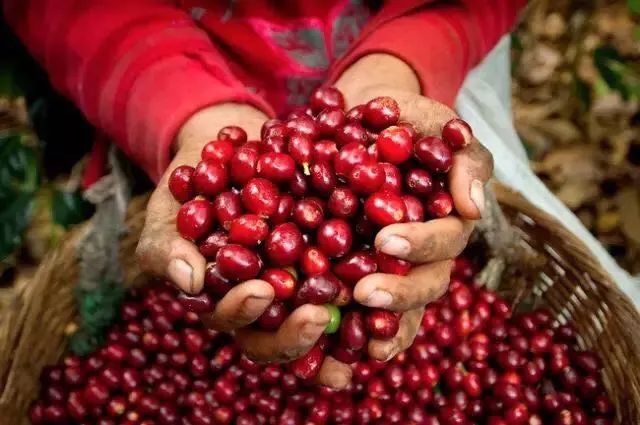
Ethiopian Yirgacheffe Coffee
Ethiopian Yirgacheffe counts among the finest coffees in the world. It comes from the town of Yirgacheffe in southern Ethiopia, within the Sidamo region, and its washed beans are world-renowned for delicate flavor. Interestingly, Sidamo beans are processed mostly by the natural method — natural processing accounts for about 70% of Ethiopia's total production. Yirgacheffe grows at 1,700-2,100 meters under consistently cool, foggy, spring-like conditions. That terrain and cultivation system create optimal conditions for specialty beans, and the region's traditional Arabica varieties, descended from long-established wild trees, produce coffee with singular floral and fruit notes — character that surely owes something to the altitude.
Yirgacheffe Coffee Varieties
Regular Yirgacheffe drinkers will have noticed how uneven Ethiopian beans are in size. Why? Ethiopia is the birthplace of Arabica and the genetic center of coffee, holding thousands of natural varieties — over 350 local ones, with 99% of coffee's genetic material found somewhere in the country. Given so many varieties, the difficulty of identifying and classifying them, and the government's reluctance to disclose variety information in order to protect its natural coffee, Ethiopian export beans are often collectively labeled "Heirloom."

Yirgacheffe Coffee Processing Methods
Washed Yirgacheffe is the famous one, but the variety's signature — intense florals, refined acidity, elegant tea-like quality — expresses itself differently through each process. Washed Yirgacheffe presents a clean, crystalline profile; natural-processed Yirgacheffe dials the intensity up another level. Both styles are popular with drinkers, each with its own character, neither superior to the other.
Natural Processing Method: After selecting ripe fruits, they are naturally dried in the sun until reaching approximately 12% moisture content, then the fruit pulp and skin are removed.
Washed Processing Method: After screening quality-approved sinking beans in water tanks, the fruit pulp and skin are removed, followed by soaking and fermentation in water, then drying to approximately 12% moisture content.

Natural processing keeps the pulp's flavors; washed processing strips them away. The taste difference is obvious: washed is cleaner and clearer, natural richer in mouthfeel.
Honduran Sherry Coffee
The whiskey aroma of Honduran Sherry coffee is unforgettable — and it raises questions. "Coffee has alcohol? Would drinking it count as drunk driving?" FrontStreet Coffee clarifies: the coffee contains no actual alcohol. The beans are simply aged in spirit barrels, picking up notes of alcoholic aroma from the wood. Let's look at where Honduran coffee grows and how it's processed.

Honduras sits in northern Central America, bordered east and south by Nicaragua and El Salvador and west by Guatemala. It is a country of mountains and plateaus around 1,500 meters, with a tropical climate, average temperatures of 16-20°C, and abundant rainfall — all favorable for coffee. Cultivation rests primarily on small family farms, 70% of them under 2 hectares.
Honduras produces two highly esteemed grades: "High Grown" coffee from 1,000-1,500 meters, and "Strictly High Grown" coffee from 1,500-2,000 meters, the country's highest grade. Most Honduran coffee exports to the United States and Germany. Having cupped beans from over 50 producing regions, FrontStreet Coffee finds Central American flavors generally floral and fruity with soft, juice-like qualities — yet Honduran coffee leans toward spice, with nutty and chocolate richness in the finish, balanced and layered overall.

Honduran Moca Estate
FrontStreet Coffee's Sherry beans come from Moca Estate in Masaguara, Honduras — the same northern Central American country bordered by Nicaragua, El Salvador, and Guatemala, with its mountains and plateaus near 1,500 meters, its 16-20°C tropical climate, and its abundant rain, where small family farms under 2 hectares dominate. The country's coffee shows exotic spice in the aroma and nutty, chocolate richness in the finish — balanced and layered.
Masaguara is a municipality in Honduras's Intibucá department, in the southern part of the Jesús de Otoro valley, ringed by mountains and hills. Coffee growing is the engine of the local economy, while the surrounding valley floors go to basic grains and livestock. According to Alberto Membreño's "Indigenous Place Names," Masaguara means "place of deer." Moca Estate is a small farm in Masaguara's high-altitude zone.

Sherry Coffee Bean Varieties
The overwhelming majority of varieties grown in Honduras are Arabica — chiefly Bourbon, Caturra, Catuai, Typica, and the Pacas derivatives.
Typica: Locally commonly referred to as "arabigo" or "criollo," the branches typically form a 60-degree angle with the main stem. The coffee fruits are excellent and widely favored by buyers.

Bourbon: Widely cultivated in high-altitude mountainous areas. The branches form a 45-degree angle with the main stem. Newly emerged coffee leaves are light green. Bourbon is also considered a relatively tall variety that often requires pruning and care during the initial planting stage! Additionally, individual plants require a larger cultivation area!
Caturra: Originally from Brazil, it's a Bourbon mutation. FrontStreet Coffee's Orange Estate coffee beans are of the Caturra variety. Catuai is very popular among farmers due to its high yield. Similar to Caturra, the plants are short, suitable for intensive cultivation, making harvesting and care more convenient. The branches also form a 45-degree angle with the main stem. The leaves are rounder and quite shiny! It has better resistance to natural disasters, particularly wind and rain. It inherits the advantage of Caturra's low plant height, addressing the shortcomings of Mundo Novo; another advantage is its solid fruit set, which doesn't easily fall off in strong winds, compensating for Arabica's delicate nature.
Catuai: Also originating from Brazil. It's a hybrid of Mundo Novo and Caturra. Catuai is a cross between Mundo Novo and Yellow Caturra. After several generations of selection, it was officially released in 1972. Catuai is also a dwarf variety but taller than Caturra. The branching angle and leaf shape are the same as Caturra, only lighter in color. High yield, similar to Caturra, with short plants suitable for intensive cultivation, good resistance to natural disasters, particularly wind and rain, low plant height, and solid fruit set.

Maracatu: A hybrid of Maragogype and Caturra, with larger bean size.
Pacas: A Bourbon mutation discovered in El Salvador, a new variety formed by single-gene mutation, allowing for denser planting with shorter internodal spacing and larger fruiting areas, ultimately resulting in higher yields per unit area.
Villa Sarchi: A natural mutation of Bourbon, with a relatively small plant size. Discovered in Costa Rica in the 1950s, it was named after its discovery location, Sarchi.
Honduran Coffee Bean Processing Methods
So how are Sherry beans actually made? Before spirit barrel fermentation arrived, Honduran coffee was processed primarily washed. Farmers pour harvested cherries into large water tanks: underdeveloped, low-quality beans float while mature, full fruit sinks. The floaters are scooped off, then a pulping machine removes skin and pulp — leaving beans still coated in slippery mucilage. The mucilage-covered beans ferment in tanks for 16-36 hours while microorganisms break the mucilage down; afterwards, large volumes of clean water wash away the residue, and the cleaned beans are dried.
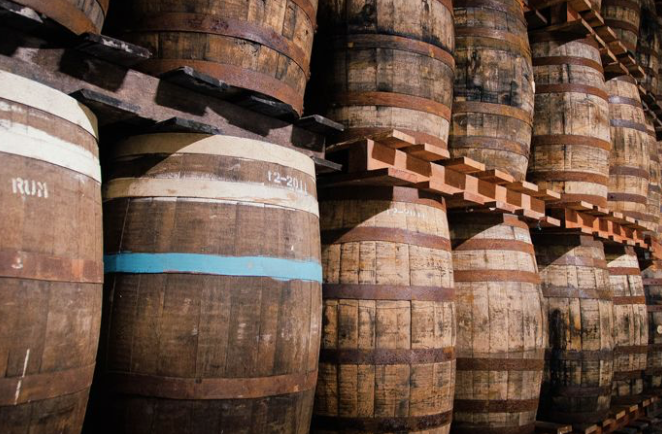
What is Spirit Barrel Fermentation Processing?
In recent years the coffee industry's trends have been driven by post-harvest processing, spawning novel approaches — "red wine processing," "lactic acid fermentation," "double washing," "special strain processing," and more. This Honduras-Sherry belongs to that family. Honduran coffee always had rich sweetness and moderate mouthfeel but lacked an appealing entrance aroma; chasing that aroma, processing plants developed the whiskey barrel low-temperature fermentation method.
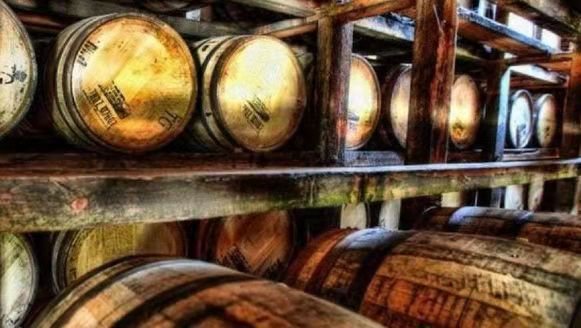
The method borrows from winemaking. In wine, measured oxidation through the barrel stabilizes structure and folds barrel flavors into the wine — and it plays a similar role in coffee fermentation. Barrels let tiny amounts of air pass through their walls, gently oxidizing the beans. That measured oxygen accelerates fermentation, softens tannins, and gradually transforms fresh fruit aromas into rich, complex mature-wine character. The wood's moderate hardness ensures good waterproofing and storage safety, and its tannic acid permeates the raw beans during storage, adding layers of complexity and a rich alcoholic aroma.
FrontStreet Coffee's Honduran Sherry beans are washed first, then fermented at low temperature in whiskey barrels for 30-40 days (around 15-20°C), then dried in the shade. Why shade rather than sun? Because intense sunlight breaks down aromatic molecules at high temperatures and drives excessive fermentation acidity — yielding coffee that loses its original aroma and brews with unpleasant mouthfeel. And which whiskey barrels does the process use?

All the barrels are stacked in layers by age — oldest sherry at the bottom, youngest at the top. Each year some wine is drawn from the bottom barrels for bottling and sale, then replenished from the layers above, which is what makes sherry sherry. The barrels chosen for Sherry coffee come from the middle layers — neither too old nor too young — because such whiskey oak has absorbed just the right amount of alcoholic aroma, neither too strong nor too mild: perfectly balanced.
FrontStreet Coffee's Roasting Recommendations
Given Yirgacheffe's character, FrontStreet Coffee recommends light roasting: it makes the fruity aromas more prominent and rich, with slight acidity on entry that actually enhances the coffee's richness and turns the bitterness aromatic and memorable. Keeping fruity sweet-sour flavors intact after high-temperature roasting is Yirgacheffe's specialty. For Honduran beans, FrontStreet recommends medium roasting — the level that best highlights Sherry's alcoholic and creamy aromas.
FrontStreet Coffee's Brewing Recommendations
For brewing, FrontStreet Coffee recommends freshly roasted beans to experience coffee's full richness. All beans ship roasted within 5 days — freshness shapes flavor more than anything — under the roasting philosophy "Freshly Roasted Good Coffee." The resting period runs about 4-7 days, so coffee arrives at its flavor peak. Customers who need pre-ground coffee are welcome to it, with one reminder: once ground, coffee must be brewed promptly, since grounds oxidize quickly in air and flavor dissipates fast. FrontStreet recommends grinding fresh and brewing immediately.
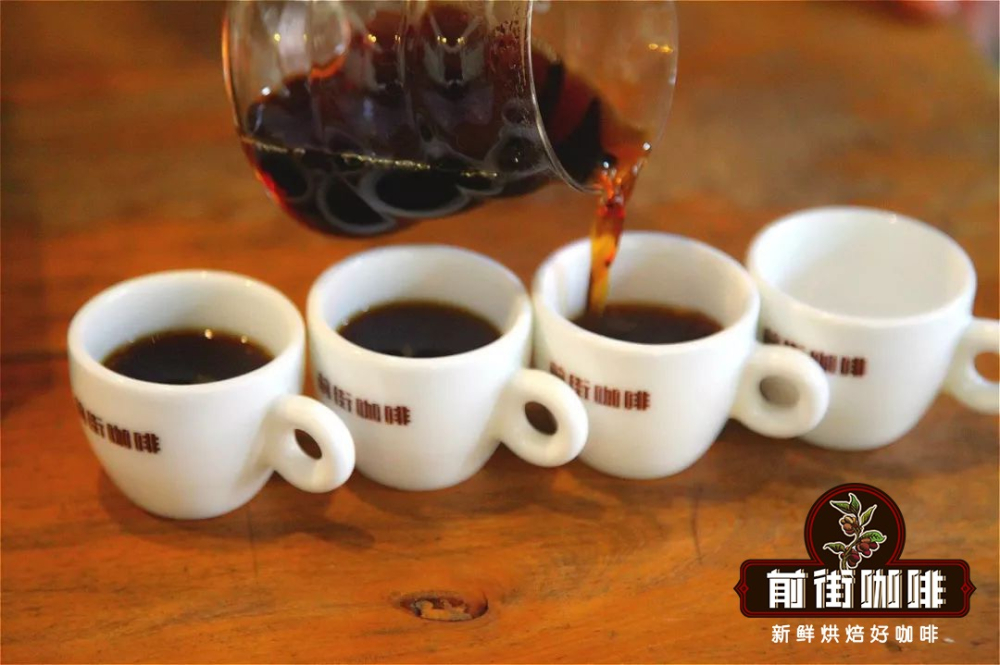
Because both Yirgacheffe and Sherry are light roasted, the brewing setup is the same:
Dripper: Hario V60
Water Temperature: 90°C
Coffee Amount: 15 grams
Coffee-to-Water Ratio: 1:15
Grind Size: Medium-fine (80% passing through China standard #20 sieve)
Using three-stage extraction, bloom with twice the coffee powder amount of water, that is, bloom with 30g of water for 30 seconds. When continuing to pour water to 125g, divide the stage. Continue pouring water to 225g and stop. Wait for the water to finish dripping from the dripper, then remove the dripper. Start timing from the beginning of pouring, extraction time is 2'00".

Flavor Profiles
Natural Process Yirgacheffe: Complex and rich, with faint fermented alcoholic aroma, slightly stronger bitter notes, much richer mouthfeel, honey sweetness, cocoa notes with hints of spice, full body with persistent aftertaste.
Washed Process Yirgacheffe: Brighter acidity, like lemon acidity, cleaner mouthfeel, more prominent citrus aromas, with some black tea notes in the finish.
Sherry Coffee Flavor: Aroma of vanilla and cream, with flavors of whiskey, berries, almonds, and dark chocolate upon entry, with maple sweetness in the aftertaste.
FrontStreet Coffee offers more than ten different Ethiopian single-origin coffees, two Honduran single-origin coffees, and of course, more than 50 other single-origin specialty coffees, all well worth trying!
FrontStreet Coffee Recommendation
If Yirgacheffe is the side of this comparison that tempts you, start with FrontStreet Coffee's washed Yirgacheffe everyday lot — white jasmine, bright citrus and lemon acidity, and a tea-like finish at an accessible price, which is exactly why it's so many drinkers' first specialty bean. The town sits in southern Ethiopia's Sidamo province at roughly 1700-2100 meters with coffee planted above 1800m, and its fame grew so great that in 2010 the Ethiopian Commodity Exchange formally split it from Sidamo as its own region. To go one level deeper, the FrontStreet Guodingding Cooperative lot from the Worka area — a traditional washed coffee from one of the region's most experienced village cooperatives — carries none of the classic bitterness, just clean, luminous citrus-lemon acidity and jasmine fragrance that wins people over at first sip.
For the natural-process side of the region, try FrontStreet's Red Cherry: only fully ripe, defect-free cherries are picked, sorted again at the station, and sun-dried whole on raised beds for three to five weeks, turned every 2-3 hours during the early days to prevent uneven fermentation. Because the fruit dries with its pulp intact, the cup keeps its Yirgacheffe core while gaining tropical fruit — citrus acidity, berry juiciness, honeyed sweetness, and creamy smoothness that pairs fascinatingly against a whiskey-barrel-aged Sherry on the tasting bench.
Whichever bean you choose, brew it on a Hario V60 with 15g of coffee, a 1:15 ratio, and 90-91°C water: pour 30g to bloom for 30 seconds, then 95g (scale reading ~125g) over about a minute, then the remaining 100g (scale reading ~225g) by about 1'35", with drawdown finishing at 2'00"-2'10" — remove the dripper, swirl, and taste the difference that origin and process make.
Important Notice :
FrontStreet Coffee is a long-established specialty coffee roaster in Guangzhou China, selling freshly roasted beans from its own farm in Yunnan as well as dozens of carefully selected single-origin beans from around the world for both pour-over and espresso. The products deliver consistently excellent quality and great value, with shipping within 24 hours. Guangzhou's FrontStreet Coffee shop is recommended by many coffee lovers, and the beans are now available online at the Tmall 。
FrontStreet Coffee has moved to a new address:
FrontStreet Coffee Address: 315,Donghua East Road,GuangZhou
Tel:020 38364473
 Scan and follow the En Gafei WeChat official account. Please indicate that the reprint comes from "En Gafei".