How Are Colombian Coffee Grades Classified - Colombian Coffee Bean Quality Characteristics and Flavor Profiles
How Are Colombian Coffee Grades Classified?
Every coffee-producing country builds its own grading system around local conditions such as cultivation history and processing methods. Some grade by defect rate, some by green bean size, and some by cupping. In this article, FrontStreet Coffee explains Colombia's green coffee grading system.
What is the Excelso Grade?
If you look closely at green coffee bags exported from Colombia, you will see "Excelso-Cafe de Colombia" printed on all of them. Whatever the bean size, any bag that meets Colombia's export standard is marked "Excelso," and the most common designations are UGQ, EP, and Supremo.
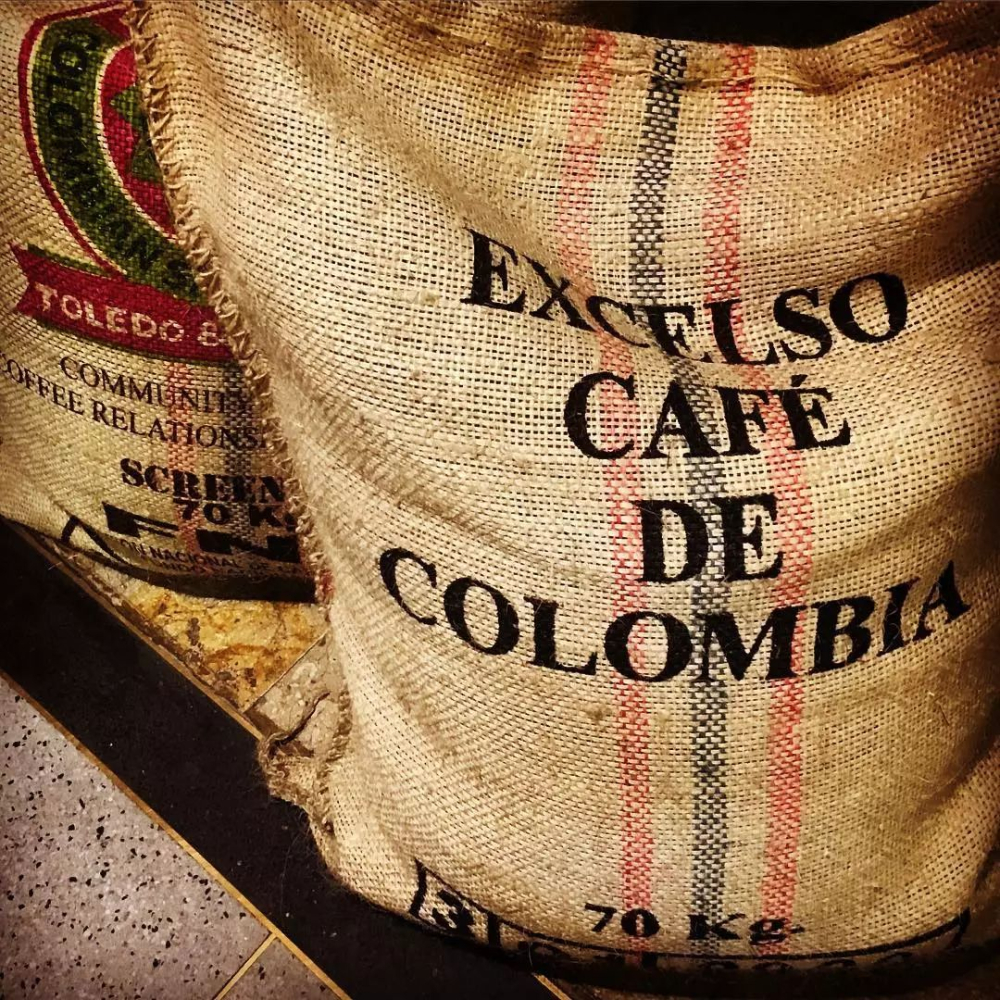
In other words, most Colombian green coffee bags exported worldwide today must carry an Excelso grade designation. UGQ is an Excelso grade, EP is an Excelso grade, and Supremo is an Excelso grade too. Excelso is the most widely used export standard adopted by the Colombian Coffee Growers Federation (FNC), and it represents the premium grade for Colombian green coffee exports.
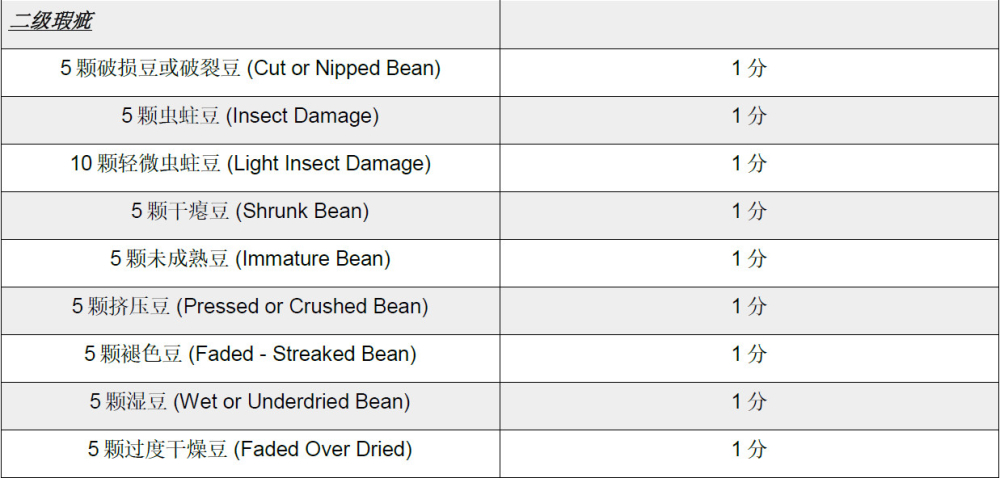
Coffee at the Excelso grade must meet the following requirements: across 500 grams of green beans, the size must be above 14 mesh, with no more than 5% of beans allowed between 12 and 14 mesh. Overall, at least 50% of the beans must be larger than 15 mesh. The beans must be free of pests, uniform in color, without off-flavors, and clean in the cup. Moisture content cannot exceed 12.5%, and cumulative defects must not exceed 24 points.
Defect Classification Standards
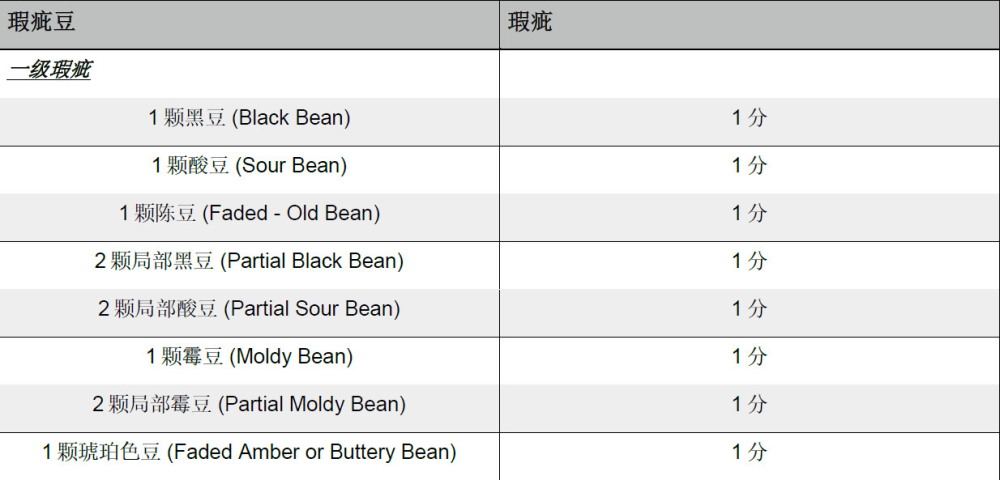
Colombia's National Coffee Committee enforces strict rules. Green bean defects are divided into two types, with defect grades assessed by a scoring system. For example, the commonly exported Supremo 12*60 (5%) designation means that in a 500-gram green bean sample, a maximum of 12 primary defect beans and 60 secondary defect beans are allowed.
Size Classification Standards
Although green bean size is not the primary determinant of quality and flavor, many producing regions hold that full, uniform, large beans indicate the coffee has reached full maturity, can develop better aromatics, and roasts more evenly, which supports consistent flavor.
Colombian green beans are graded by size using sieves of fixed dimensions, with different specifications corresponding to different hole sizes. If the mesh is 17 holes, for example, beans larger than that cannot pass through. The larger the sieve number, the larger the beans retained on top. Today, the three grades FNC exports most often are Excelso UGQ 12*60 (1.5%), Excelso EP 12*60 (10%), and Excelso Supremo 12*60 (5%).
Excelso UGQ 12*60 (1.5%): UGQ stands for Usual Good Quality. Green beans are above 14 mesh, with 1.5% allowed between 12 and 14 mesh but all above 12 mesh, and more than 50% must be larger than 15 mesh.
Excelso EP 12*60 (10%): EP stands for European Preparation. Green beans are above 15 mesh, with 10% allowed to be smaller than 15 mesh but all above 14 mesh.
Excelso Supremo 12*60 (5%): Green beans are above 17 mesh, with 5% allowed to be smaller than 17 mesh but all above 14 mesh.
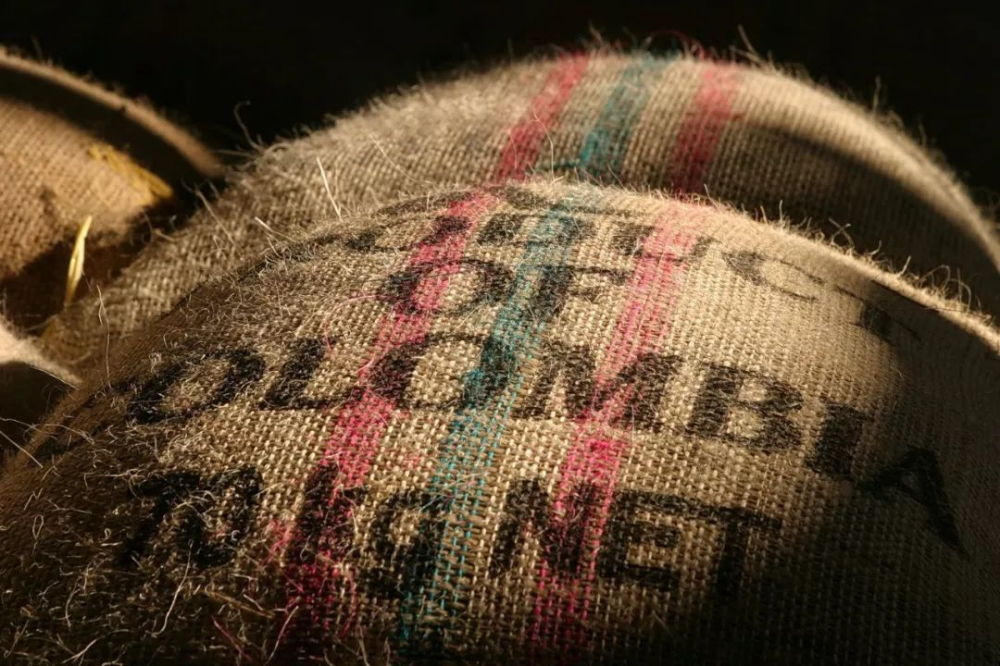
Colombia also has beans above 16 mesh called Extra, beans above 18 mesh (larger than Supremo) called Premium, and beans almost entirely uniform at 15 mesh called Minama. Colombia additionally produces coffee that does not meet the Excelso export grade; this is called "Product of Colombia" locally and is generally used for commercial-grade instant coffee.
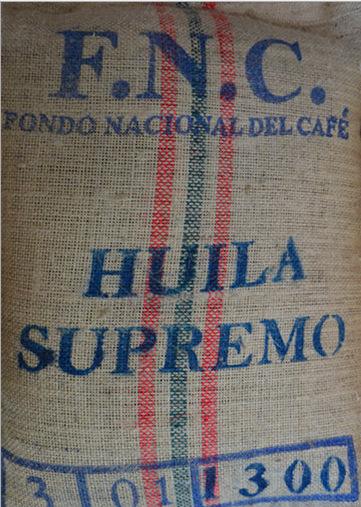
In Colombia, each farm reports a number and records green bean information, which makes later traceability possible. Exported Colombian green coffee is typically named as country + region + grade + other information. For example, the green beans of FrontStreet Coffee's Huila staple bean are "Colombia Huila Supremo SC17/18 FNC."
Flavor Characteristics of Colombian Supremo Grade Huila Coffee Beans
FrontStreet Coffee's daily lineup includes five different beans from the Colombian producing region, each with its own character. If you are new to coffee, we suggest starting with the washed Huila staple bean. Our staple bean series covers several classic producing regions and common varieties, so you can get to know the flavor profiles of the major regions and figure out your preferred style before exploring deeper.
Colombia's producing region has abundant water, and most coffee is washed. Family-unit farms use dedicated green bean processors (Ecomill or Eco-Pulper). Harvested cherries are poured in, and the machines remove the skin and pulp while requiring only a very small amount of water to take away most of the mucilage. The parchment beans, still carrying a little mucilage, then go into a small pool or container - sometimes a tiled pool - to ferment overnight and loosen what remains. The next day they are rinsed thoroughly with clean water and spread out under the sun to dry to the target moisture. Washing greatly reduces the defect rate, preserves the beans' inherent flavors, and yields higher cleanliness.
To present Colombia's classic nutty, chocolatey, rich, and mellow taste, FrontStreet Coffee uses a medium-dark roast. The deeper roast makes the beans more porous and the grounds more absorbent, so to avoid over-extraction we use a medium grind and medium water temperature paired with a KONO dripper.
Brewing Parameters: KONO dripper, 90°C water temperature, 20-mesh standard sieve with 75% pass-through rate grind, 1:15 coffee-to-water ratio, coffee amount 15g, three-stage extraction
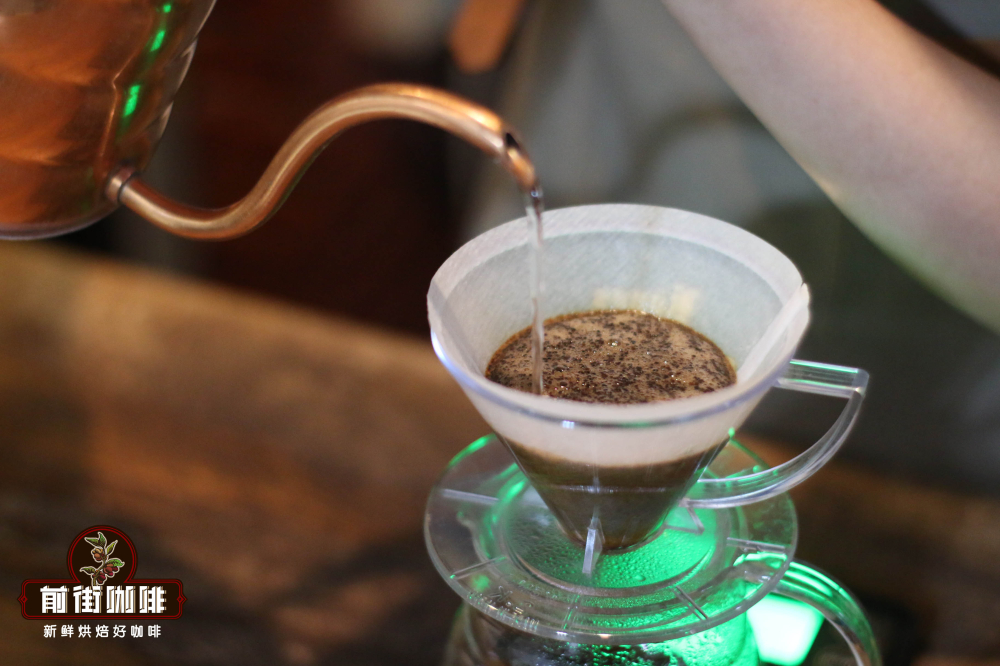
Pour the grounds into the KONO dripper and wet the bed with twice the weight of the coffee in water, forming a dome for a 30s pre-infusion. Then use a small stream to pour in circles from the inside out until you reach 125g for the first stage. Wait for the bed to drop to half the height of the dripper, then continue with the same fine stream to inject the third stage to 225g. Remove the dripper once all the coffee has filtered through, after about 2 minutes.
This Colombian Huila staple bean opens with distinct roasted aromas of chocolate, nuts, and caramel. It is smooth and sweet, with moderate body and a clean taste. As the temperature falls, a pleasant, gentle acidity comes forward.
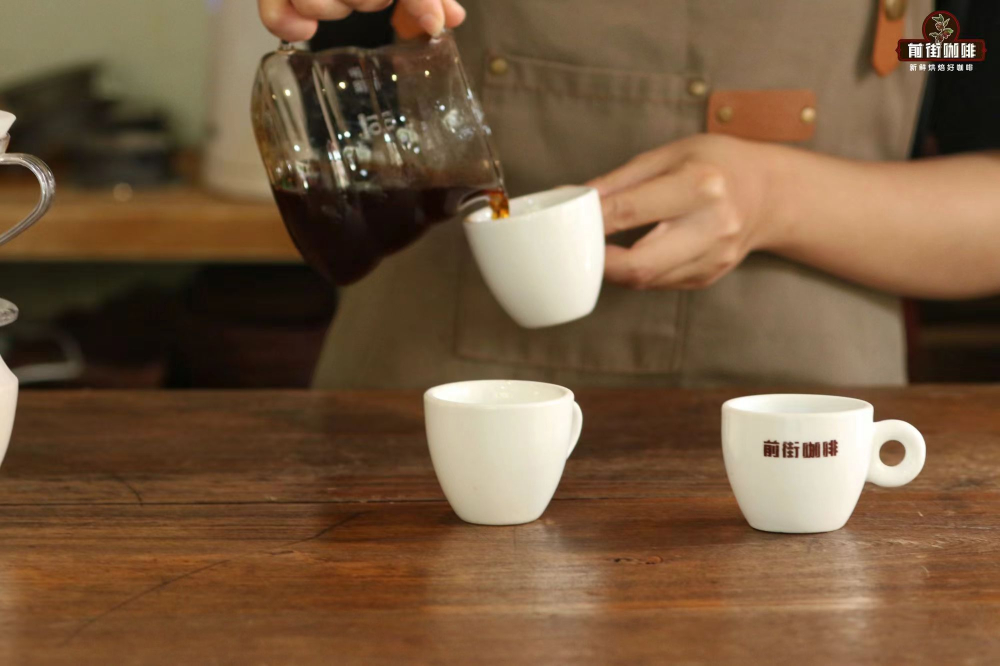
FrontStreet Coffee Recommendation
FrontStreet Colombia Huila - the easiest way to understand why Supremo-grade Colombian coffee is so consistent. Huila is the country's best-known specialty region, with farms above 1,500 meters ringed by mountains and Colombia's most important rivers converging to supply abundant water and moisture. Roasted medium-dark to bring out black chocolate and nutty sweetness, moderate oils, and a full body, it suits pour-over, French press, moka pot, and espresso machine alike.
FrontStreet Premium Blend Espresso - if you brew espresso, this is the blend our baristas recommend most. Built for cafe use, it combines the creamy nuttiness of Brazilian coffee with the dark chocolate bittersweetness of Colombian coffee. Extraction gives fine golden crema, and it pairs beautifully with milk for a rich, smooth latte. It is very friendly to beginners and also serves as the base for Americanos, cappuccinos, and mochas.
Important Notice :
FrontStreet Coffee is a long-established specialty coffee roaster in Guangzhou China, selling freshly roasted beans from its own farm in Yunnan as well as dozens of carefully selected single-origin beans from around the world for both pour-over and espresso. The products deliver consistently excellent quality and great value, with shipping within 24 hours. Guangzhou's FrontStreet Coffee shop is recommended by many coffee lovers, and the beans are now available online at the Tmall 。
FrontStreet Coffee has moved to a new address:
FrontStreet Coffee Address: 315,Donghua East Road,GuangZhou
Tel:020 38364473
 Scan and follow the En Gafei WeChat official account. Please indicate that the reprint comes from "En Gafei".