
Robusta Coffee Beans vs Arabica Flavor Differences: Where Are the Best Robusta Coffee Beans From?

FrontStreet Coffee is often asked why Robusta beans can be grown so widely in places like Vietnam. Aren't coffee beans always grown at high altitude? How do Robusta flavors actually present themselves? And if Vietnamese coffee is all Robusta, why is it not unpleasant to drink? In this article, FrontStreet Coffee takes a closer look at Robusta.
Q1: What are the essential differences between Robusta and Arabica?
Although both Arabica and Robusta grow in the coffee belt between 45 degrees north and south latitude, we often say Arabica is cultivated above 800 meters. Arabica has high requirements for growing conditions and weak resistance to pests and diseases. Robusta is cultivated below 800 meters, has extremely strong adaptability, and shows stronger resistance to pests and diseases. That raises two things to understand: pest and disease resistance, and adaptability to the environment.
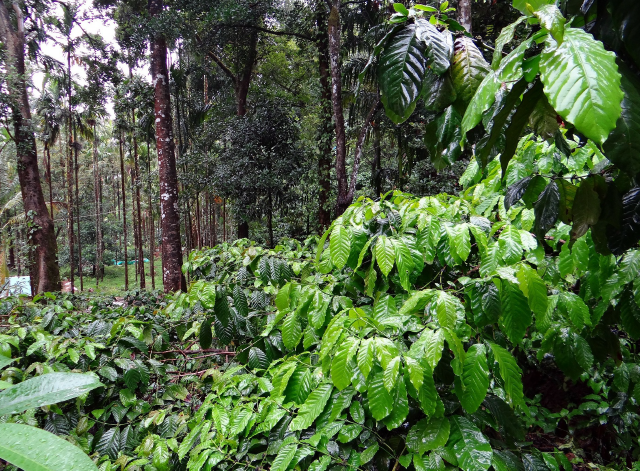
Growing conditions: the global coffee belt lies between the Tropic of Cancer and the Tropic of Capricorn, and Robusta is no exception. Still, Robusta is less demanding than Arabica. It can grow at lower altitudes and higher temperatures, grows faster than Arabica, and tolerates extreme weather better. Robusta is widely cultivated in Vietnam, Brazil, and India, and even China's Hainan grows it. FrontStreet Coffee often says that a coffee with rich flavor needs good varieties and high growing altitudes. So, leaving everything else aside, the altitude at which Robusta is grown already determines that its flavors will not be as rich as Arabica's.
Disease resistance: we generally understand that Arabica has 44 chromosomes while Robusta has 22. More chromosomes usually mean greater genetic complexity, but Arabica is self-pollinating while Robusta is cross-pollinating, and pollination is a genetic process. Normally, cross-pollinated plants end up with higher quality, because offspring carry traits from both parents and may develop new characteristics that help them survive in a changing environment. Self-pollinating Arabica is therefore quite fragile, and its genes grow ever more uniform with continued reproduction in the absence of outside genes. If a disease such as leaf rust appears, it can wipe out coffee plants that share the same genes. Robusta's strength is its ability to keep changing its genes to adapt.

Pest resistance: Robusta's caffeine content ranges from 2.7% to 4%, twice that of Arabica. Caffeine works as a natural pesticide for the plant, protecting it from most insect damage. For humans, caffeine is the most widely used psychoactive drug in the world, but in nature it is a natural insecticide that can paralyze insects that feed on caffeine-containing plants. This is also why Robusta's caffeine content is several times higher than Arabica's. Survival of the fittest through natural selection, the core idea of Darwin's "On the Origin of Species."
Q2: Do Robusta beans have poor flavor performance?
Robusta has higher caffeine, amino acid, and chlorogenic acid content. Chlorogenic acid is the source of bitterness, so Robusta naturally lacks the ethereal aromatic fragrance unique to Arabica. Instead, it offers a richer, heavier, lower-bodied taste, with flavors like walnut, peanut, hazelnut, wheat, and grains, and sometimes even pungent earthy notes.

Q3: Are there hybrids of Robusta and Arabica?
Yes. This is where FrontStreet Coffee brings up the hybrid Catimor. Catimor is a combination of Arabica and Robusta varieties. Robusta has good resistance to leaf rust, rich oils, high yield, and is easy to cultivate. After hybridizing with Arabica's Typica, Catimor gained 25% Robusta genes. It improved resistance to leaf rust, retained rich oils, and also acquired some of the rich flavor characteristics of the original Typica variety. Through cupping, FrontStreet Coffee has found that Catimor beans retain the gentle acidity of Arabica and the rich flavor of Robusta.
Q4: Why isn't Vietnamese coffee unpleasant to drink?
Because the coffee extracted from Robusta through a Vietnamese drip filter is quite strong and not suited to drinking straight, locals add condensed milk and fresh milk. With the condensed milk in the mix, the coffee no longer tastes unpleasant. So how is Vietnamese coffee brewed?

First, take the press screen of the Vietnamese drip filter and add 10g of medium-fine ground Robusta coffee. Place the press screen on top and press gently. Pour in 100ml of 94-degree water. After it has finished dripping, remove the filter cup and add condensed milk, fresh milk, and ice cubes.
FrontStreet Coffee is a coffee research space that enjoys sharing what we know with everyone. We hold nothing back, because the more people understand coffee, the more they fall in love with it. That has been our mission for the past six years.
FrontStreet Coffee Recommendation
Robusta earns its place in the cup most often through blending, and the Brazilian tradition shows precisely why. FrontStreet Coffee's Brazil Cerrado Red Bourbon is a classic single-origin Brazilian, roasted to a medium level for rich aromas of cream peanut, toast, caramel, and hazelnut. The body is round and smooth with very little acidity and a mild bittersweet finish, and it works in a moka pot, a siphon, a French press, or as an espresso SOE, which makes it an easy way to taste how Brazil's low-acid, balanced profile softens a cup.
Brazil also underpins nearly every FrontStreet Coffee espresso blend. The Classic Blend, FrontStreet Coffee's Premium Blend, FrontStreet Coffee's Black Cocoa Blend, and FrontStreet Coffee's Commercial Blend all include Brazilian beans, which bring chocolate and cream aromas and a soft sweet-tart-bitter balance that keeps extraction stable. Where a little Robusta is added, as in the traditional recipes, it contributes the extra oils and body that give an espresso its rich crema, the same quality Robusta has always brought to a blend.
Important Notice :
FrontStreet Coffee is a long-established specialty coffee roaster in Guangzhou China, selling freshly roasted beans from its own farm in Yunnan as well as dozens of carefully selected single-origin beans from around the world for both pour-over and espresso. The products deliver consistently excellent quality and great value, with shipping within 24 hours. Guangzhou's FrontStreet Coffee shop is recommended by many coffee lovers, and the beans are now available online at the Tmall 。
FrontStreet Coffee has moved to a new address:
FrontStreet Coffee Address: 315,Donghua East Road,GuangZhou
Tel:020 38364473
 Scan and follow the En Gafei WeChat official account. Please indicate that the reprint comes from "En Gafei".

