What Does the Brazil Coffee Region Taste Like? Flavor Characteristics of Brazilian Bourbon Coffee Varieties
Brazil is the world's largest coffee-exporting country, supplying roughly one-third of all the coffee beans on the planet. Yet most drinkers know only one Brazilian single origin by name: Queen's Estate. So what do Brazilian beans actually taste like, and what varieties does Brazil grow? FrontStreet Coffee offers this educational overview.
First, the obvious: coffee is an agricultural product, and its flavor depends on growing region, variety, and processing. Brazilian single origins are less commonly discussed not because they taste bad, but because their flavor profiles tend to be quite similar to one another. That is exactly why FrontStreet Coffee introduces only the best bean from each flavor category, avoiding redundancy.
Brazilian Coffee History
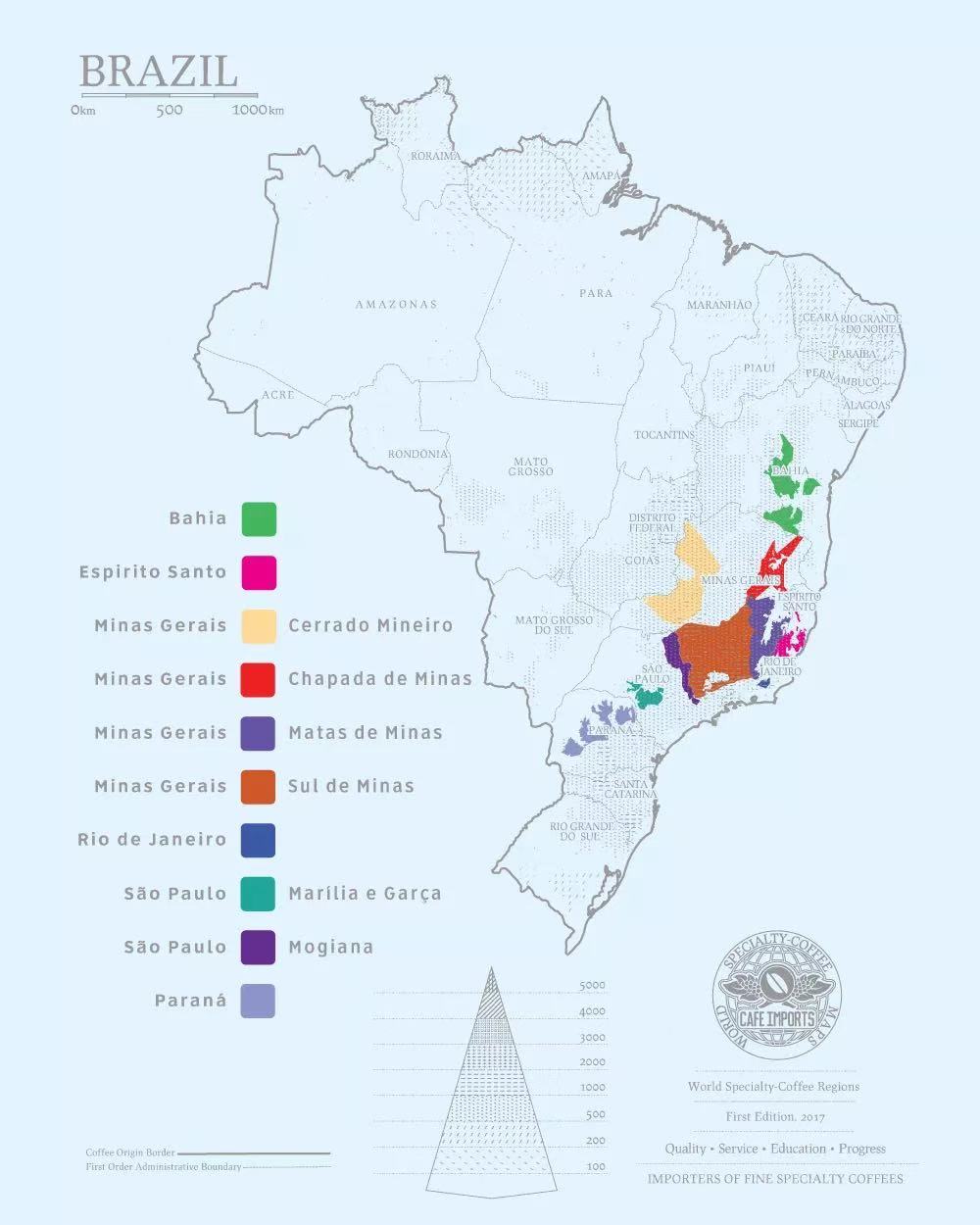
Coffee arrived in Brazil in the 18th century. In 1727, it was brought to Brazil's Port of Belém from Guiana, took root there, and spread — primarily across Brazil's southeastern coastal states: São Paulo, Paraná, Espírito Santo, and Minas Gerais.
From the late 18th century into the 1920s, under Portuguese colonization, Brazil practiced monoculture to feed Western European demand — and that monoculture was coffee. Coffee became Brazil's pillar industry for a very long stretch, and this was the golden age of Brazilian production: output once accounted for 75% of the world total, and coffee exports for a time made up two-thirds of Brazil's export income, earning the country its title as the undisputed "Coffee Kingdom." Then came 1929: the economic crisis gutted global coffee consumption and hit Brazil's coffee economy hard.
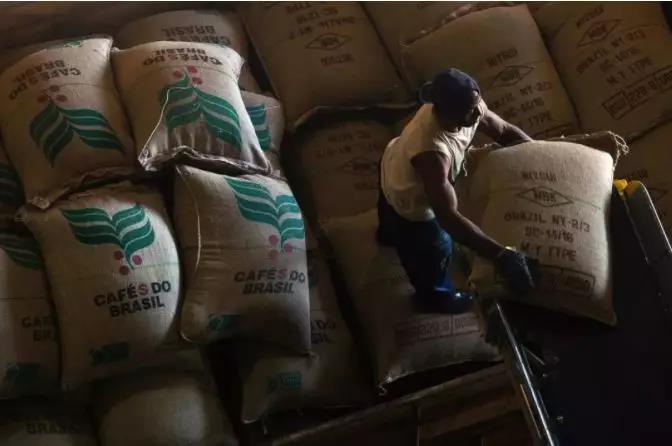
Since then, coffee's share of Brazil's export income has fallen sharply. Over the past 30 years, as Brazil's modern industries grew — steel, shipbuilding, automotive, aircraft manufacturing — coffee's role in the national economy has shrunk year by year. Even so, it remains one of Brazil's economic pillars, and Brazil is still the world's largest coffee producer and exporter.
Brazilian Coffee Varieties
Brazil's main varieties today are Red Bourbon, Yellow Bourbon, Mundo Novo, and Catuai, with Catuai and Laurina also under cultivation and study. The Campinas Agronomic Institute in São Paulo is a renowned center for coffee variety research, and the world's most widely planted Catimor was developed by Portuguese and Brazilian scientists. FrontStreet Coffee now walks through each variety's characteristics.
Red Bourbon
Bourbon is a subspecies that mutated from Typica, and together with Typica it belongs to the oldest coffee varieties in existence. When its green fruits ripen, they turn bright red. Bourbon plants have broader leaves than Typica and grow more densely; yields are higher, but the trees still bear on a two-year cycle, making it a relatively low-yield variety. The reward is superb flavor: wine-like acidity and a sweet aftertaste.
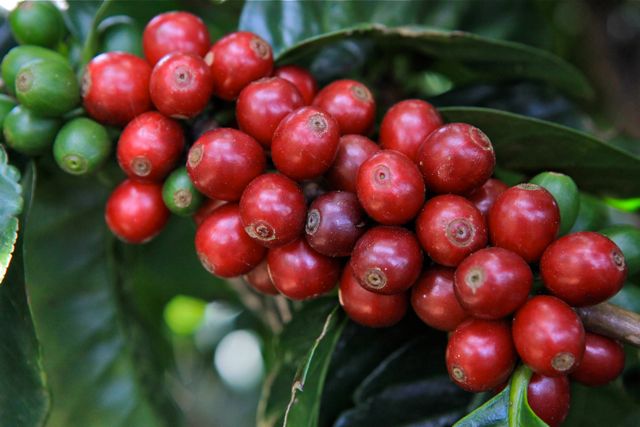
Simply put, Bourbon is an Arabica variety whose trees typically produce red fruit — hence Red Bourbon. After flowering and fruiting, its cherries progress green > light yellow > light orange > mature red > darker red when fully ripe. Its flavor shows excellent aroma with bright acidity and even wine-like traits. Red Bourbon is currently the most widely cultivated variety in Brazil's coffee regions.
FrontStreet Coffee's Brazilian everyday bean, for instance, uses Red Bourbon to represent the flavor of the Brazil region — it is both Brazil's most productive variety and its most original.

FrontStreet Coffee: Brazil · Red Bourbon Coffee Beans
Country: Brazil
Region: South Minas
Altitude: 1000m
Variety: Red Bourbon
Processing Method: Pulped Natural
Flavor: Nuts, Chocolate, Cream, Peanut, Caramel
Yellow Bourbon
Yellow Bourbon, as noted, is another genetic mutation of Bourbon — a variety long prized for high yield and excellent quality. It is found exclusively in Brazil's São Paulo state. When its cherries ripen they do not turn red but orange-yellow, hence the name. Grown at very high altitudes, its flavor is exceptional.

FrontStreet Coffee's cupping bears this out: high-altitude Yellow Bourbon performs brilliantly — for two consecutive years the top three of the Brazil Cup of Excellence were almost entirely swept by Yellow Bourbon lots, making it a specialty favorite. Typical notes are nuts and chocolate, with balanced, smooth acidity and weak, clean bitterness — an overall bright, refreshing profile.
FrontStreet Coffee's Brazilian Queen's Estate beans are precisely a Yellow Bourbon.

FrontStreet Coffee: Brazil Queen's Estate Coffee Beans
Country: Brazil
Region: São Paulo State (Queen's Estate)
Altitude: 1400-1950m
Variety: Yellow Bourbon
Processing Method: Pulped Natural/Natural
Flavor: Nuts, Cream, Peanut, Fermented Fruits, Cane Sugar
Pink Bourbon
Pink Bourbon refers to Bourbon trees whose cherries ripen to a romantic pink — a rare coffee by any measure. Intriguingly, although Brazil is Bourbon's homeland, Pink Bourbon was first discovered in the town of Paez in Colombia's Huila province, and it is primarily cultivated in Huila today.
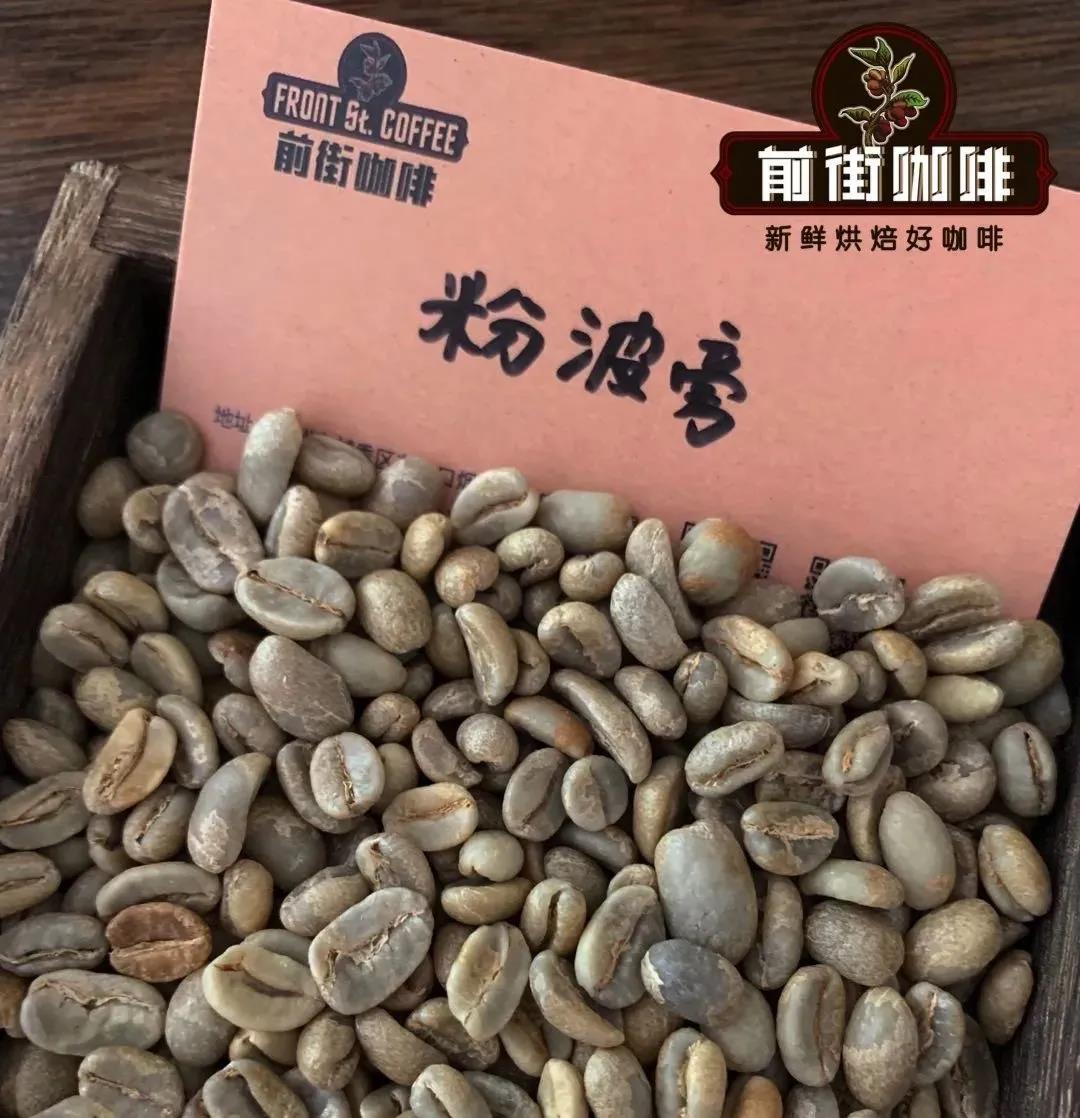
One account holds that Pink Bourbon is a natural hybrid of Yellow Bourbon and Red Bourbon. Yellow and Red Bourbon express dominant traits with strong reproductive stability, while Pink Bourbon — the product of their crossing — expresses recessive traits, and offspring from hybrid reproduction tend to segregate.
Another theory says Pink Bourbon is a natural hybrid of Bourbon and Colombia (a Bourbon-line variety). Colombia is heavily promoted in Colombia and carries some Robusta-derived genes, giving it clear advantages — high yield and resistance to leaf rust — at the cost of mediocre flavor and a lack of delicate acidity and sweetness.
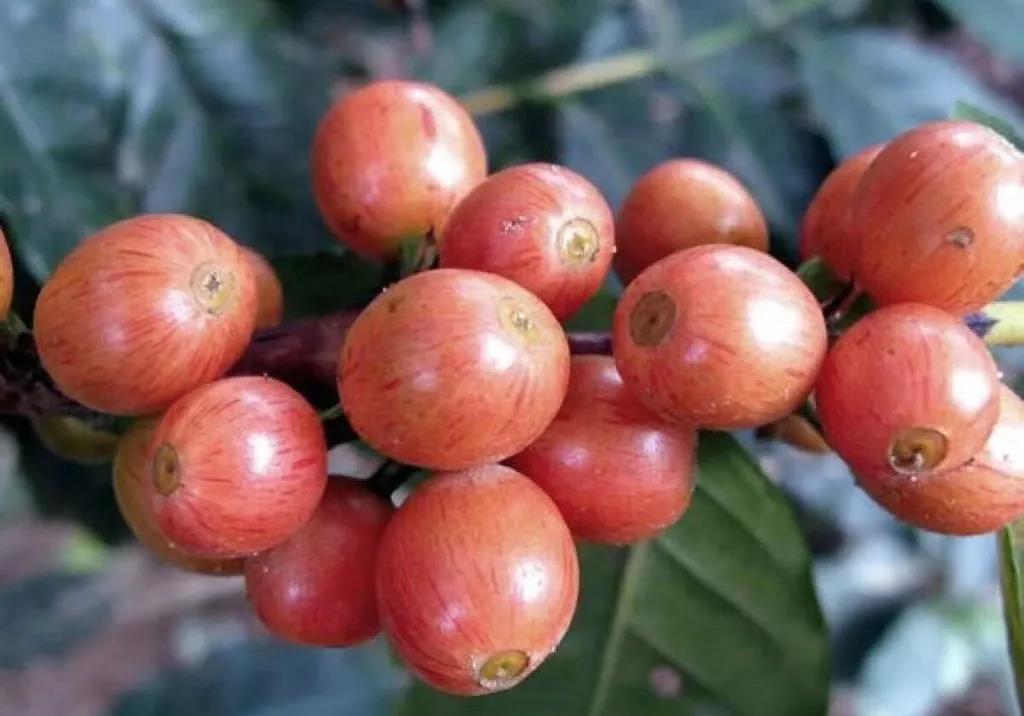
Why is Pink Bourbon so rare? Keeping that beautiful pink color is genuinely difficult. In artificial hybridization, orange Bourbon fruits sometimes appear, because cherry color is ultimately decided by recessive genes carried in the pollen — genes leaning toward both Yellow Bourbon's yellow and Red Bourbon's red, all recessive and all interfering with one another. Hence Pink Bourbon production is extremely scarce and the price relatively high.
FrontStreet Coffee once secured a Pink Bourbon from Huila, Colombia, and is happy to share it with enthusiasts: distinctive cherry tomato flavor evoking berry acidity, with vanilla and dark chocolate notes, overall cane sugar sweetness, and clearly layered flavors.
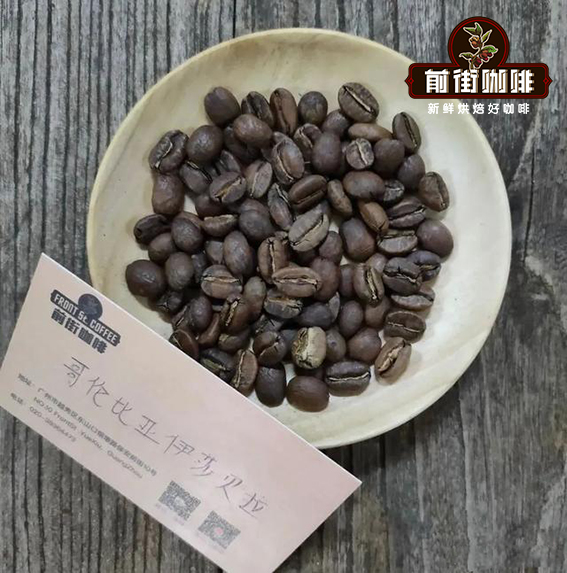
FrontStreet Coffee: Colombia Isabella Coffee Beans
Country: Colombia
Region: Huila
Altitude: 1760m
Variety: Pink Bourbon
Processing Method: Semi-washed
Flavor: Cherry Tomato, Citrus, Floral Notes, Honey, Fruits
Catuai
Catuai is a single-gene variant of Bourbon, discovered in Brazil in 1937. Its yield and disease resistance both beat Bourbon, and the plant is shorter, making harvesting convenient. Unfortunately, like Bourbon it suffers a biennial bearing cycle. Its flavor is comparable to — or slightly behind — Bourbon. More importantly, it is extremely adaptable: it needs no shade trees and thrives in direct sun (hence "sun coffee"), and tolerates high-density planting, though it then demands more fertilization, which raises costs. Coffee farmers' initial acceptance was therefore lukewarm.
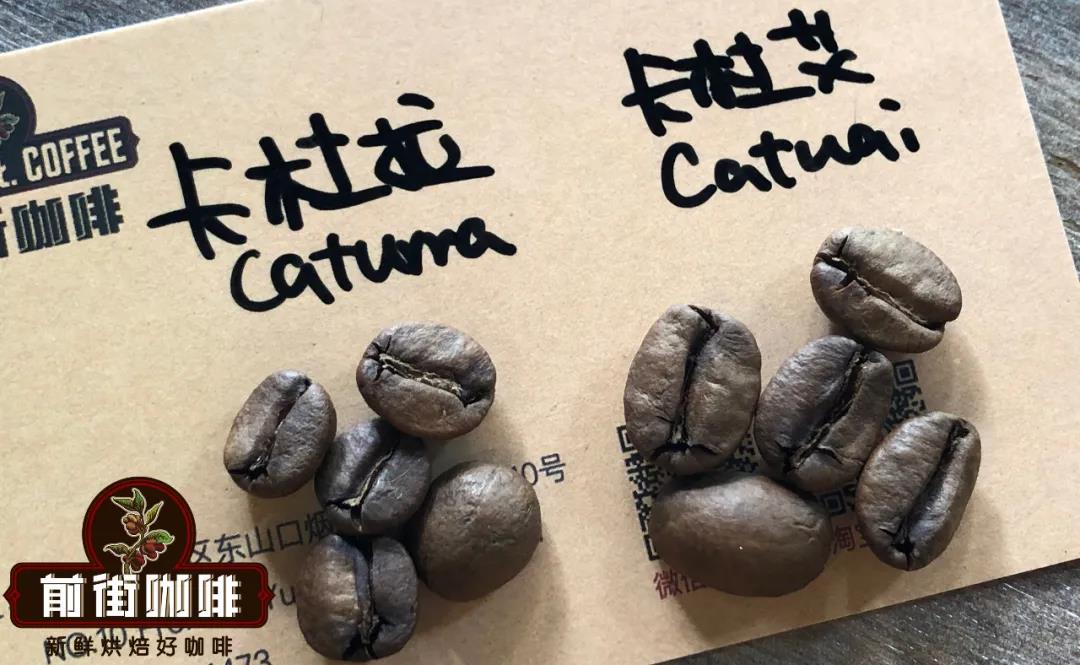
Catuai is now cultivated mainly across Latin America; most of FrontStreet Coffee's Costa Rican beans, for example, use the Catuai variety.
Icatu
Icatu is an Arabica hybrid, a cross between Mundo Novo and Catuai. It resists the elements well — particularly strong wind and rain. It inherits Catuai's low plant height while fixing Mundo Novo's shortcomings, and its cherries grip the branch firmly, refusing to fall in strong winds — a valuable trait, since Arabica cherries are notoriously fragile. Its weaknesses: flavor is flatter than Catuai and lacks Mundo Novo's richness, and its productive fruiting lifespan is only about ten years.

Mundo Novo
Mundo Novo is a natural hybrid of Bourbon and Typica (Sumatra lineage) discovered in Brazil, and it has been cultivated there since around 1950. It adapts strongly to its environment and resists pests and disease. It is a high-yield variety, though slow growing, with relatively large beans. Its flaw is height: trees exceed 3 meters — beyond the reach of harvesting machines, so mechanized harvest is impractical — and the tops must be pruned every year. In the cup, Mundo Novo balances acidity and bitterness well.
Laurina
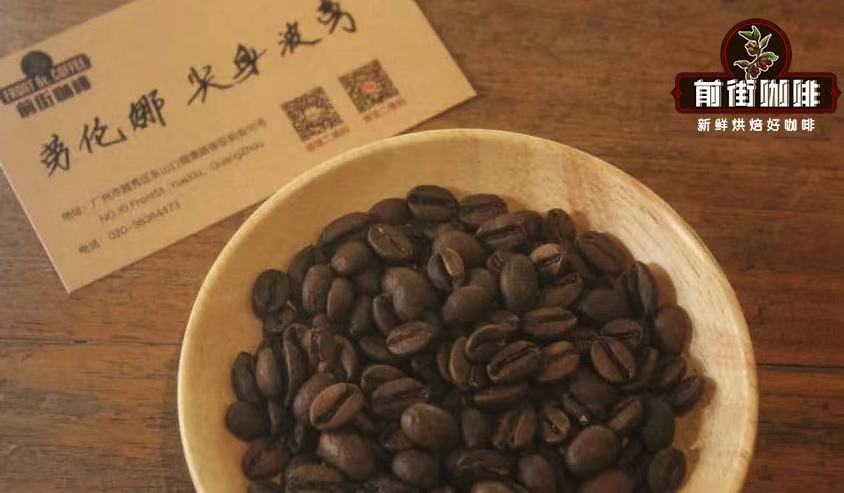
Laurina may be one of the rarest coffees in the world, discovered in 1810 by a coffee farmer named Leroy on Réunion Island (formerly Bourbon Island). Its preciousness has reasons. Beyond its unique appearance, its naturally low caffeine content sets it apart: common Arabica beans such as Typica or Bourbon carry about 1.2% caffeine, and Robusta — often relegated to instant coffee for its harsh flavor — about 2.8%. Laurina holds only 0.6%. And with the low caffeine comes no sacrifice: its rich fruit flavors and mellow aroma remain undiminished.
That concludes FrontStreet Coffee's tour of Brazilian coffee varieties. We hope it helps you understand Brazilian coffee better — and choose the Brazilian variety that best suits your palate.
For more specialty coffee beans, add FrontStreet Coffee on WeChat: kaixinguoguo0925
FrontStreet Coffee Recommendation
Brazilian coffee is wonderfully approachable: moderate acidity, with sweetness, bitterness, and body in excellent balance — which is why it takes a medium roast so well, releasing nutty aromas into a mellow cup with just a whisper of acidity. It works as a single origin or as the backbone of a blend.
For a first taste of the origin, FrontStreet Coffee's Brazil Cerrado Red Bourbon is a classic. Cerrado is one of Brazil's best-known producing regions, and this South Minas Red Bourbon — pulped natural, roasted medium — offers rich aromas of creamy peanut, toasted bread, caramel, and hazelnut with a round, smooth mouthfeel: not sour, only a light bitterness. It brews beautifully as pour-over and is equally at home in a moka pot, as an espresso SOE, in a siphon, or in a French press.
FrontStreet Coffee's other Brazilian single origin, the Queen Estate (Fazenda Rainha) Yellow Bourbon from Mogiana near southern Minas, grows in fertile red volcanic soil that develops full, saturated aromatics. Yellow Bourbon is a rare natural mutation of Red Bourbon with an especially clean fruit character; brewed by hand or through a moka pot or home espresso machine, it reveals a sugarcane sweetness found nowhere else, alongside fruit and chocolate notes.
And since low acidity and balance are exactly what espresso lovers want, Brazilian beans anchor many of FrontStreet Coffee's espresso blends — the crema-rich Classic Blend, the nut-forward Premium Blend, the balanced Black Cocoa Blend recommended by baristas, and the shop-focused Commercial Blend all include Brazilian components, contributing chocolate and cream aromas, a gentle sweet-sour-bitter harmony, and the stable extraction every barista appreciates.
Important Notice :
FrontStreet Coffee is a long-established specialty coffee roaster in Guangzhou China, selling freshly roasted beans from its own farm in Yunnan as well as dozens of carefully selected single-origin beans from around the world for both pour-over and espresso. The products deliver consistently excellent quality and great value, with shipping within 24 hours. Guangzhou's FrontStreet Coffee shop is recommended by many coffee lovers, and the beans are now available online at the Tmall 。
FrontStreet Coffee has moved to a new address:
FrontStreet Coffee Address: 315,Donghua East Road,GuangZhou
Tel:020 38364473
 Scan and follow the En Gafei WeChat official account. Please indicate that the reprint comes from "En Gafei".