Espresso Recipe and Brewing Method: Ratios, Time, Tamping Steps and Process
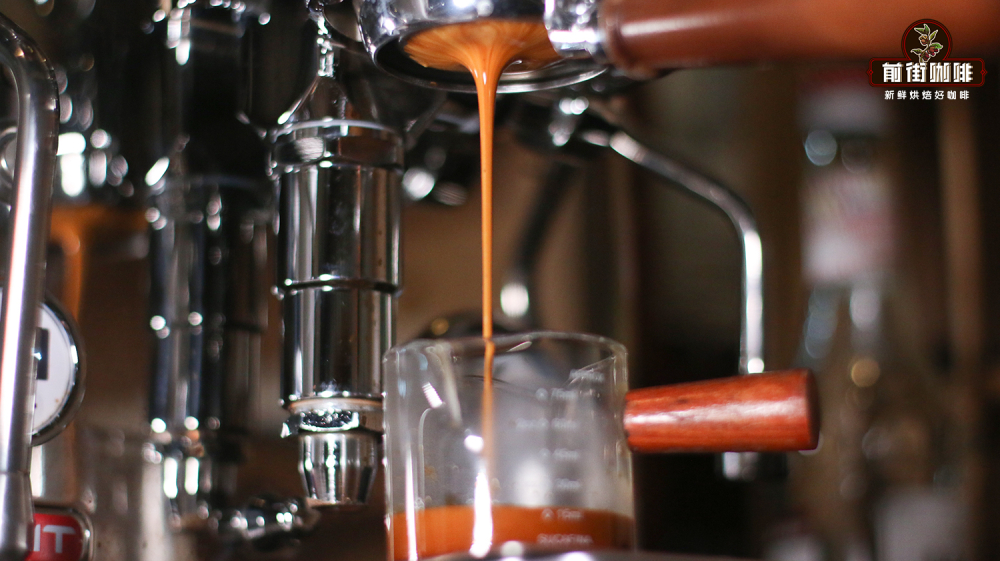
A coffee shop typically offers espresso-based drinks such as the ever-popular latte and Americano. Every one of those drinks depends on a properly extracted espresso shot. FrontStreet Coffee has shared many extraction methods before; today it will walk through how to pull a qualified shot with ease.
What Parameters Should Be Considered When Extracting Espresso?
When making espresso we need to measure at least three main parameters: dose, extraction yield and extraction time. As baristas at FrontStreet Coffee, we check these three every morning, and some baristas go so far as to check the parameters of every single shot they pull.
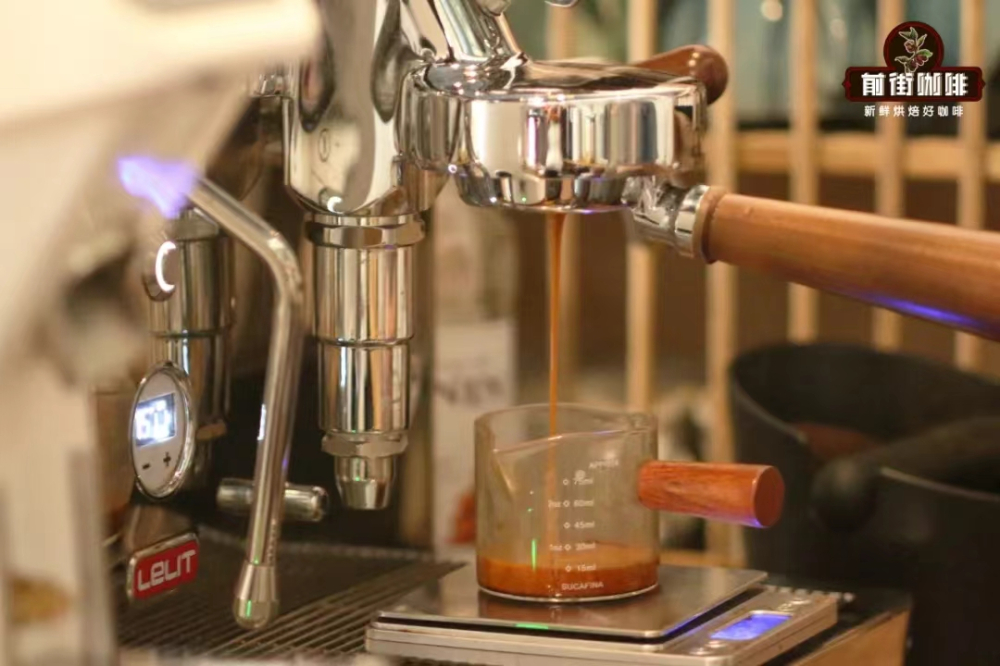
It is worth noting that FrontStreet Coffee recommends using a double espresso basket for extraction. At FrontStreet Coffee we believe you should use double baskets as much as possible and, ideally, never touch single portafilters. That is another topic, though - for now, let us focus on the recipe.
Dose Amount
Dose is the weight of the coffee grounds you use (unit: g). Coffee dose is typically measured in grams. It is generally accepted that for a double espresso the dose ranges between 14-24 grams, depending on the basket size. In that dark era when all coffee beans were thought best roasted dark and oily, 14 grams was once the golden rule for dose. Fortunately, trends have shifted over the past 10 years: beans used for espresso have gradually moved to medium-dark as the mainstream, with a drift toward lighter roasts, and doses have risen accordingly.

We should treat dose as the first parameter to adjust. So how do you know how many grams to use? It is the simplest step in building a recipe - check the capacity of your double basket. The basket's capacity, together with the roast degree of the beans, basically determines how much coffee you should use. For example, FrontStreet Coffee commonly uses the Lelit V3 espresso machine, whose standard double basket holds about 20 grams, so FrontStreet Coffee's espresso recipes typically start at 20 grams.
Of course, even if your basket also holds 20 grams, you can adjust the dose up or down according to the roast. Put simply, for darker roasts the dose can be slightly less (18-20 grams); for lighter roasts it should be slightly more (20-21 grams).

If for some reason you need to extract with a smaller dose - say 14 grams - then it is best to switch to a shallower, smaller-capacity flat-bottom basket. Using a large-capacity basket with a small amount of coffee raises the risk of channeling, because it is hard to distribute the grounds evenly before tamping, and after tamping there is too much space between the puck and the shower screen, which easily causes turbulence. Once channeling occurs, hot water cannot pass evenly through the puck, so the overall extraction is uneven and neither the parameters nor the flavor can be referenced.
Extraction Yield
Extraction yield is the amount of liquid in the cup (coffee liquid plus crema), measured in ml or g. Traditionally it was measured in milliliters, but over the past 10 years more and more baristas have begun using electronic scales and measuring in grams. Measuring in grams is more accurate because you do not have to account for how roast degree and freshness affect crema volume, whereas measuring in milliliters requires allowing for those variables.

Extraction yield is usually tied to dose. For example, a brew ratio of 1:2 means that with 20 g of coffee the yield will be 40 g. For example:
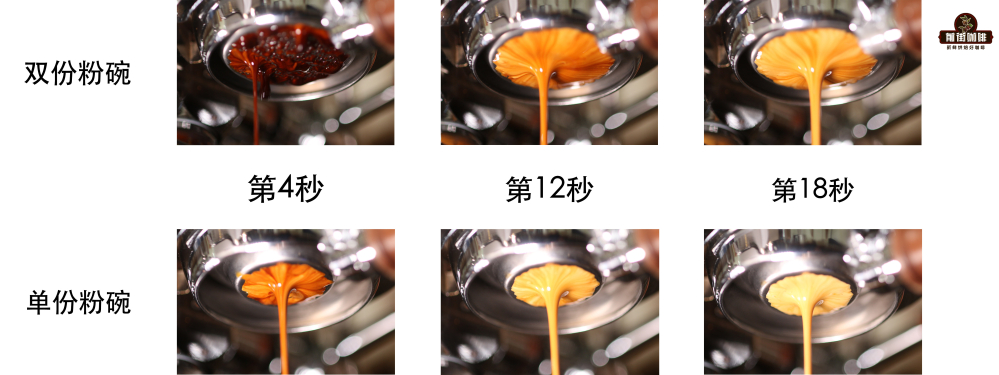
15g dose: 37g yield = 1:2.5
17.5g dose: 47.5g yield = 1:2.7
22g dose: 44g yield = 1:2
With a fixed dose, a higher yield means a more diluted espresso (weaker, more subdued flavor); a lower yield makes it more concentrated, with a stronger, more intense flavor.
FrontStreet Coffee suggests starting with a 1:2 ratio when building a recipe. At 1:2 most espressos keep a pleasant, strong but not overly harsh taste while still letting you taste all the subtle differences. A 1:1.5 ratio can make the shot too strong and mask some of the coffee's good flavors. For some beans, going up to 1:2.5 is also acceptable, since it reduces intensity slightly and makes the flavor clearer and more complete.

FrontStreet Coffee suggests that when building a recipe you should not casually change the 1:2 ratio until you have tested at least a few different extraction times. If, after trying different times, the 1:2 ratio still does not satisfy you, then you can try changing the ratio.
Extraction Time
Extraction time is the time needed to extract the shot. Timing starts when you press the button and ends when the yield reaches the target amount (unit: s). Most institutions and books hold that espresso extraction time should be between 20-30 seconds. The darker the roast, the shorter the time; the lighter the roast, the longer the time. This is because darker-roasted beans have lower density (lighter roasts are denser), making flavor easier to pull from the grounds. For darker roasts, extraction time is best kept between 20-25 seconds; for lighter roasts, between 25-30 seconds. Every bean has a "sweet spot" in extraction time, and the barista's job is to find it by adjusting the grind setting.

The simplest approach is to first find the extraction time at which the coffee starts to turn bitter, then step back to the last time that was not bitter. For example, using FrontStreet Coffee's Sunflower Warm Blend:
25 seconds = too acidic, hollow flavor, short aftertaste;
27 seconds = bright acidity, more flavor, quite good;
29 seconds = pleasant acidity, more sweetness, balanced flavor and a long aftertaste;
31 seconds = sweet and bitter notes.

In that case we could choose 27 or 29 seconds and stop experimenting, but if you want to see whether more sweetness can be pulled, keep going. At 31 seconds it starts to turn very bitter, and once we know over-extraction is setting in, we go back to the 29-second extraction - the optimal time for this bean.
Temperature
Temperature refers to the temperature of the extraction water (unit: °C). It should not sit at the top of the list, but if your espressos are struggling to reach their best it is definitely worth considering. Higher water temperature makes extraction easier, thus increasing the extraction rate.

If you feel you cannot extract enough flavor within 30 seconds - especially with light-roasted beans - then raising the water temperature may be wise. Espresso extraction almost always begins to channel near the end (the puck loosens after flavor compounds are extracted), and if enough flavor compounds cannot be extracted before channeling speeds up the flow, the shot will be under-extracted. Raising the water temperature before extraction begins boosts the extraction rate and therefore the overall extraction percentage.
Pressure Profiling
Espresso extraction requires pressure. Pressure profiling means the pressure used during extraction varies across different stages (unit: bar). Only certain machine models offer this, such as Synesso, Modbar or Slayer. Pressure increases the extraction rate, so for lighter-roasted beans lower pressure can be used early in the extraction (increasing in the middle stage and decreasing at the end), which extracts less acidity. Using lower pressure early also reduces channeling, resulting in higher extraction rates.
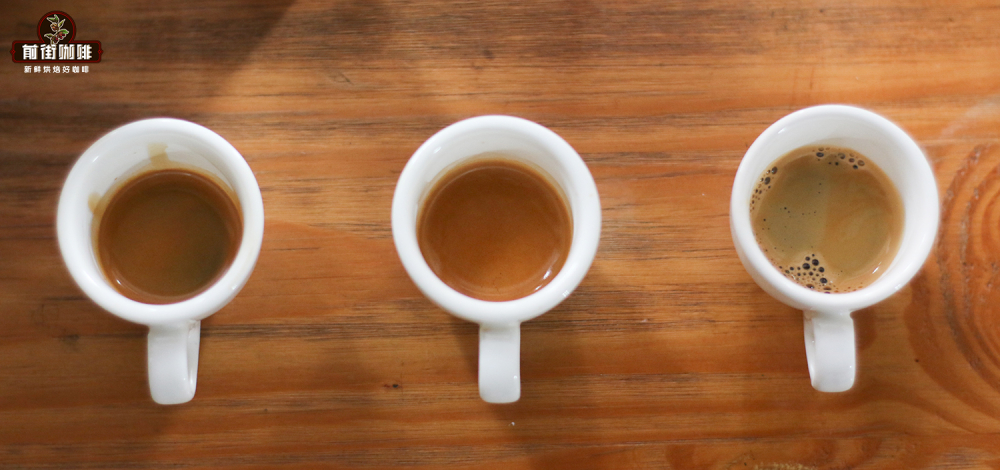
Even Extraction: Avoid Channeling
Even extraction means making the hot water pass evenly through the puck, with no area extracted more or less than another. Even extraction should be the barista's ultimate goal.
As long as you keep these points in mind, with understanding and practice, you can pull a satisfying espresso shot too.
FrontStreet Coffee Recommendation
A shot is only as good as the beans behind it, and for espresso and moka pot use FrontStreet Coffee's first choice is FrontStreet Classic Blend. Designed specifically for espresso and moka extraction, its standout strength is crema: even a beginner on a non-professional home machine can pull a dense, fine crema. Built on the traditional Mamba recipe, it is rich and mellow, easy for veterans and newcomers alike.
If you want good flavor at a modest price, FrontStreet Black Cocoa Blend uses 100% Arabica and offers ample crema with a full body for far less. And for a fruit-forward twist, FrontStreet Strawberry Candy is a popular fruit-flavored espresso blend that weaves the native flavors of different Arabica origins into a bright strawberry-candy sweetness - ideal for home drinking or a cafe menu that wants a distinctive milk coffee.
Finally, FrontStreet Premium Blend has been the shop's staple for nearly a decade, carrying its Americano and latte lineup. It pairs Brazil Cerrado with Colombia Huila for the classic espresso taste so many people remember.
Important Notice :
FrontStreet Coffee is a long-established specialty coffee roaster in Guangzhou China, selling freshly roasted beans from its own farm in Yunnan as well as dozens of carefully selected single-origin beans from around the world for both pour-over and espresso. The products deliver consistently excellent quality and great value, with shipping within 24 hours. Guangzhou's FrontStreet Coffee shop is recommended by many coffee lovers, and the beans are now available online at the Tmall 。
FrontStreet Coffee has moved to a new address:
FrontStreet Coffee Address: 315,Donghua East Road,GuangZhou
Tel:020 38364473
 Scan and follow the En Gafei WeChat official account. Please indicate that the reprint comes from "En Gafei".