Should You Stir When Brewing Coffee with a Siphon? What Happens If You Don't Stir Siphon Coffee?
When brewing siphon coffee, FrontStreet Coffee's baristas typically stir more to accelerate extraction from the grounds, removing the heat source at about one minute to let the coffee liquid flow back.
The editor was curious: if we keep the same parameters as usual but reduce the stirring, thereby extending the extraction time, what would happen? So today we are going to try it out.
Siphon Pot
The main principle of coffee extraction with a siphon pot is a pressure difference. First, the water in the lower chamber is heated to boiling, then the upper chamber is inserted, creating a high-pressure state in the lower pot. Due to the pressure difference between the lower and upper chambers, hot water flows upward to mix with coffee grounds in the upper chamber and extract. When the extraction is complete, the heat source is removed from the lower chamber, instantly reducing the pressure difference. The siphon effect then causes the coffee extract to flow back down into the lower chamber.
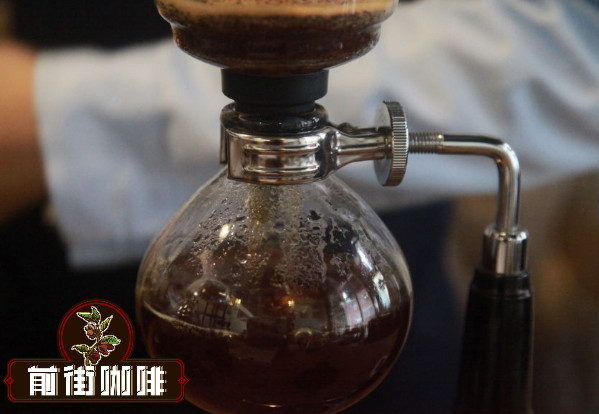
If you want to speed up the return flow of the coffee extract, you can wipe the lower chamber with a wet cloth, which reduces the pressure difference between the chambers and makes the extract flow back faster.
Bean Introduction
Today, FrontStreet Coffee chose the Costa Rica Gigante Black Honey bean for this experiment. This bean showed excellent fermented wine aroma, strawberry, and sugarcane flavors during cupping. I wonder what flavors it would have when brewed with a siphon?
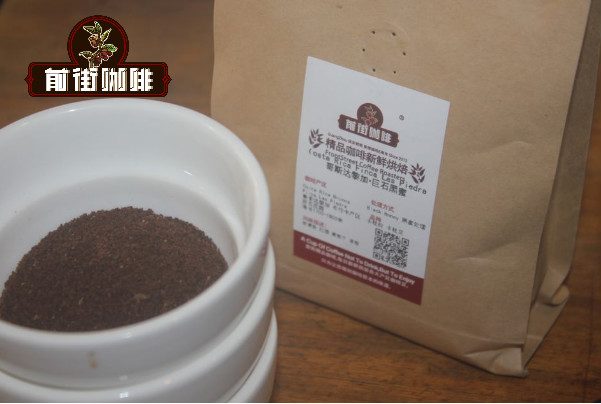
Costa Rica Gigante Estate
Country: Costa Rica
Estate: Gigante Estate
Grade: SHB
Processing: Black Honey Processing
Altitude: 1700-1800m
Variety: Caturra, Catuai
Experiment
In this experiment, we will stir once after adding the coffee grounds to ensure full contact between coffee and water, then steep directly for 1 minute and 5 minutes to see what differences in flavor emerge. The basic parameters remain unchanged; only the extraction time is altered.
Parameters: 15 g coffee dose, water temperature 90°C, medium grind (BG 6T: 50% pass-through rate on China standard #20 sieve), coffee-to-water ratio 1:15.
Let us first brew a pot using our usual method as a comparison.
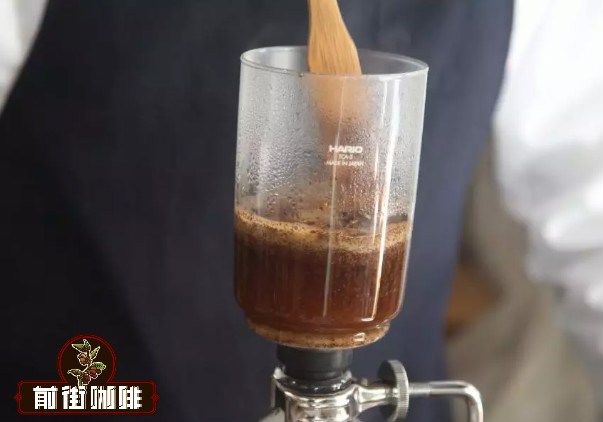
Method: Add 225 g of water to the lower chamber. When the water temperature reaches 90°C, insert the upper chamber tightly. When water reaches the upper chamber, add the coffee grounds and stir to ensure full contact between coffee and water. Stir again after 30 seconds to break the crust. Remove the heat source at one minute to let the coffee liquid flow back. (Timing starts when the grounds are added.) Extraction time: 1'20".
Flavor: Fermented wine aroma, citrus, almond, hazelnut, cream.
Steeping for 1 minute
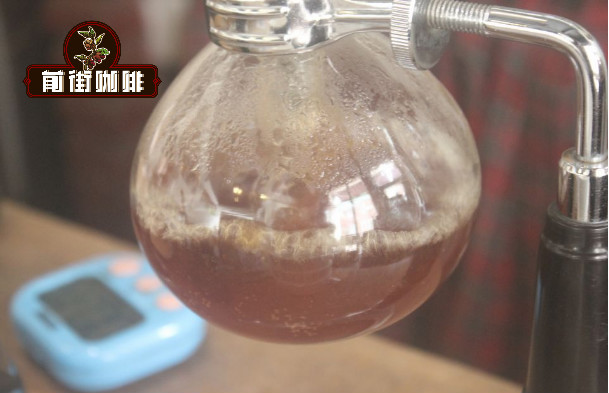
Method: Add 225 g of water to the lower chamber. When the water temperature reaches 90°C, insert the upper chamber tightly. When water reaches the upper chamber, add the coffee grounds and stir to ensure full contact between coffee and water. Remove the heat source at one minute to let the coffee liquid flow back. (Timing starts when the grounds are added.) Extraction time: 1'24".
Flavor: Fermented aroma, floral notes, tea fragrance, caramel. Overall flavor is thin, but sweetness is prominent.
Steeping for 5 minutes
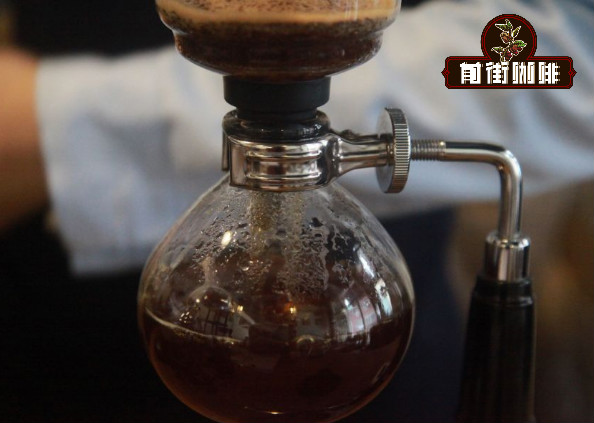
Method: Add 225 g of water to the lower chamber. When the water temperature reaches 90°C, insert the upper chamber tightly. When water reaches the upper chamber, add the coffee grounds and stir to ensure full contact between coffee and water. Remove the heat source at one minute to let the coffee liquid flow back. (Timing starts when the grounds are added.) Extraction time: 5'34".
Flavor: Fermented aroma, tea fragrance, citrus, cherry, sugarcane. Sweet and sour sensations are relatively more pronounced.
Conclusion
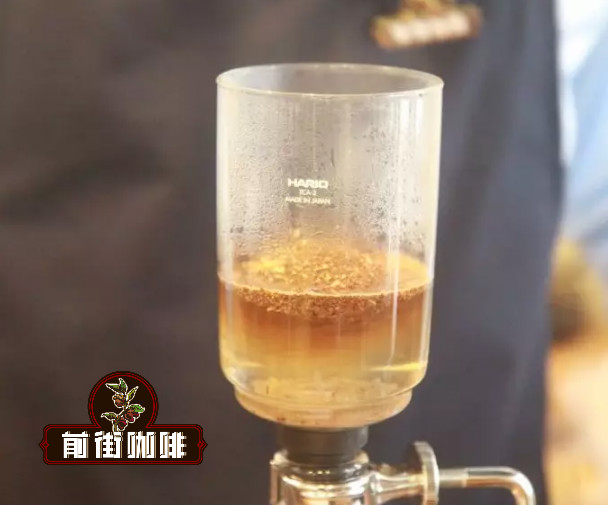
When brewing siphon coffee with a coarse grind but without stirring, even with extended extraction time, the resulting coffee extract will still taste weak.
Therefore, FrontStreet Coffee suggests that when brewing siphon coffee, if you do not want to stir, you might try adjusting the grind finer to increase the extraction rate.
FrontStreet Coffee Recommendation
Siphon brewing rewards a bean with enough body and sweetness to stand up to the immersion-style extraction. For that, FrontStreet Coffee's medium-to-dark single origins are a strong match. FrontStreet Jamaica Blue Mountain No. 1 is medium-dark roasted and balances sweetness, acidity, and bitterness almost perfectly, with cream, caramel, chocolate, nut, and honey notes and a clean, long finish. FrontStreet PWN Indonesian Golden Mandheling is a deep roast with very low acidity and a full, long body of herbal and dark chocolate aroma, and FrontStreet Brazil Queen's Estate brings low acidity, rich nut and cocoa aromas, and clear caramel sweetness.
FrontStreet Papua New Guinea Bird of Paradise, grown at 1,600-1,800 meters from the same Typica lineage as Blue Mountain and washed three times, offers a clean, sweet cup that suits the siphon's gentle extraction, and FrontStreet Yunnan 2013 Sun-Dried Typica adds citrus and caramel with a medium-dark roast profile of nut, chocolate, and brown sugar.
Use a medium grind and 1:15 ratio at 87-90 degrees Celsius, break the crust with a gentle stir during the brew, and remove the heat source before the last of the liquid returns so the finish stays clean.
Important Notice :
FrontStreet Coffee is a long-established specialty coffee roaster in Guangzhou China, selling freshly roasted beans from its own farm in Yunnan as well as dozens of carefully selected single-origin beans from around the world for both pour-over and espresso. The products deliver consistently excellent quality and great value, with shipping within 24 hours. Guangzhou's FrontStreet Coffee shop is recommended by many coffee lovers, and the beans are now available online at the Tmall 。
FrontStreet Coffee has moved to a new address:
FrontStreet Coffee Address: 315,Donghua East Road,GuangZhou
Tel:020 38364473
 Scan and follow the En Gafei WeChat official account. Please indicate that the reprint comes from "En Gafei".