What are the characteristics and stories of Bolivian coffee beans? How does Bolivian coffee taste?
For more premium coffee knowledge, visit FrontStreet Coffee.
Central and South American coffee has long been known for its high quality. As a South American coffee-producing country, Bolivia has received limited attention because its cultivation altitude is lower than that of other South American growing countries. FrontStreet Coffee does not, however, believe Bolivian coffee is inferior simply because of "lower altitude." The country has a beautiful natural environment and excellent natural resources as its capital, making it a "paradise" for coffee cultivation. In this article, FrontStreet Coffee takes you through Bolivian coffee.
Bolivian Geography
Bolivia lies in the central part of South America, bordered by Brazil, a major coffee-producing country, and by Peru, a mysterious coffee nation, to the north. Bolivia is known as a country of high mountains, and its capital, La Paz, sits at an altitude of 3,660 meters. Even Arabica, which thrives at high altitudes, cannot be cultivated on this cold highland. The Yungas region in northeastern La Paz, however, borders the basin and sits slightly lower, with fertile land that is very suitable for coffee. Bolivia is therefore a country where coffee is grown at "lower altitudes."

Bolivia's Coffee Cultivation History
Bolivian coffee cultivation has a long history, dating back to 1880, when production was largely run as large farms. From 1932 to 1983, the country faced internal and external troubles, and political turmoil caused the coffee industry to stagnate or even regress. In 1991, with the government stabilized, indigenous people were encouraged to join coffee cultivation plans to revive the national economy, though coffee quality was not emphasized at the time. Poor national infrastructure and difficult transport also limited the development of the coffee industry.
Bolivian Coffee Growing Regions
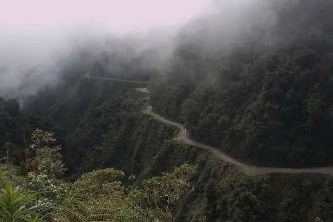
The main coffee-growing region in Bolivia is the Yungas area. Infrastructure here is relatively backward, and there are no large-scale washing plants. When coffee ripens, farmers must harvest the ripe cherries and immediately transport them to La Paz, which sits higher than the region, for processing. The road from Yungas to La Paz is rugged and known as the "Death Road." During transport, the cherries are prone to fermentation and rot, which produces unpleasant, pungent flavors.

Bolivian Growing Region Flavors
Through cupping Bolivian coffees, FrontStreet Coffee has found that coffee from high-altitude areas usually carries deep, full sweetness, soft citrus acidity, and layered flavors of black fruit and berries. Coffee from relatively lower altitudes, by contrast, shows a balanced taste, excellent chocolate sweetness, soft acidity, and flavors of malt and dried fruit.
The Symbol of Bolivia's Specialty Coffee Movement
Before the 21st century, Bolivian coffee had the right time and place but was missing the right people. Between 2000 and 2004, the United States Agency for International Development, aiming partly to curb drugs and partly recognizing Bolivia's coffee potential, invested in building a large-scale washing plant and supporting facilities in the Yungas region. This ended the "Death Road" that had lasted for over 100 years. Panamanian coffee experts also came to assist Bolivia's coffee industry, believing that only high-quality specialty coffee could lead coffee farmers to prosperity. The "Central Coffee Producers Association" was therefore established in Caranavi, in the Yungas region, with the aim of improving coffee quality.
In 2004, Bolivia held its first Cup of Excellence (COE) competition, with a total of 13 specialty beans scoring above 84 points, among which the champion bean scored as high as 90.44 points, marking the first international recognition of Bolivian coffee. At the 2017 World Barista Championship (WBC), Japanese competitor Miki Suzuki used Geisha from Bolivia and, with her superb skills and the profound flavors of Bolivian coffee, won the world runner-up position.
Tomorrow's Sun Program
This is a comprehensive plan to improve Bolivian coffee, requiring significant investment of money and effort to guide small farmers through technical support, breeding, pruning, harvesting, and other important techniques. It also purchases coffee from small farmers at high prices, creating a virtuous cycle in which farmers' income and quality enter sustainable operation. The Rodriguez family visits all members of the Tomorrow's Sun Program every month, providing personalized technical assistance and agricultural advice, where even the simplest suggestion can be very helpful.
As coffee farmers' productivity keeps improving, the Rodriguez family stresses that they should keep focusing on quality rather than quantity. They also teach farmers to take good care of what they have and make full use of it to maximize production. The Rodriguez family also holds seminars with top agronomists throughout the year, where coffee farmers can meet each other, share experiences, and discuss solutions to the problems they encounter.
Bolivian Coffee Cultivation Varieties
Bolivia mainly cultivates Arabica, primarily Typica, Caturra, and Catuai. Geisha, SL-28, and Java are also grown. Organic cultivation methods are used nationwide, which results in higher coffee quality.
The variety locally known in Bolivia as "long-shaped bean" takes its name from its elongated appearance. Its formal name is Java. Java is a very interesting variety: its name suggests a strong connection to Indonesia, but Java actually originated in the forests of Ethiopia. It was collected by local ethnic groups and then carried to Indonesia through Yemen, where it was named Java. It was once generally believed to be a variant of Typica, but genetic comparison revealed that Java is actually the Ethiopian coffee variety Abysinia.
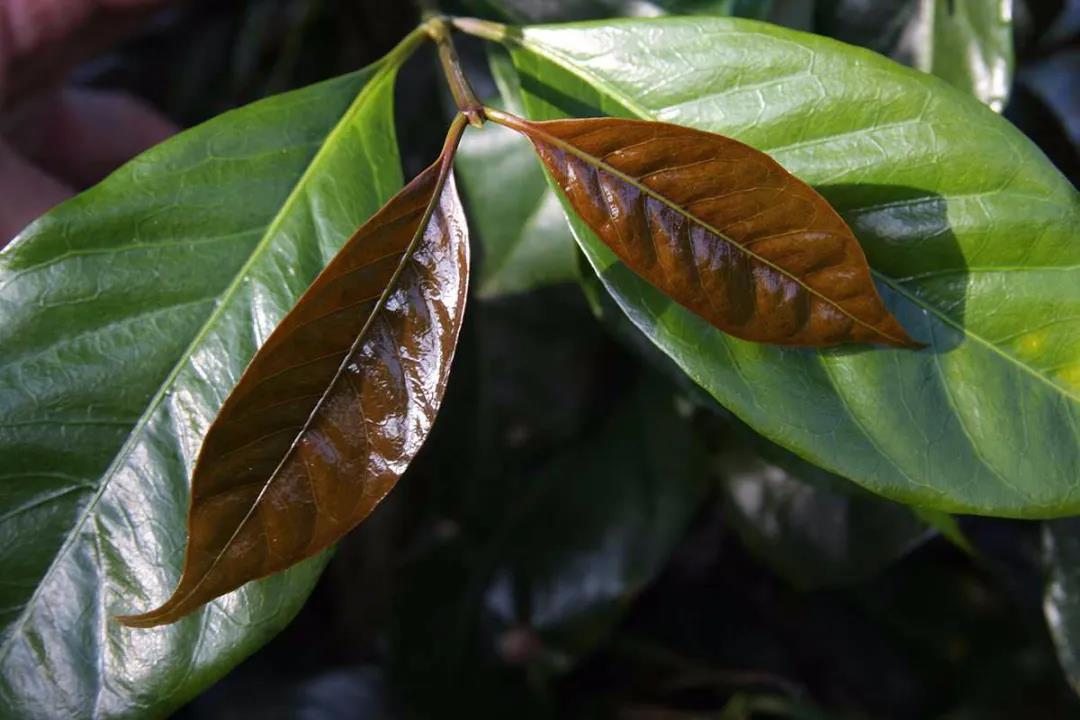
After being introduced to Indonesia, the Java variety first spread to the nearby Timor island group and then to Cameroon in East Africa, where it was first released for farmer cultivation in 1980. As for its arrival in Central and South America, under the leadership of breeding expert Benoit Bertrand, it was introduced to Costa Rica in 1991 through CIRAD, the French Agricultural Research Centre for International Development. The first Central American country to officially recognize the Java variety was Panama. The fruit and seeds of Java are very long, the young shoots are bronze-colored, and the plant is quite tall but yields little. Because its flavor is outstanding, rivaling Geisha, and it resists leaf rust and coffee berry disease better than many varieties, it is very suitable for cultivation by small farmers.

FrontStreet Coffee - Bolivia Waliki Estate Cocoa Natural Java
Coffee Region: La Paz, Waliki Estate
Cultivation Altitude: 1,600 meters
Coffee Variety: Java
Processing Method: Cocoa Natural Processing
Cocoa Natural Processing
During the harvest season, the estate hires pickers from the Bolinda community to carefully select coffee cherries during the picking period. These pickers are trained to select only ripe cherries, and the estate conducts multiple rounds of picking during the harvest season to ensure the cherries are picked at optimal ripeness. The estate uses crates, which prevent the coffee from being damaged in transit and also let air circulate around the cherries, avoiding unnecessary early fermentation.

After selection and weighing, the cherries are carefully washed and placed on raised African drying beds to dry, then turned every hour. After about a week, the cherries are placed in cocoa dryers. Cocoa dryers had never been used for coffee processing before, but Pedro of the Rodriguez family kept innovating and experimenting with different techniques and discovered that cocoa dryers can dry coffee slowly and continuously at low temperatures, thereby reducing the influence of weather. After the beans are dried, they are transported to La Paz for resting and then dehulled at Agricafe's drying factory, La Luna. Mechanical dehulling and sorting are used at the factory, and in addition, manual sorting under ultraviolet and natural light is required.
FrontStreet Coffee Roasting Recommendations
When roasting this cocoa natural processed Java, FrontStreet Coffee's roasters adopted a medium-light roast to highlight the fermentation notes brought by the processing method and the floral, berry, and nut characteristics of the Java beans themselves.
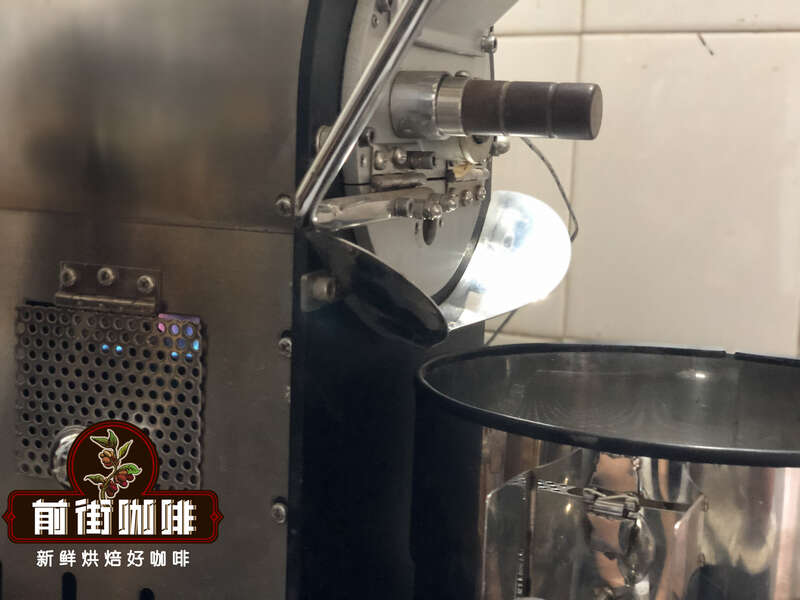
Yangjia 800N, roasting amount 480g: heat at 170°C into the drum, firepower 120, damper opening 3; return temperature point at 1'36", when the drum temperature reaches 111°C, open the damper to 4; when the drum temperature reaches 151°C, the bean surface turns yellow, the grassy smell completely disappears, entering the dehydration stage; when the temperature reaches 164°C, open the damper to 5, ugly wrinkles and black patterns appear on the bean surface, and the toast smell clearly changes to coffee aroma, which can be defined as the prelude to first crack. At this point, listen carefully for the sound of first crack, starting at 10'18", damper unchanged, develop for 1'00" after first crack, and discharge at 190°C.
FrontStreet Coffee Cupping Report
FrontStreet Coffee conducts cupping within 8-24 hours after roasting sample beans. FrontStreet Coffee's baristas generally use 200ml ceramic bowls with markings at 150ml and 200ml. According to SCAA standards, water TDS is around 150ppm. Too low a TDS can easily cause over-extraction, while too high a TDS affects mouthfeel and can easily cause under-extraction. The water temperature used for cupping is 94°C. The cupping grind size is controlled according to SCAA cupping standards, with a pass rate of 70%-75% through a #20 standard sieve (0.85mm). Ratio: 11 grams of coffee powder plus 200ml of hot water, that is, 1:18.18, so the extracted concentration falls within the 1.15%-1.35% Golden Cup range. Soaking time: 4 minutes.

Dry Aroma: Fermentation aroma
Wet Aroma: Grapes, fermentation notes
Flavor: Fermentation notes, grapes, nuts, slight floral notes, honey, cream
FrontStreet Coffee Brewing Experience
For brewing medium-light roasted beans, it is recommended to use 90-91°C. A higher water temperature can extract the aromatic substances and acidity from light roasted beans. Because medium-light roasted beans have a harder texture, increasing water temperature raises the extraction efficiency from the coffee powder and avoids unpleasant flavors such as sharp acidity.

Water Temperature: 90-91°C
Grind Size: BG#6m (80% pass rate through #20 sieve)
Powder to Water Ratio: 1:15
Powder Amount: 15 grams
For grind size, FrontStreet Coffee determines it through sieving, based on grinding suggestions provided by the Specialty Coffee Association (SCA) for pour-over coffee combined with practical verification. If you do not have a sieve at home, FrontStreet Coffee suggests watching the flow rate instead: if the water flows too fast, the grind is coarse; if it flows too slowly, the grind is fine.

FrontStreet Coffee Brewing Method: First pour 30g of water for a 30-second bloom, then pour 95g more (the scale reads around 125g), completing the pour in about 1 minute. When the water level drops to 2/3 of the powder layer, pour the remaining 100g (the scale reads around 225g), completing the pour in about 1 minute 40 seconds. Drip filtration finishes between 1'55" and 2'00"; remove the filter cone to complete extraction.
Brewing Flavor: Slight fermentation notes, grapes, slight nuts, floral notes, medium acidity, juice-like mouthfeel.
FrontStreet Coffee Recommendation
As the largest coffee producer, Brazil grows a huge range of coffees. Brazilian beans carry moderate acidity, and the balance among sweetness, bitterness, and body is excellent, which makes them especially suited to a medium roast, where nutty aromas rise from the cup, the taste is smooth and fragrant, and a light acidity remains. They work as a single origin or in a blend.
If you simply want a first taste of the Brazilian profile, FrontStreet Cerrado Red Bourbon is a very classic Brazilian single origin. Cerrado is a well-known local region that produces high-quality beans, and this coffee is the Red Bourbon variety common in South America. Roasted medium, it shows rich aromas of cream, peanut, toast, caramel, and hazelnut, with a rounded body, no acidity, and a slight bitter edge. It brews well as pour-over and also works in a Moka pot, as espresso SOE, in a siphon, and in a French press.
FrontStreet Brazil Queen Estate is another Brazilian single origin, from Mogiana, near South Minas. The fertile red volcanic soil there lets the cherries absorb plenty of nutrients and develop full aroma. Part of the area keeps the traditional farm model while another part has adopted modern, standardized management, which has greatly improved local coffee quality. FrontStreet Queen Estate is the rare Yellow Bourbon, a mutation of Red Bourbon with a cleaner fruit character. Brewed by pour-over, Moka pot, or home espresso machine, it delivers the fresh sugarcane sweetness other regions rarely offer, along with fruit and chocolate notes.
Brazil's low-acid, balanced character and approachable price make it a first choice for many specialty espresso recipes. FrontStreet's classic blend, its nutty specialty blend, the well-balanced black cocoa blend recommended by many baristas, and FrontStreet Coffee's Commercial Blend built for cafes all include Brazilian beans. The Brazilian component not only supplies chocolate and cream aromas but also provides a soft sweet-bitter-sour balance, which helps keep extraction stable.
Important Notice :
FrontStreet Coffee is a long-established specialty coffee roaster in Guangzhou China, selling freshly roasted beans from its own farm in Yunnan as well as dozens of carefully selected single-origin beans from around the world for both pour-over and espresso. The products deliver consistently excellent quality and great value, with shipping within 24 hours. Guangzhou's FrontStreet Coffee shop is recommended by many coffee lovers, and the beans are now available online at the Tmall 。
FrontStreet Coffee has moved to a new address:
FrontStreet Coffee Address: 315,Donghua East Road,GuangZhou
Tel:020 38364473
 Scan and follow the En Gafei WeChat official account. Please indicate that the reprint comes from "En Gafei".