Brewing Flavor Characteristics of Small Blue Mountain Coffee Beans - The Story of Papua New Guinea Kimel Estate Coffee Beans
Papua New Guinea Coffee
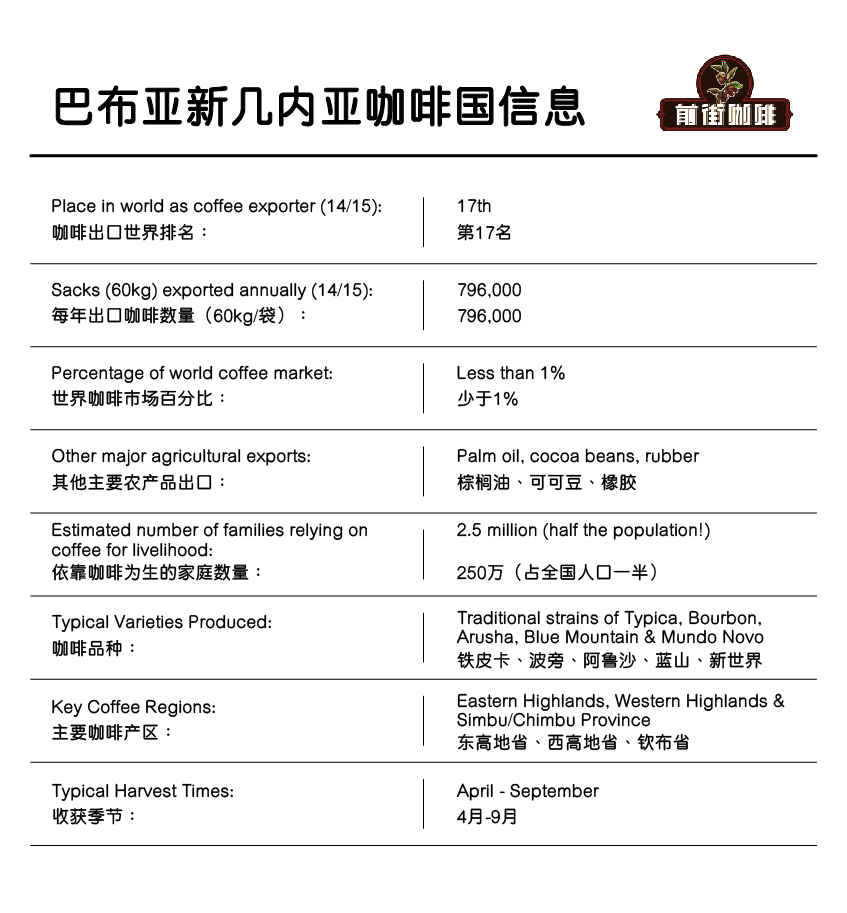
For years, Papua New Guinea's coffee has been overshadowed by that of its neighbor Indonesia. But its highly fruity, sweet coffee and ideal growing conditions have drawn the attention of FrontStreet Coffee. With coffee production growing by 65% between 2015 and 2016, it is time to pay more attention to this Oceanian country. Papua New Guinea is one of the least developed countries in the world, with dense rainforests, rugged mountains, and diverse indigenous peoples. It also sits in the equatorial rainy climate zone, dominated by tropical rainforest, and its biodiversity amazed FrontStreet Coffee's partners - roughly 6,500 native plant species and 380 native bird species make it a genuine biological treasure trove.
Although Papua New Guinea is close to Indonesia, its different coffee varieties, higher altitudes than Sumatra, and use of washed processing lead FrontStreet Coffee to conclude that its regional flavor is completely different from Indonesia's heavy, mellow aroma - instead it has brightness, sweet-and-sour notes, and floral and fruity aromas.

The island of New Guinea was colonized in turn by the Netherlands, Germany, Britain, Japan, Australia, and others from the 18th to 19th centuries. In 1961 the western half of the island became Indonesian territory, while the eastern half became independent from Australia in 1975, becoming today's Papua New Guinea.
Papua New Guinea is an island nation in the southwestern Pacific, and coffee is the only cash crop in its highlands, accounting for 40% of the country's total, with over 2 million small farmers depending on it for their livelihood. The coffee is grown mainly in mountainous areas at altitudes between 1,500 and 1,900 meters, where the scenery is picturesque, rainfall is abundant, and the soil is volcanic - ideal for high-quality Arabica.
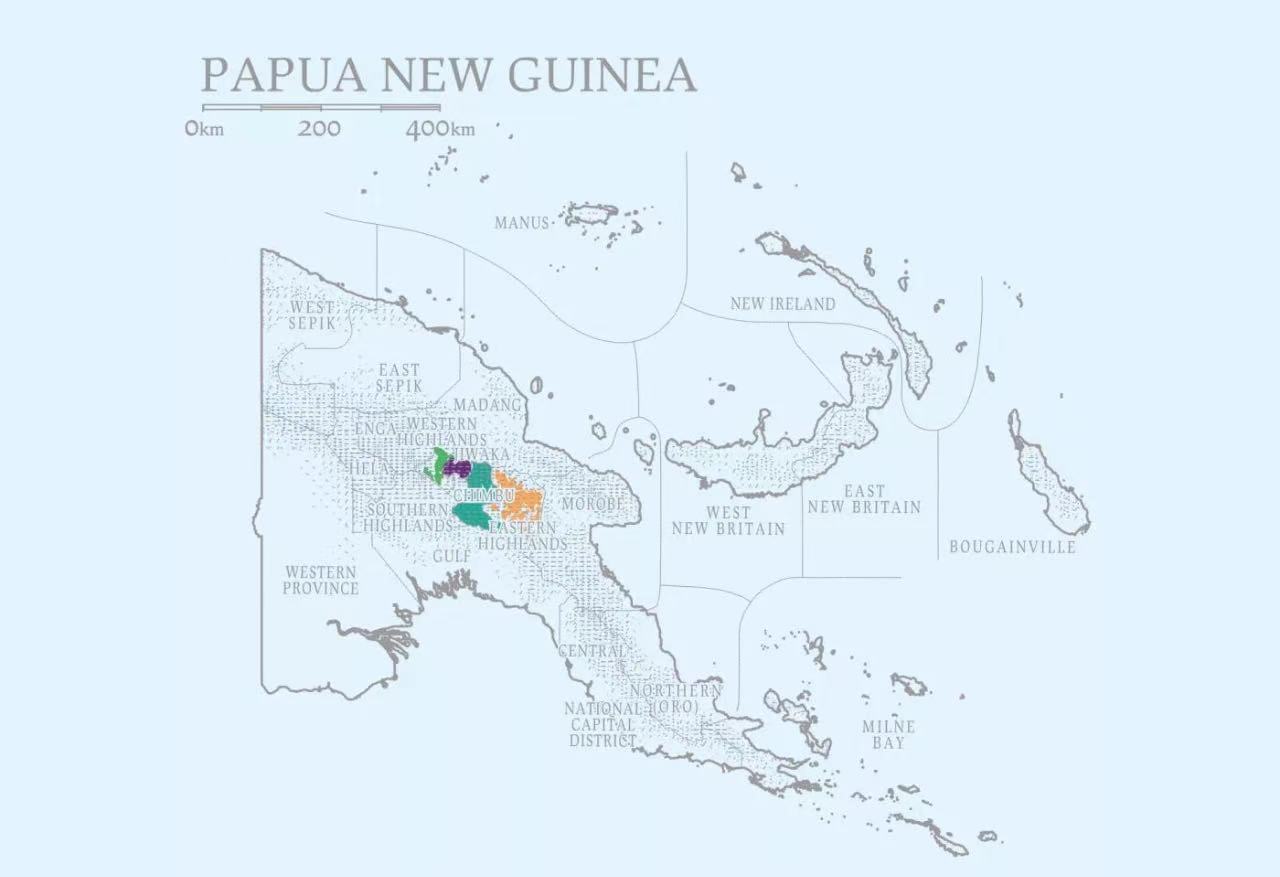
According to the Papua New Guinea Coffee Industry Corporation, the country has 16 coffee-producing provinces, yet over 90% of production is concentrated in the Eastern Highlands, Western Highlands, Jiwaka, Morobe, and Chimbu provinces. The vast majority of coffee is exported to Germany, the United States, and Australia. Even with production up 65%, the country's harvest remains small. ICO data shows it produced nearly 1.2 million bags of coffee (60kg per bag) in 2016, compared with nearly 11.5 million bags from Indonesia. More importantly, before 2016 the industry had been in decline. Still, many Papua New Guineans depend on the crop: the CIC estimates it provides income for 400,000 rural families.
Challenges Facing Papua New Guinea
Producers in Papua New Guinea face many challenges, and logistics is among the biggest. Scott Bennett, Managing Director of the Australian importer Bennetts, worked in Papua New Guinea in the 1990s. He told FrontStreet Coffee: "This is not an easy country. The roads between the mountains are poor, which makes transportation somewhat unreliable."
Although leaf rust is not currently a major problem, environmental threats remain. The CIC has called on the Papua New Guinea government to provide financial support for controlling the pest. Similarly, the Center for Agriculture and Bioscience International is working to prevent and manage its presence, while the New Zealand Fair Trade Australia office is providing farmer training for coffee groups applying for Fair Trade certification.
Another challenge is making sure the crop is consistent enough to enter specialty markets.

Papua New Guinea Coffee Bean Grading Standards
PNG's green-bean grading method is the same as Kenya, Tanzania, Uganda, Zimbabwe, and Puerto Rico - all use bean size as the basis for grading. Bean size is not an absolute measure of flavor quality, but for coffee from certain regions it is a highly useful indicator. In these areas, robust, fully formed, beautiful mature beans best express wonderful flavor. Consistent ripeness, hardness, and moisture content make it easier for roasting to achieve uniform, perfect flavors, so many emerging producing regions also use bean size as a grading method.
Papua New Guinea's coffee grades are divided into 12 levels, graded by defects:
Grade | Screen Size
AA | >18
A | 17
AB | >16 (50%) >17 (50%)
B | >16
C | >15
PB | 11-14S
X | mixed
E | >19
PSC | >15mm
Y1 | mixed
Y2 | mixed
T | mixed
Meaning and Rules of Papua New Guinea Green Coffee Names:
PNG Plantation Y
Country + Planting Type + Grade Name
In Papua New Guinea, plantations and large estates account for 25% of national production, and small to medium farms of 10-20 hectares (Holdings or Blocks) account for 10%. PNG has 76 registered plantations and estates.
Take the most notable specialty grades, AA and A, as examples:
(1) AA and A grade coffees are specialty coffee grades, mainly from larger estates.
For AA grade, bean size is larger than 18 screen and the shape is an oval flat bean. Defect count: at most 10 defects per kilogram. The green bean appearance is greenish-blue. Green bean flavor should be clean, and roasted flavor should be clean and smooth. Cup quality must be excellent (Fine Cup).
(2) A grade is larger than 17 screen, and cup quality must reach at least GTF level (Good to Fine), meaning good to excellent taste - other defect counts and green bean conditions are the same as AA.

Papua New Guinea Growing Regions
Eastern Highlands Province
Most coffee in Papua New Guinea comes from the highland provinces, and the Eastern Highlands Province is undoubtedly the country's best coffee-producing region.
Altitude: 400-1900m
Harvest period: April-September
Varieties: Bourbon, Typica, Arusha
Western Highlands Province
The Western Highlands Province is another major coffee region in Papua New Guinea. Much coffee is grown around the provincial capital Mount Hagen, whose name comes from an ancient dormant volcano. Coffee from this region is mostly processed in Goroka, which makes traceability difficult for some lots. The altitude, combined with extremely fertile soil, gives the region's coffee unlimited quality potential.
Altitude: 1000-1800m
Harvest period: April-September
Varieties: Bourbon, Typica, Arusha
Chimbu Province
Chimbu has a relatively short history of coffee cultivation, but it possesses rich soil, high altitudes, a mild year-round climate, and good green-bean processing: farmers hand-select ripe cherries and take them to Goroka processing plants for depulping and fermentation, followed by washed processing and sun-drying - understood as the currently popular honey processing - to ensure quality and give the beans rich, mellow flavor, making them excellent quality coffee beans. 90% of the region's population works in coffee-related industries, and coffee is basically the only local cash crop.
Altitude: 1300-1900m
Harvest period: April-September
Varieties: Bourbon, Typica, Arusha
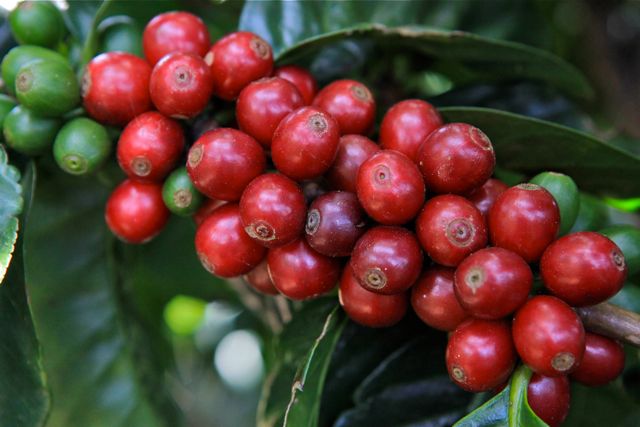
Kimel Estate
In the 1920s, British settlers from Kenya established large plantations in Papua New Guinea to grow commercial coffee. They introduced native Arabica varieties from Ethiopia and Kenya, as well as Blue Mountain and Typica varieties from Jamaica. At the time, most coffee was produced by 18 large coffee farms. As time passed, although some large farms continue to operate, they now account for only 15% of the country's total. Today most coffee comes from individual smallholders growing coffee in their own "coffee gardens," with these farmers relying on agriculture for their livelihood.
Kimel sits in the western highland Waghi Valley near the Kimel River Valley, on volcanic rock soil. Like many large farms or estates, it has its own dedicated washing plant, but in fact it is an estate jointly owned by many independent smallholder coffee farmers from the surrounding Opais people. Thanks to excellent growing conditions and the processing plant's stable quality control, the coffee has an active brightness while retaining a considerable degree of Papua New Guinea's unique character. Kimel's planted varieties are diverse, including Typica, Arusha, Blue Mountain, Mundo Novo, Catimor, Caturra, and more. Most farmers plant several varieties to avoid the risk of abnormal production in any one variety, which also creates interesting expressions in this coffee.

Kimel Estate was founded in 1974 by Australian businessman Bobby Gibbs and named after the adjacent Kimel River. It currently has 432 employees, mainly from the Opais tribe, who live on the estate. Although the owner is a foreigner, coffee production and estate management are handled by local farmers. The estate also provides full educational institutions and medical facilities. All the coffee trees on the estate are grown under shade, which both regulates temperature and reduces excessive sunlight. Local farmers also adopt practices that minimize environmental impact, such as recycling water resources and using residual berries as compost. The estate grows many varieties, from traditional Typica and Bourbon to the rare Blue Mountain, making the coffee here more resistant to pests, disease, and natural disasters, stabilizing quality while adding more elements to the flavor.
Kimel Estate Cupping Scores Over the Years
November 2014 Coffee Review 92 points
November 2013 Coffee Review 93 points
What Is Little Blue Mountain Coffee?
In 1937, Papua New Guinea's coffee cultivation began with seeds imported from Jamaica's famous Blue Mountain region. Kimel Estate's seedlings were transplanted from Jamaican native seedlings of the Typica Arabica variety, so they can be called descendants of Blue Mountain - also known as "Little Blue Mountain Coffee." The flavor of Little Blue Mountain Coffee is close to authentic Blue Mountain, but with some differences: its fruit acidity is more prominent and full, unlike authentic Blue Mountain's balanced sweet, sour, and bitter profile.

Kimel Estate Coffee Cupping Report
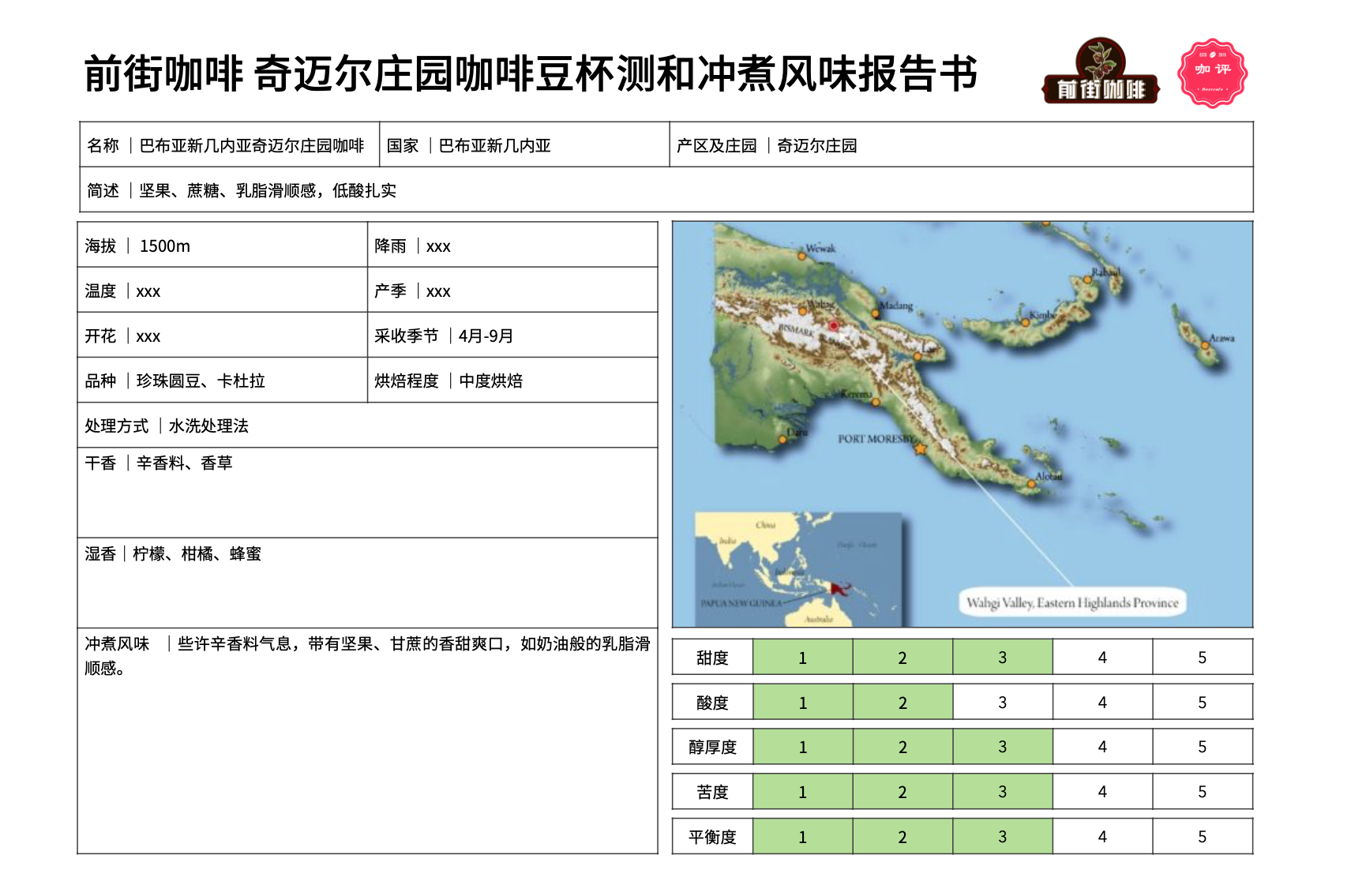
Flavor:
This Kimel Estate peaberry coffee has a slight spice aroma on the palate, with a sweet, refreshing taste of nuts and sugarcane on entry, a creamy smoothness like cream, and the more solid texture typical of peaberries. Overall it is balanced and smooth. The flavor is rich, the aroma pleasant, with no herbal or earthy notes. Its texture is as intense and mellow as a Van Gogh painting.
FrontStreet Coffee Recommendation
Because Kimel's Typica-lineage beans are nicknamed "Little Blue Mountain," the most natural comparison is the real thing - FrontStreet Coffee's Jamaica Blue Mountain No. 1 from the historic Clifton Hill Estate. It is the highest-grade lot, backed by complete origin certification and genuine wooden barrels, grown at an average altitude of 4,300 feet (1,310.64 meters), and roasted medium-dark so the classic balance comes through. Where Little Blue Mountain leans toward prominent, full fruit acidity, authentic Blue Mountain No. 1 keeps its sweet, sour, and bitter notes in perfect harmony.
In the cup, FrontStreet Coffee's Blue Mountain No. 1 is very clean, complex, and mild, with chocolate sweetness and a strong body - completely without bitterness, with only a moderate and perfect acidity and a long fruit finish. For brewing, FrontStreet Coffee suggests a Kono dripper to bring out the full body, a 15g dose, a 1:15 coffee-to-water ratio, and a water temperature of 87-88 degrees C, with the beans rested 4-7 days from the roast date.
Important Notice :
FrontStreet Coffee is a long-established specialty coffee roaster in Guangzhou China, selling freshly roasted beans from its own farm in Yunnan as well as dozens of carefully selected single-origin beans from around the world for both pour-over and espresso. The products deliver consistently excellent quality and great value, with shipping within 24 hours. Guangzhou's FrontStreet Coffee shop is recommended by many coffee lovers, and the beans are now available online at the Tmall 。
FrontStreet Coffee has moved to a new address:
FrontStreet Coffee Address: 315,Donghua East Road,GuangZhou
Tel:020 38364473
 Scan and follow the En Gafei WeChat official account. Please indicate that the reprint comes from "En Gafei".