2019 Best Panama BOP Coffee Auction Results Released! Characteristics and Stories of Panama Coffee Beans
Record-Breaking Best of Panama 2019 Auction
At 12:48 AM Beijing time on July 17, 2019, the Best of Panama 2019 global auction closed. The new king of bids, Elida Estate's "Anaerobic Slow-Dried Natural Green Tip Geisha" (Elida Geisha Green Tip Natural ASD), fetched a final price of $1,029 per pound, smashing the previous year's record of $803 per pound, which had also been set by Elida Estate. It was the highest price in the history of the Best of Panama (BOP) auction. FrontStreet Coffee secured a Geisha lot from the same altitude, the same plot, and the same process as the BOP champion; here is how it performs.
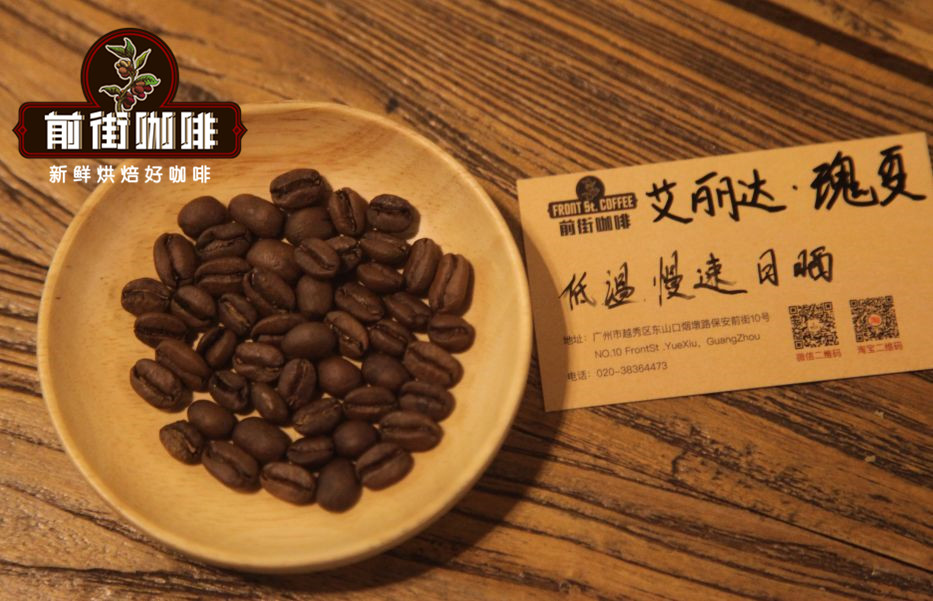
FrontStreet Coffee, Elida Estate Low-Temperature Slow-Dried Natural Geisha
Region: Boquete, Panama
Estate: Elida Estate
Altitude: 1,900 meters
Variety: Geisha
Process: Anaerobic fermentation, low-temperature slow-dried natural
Premium Geisha, The Glory of Best of Panama
As the world's first green bean competition, BOP was a strategic play by Panama's specialty coffee sector, and a successful one, carving out a blue ocean built on quality rather than volume. In 1995, seven of Panama's coffee-producing families jointly founded the Specialty Coffee Association of Panama (SCAP); in 1996 they launched the country's first green bean competition, Best of Panama.

The most interesting change in 2019 was the grouping. In past years, lots were split simply into natural and washed categories; this year they were reorganized into "Processed" and "Washed" groups. Inspired by the previous year's championship prices, many Panamanian producers had begun chasing quality gains through novel processing, even bringing in experts from other regions to advise. The competition consequently filled with experimental coffees: lactic acid fermentation, carbonic maceration, yeast inoculation. The old "natural" label no longer covered them, so the organizers placed every non-traditionally washed coffee into the "Processed" category. The new bid king, lot GNEP-01 (Elida Geisha Green Tip Natural), specified the NATURAL-ASD (anaerobic slow-dried) technique, newly mastered that year, and scored a record-high 95.25 points. The 2019 BOP ultimately ran five categories: Geisha Processed, Geisha Washed, Traditional Varieties Processed, Traditional Varieties Washed, and Pacamara.
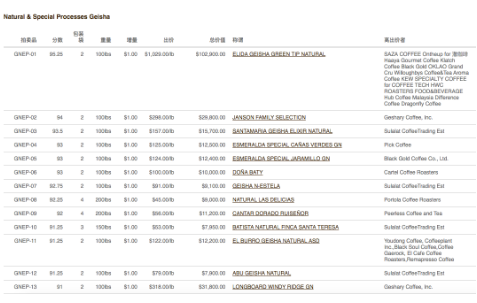
Just as in 2018, Elida Estate was the biggest winner of the 2019 auction. In the green bean competition, two Elida lots topped their categories, taking both Geisha Processed (95.25 points) and Geisha Washed (95.00 points), making Elida a "double champion" yet again. Of the 49 auction lots, 18 were natural-processed Geisha, and the highest price went to the Geisha Processed champion, Elida's Anaerobic Slow-Dried Natural Green Tip Geisha, at $1,029 per pound (about 7,079 yuan per pound).
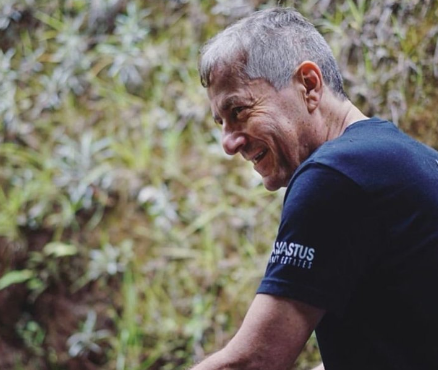
Bidders from 24 countries and regions took part, with 197 international buyers competing, records both for participation and for the highest-ever average transaction price of $100.70 per pound. In an era of sagging commodity coffee prices, Panama's quality-first strategy has been a genuine lift for growers.
About Elida Estate
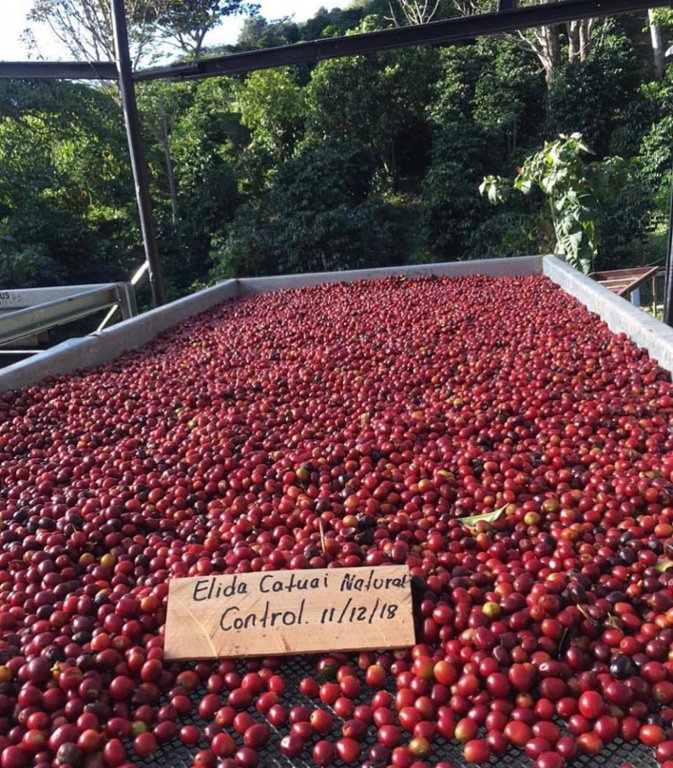
More than half of Elida Estate lies within the protected zone of Baru Volcano National Park. Baru is one of Central America's highest volcanoes, spanning 14,000 hectares and seven distinct climate zones. Elida itself is a rare ultra-high-altitude farm: coffee grows from 1,670 to 1,850 meters, sharing the title of Panama's two highest coffee estates with Carmen Estate in the Volcán Valley. Elida is the best-known property of the Lamastus family, founded in 1918. From the first tree Robert Lamastus planted, a full century has passed, long enough for the farm to witness the global rise of specialty coffee.
At such altitude, low temperatures delay cherry maturation by roughly a full month, while fertile volcanic soil and Baru's microclimate feed exceptional cup quality, which is why Elida keeps topping cupping competitions. The estate remains in Lamastus family hands: owner Wilford, his father Thatcher, and Wilford's son Wilford Jr., the fourth-generation successor. Elida grows three main varieties, Catuai, Typica, and Geisha, and its mill sits halfway up the mountain so freshly picked cherries can be processed immediately, protecting their quality.
Variety Notes
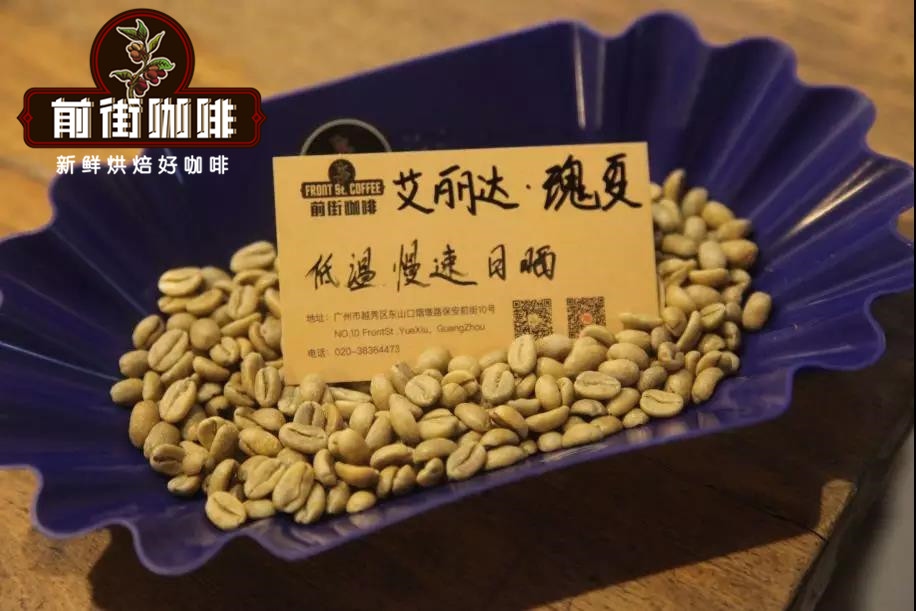
The Elida lot FrontStreet Coffee acquired is Geisha, including both Green Tip and Bronze Tip plants. Green Tip Geisha is known for floral aromatics, vivid acidity, and sweetness; Bronze Tip Geisha leans toward body and sweetness with less pronounced acidity. When the green beans arrived, they showed a yellowish-green color with aromas of snow pear, orange, and a light fermented note.
Low-Temperature Slow-Dried Natural Processing
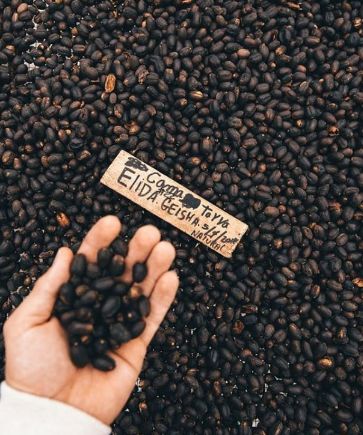
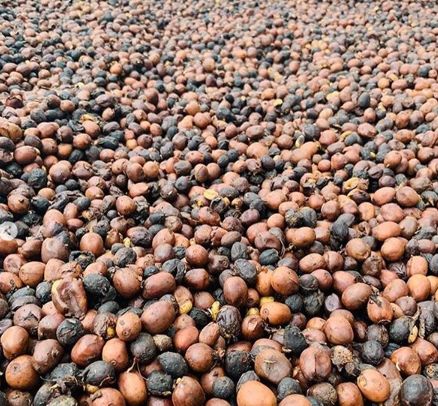
Harvested cherries ferment in sealed containers for 4–5 days, then are spread in thick layers on drying beds for slow drying. This process demands extra time and labor from the producer. The slow dry lets the cherries reach optimal water activity, developing deeper flavor and helping the green beans keep longer through the harvest cycle. The trade-offs: it depends on cooperative weather, stretches each batch's production time, and raises the cost of the green beans.
FrontStreet Coffee Roasting Record
FrontStreet Coffee's roaster found this coffee medium in both size and density; it took on more heat during the roast, with a relatively fast Maillard stage. The air damper was opened as the beans began to yellow, to develop more fermented aromatics and boost sweetness and balance.
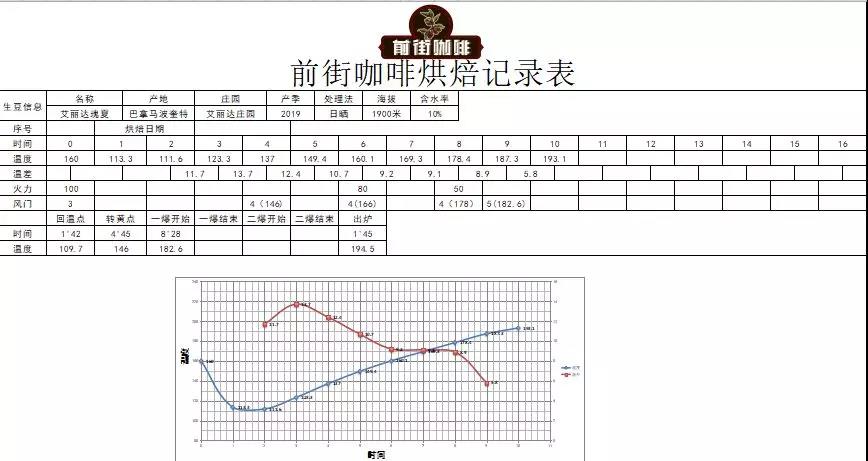
Preheat the roaster to 160°C, charge at 100% heat with the damper at 3. Turning point at 1'42". When probe temperature reaches 146°C, open the damper to 4; at 146°C the bean surface yellows and the grassy aroma disappears completely. At 166°C, reduce heat to 80 with the damper unchanged. At 7'31", pronounced wrinkles and black spots appear on the surface and toast aroma gives way to coffee aroma, the prelude to first crack. Listen carefully now. First crack begins at 8'28"; reduce heat to 50 and open the damper fully to 5. Develop 1'45" after crack and drop the batch at 194.5°C.
FrontStreet Coffee Cupping Report
Cupping takes place 8–24 hours after roasting. FrontStreet Coffee's baristas typically use 200 ml ceramic bowls and 94°C water. The grind passes 70–75% through a #20 standard sieve (0.85 mm). Ratio: 11 g of coffee to 200 ml of hot water, 1:18.18, landing extraction squarely in the Golden Cup range of 1.15–1.35%, with a 4-minute steep.
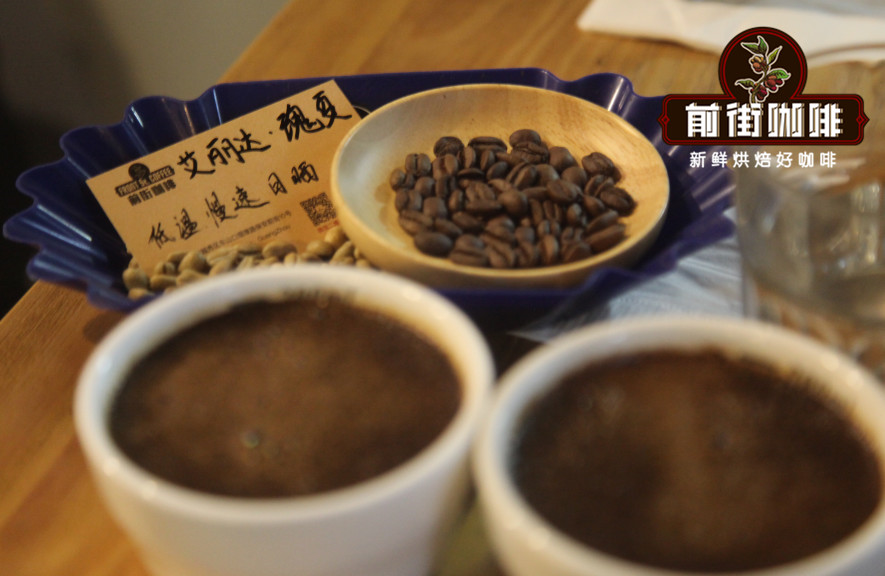
Dry aroma: floral, berries
Wet aroma: apricot, peach
Flavor: yellow pear, orange, guava, pomelo, apricot, honey, cream
FrontStreet Coffee Brewing Notes
Dripper: Hario V60
Water temperature: 90–91°C
Grind size: medium-fine (BG 6m; 80% pass-through on the #20 standard sieve)
Coffee-to-water ratio: 1:15
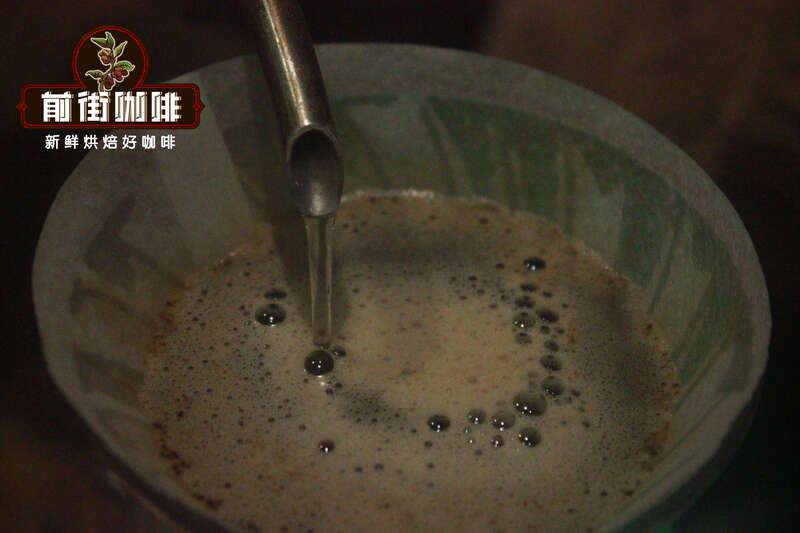
Multi-stage pouring: dose 15 g, bloom with 30 g of water for 30 seconds. Then pour in small, circling streams to 125 g for the first stage. Once the level drops and the bed is about to surface, pour on to 226 g and stop. When the bed threatens to expose again, remove the dripper (timing from the start of bloom). Total extraction time: 1'50".
In the cup: light fermentation and floral aromatics; grapefruit, lemon, and guava on entry; honey sweetness through the mid-palate; a black tea finish.
FrontStreet Coffee Recommendation
Geisha may be the most coveted Arabica variety of all, its unmistakable florals and sparkling sweet-acid balance have won over countless coffee lovers, while its low yield, disease susceptibility, and demanding cultivation keep prices climbing. If you want to explore the wider Geisha family beyond Panama, here is how FrontStreet Coffee's lineup breaks down.
Esmeralda Red Label and Green Label: Esmeralda Estate made Geisha famous, and its product line comes in two tiers. The Red Label, officially "Esmeralda Special," grows at 1,600–1,800 meters; every batch must cup above 90 points and is fully traceable to a single small plot, FrontStreet Coffee's Red Label comes from the Harrymio plot, so buyers can choose the micro-lot whose nuances suit them. The Green Label, "Private Collection," blends batches from multiple plots to express the estate's signature high-altitude Geisha profile rather than any single terroir, making it the better value of the two.
Boquete Geisha: for a first taste of classic "Geisha flavor," FrontStreet Coffee recommends this entry-level Panama lot, classic orange-blossom honey notes, an oolong-tea-like body, delicate fruit acidity, and clearly layered sweetness at an approachable price.
Geisha Village Gold and Red Label: back in Ethiopia, Geisha's birthplace, a couple built the 475-hectare Geisha Village farm 12 miles from the Gesha forest, planting the varieties closest to the Panamanian plant. Its grading is even more intricate than Esmeralda's: three varieties (Gori Gesha, Gesha 1931, and Illubabor Forest) across Gold RARITIES, Red GROWERS RESERVE, Green SINGLE-TERROIR, and Chaka lots. The Gold label is Gesha 1931, just 10% of the farm's output, its top non-auction coffee, and a favorite of international competitors; FrontStreet Coffee's Gold lot is a meticulous natural with remarkably complex flavor. The Red label, Gori Gesha at 15% of production, scores 88+ on the SCA 100-point scale in the single-terroir series, with full lot traceability from block name to processing date.
Genlana Gesha: from a processing station founded in 2014 on the border of Kochere and Genji Abaya in Yirgacheffe, run by Israel Degefa and surrounded by 700 hectares of largely uncultivated, shade-dotted land. Fully ripe cherries are hand-picked and sun-dried on raised beds for 14–20 days depending on weather. Roasted medium-light, it offers bright citrus acidity, elegant ginger-flower aromatics, the full sweetness of ripe fruit, and a silky, fine-textured finish, the classic Geisha aftertaste.
For brewing any of these, Geisha is a hard, dense bean that tends to sink and clog the dripper, so grind coarser, about a 78% pass rate on the #20 standard sieve (fine granulated sugar), and use 91°C water. FrontStreet Coffee brews 15 g in a small Hario V60 at 1:16, three-stage: 30 g bloom for 30 seconds, then a small circling pour to 125 g, topping up to 225 g once the bed drains halfway, for a total extraction of roughly 2:10–2:20.
Important Notice :
FrontStreet Coffee is a long-established specialty coffee roaster in Guangzhou China, selling freshly roasted beans from its own farm in Yunnan as well as dozens of carefully selected single-origin beans from around the world for both pour-over and espresso. The products deliver consistently excellent quality and great value, with shipping within 24 hours. Guangzhou's FrontStreet Coffee shop is recommended by many coffee lovers, and the beans are now available online at the Tmall 。
FrontStreet Coffee has moved to a new address:
FrontStreet Coffee Address: 315,Donghua East Road,GuangZhou
Tel:020 38364473
 Scan and follow the En Gafei WeChat official account. Please indicate that the reprint comes from "En Gafei".