What is Monsooned Coffee? Characteristics of Indian Coffee Beans & Monsooning Processing Method
When the conversation turns to Asian coffee, most people think first of Indonesian Mandheling. But Asia has another mysterious coffee — the famous Indian Monsooned Coffee, also known as Monsoon Malabar. How its flavor is formed greatly interests FrontStreet Coffee. Legend has it that the process was discovered by accident when raw coffee was shipped from India to Europe: the high humidity and heat of the Indian Ocean during the voyage made the raw beans swell and turn golden yellow, and those fermentation-like changes produced a mellower taste and a unique flavor. While most coffee processing relies on controlled drying and fermentation, only Indian Monsooned Coffee depends on natural climate conditions for its distinctive character — which FrontStreet Coffee finds truly remarkable.
Indian Monsooned Malabar
- Region: Malabar Coast, Southern India
- Altitude: 1100-1200 meters
- Varieties: Kents, S795, Catimor, Selection 9
- Processing: Monsooned Natural Processing
Regional Introduction
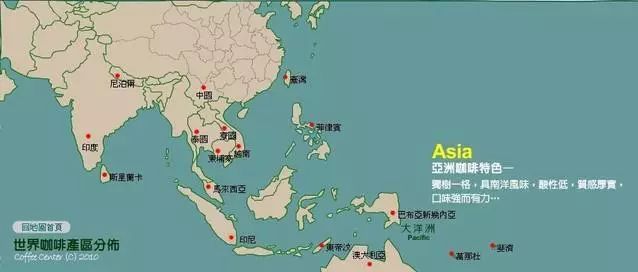
Coffee first reached India in the 16th century, when pilgrims established the first plantation. You might be surprised to learn that India produces far more coffee than Ethiopia and any Central American country combined. With 900,000 hectares devoted to coffee, India has approximately 140,000 coffee farms, over 90% of them small-scale operations under 10 acres. These farms are distributed along the coastal mountains of the southern and eastern regions at altitudes of 900-1200 meters. Arabica accounts for two-thirds of total production, with Robusta making up the rest. Annual production sits between 440,000 and 450,000 bags, making India the fifth-largest coffee producer in the world.
Monsooned coffee came about by accident, creating an entirely new flavor profile. From the 17th to 18th centuries, India shipped coffee to Europe by sailing ship, a journey that took six months. The raw beans sat in the lower decks, absorbing moisture and saltiness from the sea air. By the time they landed in Europe they had changed — their color shifted from deep green to the yellow-brown of rice grains, and the fruit acidity had almost disappeared. In its place came strong nutty and grainy flavors with a rich mouthfeel reminiscent of genmaicha (roasted rice tea). Northern Europeans particularly loved this golden alternative coffee. In 1869, the opening of the Suez Canal and the arrival of steamships shortened the India-Europe voyage, and customers began to complain that Indian coffee had "lost its flavor," missing its distinctive golden color and nutty taste. Orders fell sharply, prompting Indian exporters to search for a solution.

It turned out that with the voyage to Europe cut by more than half, the coffee no longer had time to mature and "transform," losing its characteristic flavor. Exporters then recalled that a stretch of India's southwestern Malabar coast becomes salty and humid from May to September, thanks to the Indian Ocean monsoon. After several experiments, they successfully recreated the golden, low-acidity coffee similar to the traditional product. It was named "Monsoon Coffee," commonly known as Monsooned Coffee, and for hundreds of years European roasters have used it widely in blends to add viscosity and a tea-like quality.
Export Port
MANGALORE is India's New Mangalore port, located north of the Gurpur River estuary on the southwestern Indian peninsula of Karnataka state, northwest of Mangalore city and facing the Arabian Sea. The port's northeastern waterfront serves as a bulk cargo terminal for general goods, with railway access. Southwest winds prevail in summer at an average force of 5-6, and the area is also affected by tropical storms. The tides are semidiurnal. The port exports minerals, pepper, coffee, sandalwood, cashews, tea and other products. The new port lies about 2 nautical miles south of the original, smaller port, which was mainly used for coastal trade and fishing. Mangalore city port is approximately 10 kilometers south of the new port and 6 kilometers from the old port.
Processing Method
Each year during May and June, monsoon phenomena occur in southwestern India. Monsooned coffee must be made from naturally processed beans. Farmers spread the beans in monsooning warehouses to a thickness of about 12-20 centimeters for 5 days, then repeatedly rake them to ensure all the beans come into contact with the extremely humid air. The beans are then loosely packed into bags and stacked so the monsoon winds can penetrate through the bags. The monsooning warehouses face west to catch the salty, humid southwest monsoon winds. The beans are spread flat in the monsooning yards with all windows open. During summer, the monsoon humidity from the Arabian coast is very high. After monsooning to a certain degree, the beans are bagged again — but the bags can't be filled too full, and they can't be stacked too densely, or poor ventilation leads to mold. At the facility, the bags are repacked and restacked weekly for 7 weeks, until the beans' color and flavor change. The beans must also be removed periodically and the burlap bags changed to prevent mold, making this a time-consuming and labor-intensive process.
The monsooning period lasts about twelve to sixteen weeks. After maturation, the beans undergo smoke treatment to drive away weevils, followed by hand-sorting to remove any that haven't turned golden yellow. Starting in June, after three to four months of monsooning, the green beans expand to one to two times their original volume, their color begins to shift from green to golden yellow, and their weight and density decrease. Moisture content reaches about 13%, and the beans' acidity is reduced, producing significant changes in both quality and quantity. Finally, any beans that haven't been properly monsooned, along with other debris and defective beans, are sorted out again to remove those not affected by the "monsoon" process. Then cupping, grading, bagging and other post-processing preparations follow. The period from October to February of the following year is the best season for producing "Monsoon" coffee.

Cultivated Varieties
Kent:
A Typica hybrid discovered in 1911 at the Kent Coffee Estate in India's Mysore region, created by crossing S288 with Typica. It has high yield and rust resistance but has never scored well in cupping. Its aroma has more body than Bourbon varieties.
S795:
Also known as Jember, this came about when Indian botanists crossed the first-generation S288 with Typica to create Kent, then crossed Kent with a second-generation S288 to produce today's S795. In 1955 the Indonesian Coffee and Cocoa Research Institute (ICCRI) named it Jember, and it has been widely cultivated in India, Indonesia, Yemen and Ethiopia. It has some resistance to coffee leaf rust, though that resistance fades over time. Its flavor profile is close to Arabica, with wild characteristics.
Catimor:
In 1959, Portuguese breeders crossed Brazilian Caturra with Timor Hybrid to create the F2 hybrid Catimor, which has exceptionally strong disease resistance and yield capacity. Its flavor is inferior, however, making it an important commercial variety today. To improve Catimor's poor cupping reputation, botanists from many countries have recently returned to crossing Arabica with Catimor repeatedly in an attempt to reduce the Robusta genetic influence.

Roasting Recommendations
This coffee has medium bean density. FrontStreet Coffee decided to roast it with medium heat, steadily increasing the temperature. The yellowing point occurs around 4 minutes and 50 seconds, after which the heat is reduced and airflow increased to enter the Maillard reaction. At first crack, the airflow is opened wide while maintaining heat at approximately 184.4°C. The beans are dropped 2 minutes and 30 seconds after first crack.
Roasting Machine: Yangjia 600g Semi-direct Heat
Preheat the roaster to 200°C before loading, set airflow to 3, turn on heat after 30 seconds and adjust heat to 160, return to temperature at 1'25''. Maintain heat; yellowing at 4'50'', the grassy smell disappears and dehydration begins; reduce heat to 140 and open airflow to 4, then reduce heat again to 110 when the temperature reaches 168°C.
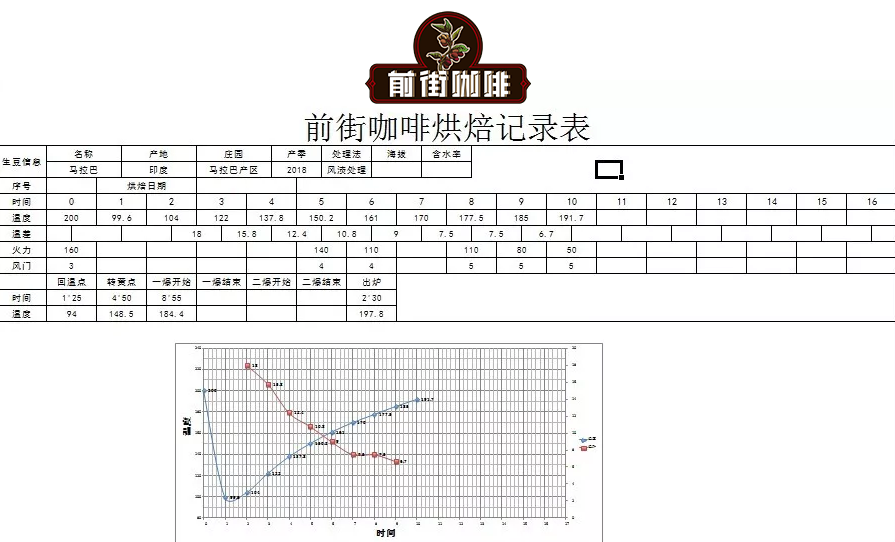
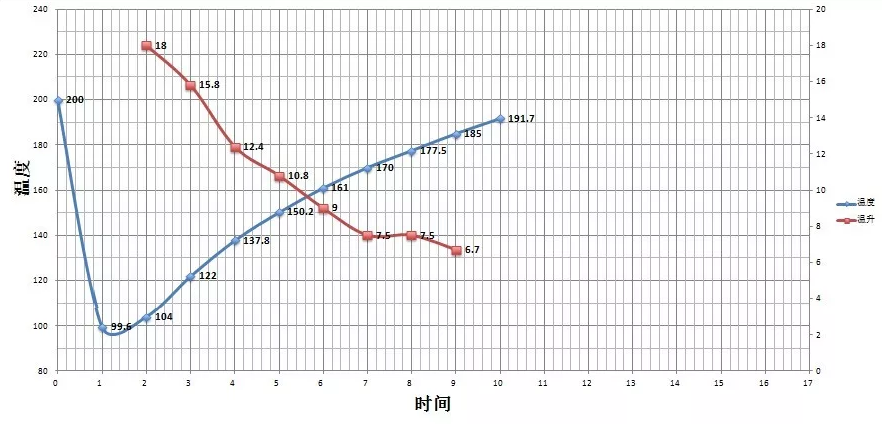
After 8 minutes, dehydration is complete and the bean surface shows wrinkles and black patterns; the toasted bread aroma transforms into coffee aroma, signaling the prelude to first crack. At this point, keep the heat constant, open airflow to 5 and listen carefully for first crack. First crack begins at 8'55''; open airflow fully to 5. Development time after first crack is 2 minutes and 30 seconds, dropping at 197.8°C.
Brewing Recommendations
FrontStreet Coffee experimented with four brewing methods — siphon, AeroPress, French press and the Kalita Wave three-hole filter cup — to compare their flavor profiles.
I. Siphon
Brewing Parameters: Grind size BG 6M (70-75% pass-through on the China standard #20 sieve), coffee-to-water ratio 1:13, water temperature 84°C, extraction time 1 minute 20 seconds

Brewing Method: Pour 260g of water into the bottom chamber, wait for the water to rise to the top chamber, then add 20g of coffee grounds and gently press the coffee bed to ensure full contact between coffee and water. Stir at 30 seconds, turn off the heat and stir again at 50 seconds, letting the coffee return to the bottom chamber.
Flavor: Slight fruit acidity on entry, with genmaicha and chocolate flavors, and a relatively thin body.
II. AeroPress
Brewing Parameters: Grind size BG 6M (70-75% pass-through on the China standard #20 sieve), coffee-to-water ratio 1:13, water temperature 85°C, extraction time 1 minute 50 seconds
Brewing Method: Inverted method, using 15g of coffee, pour 195g of 85°C hot water, stir at 1 minute, flip and start pressing at 1 minute 30 seconds, finishing at 1 minute 50 seconds.

Flavor: Aroma of cream and nuts with some herbal, plant-like notes, a sugarcane aftertaste and medium body.
III. French Press
Brewing Parameters: Grind size BG 6M (70-75% pass-through on the China standard #20 sieve), coffee-to-water ratio 1:13, water temperature 85°C, extraction time 2 minutes
Brewing Method: 15g of coffee, pour 195g of water, stir the coffee bed at 1 minute, press down at 1 minute 50 seconds, for a total extraction time of 2 minutes.

Flavor: Smooth on entry, a relatively heavy body with soft fruit acidity, featuring nutty, genmaicha and creamy chocolate flavors and a sugarcane aftertaste.
IV. Kalita Wave Three-Hole Filter Cup
Brewing Parameters: Grind size BG 5R (70-75% pass-through on the China standard #20 sieve), coffee-to-water ratio 1:14, water temperature 85°C, extraction time 2 minutes
Brewing Method: Using 18g of coffee at a 1:14 ratio, bloom with 30g of water for 30 seconds, slowly pour to 125g for a segmentation, and finish pouring at 250g.
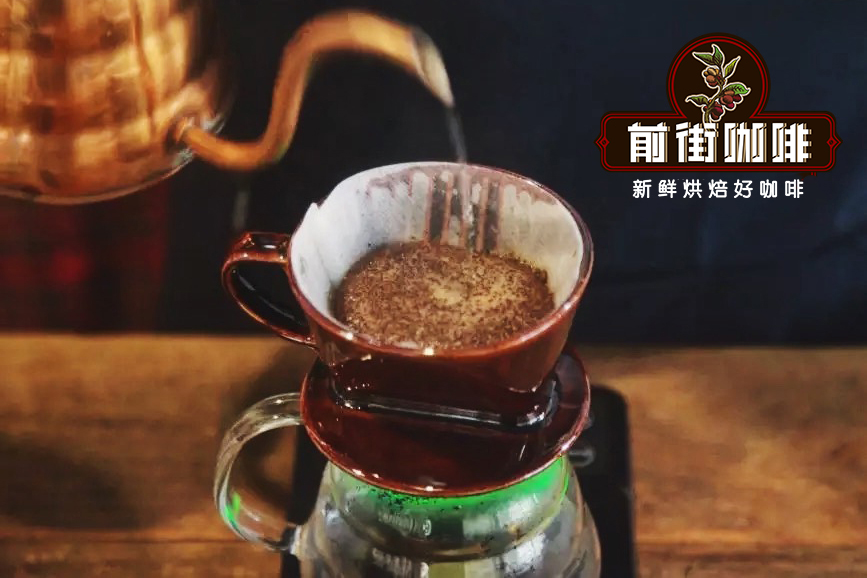
Flavor: Entry with light plum acidity, cocoa, nutty and creamy flavors, and noticeable wheat tea and genmaicha tea characteristics in the finish.
FrontStreet Coffee found that when this coffee is brewed with different equipment, the basic flavor profile stays similar — all showing distinctive genmaicha, cocoa and nutty flavors — but the mouthfeel and fruit acidity express themselves quite differently. Among these methods, siphon-brewed Malabar is overall the most balanced and gentle; AeroPress-brewed coffee shows more prominent aromatics; French press yields a Malabar with greater richness and body; and in pour-over brewing, the fruit acidity becomes clearer and more distinguishable.
The same coffee beans can display different flavors when brewed with different equipment, which is precisely what makes coffee so fascinating to explore.

FrontStreet Coffee Recommendation
Monsooned Malabar is one of the rare coffees defined by the weather rather than a fermentation tank, and it shares a family resemblance with Sumatra's wet-hulled coffees: heavy body, low acidity and deep, earthy complexity. If that style appeals to you, FrontStreet Coffee's PWN Indonesian Golden Mandheling is the top of the Mandheling range. It's produced by Indonesia's PWN company under very strict standards — beans of 18 mesh and above, with fewer than 3 defective beans per 300g sample to meet the highest G1 grade, plus three rounds of hand sorting to remove every remaining defect. That meticulous selection raises both the cleanliness and the sweetness of the cup.
Roasted medium-dark, FrontStreet's Golden Mandheling keeps the low acidity and long, syrupy body that Mandheling is known for, with clean, full flavor and plenty of roast aroma. It's a natural pick for anyone who doesn't like sour coffee. For an even earthier expression, FrontStreet's Lintong Mandheling comes from the traditional Mandheling heartland around Lake Toba in North Sumatra, where the region's wet-hulled process and local fermentation create a wild, savory profile: clove and woody aromas, low acidity, a spice-and-mint edge and a strong, lasting sweetness.
For brewing, FrontStreet suggests a pour-over to bring out Golden Mandheling at its best — water at 87-88°C, 15g of coffee, a 1:15 ratio and a grind about as coarse as granulated sugar. A three-stage pour works especially well: a 30ml bloom to wet all the grounds and let them degas, a second pour of 100ml to open up the golden foam and lift the bed, then a gentle 95ml center pour to round out the sweetness. The result is a thick, full-bodied cup with caramel sweetness and chocolate and nut flavors.
Important Notice :
FrontStreet Coffee is a long-established specialty coffee roaster in Guangzhou China, selling freshly roasted beans from its own farm in Yunnan as well as dozens of carefully selected single-origin beans from around the world for both pour-over and espresso. The products deliver consistently excellent quality and great value, with shipping within 24 hours. Guangzhou's FrontStreet Coffee shop is recommended by many coffee lovers, and the beans are now available online at the Tmall 。
FrontStreet Coffee has moved to a new address:
FrontStreet Coffee Address: 315,Donghua East Road,GuangZhou
Tel:020 38364473
 Scan and follow the En Gafei WeChat official account. Please indicate that the reprint comes from "En Gafei".