What is Flash Brew? The Difference Between Flash Brew, Cold Brew, Iced Drip, and Iced Pour-Over Coffee
For professional coffee knowledge exchange and more coffee bean information, please follow Coffee Workshop (WeChat official account: cafe_style)
Flash Brew Coffee: A Rapid Iced Coffee Method
There are many ways to make iced coffee — cold brew and iced drip among them — but both demand serious time, typically 8–12 hours. There is one technique, however, that extracts iced coffee in mere minutes: flash brew.
Are Cold Brew and Iced Drip Coffee the Same?
Let's start with cold brew and iced drip. Both are common preparations, and many coffee shops offer them in summer.
But they differ considerably in method. Cold brew uses immersion extraction, while iced drip uses percolation. What the two share is ice-water extraction, which means extremely low extraction efficiency and long preparation times.
Iced Drip Coffee Method
Iced drip is typically made in an iced drip tower with three chambers: an upper chamber (ice water), a middle chamber (coffee grounds), and a lower chamber (finished coffee). Ice water drips drop by drop through the grounds, slowly extracting coffee that collects below. A run generally takes 6–8 hours.

FrontStreet Coffee's iced drip recipe uses 60 grams of grounds to yield 600 milliliters of coffee — a grounds-to-liquid ratio of 1:10 — dripping at roughly 3 drops every 10 seconds from an ice-water mixture in the upper chamber. The extraction takes about 8 hours; afterward the coffee is bottled, sealed, and refrigerated for 24 hours.
Cold Brew Coffee Method
Cold brew is simpler: put ground coffee in a container, add cold (or iced) water in proportion, stir well, seal, and steep in the refrigerator for 12–24 hours. Then filter out the grounds with filter paper for clean cold brew coffee.

FrontStreet Coffee's cold brew recipe starts with 50 grams of grounds. Add the grounds first, then 400 milliliters of room-temperature water and 200 grams of hard ice cubes (600 grams of ice-water in total), for a grounds-to-water ratio of 1:12. Stir until even, seal, and refrigerate.
After 12–24 hours of chilling, filter out the grounds with filter paper, transfer the coffee to a clean sealed bottle, and give it another 4 hours or so in the refrigerator before drinking.
What Are the Flavor Differences Between These Two?
Because iced drip extracts slowly with ice water, it draws out more small-molecule compounds (florals, acidity) while large-molecule compounds (such as the bitterness of tannic acid) stay behind. Bottled and fermented cold for a further 12 hours, it develops distinct fermented notes and the bean's innate sweetness — ice-cool and refreshing.
Cold brew lacks the clarity of iced drip and may carry a thin layer of oil on the surface, but in flavor and mouthfeel it is somewhat richer and more balanced by comparison.

What is Flash Brew Coffee?
Now that cold brew and iced drip are clear, what exactly is flash brew? Also known as Flash Brew, it is a classic Japanese iced coffee process that keeps traditional hot extraction while borrowing cold brew's best feature — immediate chill — and it has been enthusiastically embraced by Japanese coffee drinkers.
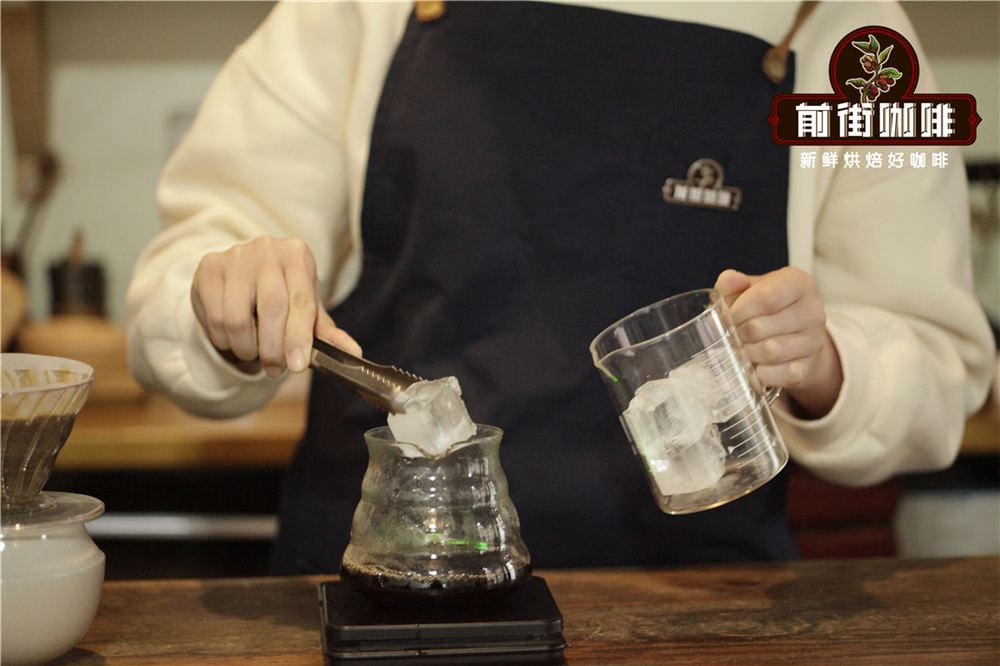
Flash brew extracts the coffee quickly with hot water, then cools it instantly with ice, making it a hot-extraction method. Cooling the coffee within moments effectively "locks in" the aromatics created during hot extraction while minimizing oxidation, which is what gives flash brew its excellent flavor.

To keep the ice from diluting the coffee, flash brew (iced pour-over) reduces the water used during brewing, extracting a more concentrated coffee that the ice then chills and brings into balance.
FrontStreet Coffee's flash brew method, using 15 grams of grounds as an example: grind slightly finer than for hot pour-over — if a light roast passes an #20 sieve at 80% for hot brewing, flash brew would target 85%. The coffee-to-water-to-ice ratio is 1:10:5. Water temperature matches hot pour-over: 90-93°C for light roasts and 87-89°C for medium-dark roasts. After brewing, swirl or stir the filter cup so the ice melts evenly into the coffee, chilling it fast while keeping the concentration consistent.

What Are the Characteristics of Flash Brew Coffee?
The great virtue of flash brew is speed: a glass of ice-cold, refreshing iced coffee in minutes, at a fraction of the time cost of iced drip or cold brew. Because it extracts the early and middle-phase compounds and then cools and dilutes them with an equal proportion of ice, the cup is cleaner and crisper, and it flatters the coffee's core flavors.
For more specialty coffee beans, please add FrontStreet Coffee's private WeChat account: kaixinguoguo0925
FrontStreet Coffee Recommendation
Cold extraction amplifies florals and fruit while muting woodsy and roasted notes, so light-to-medium roasts are the natural choice for any iced coffee — flash brew included. FrontStreet Coffee's natural Huakui (Flower Queen) from Ethiopia, the birthplace of coffee, is the pick for flower-forward iced cups: dried in the fruit, the beans soak up sweetness, and as cold brew they show magnolia, cream strawberry, dried mango, guava, and black tea.
For a full-on fruit-juice experience, FrontStreet Coffee's Kenya Cherry Tomato is the first choice. Grown in Thika at 1,550–1,750 meters from the multi-selected SL28 and SL34 varieties and processed with Kenya's distinctive K72 double-washed fermentation, then roasted medium-light, it renders cherry tomato, snow pear, black plum, and dried plum in vivid detail over the ice — low bitterness, full acidity, and a lingering fragrance.
If you love Geisha, the FrontStreet Coffee Strawberry Candy Geisha blend pairs classic Panama Geisha with Costa Rican honey-process coffee: the former contributes rose and orange, the latter grape, dried blueberry, and strawberry-gummy sweetness. As cold brew it is sweet-tart and lively, and with a little fermentation it even takes on a fruit-wine character. Likewise, the washed Yirgacheffe Worka Cooperative lot — an affordable everyday Ethiopian — yields sweet berries, layered depth, and honey, and works just as well for flash brew as for immersion.
Since cold brew consumes more grounds than pour-over, FrontStreet Coffee also suggests a budget-conscious trick: blend the Colombian Sidra's passion fruit, grape, apricot, and dried-fruit sweetness with Costa Rica Tarrazu at a 1:2 ratio. You keep Sidra's florals and fruit and Tarrazu's crisp citrus acidity — and stretch the value of every bag. Whichever bean you choose, both flash brew and cold brew will showcase it beautifully.
Important Notice :
FrontStreet Coffee is a long-established specialty coffee roaster in Guangzhou China, selling freshly roasted beans from its own farm in Yunnan as well as dozens of carefully selected single-origin beans from around the world for both pour-over and espresso. The products deliver consistently excellent quality and great value, with shipping within 24 hours. Guangzhou's FrontStreet Coffee shop is recommended by many coffee lovers, and the beans are now available online at the Tmall 。
FrontStreet Coffee has moved to a new address:
FrontStreet Coffee Address: 315,Donghua East Road,GuangZhou
Tel:020 38364473
 Scan and follow the En Gafei WeChat official account. Please indicate that the reprint comes from "En Gafei".