What Roast Level is Best for Kenyan Coffee Beans - Flavor Differences Between Light and Dark Roast
Kenya is one of the most distinctive coffee-growing regions in Africa, with a flavor built on pleasant cherry tomato and plum acidity - quite unlike the citrus and lemon character of neighboring Ethiopia. That distinction has earned it a firm place in the specialty coffee market. What conditions make Kenyan coffee so distinctive? In this article, FrontStreet Coffee explains the factors behind the formation of Kenyan coffee flavor.
Kenyan Coffee Growing Region Conditions
Coffee is, after all, an agricultural product, so its flavor is inseparable from growing conditions: soil, climate, altitude, and other factors that set the flavor direction of a bean. Kenya sits in eastern Africa with the equator crossing its center and the East African Rift Valley running north to south. It borders Somalia to the east, Tanzania to the south, Uganda to the west, and Ethiopia and Sudan to the north, with the Indian Ocean to the southeast. Most of the country is plateau, with an average altitude of 1,500 meters; Mount Kirinyaga (Mount Kenya) in the central region reaches 5,199 meters and carries snow on its summit, making it the second-highest peak in Africa.
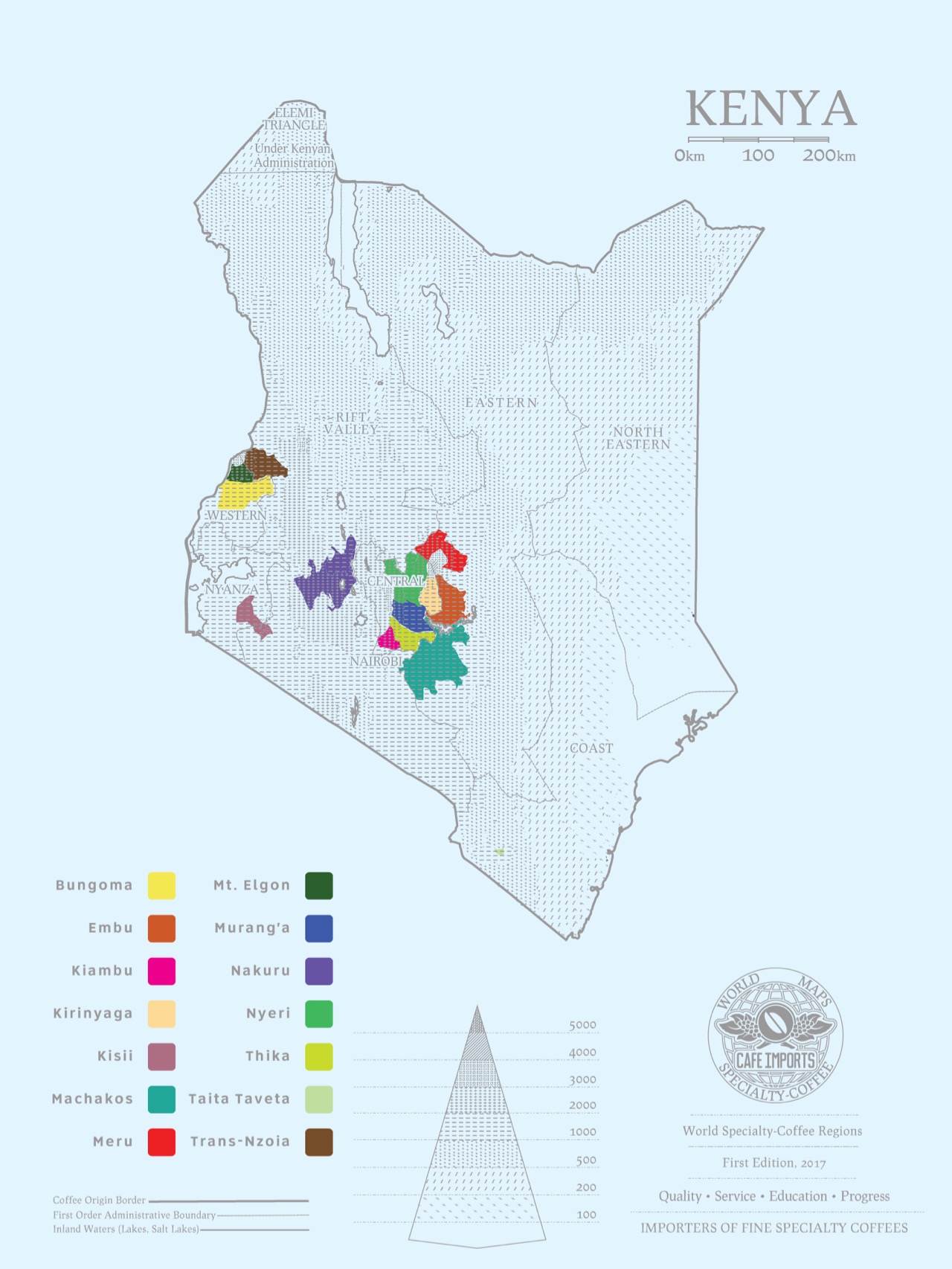
Because the equator passes through the middle of the country and Kenya lies within ten degrees of latitude on either side, it is a genuinely tropical growing region with two rainy seasons each year - and therefore two harvests: 60% concentrated from October to December, and the remaining 40% from June to August. Coffee is grown mainly in the volcanic areas at 1,600-2,100 meters around Nairobi and up toward the Kenyan mountain region. At this altitude, cooler mountain temperatures slow growth, so the beans' aromatic compounds develop fully, fruit acidity becomes more prominent, and the beans are denser and harder. This crescent-shaped belt of fertile soil is the heartland of Kenyan specialty coffee.
As FrontStreet Coffee has shown, the Kenyan growing region is almost tailor-made for coffee. Under such unique natural conditions, quality follows naturally. Kenya also produces almost exclusively Arabica, considered one of the finest coffee varieties in the world - and one of its traits is that the higher the planting altitude, the richer the acidity, which is one reason Kenyan coffee tastes so pleasantly acid-driven.
Kenyan Coffee Bean Varieties
The excellent acidity of Kenyan coffee is also inseparable from the varieties the country has developed. Coffee flavor comes primarily from growing region, variety, and processing method - so next, FrontStreet Coffee introduces Kenya's signature varieties and processing.
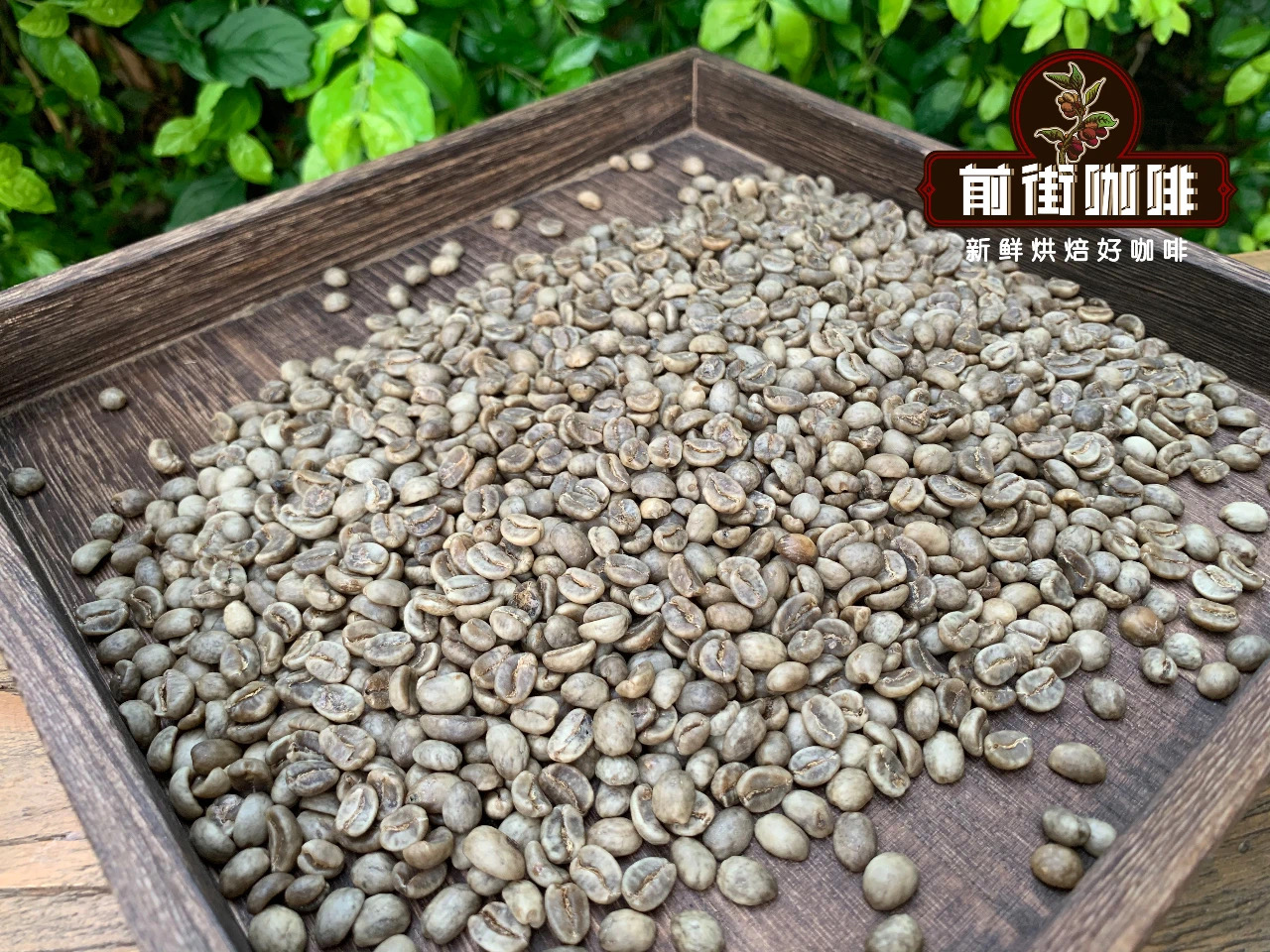
According to FrontStreet Coffee's understanding, the common Kenyan varieties are SL28, SL34, Batian, and Ruiru 11 - all four developed by the Kenyan Coffee Research Foundation, which is itself one of the defining characteristics of Kenyan coffee.
SL28
Historical records show that a senior coffee officer from the Scott Laboratory (A.D. Trench) noticed a variety growing in the Modi region of Tanzania that seemed tolerant of drought, disease, and pests. He collected seeds and brought them back to the Scott Laboratory, where its drought resistance was confirmed.
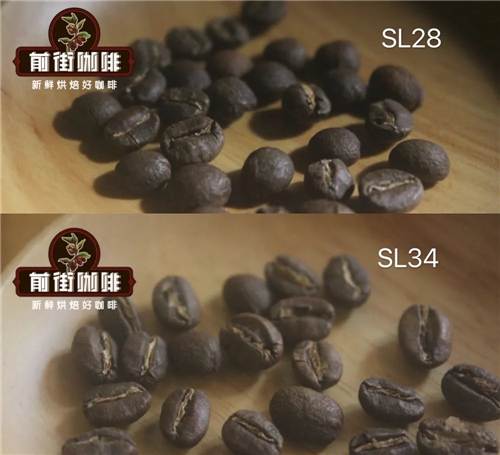
Recent genetic testing has confirmed that SL28 belongs to the Bourbon genetic group, so the beans share the round, robust shape typical of Bourbon. In FrontStreet Coffee's experience, SL28 is defined by complex, varied acidity and excellent sweetness.
SL34
SL34 was first selected from the "French Mission" (a Bourbon variety) at the Kabati Loresho estate. However, FrontStreet Coffee's research shows that genetic testing has since confirmed the presence of Typica genetics, and the plant's characteristics also resemble Typica - so it is now believed SL34 was in fact selected from Typica. Being close to Typica, its beans are elongated and oval, looking relatively flat from the side.
Ruiru 11
Ruiru came after SL28 and SL34. According to FrontStreet Coffee's understanding, in the 1970s the Ruiru station began experimenting with varieties resistant to CBD (coffee berry disease) and rust. The result was Ruiru 11, released in the 1980s. High yield plus CBD and rust resistance seemed to solve all of Kenya's coffee production problems at once.
Batian
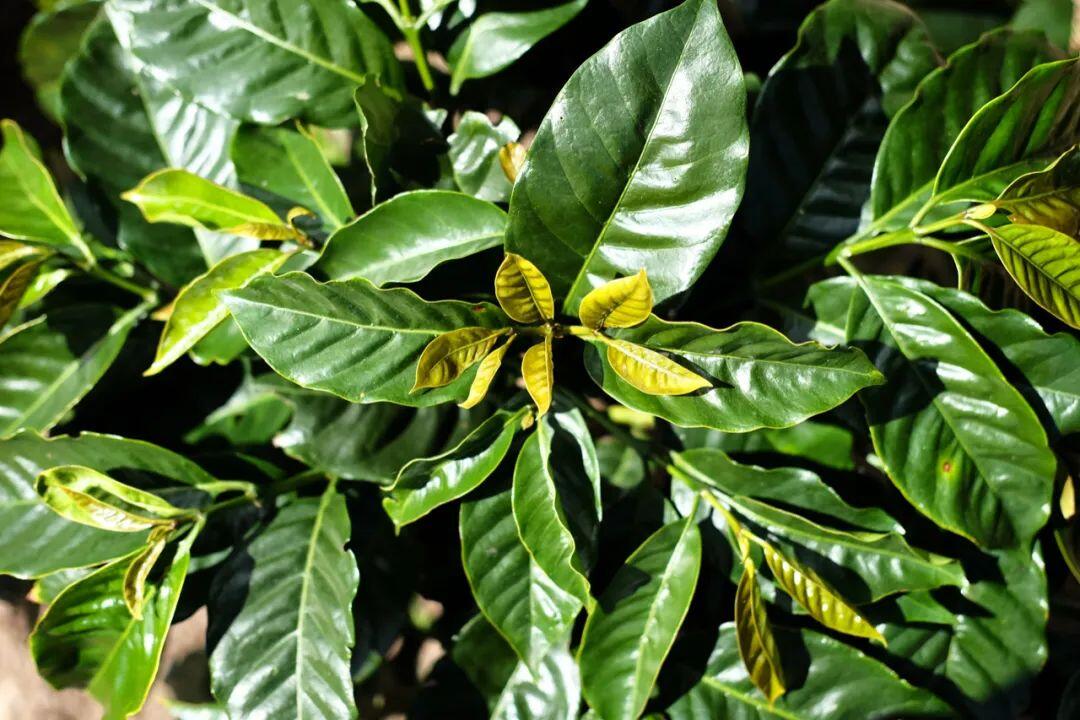
Batian was launched by the Coffee Research Institute (CRI) on September 8, 2010, and is Kenya's newest variety - a further experiment that applied the lessons learned from Ruiru 11. Genetically, it was essentially selected from backcrosses of SL28 and SL34, making it closer to SL28 than Ruiru 11 is. This eliminated the problematic Robusta elements, thereby improving cup quality.
That is FrontStreet Coffee's rundown of Kenyan varieties, and it is clear they are the major contributors to Kenyan coffee's flavor. If other varieties were planted in Kenya, the resulting beans would very likely lack that signature plum and cherry tomato acidity. By the same token, the Panama Esmeralda Geisha sold by FrontStreet Coffee tastes nothing like the baseline flavor of the rest of Panama, because the Geisha variety carries its own pleasant floral and fruity aromas.
Kenyan Coffee Processing Method
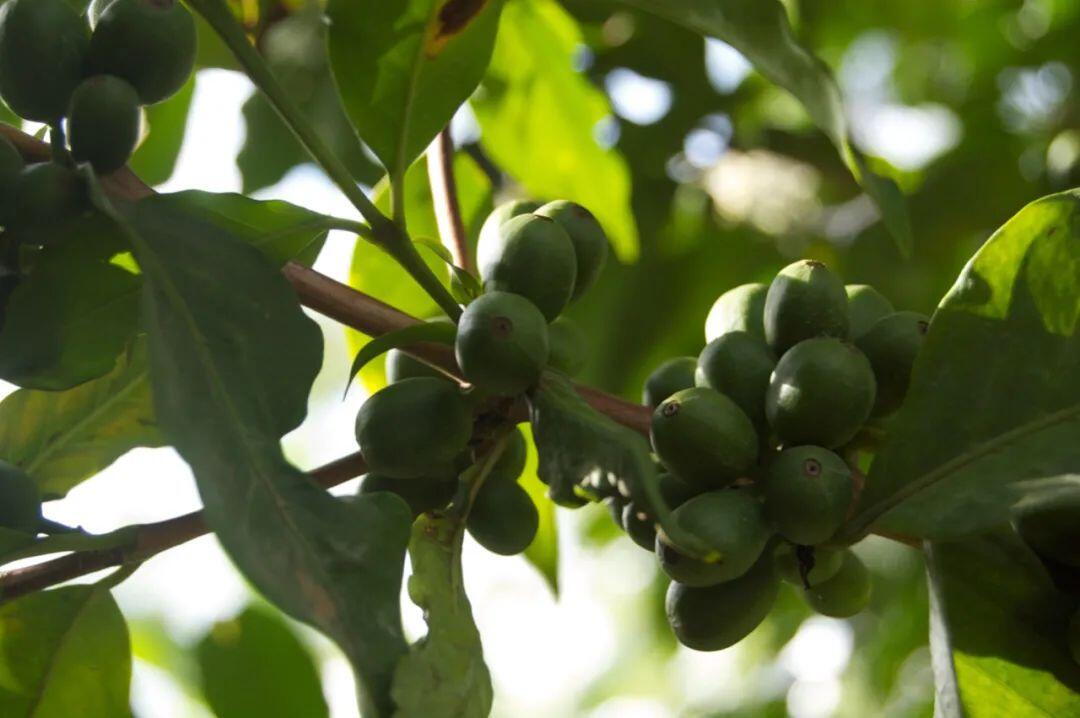
FrontStreet Coffee also believes Kenya's distinctive processing method amplifies the plum and cherry tomato character of its varieties. This is the K72 double-washed process.
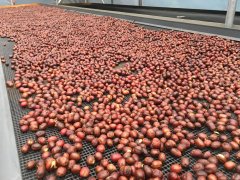
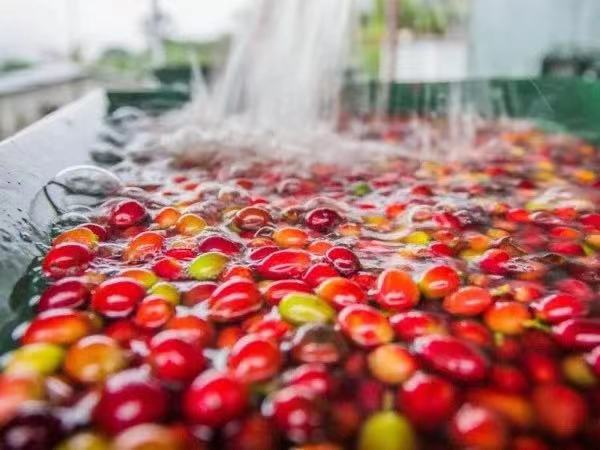
K72 washed process flow: Fully ripe cherries are washed and pulped, then dry-fermented for 24 hours, washed, dry-fermented another 24 hours, washed again, and dry-fermented a third time for 24 hours - a cycle that builds up to 72 hours of fermentation (hence the name K72). After the final washing, the beans soak overnight in fresh-water tanks, and drying begins on the raised drying beds the next morning.
What is the Roasting Level for Kenyan Coffee Beans?
Roast level matters too, because only roasting unlocks the flavors inside green coffee - and different roast levels present different flavors.
Roasting should maximize a coffee's flavor potential, but poor roasting can ruin even good green beans. FrontStreet Coffee would even say roasting is the finishing touch for green coffee. So what roast level suits Kenyan beans?
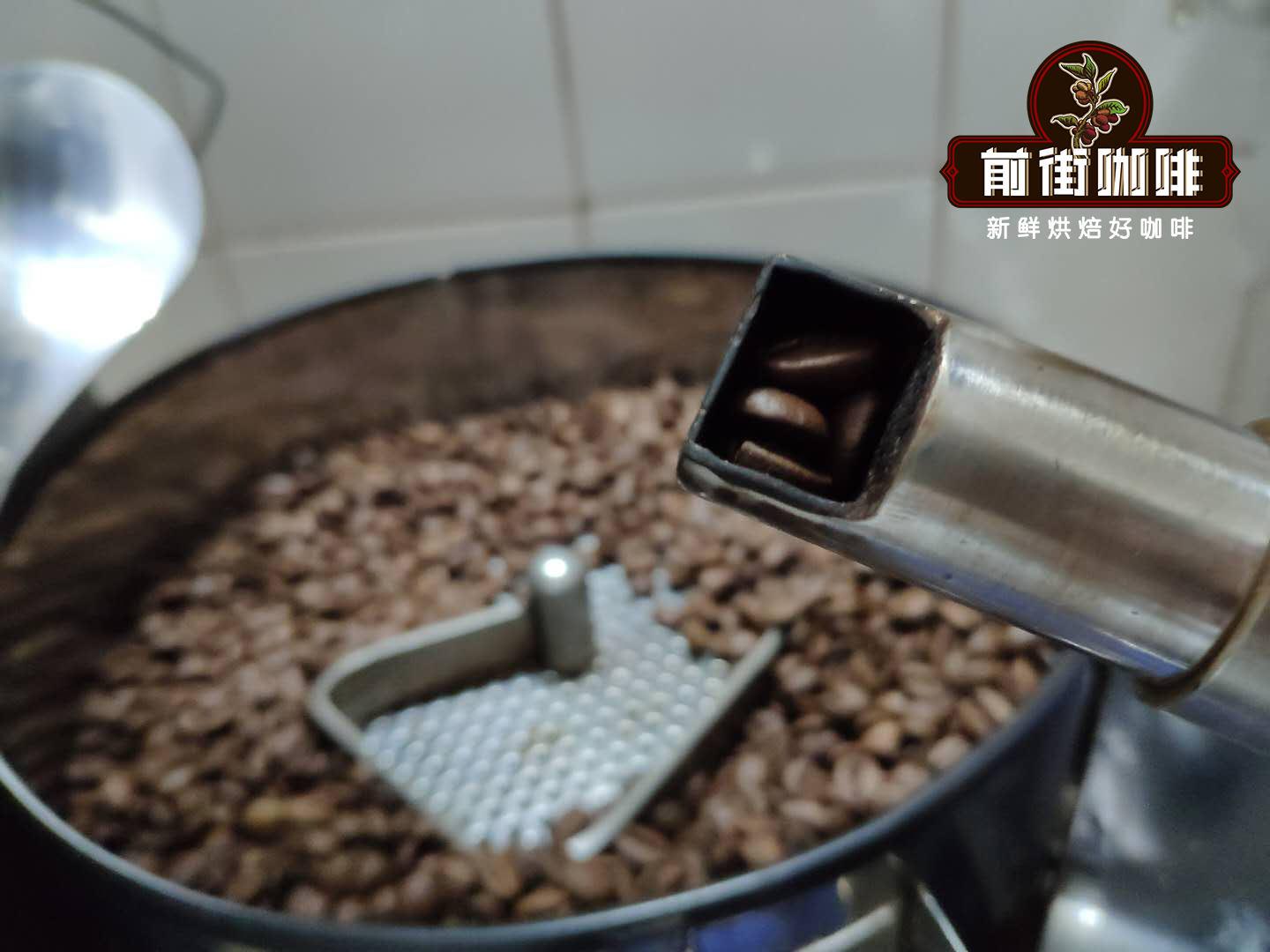
Anyone familiar with roast levels knows they are broadly divided into light, medium, and dark, distinguished mainly by bean color after roasting. Generally, the darker the color, the mellower the flavor; the lighter the color, the more the beans' inherent acidity shows. Since the hallmark of Kenyan coffee is its bright, pleasant acidity, FrontStreet Coffee's roasters use a light roast to showcase it.
Next, FrontStreet Coffee introduces the flavor profile and roasting curve for its Kenyan Asalia beans.
FrontStreet Coffee Kenyan Asalia Coffee Beans
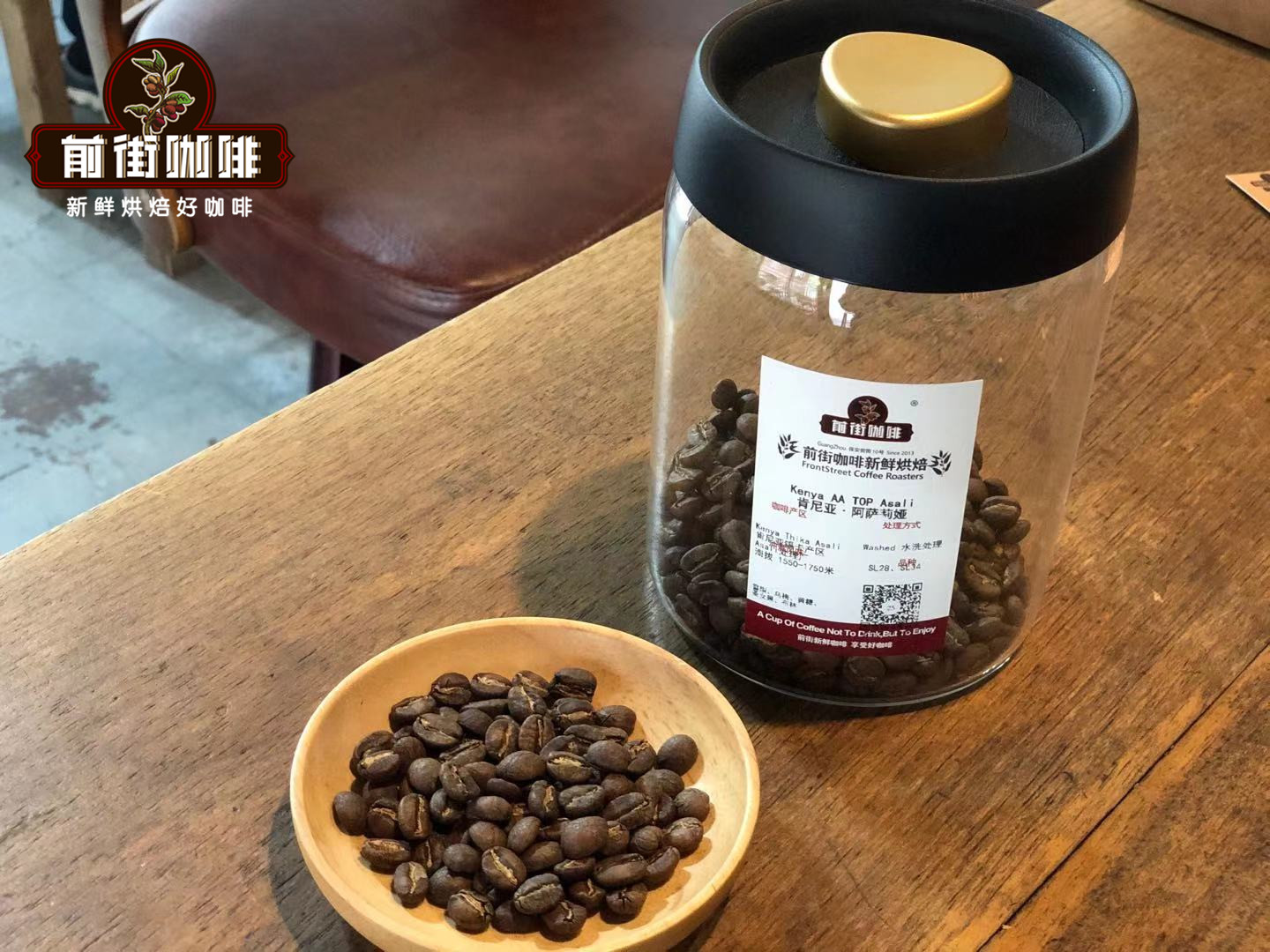
Country: Kenya
Region: Asali (Honey Processing Station)
Altitude: 1550-1750m
Varieties: SL28, SL34
Processing Method: 72-hour washed processing
Flavor: Snow pear, plum, brown sugar, and cherry tomato
FrontStreet Coffee Roasting Parameters
Kenyan Asalia: a full, round bean. As noted above, to fully express its bright, mellow acidity, FrontStreet Coffee roasts it light.
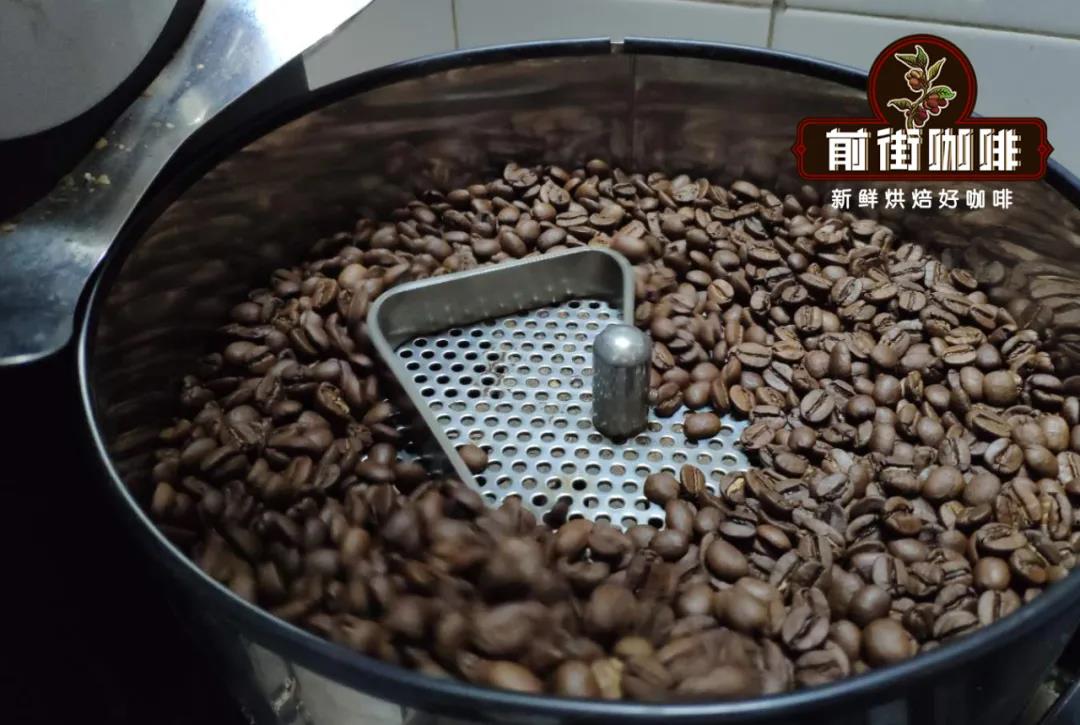
Yangjia 800N semi-direct-fire roaster, 480g batch charge: Preheat to 160°C, air damper at 3, heat power 120. Return temperature point: 1'28". When temperature rises to 130°C, open the damper to 4. At 6'00" the temperature reads 154.6°C, the bean surface yellows, the grassy smell completely disappears, and dehydration is complete. When wrinkles and dark spots appear on the bean surface and the toast smell clearly shifts into coffee aroma, first crack is about to begin - listen carefully for it. At 9'28" first crack starts; with the damper unchanged, develop for 2'20" and drop the batch at 193.8°C.
FrontStreet Coffee Brewing Suggestions
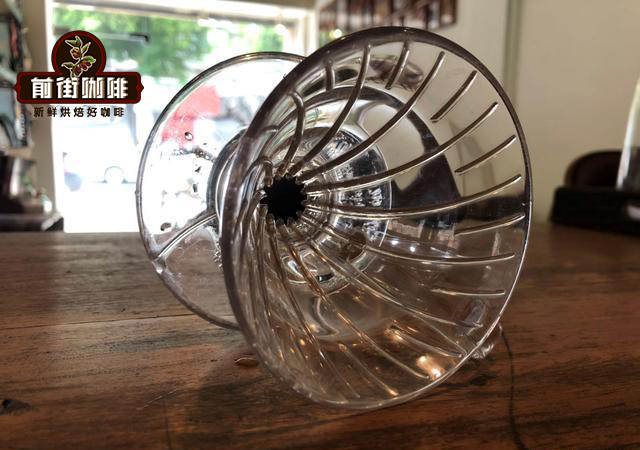
Dripper: V60 or cake cup
Water Temperature: 90-91°C
Coffee-to-Water Ratio: 1:15
Grind Size: Fine grind (80% pass-through rate on a #20 standard sieve)
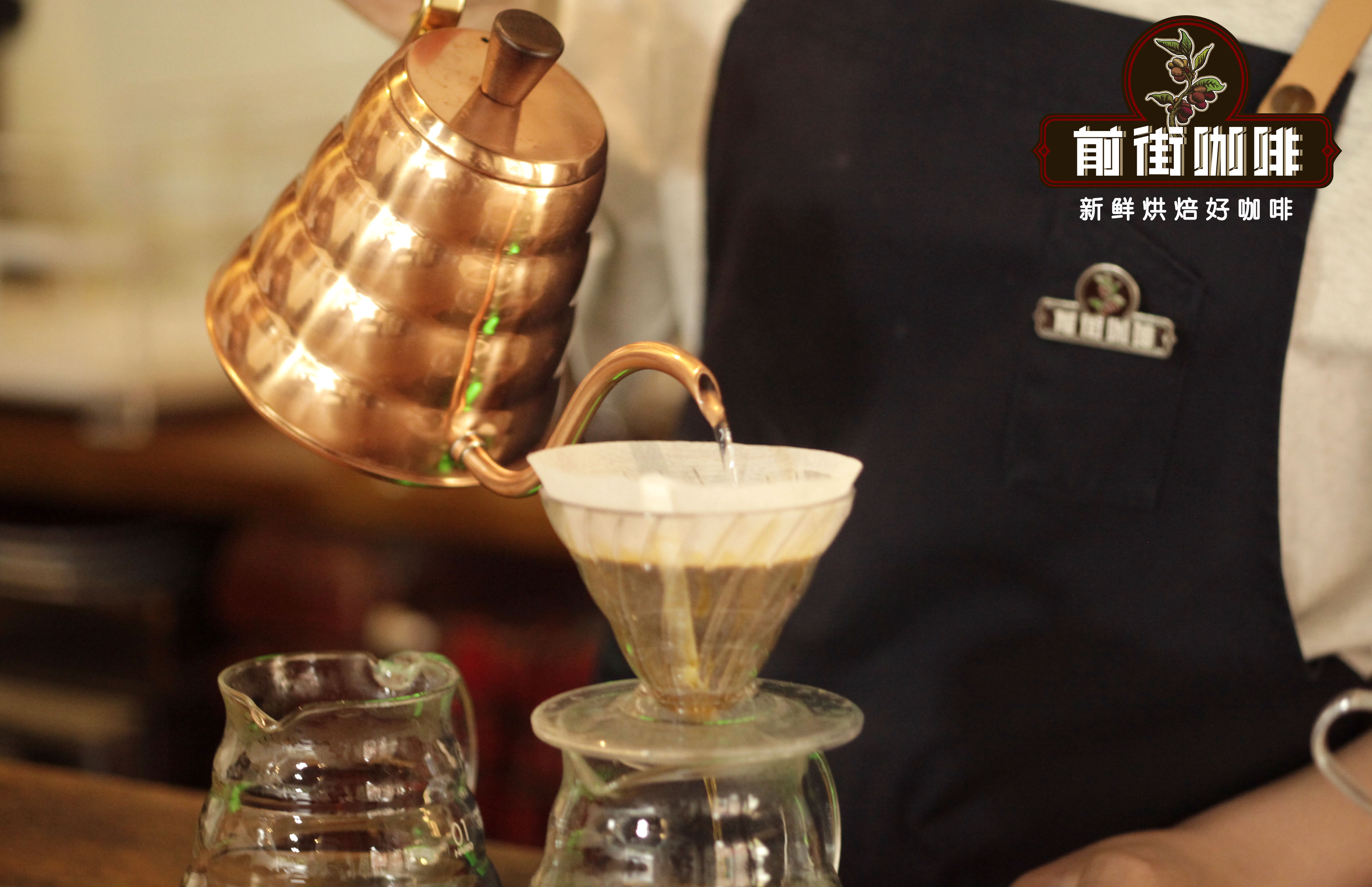
Brewing Method: Segmental pouring.
Start with 30g of water for a 30-second bloom, then continue pouring in circles to 124g for the first segment. When the water level drops and the coffee bed is about to be exposed, pour to 228g and stop. Once the bed is again about to be exposed, remove the dripper (timing starts from the bloom). Total extraction time: 1'55".
Asalia flavor: The wet aroma shows ripe tomato and florals. On entry: cherry tomato and plum with bright acidity, a clean and juicy texture, prominent mid-palate sweetness, and a finish of berry aroma, brown sugar sweetness, and a green tea fragrance.
FrontStreet Coffee Recommendation
Ethiopia, the birthplace of coffee, is world-renowned as a specialty coffee origin, with countless native varieties - a treasure land in the eyes of many coffee lovers. If Kenyan beans like the bright, berry-toned Asalia above appeal to you, FrontStreet Coffee's washed Yirgacheffe is the perfect next step: jasmine florals and bright citrus acidity in a light, elegant, tea-like cup that drinks like a clean, refreshing lemon tea.
For a fruitier profile in the same vein, try FrontStreet Coffee's Yirgacheffe Red Cherry natural. Damaged or moldy cherries are removed first, then the rest dry in the sun for two weeks until the moisture content falls to 12%, with density and color checks plus hand sorting at every stage. The result is an impeccably clean, intensely fruity cup of peach, cocoa, honey, and lemon. FrontStreet's Hambella "Flower Queen" natural from Guji, Sidamo - dried 21 days on raised beds over a 200-hectare farm - goes even richer, with a faint fermented wine note, florals, citrus, and mango, thick body, and a long finish.
Prefer delicate florals? FrontStreet Coffee's Kaffa Forest coffee, medium-light roasted from wild coffee trees grown at 1400-2100 meters under shade, offers white florals on the grind, bright lemon acidity, sweet orange and bergamot, and a green-tea-like body - a lovely contrast to Kenya's tomato-bright profile.
Important Notice :
FrontStreet Coffee is a long-established specialty coffee roaster in Guangzhou China, selling freshly roasted beans from its own farm in Yunnan as well as dozens of carefully selected single-origin beans from around the world for both pour-over and espresso. The products deliver consistently excellent quality and great value, with shipping within 24 hours. Guangzhou's FrontStreet Coffee shop is recommended by many coffee lovers, and the beans are now available online at the Tmall 。
FrontStreet Coffee has moved to a new address:
FrontStreet Coffee Address: 315,Donghua East Road,GuangZhou
Tel:020 38364473
 Scan and follow the En Gafei WeChat official account. Please indicate that the reprint comes from "En Gafei".