Understanding Peruvian Coffee Culture: An Introduction to Peru's Four Major Coffee Growing Regions
Did you know? Peru, in western South America, is the world's largest producer of organic coffee. Its cultivation area reaches 420,000 hectares, mostly in the Andes Mountains at altitudes of approximately 600 to 1,900 meters. The region produces premium-quality beans, largely grown under shade without cutting down the trees — protecting rainforest ecosystems and letting humans coexist with nature. Most Peruvian coffee is cultivated under natural conditions without fertilizers or pesticides. Under the shade canopy, the coffee's maturation slows, helping the trees absorb the essence of the land and giving FrontStreet Coffee's Peru beans a smooth mouthfeel and excellent flavor.
Main Coffee Varieties in Peru
The main varieties are Typica, Bourbon, and Caturra, and most lots are fully washed, which makes the flavor especially distinctive. Peruvian coffee has a rich aroma and strong stability, tasting clean and clear with well-defined layers. It offers soft fruit acidity with notes of caramel, honey, dark chocolate, or toffee sweetness.
Cultivation Varieties
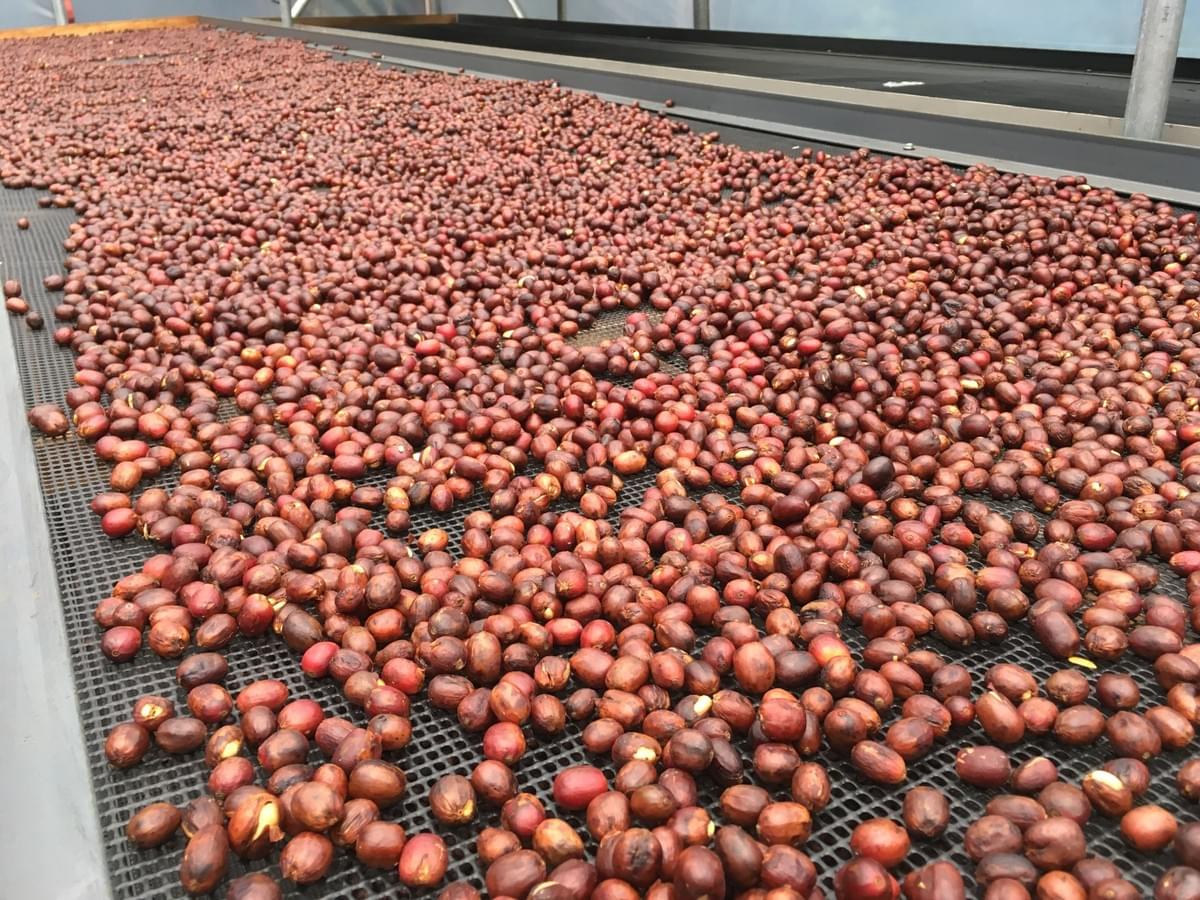
In terms of cultivation, about 70% of Peruvian coffee is Typica, with the remainder made up of Caturra, Catimor, Bourbon, Pasche, and other varieties. After the cherries are harvested, they undergo about 16 to 30 hours of fermentation and wet processing, then dry on mesh racks in the sun, and are finally hand-sorted to remove impurities and defective beans. Every step must be handled with the utmost care to create high-quality Peruvian specialty coffee.
Four Major Coffee Growing Regions of FrontStreet Coffee's Peru Coffee
Across Peru's northern, central, and southern coffee regions, 70% of the varieties are Typica, 20% are Caturra, and the remainder are Catimor and others. Thanks to Peru's complex, diverse natural resources and rich cultural heritage, the coffee from each region has its own character.
The highest-quality Peruvian coffee comes from Chanchamayo, Cuzco, Norte, and Puno.
Northern Region Coffee Beans
The north accounts for 43% of Peru's total cultivation area, covering Amazonas, Cajamarca, Piura, and San Martin.
Northern coffee has a rich aroma, higher acidity, and moderate purity and aftertaste.
Central Region
Central coffee accounts for 34% of the national total, covering Huánuco, Junín, Pasco, and Ucayali.
The central region's coffee is characterized by a light, gentle aroma, medium body, and a smooth, mild taste.
Southern Region
The south accounts for 23% of cultivation, covering Apurímac, Ayacucho, Cusco, Madre de Dios, and Puno.
The southern region's hallmark is a rich nutty aroma and excellent body.
FrontStreet Coffee Recommendation
Peru's washed, clean-cupped style is a natural gateway into washed specialty coffee, and FrontStreet's lineup shows what the method can do at its best. The FrontStreet Yirgacheffe Gedeb (Dimtine) Cooperative lot is the classic example: fully washed and medium-light roasted, it unfolds jasmine fragrance and bright citrus acidity over green-tea and honey tones — lovely as pour-over, cold brew, or even espresso. For washed processing taken to its extreme, try the FrontStreet Kenya "Cherry Tomato" double-washed lot, whose repeated washing and soaking yields juicy acidity with aromas of cherry tomato, dried plum, snow pear, black plum, and yellow sugar. If you prefer balance over brightness, the Jamaica Blue Mountain No.1 — washed to suit the island's short sunshine hours — offers hazelnut, cream, chocolate, and caramel with nothing out of place. Brew the washed lots on a V60 at around 90-92°C, 1:15, with a medium grind.
Important Notice :
FrontStreet Coffee is a long-established specialty coffee roaster in Guangzhou China, selling freshly roasted beans from its own farm in Yunnan as well as dozens of carefully selected single-origin beans from around the world for both pour-over and espresso. The products deliver consistently excellent quality and great value, with shipping within 24 hours. Guangzhou's FrontStreet Coffee shop is recommended by many coffee lovers, and the beans are now available online at the Tmall 。
FrontStreet Coffee has moved to a new address:
FrontStreet Coffee Address: 315,Donghua East Road,GuangZhou
Tel:020 38364473
 Scan and follow the En Gafei WeChat official account. Please indicate that the reprint comes from "En Gafei".