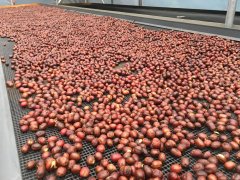
Impact of Coffee Bean Roast Levels and Grind Sizes on Cold Brew Coffee Flavor - Cold Brew Coffee Bean Recommendations
Understanding Coffee Flavor: The Journey from Bean to Brew
As you savor your freshly brewed coffee and inhale its aromatic essence — that interplay of bitterness, acidity, and sweetness — you might wonder what creates these distinctive flavor variations. Coffee flavor is shaped by many elements: the growing region of the beans, post-harvest processing methods, and the roast level. Even if you're a coffee enthusiast who hasn't yet explored the subtle nuances of bean flavors, now is the perfect time to join FrontStreet Coffee in rediscovering how coffee beans develop their captivating aromas and charm!
The Impact of Roast Level on Flavor
Roasting is the final stage in coffee's long transformation from an agricultural product to the beans we grind, brew, and enjoy. Unroasted beans are called "green beans," named for their distinctive green color. Before roasting, they are dense and nearly flavorless, with a grassy smell. Only the heat of roasting releases the prized coffee flavors and aromas, making the coffee more soluble and ready for brewing. Roasting is an indispensable step in the pursuit of delicious coffee — a careful balance of art and science.
When we describe coffee as light, medium, or dark roast, we're talking about the roast level. The visible color of the beans correlates directly with the caramelization of sugars — the longer the heat exposure, the deeper the roast color and the higher the degree of caramelization. Finding your preferred roast level is crucial to enjoying coffee, because the same bean can taste dramatically different depending on the roast degree.
FrontStreet Coffee's Roasting Philosophy
FrontStreet Coffee's roasters create different roasting curves based on the unique characteristics of each bean variety.
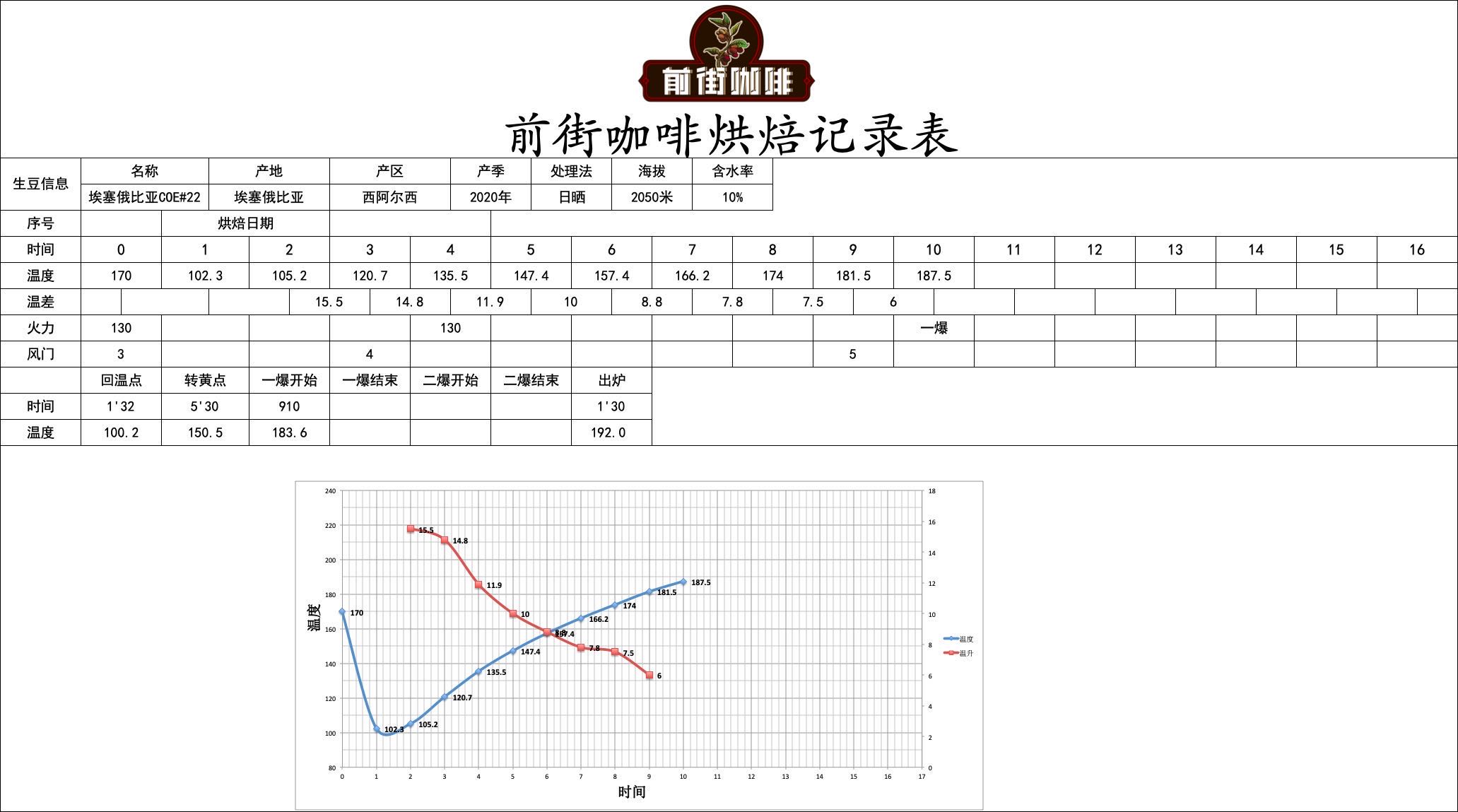
Ethiopian beans are known for their delicate, refined flavors. To highlight their floral and fruity notes, FrontStreet Coffee's roasters choose lighter roast levels that preserve more of the original sugars and plant-based aromas, resulting in a brighter, more complex cup. Take FrontStreet Coffee's COE22: the cinnamon-colored roast perfectly showcases its array of fruit flavors — citrus and lychee — with distinctly noticeable fermented, wine-like aromas.
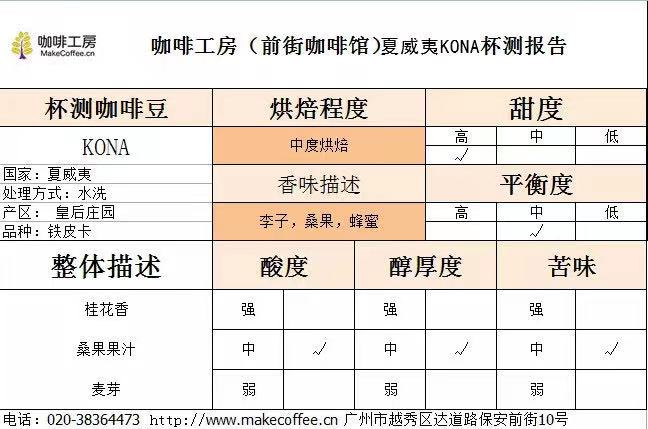
Medium-roasted Kona is prized for its balanced, smooth nectar sweetness and elegant, full-bodied texture. FrontStreet Coffee's roasters select a medium roast, and the cupping results speak for themselves:
The brewed coffee releases a mulberry aroma that brings a sweet sense of happiness, while the aftertaste is a smooth malt bitterness that glides down the throat — a wonderful journey begins!
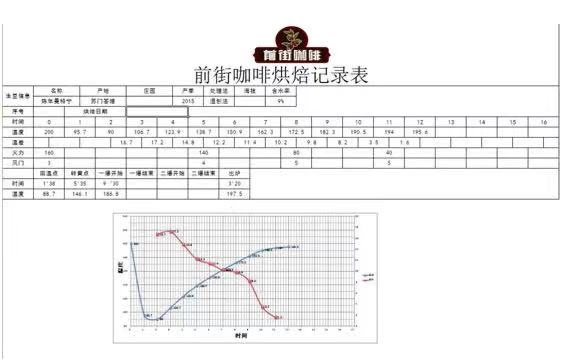
At FrontStreet Coffee, dark-roasted beans are few and far between — basically limited to Indonesian varieties. Dark roasts can be too bitter and intense for the average customer. All espresso-based drinks in coffee shops use dark-roasted coffee, however: dark-roasted beans take on a deep brown color, and their oils rise to the surface under the roasting heat, creating espresso with abundant crema that pairs perfectly with milk — truly a match made in heaven. Aged Mandheling is an example of dark-roasted coffee. Because Mandheling green beans are dense and aged coffee holds less moisture, fire adjustments at each stage of the roast require special care to prevent the surface oils from burning.
The Impact of Grind Size on Cold Brew Coffee
Grind size is crucial for brewing! Whatever your method, coffee making means extracting flavors (and caffeine) from the grounds. The finer the beans are ground, the greater the exposed surface area and the faster the extraction. If your coffee tastes sour and watery, the grind may be too coarse. If the flavor is overly bitter (assuming roast level and origin aren't the culprits), a coarser grind may improve the taste. This is why coffee for espresso machines is ground so finely — the water passes through the grounds very quickly under high pressure. Cold brew, on the other hand, uses coarsely ground coffee because this cold extraction keeps the coffee in contact with water far longer. Espresso extracts in about 30 seconds; cold brew takes an entire afternoon.
When FrontStreet Coffee makes cold drip coffee, the typical grind setting is EK43S 10.
Cold Brew Coffee Bean Recommendations
FrontStreet Coffee believes that regardless of roast level, any coffee can work for cold brew once the parameters (extraction time, grind size, and so on) are adjusted to your flavor preferences.
When you want to add milk to your cold brew, dark-roasted coffee is one of the best options. A friendly reminder: dark-roasted beans need less steeping time than light-roasted ones — steeped too long, the dark-roast flavors become even more intense.
Many people consider medium-roasted beans the most suitable for cold brew because their aromas and flavors are balanced. Friendly reminder: extra-coarse grinding will maximize the extraction of a medium roast's flavors.
FrontStreet Coffee typically uses light-roasted coffee for cold drip. Light-roasted coffee has very high acidity, which is exactly why it suits cold brew so well: chilling for more than 16 hours tames the acidity, leaving a smooth, flavorful cup.
Professional coffee knowledge exchange • More coffee bean information • Please follow Coffee Workshop (WeChat official account: cafe_style)
For more specialty coffee beans, please add FrontStreet Coffee's private WeChat, WeChat ID: kaixinguoguo0925
FrontStreet Coffee Recommendation: The Cold Brew Star — Natural Huakui Yirgacheffe
Cold brewing amplifies floral and fruity tones while softening woody, roasty notes, so light-to-medium roasts are the natural starting point — and few beans reward the method like FrontStreet Coffee's natural Huakui from Ethiopia, coffee's birthplace. Because the beans dry inside their fruit, they absorb abundant sweet aromatics, and in a cold brew they unfold as magnolia blossom, creamy strawberry, dried mango, guava, and a black tea finish — sweet, juicy, and remarkably smooth, with the kind of brightness that makes iced coffee shine. If you prefer your cold brew on the sparkling side, let it ferment and settle briefly after steeping and you'll find a wine-like fruitiness emerging. For anyone who has found cold brew flat or bitter, this is the bean that changes minds.
Important Notice :
FrontStreet Coffee is a long-established specialty coffee roaster in Guangzhou China, selling freshly roasted beans from its own farm in Yunnan as well as dozens of carefully selected single-origin beans from around the world for both pour-over and espresso. The products deliver consistently excellent quality and great value, with shipping within 24 hours. Guangzhou's FrontStreet Coffee shop is recommended by many coffee lovers, and the beans are now available online at the Tmall 。
FrontStreet Coffee has moved to a new address:
FrontStreet Coffee Address: 315,Donghua East Road,GuangZhou
Tel:020 38364473
 Scan and follow the En Gafei WeChat official account. Please indicate that the reprint comes from "En Gafei".