Flavor Profile and Characteristics of Panama Boquete Washed Huemul Geisha Coffee Beans - Hand Brewing Panama Geisha

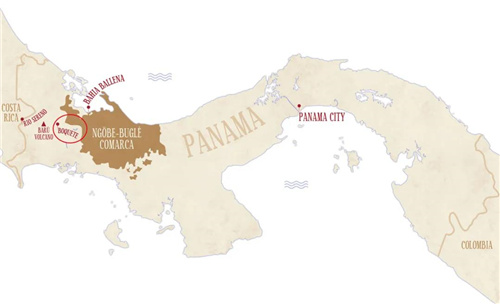
Panamanian coffee from the Boquete region of Chiriqui Province is justly famous, not least the well-known Hacienda La Esmeralda Geisha. Why is coffee quality from Boquete so excellent? FrontStreet Coffee believes it has much to do with the natural environment. Panamanian beans from Boquete are grown at altitudes as high as 1400-1900 meters near the famous Baru Volcano. The volcanic soil is fertile and rich in organic nutrients, and the humid climate is perfect for producing high-quality coffee. FrontStreet Coffee has cupped numerous Panamanian coffees and, after careful selection, has introduced beans from Hacienda La Esmeralda Geisha, Elida Estate, and Hartmann Estate.
FrontStreet Coffee's Collection and Mission
Since opening in 2013, FrontStreet Coffee has featured nearly two hundred different coffee beans. In China, few specialty coffee shops offer such a wide variety of pour-over beans. The constant updating of FrontStreet Coffee's selection aims to build a corresponding body of coffee information — to understand each bean deeply, the flavor profiles of beans from each country's regions, and then present all of it through text, images, and other formats.

Panama Boquete: Ideal Growing Conditions
Today FrontStreet Coffee wants to introduce Panamanian coffees from the Boquete region. Coffee cultivation is quite particular. Apart from Caturra grown in Brazil, a sun-exposed variety that needs no shade trees, many coffee trees do require them.
From FrontStreet Coffee's understanding, plantations in Panama's Boquete region need shade trees. Plantations with more than 50 trees per hectare count as full-shade, those with 25-50 trees as semi-shade, and those with fewer than 25 trees as sun plantations. Shade trees matter a great deal because they block intense sunlight and slow the maturation of the coffee cherries. That longer ripening lets the cherries accumulate more flavor compounds, so coffee from shaded plantations ends up higher in flavor quality.

Esmeralda Estate's Geisha Classification
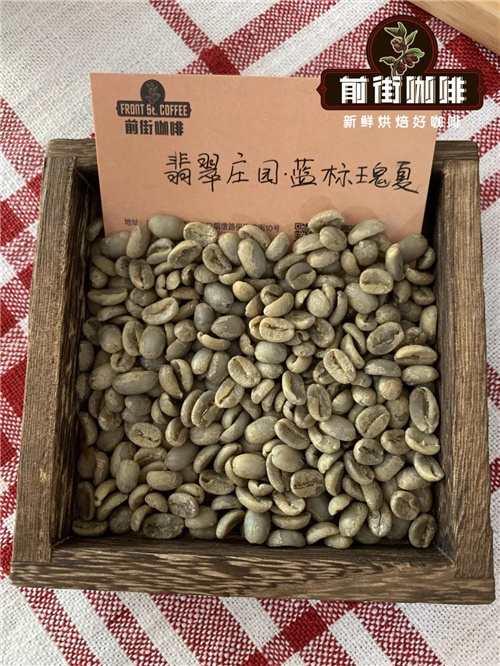
Most beans from Panamanian estates are hand-selected Arabica, each lot traceable to its origin, and the Esmeralda Estate coffees FrontStreet Coffee acquires can all be traced back to source. Red Label Geisha cups above 90 points, from trees grown at 1600-1800 meters and drawn mainly from the Jaramillo and Cañas Verdes plots. Green Label Geisha carries no cupping requirement, also grown at 1600-1800 meters and blended from the Jaramillo and Cañas Verdes plots. Blue Label Geisha comes from the Jaramillo, Cañas Verdes, and Velo de Novia plots, grown at 1400-1500 meters.
Butterfly Coffee: A High-Value Option
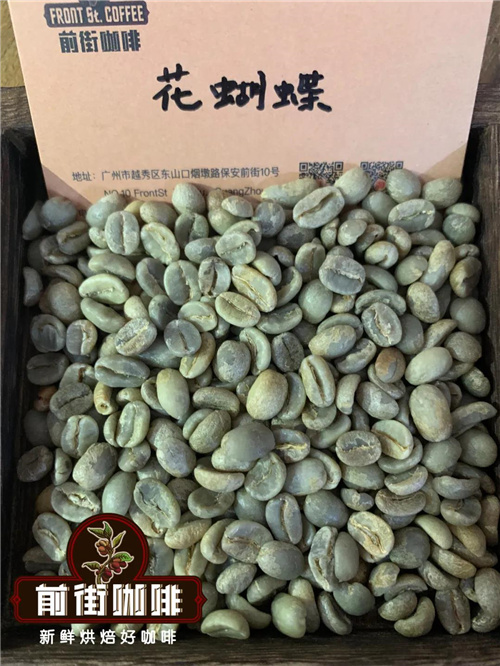
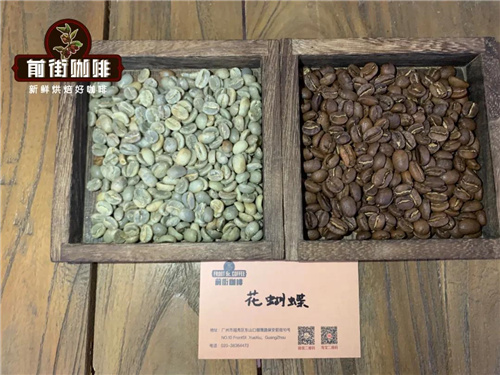
Beyond Panamanian Geisha, FrontStreet Coffee has also acquired a Panamanian coffee with excellent value for money — Butterfly. This coffee carries 70% premium Geisha heritage, composed of three varieties: Geisha, Caturra, and Catuai. Because Panama receives very abundant rainfall, washed processing is often used. As noted above, both Green Label and Blue Label Geisha come as washed beans. FrontStreet Coffee's Butterfly, also washed, produces a cup that is not only full-bodied but also bright in acidity with intense floral aroma, and a rich rose fragrance is noticeable while brewing.
Washed Processing Method
This Panama Butterfly coffee uses washed processing. Mature cherries are harvested first, then impurities and defective beans are removed by flotation: when cherries are poured into water tanks, the mature, full ones sink while the immature ones float. After the skin and pulp are removed, the beans rest in water tanks for 18 hours of fermentation, then are washed. Only then are they dried.

Processing Methods and Flavor Profiles
Because processing inevitably affects flavor, and most customers who buy beans at FrontStreet Coffee know little about processing or the flavor differences between washed and natural, the team has cupped washed and natural beans many times. The conclusion: washed beans have brighter acidity, while natural beans have a much fuller body with ample sweetness and aroma.
Butterfly Coffee: A Single Origin Blend
In pursuit of higher yields, early Geisha varieties were mixed and planted with Caturra and Catuai trees, while Butterfly is a later manual blend. Because all three of its varieties come from the same origin and region, Butterfly still counts as a single origin coffee. When brewing it, a three-stage pour works well — a relatively simple technique that extracts regional flavor effectively.
Elida Estate: Another Premium Selection
FrontStreet Coffee has also acquired beans from another Boquete estate — Elida. Elida is a very famous Panamanian coffee estate with extremely high quality. Cupping Geisha from the same plot and altitude at Elida, the team found Elida Geisha shows more complex layering than Esmeralda Geisha, possibly owing to different processing methods.
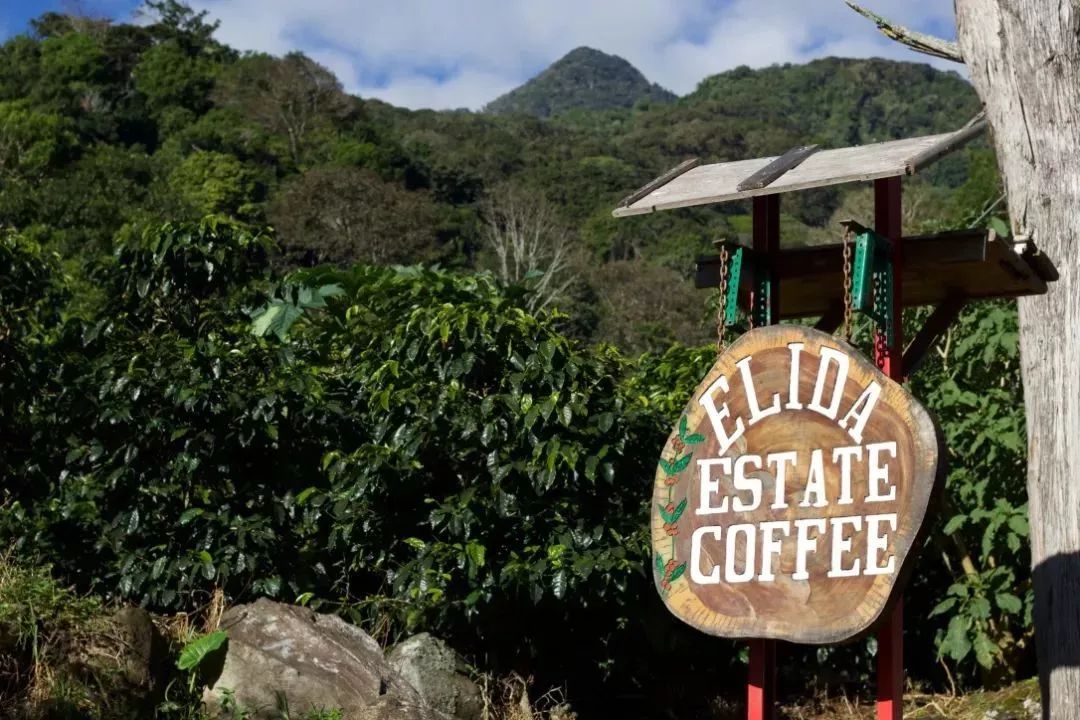
Elida's beans often achieve excellent results in cupping competitions, which is inseparable from its superior environment. Its trees grow at 1600-1800 meters, making it one of the highest-altitude coffee estates in Panama. At such altitude, low temperatures extend cherry maturation by about a month compared with normal. Proximity to volcanoes also supplies fertile nutrients. Together these conditions strongly promote flavor development.
FrontStreet Coffee Recommendation
FrontStreet Esmeralda Red Label Geisha — The estate's top line, sold as "Esmeralda Special." Grown at 1600-1800 meters, every lot must cup above 90 points, and each lot carries its own number because all its beans come from a single small plot — FrontStreet's red label, for instance, is from the Jaramillo plot. Expect a remarkably elegant jasmine aroma with citrus, bergamot, and black tea, clean and transparent with a long finish and rich layers.
FrontStreet Boquete Geisha — The entry point for anyone curious about the much-talked-about Geisha flavor. This approachable Panamanian Geisha lets you taste the classic orange-blossom honeyed character of high-quality Boquete Geisha at a friendly price, with its oolong-tea sensation, fine fruit acidity, and clearly defined layers.
FrontStreet 70% Geisha Blend — A high-value option in the style of Butterfly: a single-origin washed Panamanian blend of Geisha, Caturra, and Catuai in which Geisha contributes delicate florals and the Caturra and Catuai supply gentle fruit acidity and body. Brewed as pour-over it shows white-flower fragrance, soft citrus acidity, caramel sweetness, and a green-tea finish.
Important Notice :
FrontStreet Coffee is a long-established specialty coffee roaster in Guangzhou China, selling freshly roasted beans from its own farm in Yunnan as well as dozens of carefully selected single-origin beans from around the world for both pour-over and espresso. The products deliver consistently excellent quality and great value, with shipping within 24 hours. Guangzhou's FrontStreet Coffee shop is recommended by many coffee lovers, and the beans are now available online at the Tmall 。
FrontStreet Coffee has moved to a new address:
FrontStreet Coffee Address: 315,Donghua East Road,GuangZhou
Tel:020 38364473
 Scan and follow the En Gafei WeChat official account. Please indicate that the reprint comes from "En Gafei".