FrontStreet Coffee Pour-Over Coffee Basic Steps: Simple Brewing Methods for Premium Ground Coffee
For professional coffee knowledge exchange and more coffee bean information, follow Coffee Workshop (WeChat public account: cafe_style).
The Art of Pour-Over Coffee
Since the third wave of coffee, pour-over has gradually worked its way into daily life. With simple equipment and an emphasis on manual technique, pour-over feels like a return to purity; it grew out of a Japanese pursuit of refinement and has captivated countless coffee experts and lifestyle enthusiasts. What makes pour-over so appealing, and what is the key to a good cup? FrontStreet Coffee advocates a conservative approach, presenting coffee flavor through accurate grinding, precise temperature, exact weight, and sufficient extraction within the right time frame. The parameters FrontStreet Coffee cites are based on SCA-provided parameters combined with FrontStreet Coffee's own practical experience. Over-extraction means exceeding Golden Cup standards, while under-extraction means falling below them. This method offers a standard practice from FrontStreet Coffee that you can then adjust to taste.
Q: What is Pour-Over Coffee?
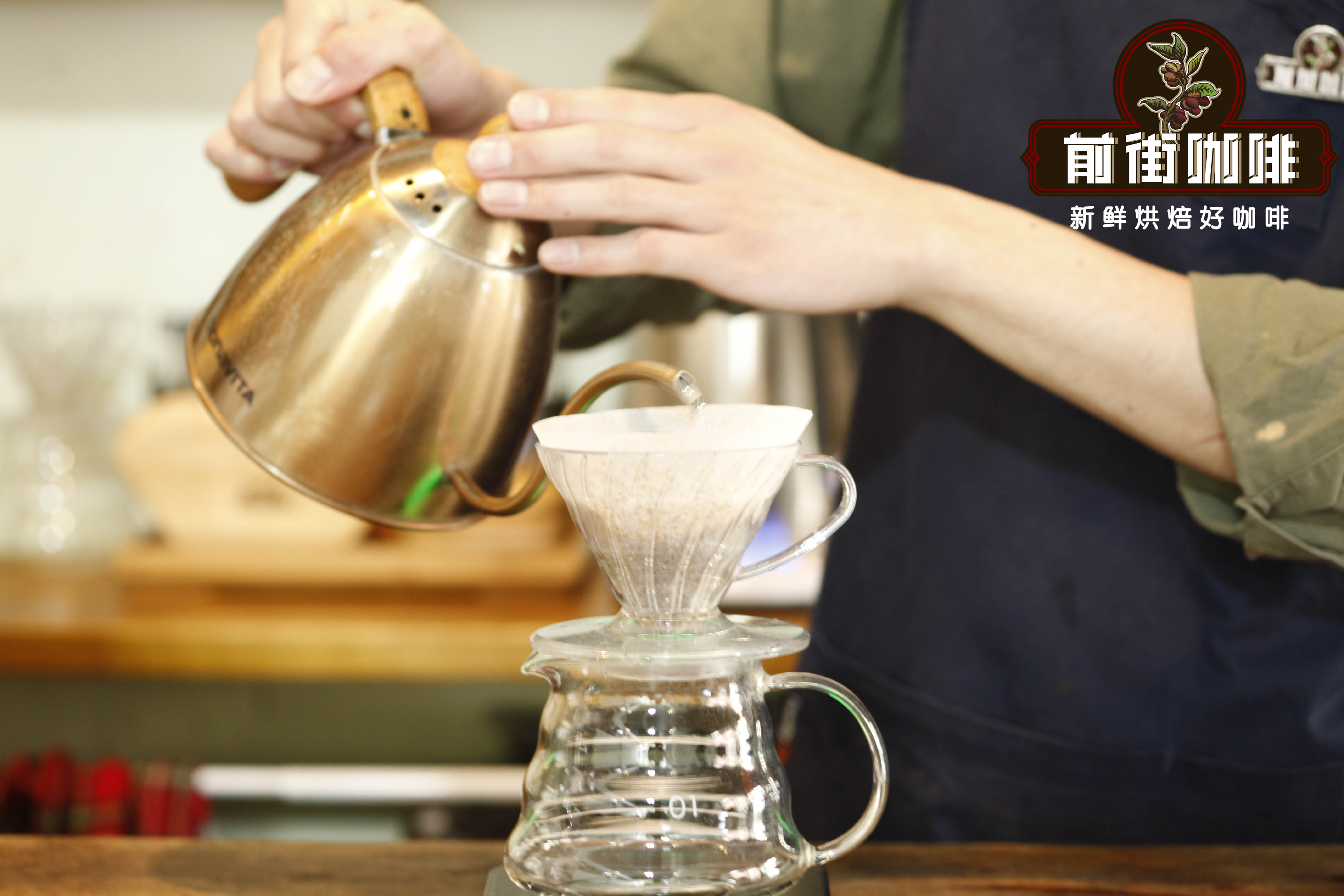
FrontStreet Coffee: "Pour-over coffee" means brewing at atmospheric pressure, using a filter cup and filter paper to hold appropriately ground coffee. The brewer uses a steady pouring technique to introduce water of the right temperature and volume over the grounds to extract coffee. Since grind size, water temperature, pouring method, and brew time all affect extraction, this method demands considerable technique and professional coffee knowledge.
Q: What is Golden Cup Extraction?
FrontStreet Coffee: The Golden Cup extraction standards are most strongly influenced by the SCA (the SCAA and SCAE merged in 2017). Put simply, during pour-over, keeping "concentration" between 1.15-1.45% and achieving an "extraction rate" of 18-22% puts the brew within the Golden Cup range.
The best-known part of the Golden Cup standard is undoubtedly the extraction chart, where the horizontal axis is extraction rate, the vertical axis is concentration, and the diagonal lines represent coffee-to-water ratio (coffee amount/water amount).
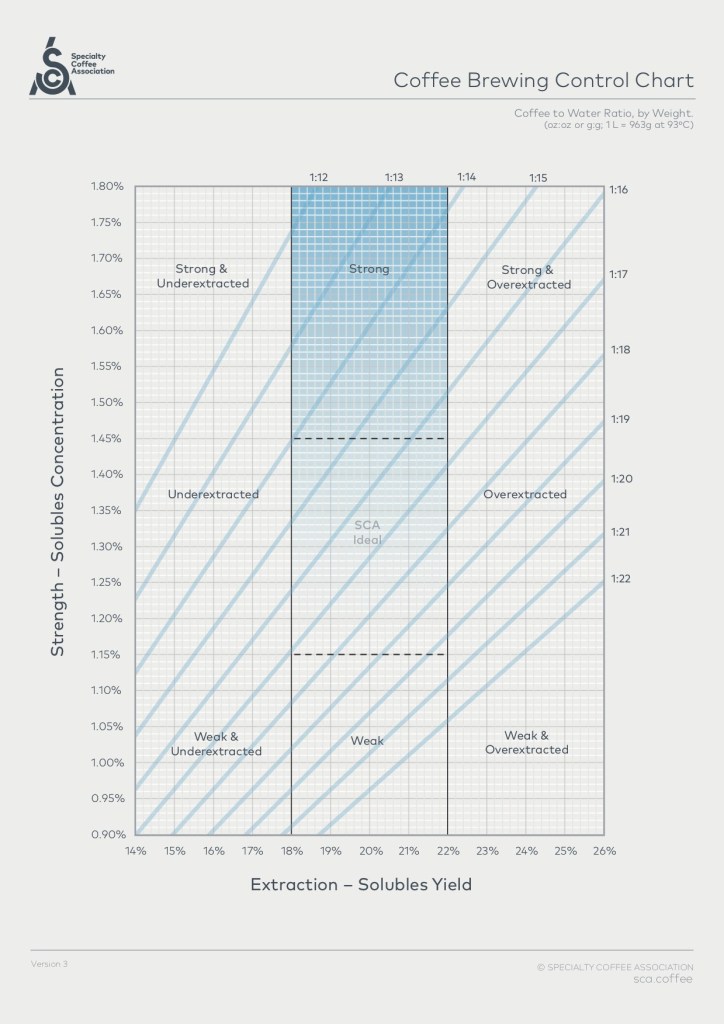
Once you measure the coffee concentration, you can easily calculate the extraction rate.
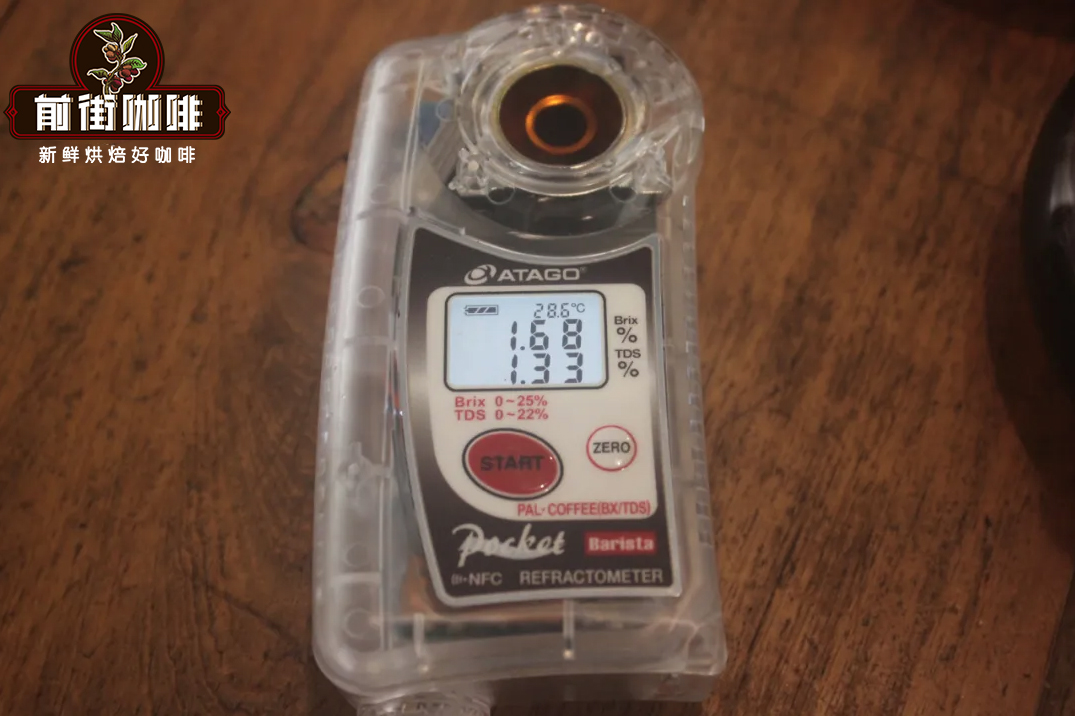
Pour-over extraction rate formula:
Extraction Rate = Coffee Liquid Volume x Coffee Concentration / Coffee Grounds Amount
Golden Cup Standards from Different Countries
American Specialty Coffee Association (SCAA):
Extraction rate [18%-22%], concentration [1.15%-1.35%]
European Specialty Coffee Association (SCAE):
Extraction rate [18%-22%], concentration [1.2%-1.45%]
Norwegian Coffee Association (NCA):
Extraction rate [18%-22%], concentration [1.3%-1.55%]
Brazilian Coffee Association (ABIC):
Extraction rate [18%-22%], concentration [2%-2.4%]
As you can see, countries define Golden Cup differently and have different preferences for concentration. What is universally accepted, though, is that an extraction rate between 18% and 22% produces the most delicious coffee. Golden Cup standards have made a great contribution by giving specialty coffee a reference point and making extraction more scientific. Even so, this is not the only approach; it is more of a benchmark for beginners. Coffee that meets Golden Cup standards isn't necessarily good, and coffee that misses them isn't necessarily bad. What matters is understanding the relationship between ratio, concentration, and extraction rate, rather than chasing those cold, hard numbers.
Q: What Do We Need to Prepare for Making Pour-Over Coffee?
FrontStreet Coffee:
1. Pour-over kettle: Kettles come in various sizes and materials, so choose according to your needs. The spout size has the biggest effect on results, because it governs the water flow. Beginners are generally advised to use a narrow-spout kettle for easier control. Different kettles also suit different heat sources (induction or gas), so pay attention when buying.
2. Filter cup: Filter cups also come in different sizes and materials, mainly in three shapes: fan, cone, and wave. The size of the hole at the bottom affects the flow rate of the brewed coffee and therefore the flavor. Fan-shaped cups have smaller holes, slower flow, and a richer, fuller flavor; conical cups have larger holes, faster flow, and a lighter, more delicate flavor; wave cups have a flat bottom paired with special wave filter paper, producing the most uniform flavor. Metal mesh filter cups are worth noting in particular: they need no paper and retain more coffee oils for a stronger flavor, but some finer particles may not be filtered out effectively.
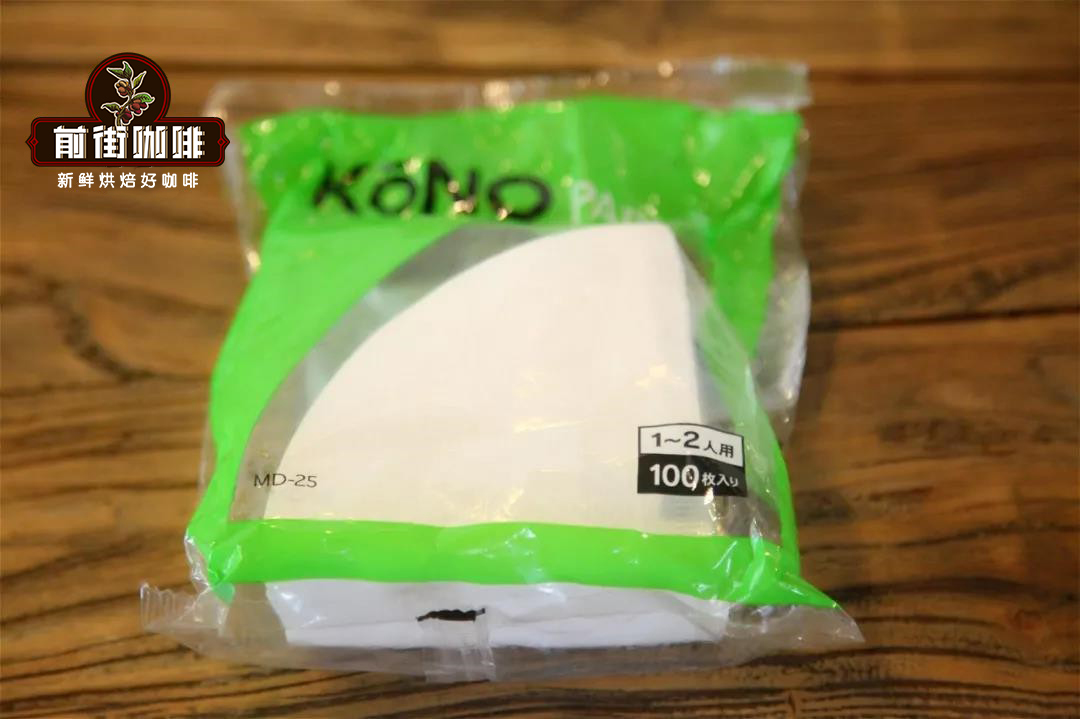
3. Filter paper: Filter paper comes bleached or unbleached. Bleached paper looks whiter, while unbleached looks closer to light brown. Its job is to use very dense fibers to hold the grounds while letting brewed coffee through into the cup. When buying, choose the type that matches your filter cup.
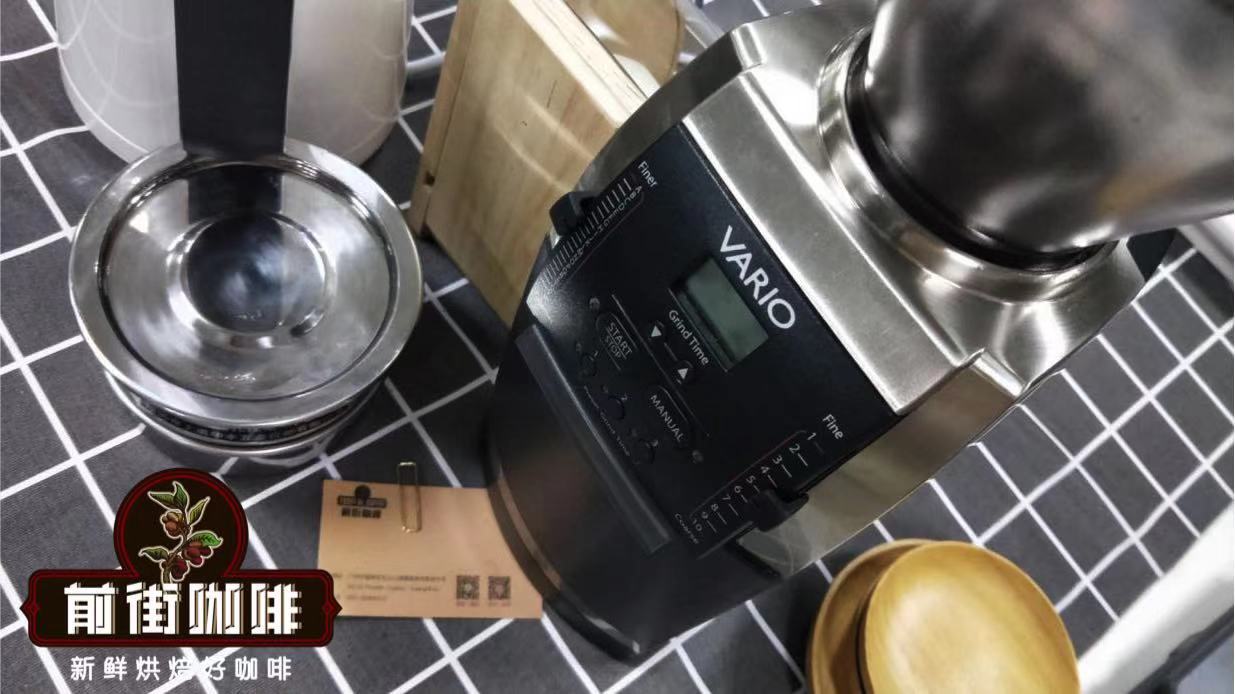
4. Coffee grinder: Good pour-over needs a good grinder. There are three types on the market:
1) Ghost tooth grinder
2) Flat burr grinder
3) Conical burr grinder
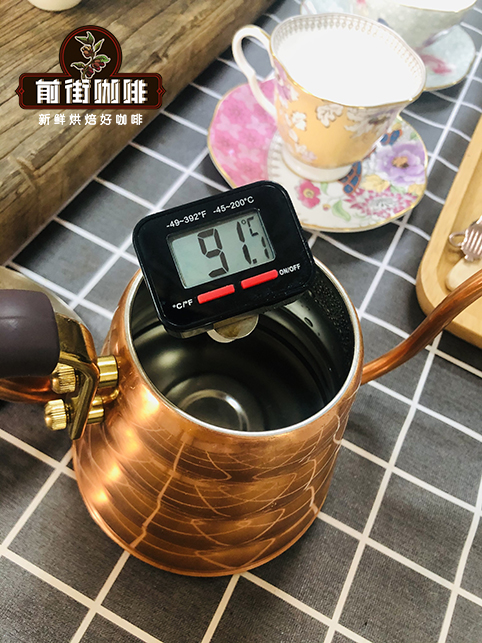
5. Thermometer: A thermometer measures water temperature. Options on the market include Tiamo, Hero, and Cafede Kona thermometers.
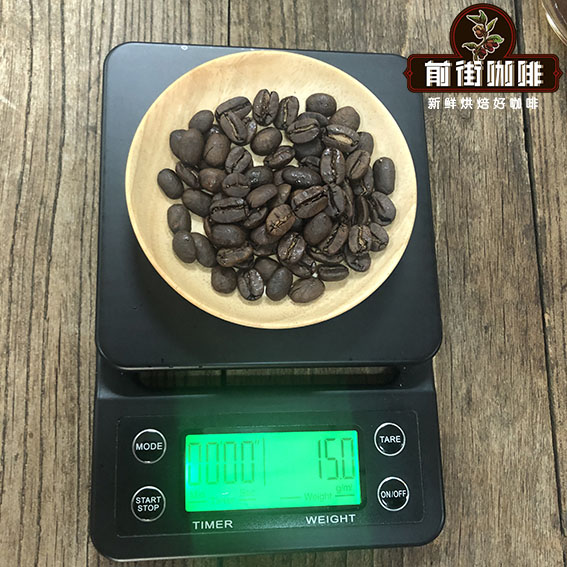
6. Electronic scale: A scale lets you control the coffee-to-water ratio more precisely, reducing inconsistency and adding fault tolerance. Scales range from dozens to hundreds of yuan, with options like Yami scales, Hero smart scales, and Timemore scales.
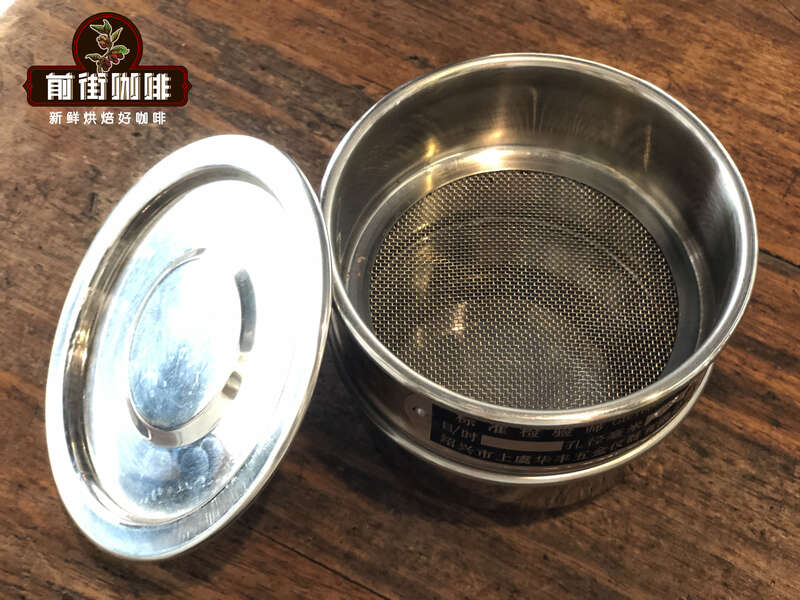
7. Sieve: Used mainly to determine grind size. Each bean variety suits a different pour-over grind. Through continuous experimentation, FrontStreet Coffee established 80% passing through a Chinese standard #20 sieve as the standard pour-over grind.
8. Server carafe: If you're brewing for one, you can skip the carafe and brew straight into a mug. For multiple cups, a carafe is necessary. With its measurement markings and transparent body, it also helps you follow and control extraction, making it more than just a serving vessel. FrontStreet Coffee recommends the Hario V60 Cloud Server Carafe and the Kalita Server Carafe.
Q: What Are the Detailed Steps for Pour-Over Coffee?
FrontStreet Coffee: Brewing a good pot starts with four things: water temperature, grind size, coffee-to-water ratio, and brewing technique.
1. Water temperature
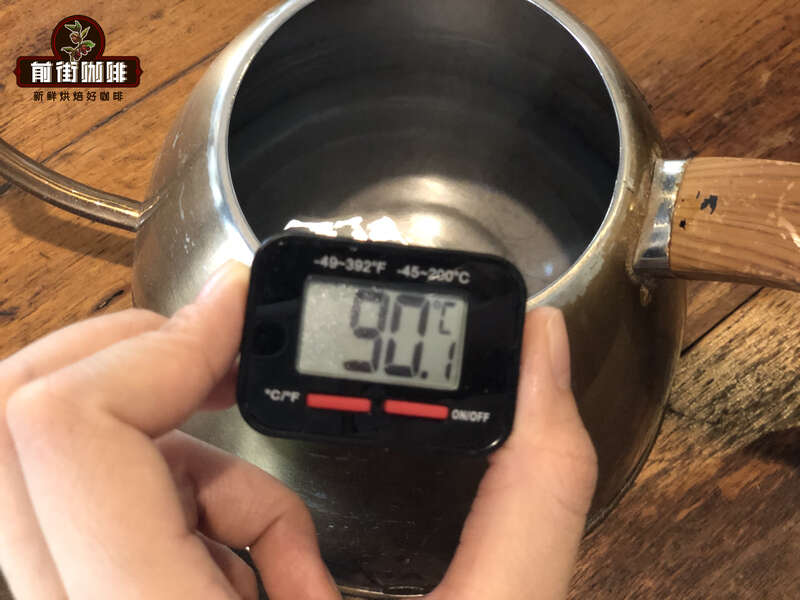
Higher temperature means stronger extraction, giving a more bitter, intense cup; lower temperature means weaker extraction, giving a more acidic, mild, delicate cup. Pour-over temperature should be adjusted to the roast level. For light to medium roast beans, 90-91 degrees C is recommended; for medium to dark roast beans, 85-87 degrees C. FrontStreet Coffee generally adjusts within this range. A customer once questioned this, so FrontStreet Coffee brewed the Golden Mandheling bean (a dark roast) at 90 degrees C, and the result was almost comparable to espresso.
2. Grind size
Grind size refers to the size of the coffee particles and affects the contact time between coffee and water. The finer the grounds, the more water extracts in the same time, but finer grinds are prone to over-extraction. Coarser grounds extract less in the same time, but coarser grinds are more prone to under-extraction. FrontStreet Coffee recommends 80% passing through a Chinese standard #20 sieve, determined through repeated taste tests. Note that different beans need different grinds, so when the pour-over tastes off, check whether the grind is the problem.
3. Coffee-to-water ratio
The ratio refers to the proportion of grounds to brewing water and affects concentration. Ratios can be 1:10, 1:13, 1:15, or 1:16. FrontStreet Coffee recommends 1:15, which is moderate in both concentration and flavor. Of course, everyone wants something different, so during extraction you can adjust the ratio to the strength and taste you prefer.
Q: How to Make Good Pour-Over Coffee at Home? Any Suggestions for Brewing Techniques?
FrontStreet Coffee: There are various techniques, including three-stage pouring, single-pour, and drip-style pouring. FrontStreet Coffee recommends beginners use the three-stage method, which suits light, medium-light, and medium roast beans. By extracting in segments, the three-stage method clearly separates the front, middle, and back-end flavors and better ensures that the coffee's flavors come through.
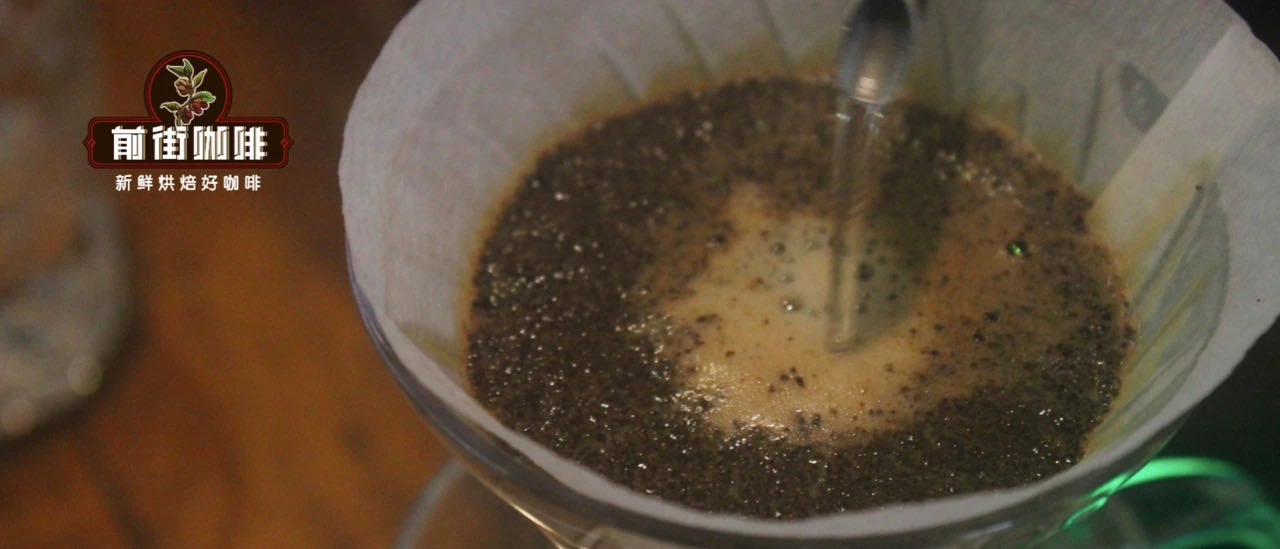
First pour: the bloom (to release gas)
During roasting, beans from green to roasted undergo a series of chemical reactions and physical changes. After a certain degree of roast, the beans accumulate large amounts of gas, mostly carbon dioxide.
Generally, the fresher the coffee, the more bubbles appear during the bloom. Dark roast beans also release more gas during the bloom than light roast beans. FrontStreet Coffee's beans are all freshly roasted, so it generally advises customers to rest the beans for three days first, letting carbon dioxide escape so that brewing avoids instability and under-extraction.
After the bloom releases gas, the coffee particles can absorb water evenly, allowing more uniform extraction afterward. A good bloom lets the grounds release gas quickly and evenly while also letting them contact water fully and rapidly, helping to ensure uniform extraction.
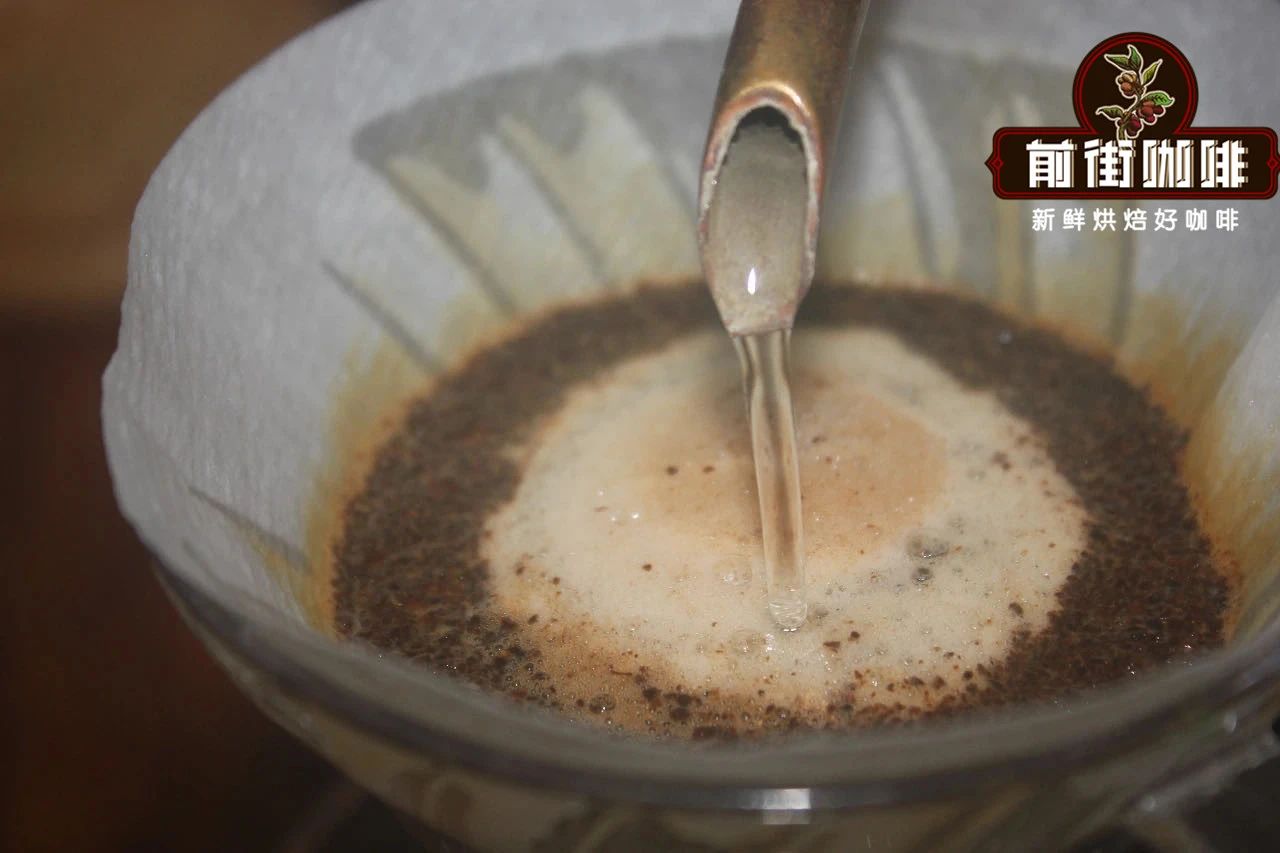
Pay attention to four things during the bloom:
1. Before pouring for the bloom, level the coffee bed first.
2. Pour gently during the bloom.
3. During the bloom, try to minimize the amount of liquid that flows down. When too much liquid appears in the lower pot, reduce the water amount or check the grind. (If too much water is used during the bloom and a lot of coffee drips through, the falling water doesn't linger - it directly carries substances from the outer layer of the grounds, and the undesirable flavors and astringency from that outer layer start to dissolve, giving you a coffee that is at once weak and over-extracted. If too little water is used and nothing drips, the grounds haven't absorbed enough water and some haven't released enough gas, leading to under-extraction.) Given this, FrontStreet Coffee ran multiple bloom experiments and found that pouring twice the grounds' weight in water during the bloom is most appropriate.
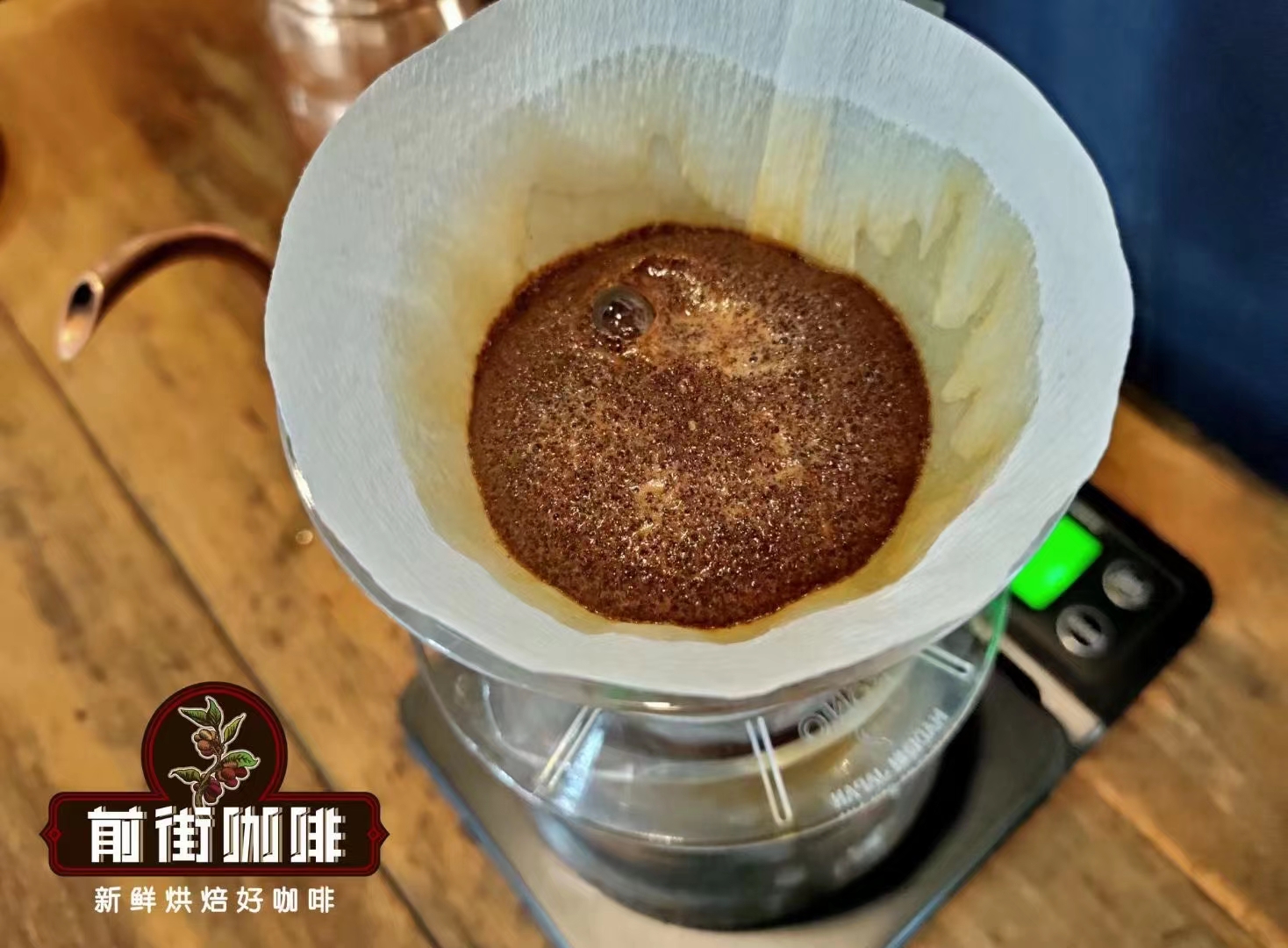
4. Bloom time should be about 30-40 seconds. When the surface stops expanding and begins to shrink, the bloom is done and you can start pouring. (Too long a bloom easily develops bitter and astringent flavors; too short a bloom means insufficient soaking, possibly leading to under-extraction or an under-expressed coffee.) Bloom-end times vary by bean, but FrontStreet Coffee found this not beginner-friendly, since beginners need standardization and ease of use. So, while making sure the beans are still freshly roasted, FrontStreet Coffee recommends a 30-second bloom, though experienced brewers can adjust the time themselves.
Second pour
Start the second pour from the center, using a small stream injected down to the bottom of the coffee bed. To concentrate the stream's penetrating power, keep the circular motion small - about the size of a one-yuan coin - then expand outward. From the start of the second pour, watch the water amount and try not to exceed the height of the coffee bed, meaning you can stop pouring when the stream comes close to the filter paper.
Third pour
As the originally thicker coffee bed near the filter paper edges becomes heavier from absorbing water and slides down and thins as the water level drops, you can begin the third pour when the level falls to halfway. From the third pour, observe how far the water level drops. Again, start from the center in circular motions, with the water amount not exceeding the coffee bed height. At this point you'll also see that foam has covered the entire surface. The third pour needs to increase the tumbling of the coffee particles, getting all the settled particles moving so soluble substances dissolve.
Tumbling particles begin to settle when you stop adding water. At that point, rely on the flow created by the dropping water level to create friction between the particles. Once you stop, the particles sink and cause blockage, so pay special attention to the rhythm of pouring. If you interrupt the water too many times, it's as if you let the particles soak continuously, which leads to astringency and off-flavors in the tail end of extraction.
Q: What Exactly Is the Principle of Pour-Over Coffee?
FrontStreet Coffee: So-called coffee brewing is really the process of extracting molecules from coffee cells, and it has three steps: wetting, dissolution, and release. The three occur in sequence and influence each other, ultimately producing coffee's unique flavors.
Step one: Wetting
This means exactly what it says - the grounds get wet when they meet water, which is the starting point for coffee cells to begin releasing molecules. Note that roasted beans are filled with carbon dioxide, and fresher beans contain more of it. When hot water touches the grounds, carbon dioxide escapes first, forming a layer of bubbles on the surface. During pour-over, you'll see the grounds in the filter cup begin to expand. At that moment the coffee cells are like a supermarket where many people are trying to squeeze out from inside, so people outside can't get in; similarly, hot water outside the cells can't enter. So after wetting the grounds, we stop pouring and wait for carbon dioxide to fully release and the grounds to stop expanding before continuing to add water, for a better result.
Step two: Dissolution
This is the process of soluble molecules in the coffee cells dissolving in hot water. It is the most important step, because it determines the flavor of the brewed coffee. Coffee beans are two-thirds insoluble cellulose, with the remaining third made of soluble aromatic molecules that dissolve in water according to molecular size. The first small molecules to dissolve include acids and aromatics, followed by medium molecules of sweetness, and finally large molecules of bitter and burnt flavors. This is how coffee's different flavor layers arise. So if you prefer sweeter flavors, the extraction should be shorter, because the longer hot water stays on the grounds, the more bitter molecules dissolve.
Step three: Diffusion
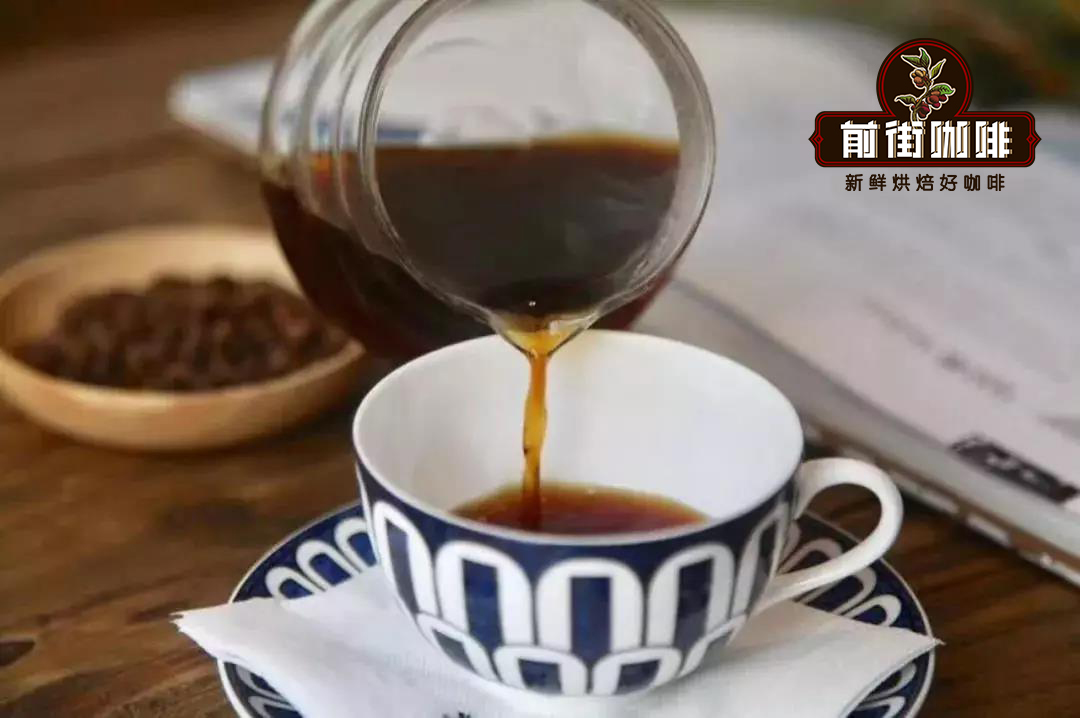
After aromatic molecules dissolve, they leave the coffee cells through osmosis in a process called diffusion. The aromatic molecules diffuse into the hot water, forming the final coffee extract.
FrontStreet Coffee Recommendation
Once you have the basics down, the V60 filter cup is the tool most pour-over beginners are pointed toward, and FrontStreet Coffee's floral and fruity single-origins are what suit it best. The classic starting point is the FrontStreet Yirgacheffe Gedeb, which opens with jasmine blanc, bright citrus and lemon acidity, and a tea-like body, all at a friendly price.
For a bigger, juicier fruit character, the FrontStreet Huakui is hard to beat. Grown at very high altitude with excellent terroir, it carries a delicate aroma and, after a medium-light roast, delivers strawberry, passion fruit, jackfruit, and even lychee aromas with low bitterness, a smooth, juice-like mouthfeel, honeyed sweetness, a cocoa edge, and some spice.
If you want to try V60 with a rarer profile, the FrontStreet Kenya Cherry Tomato is a Kenyan washed standout: sumptuous cherry tomato and dark plum aromas, a full, juicy body, and a clean, long finish of yellow sugar and light green tea. And for the ultimate floral expression, the FrontStreet Panama Esmeralda Red Label Geisha brings elegant jasmine, citrus, bergamot, and black tea notes, with a clean, transparent body and a long, layered finish.
Important Notice :
FrontStreet Coffee is a long-established specialty coffee roaster in Guangzhou China, selling freshly roasted beans from its own farm in Yunnan as well as dozens of carefully selected single-origin beans from around the world for both pour-over and espresso. The products deliver consistently excellent quality and great value, with shipping within 24 hours. Guangzhou's FrontStreet Coffee shop is recommended by many coffee lovers, and the beans are now available online at the Tmall 。
FrontStreet Coffee has moved to a new address:
FrontStreet Coffee Address: 315,Donghua East Road,GuangZhou
Tel:020 38364473
 Scan and follow the En Gafei WeChat official account. Please indicate that the reprint comes from "En Gafei".