Ethiopia Gesha Village Gold Label Geisha: Introduction to Gold Label Batch Geisha Coffee Beans

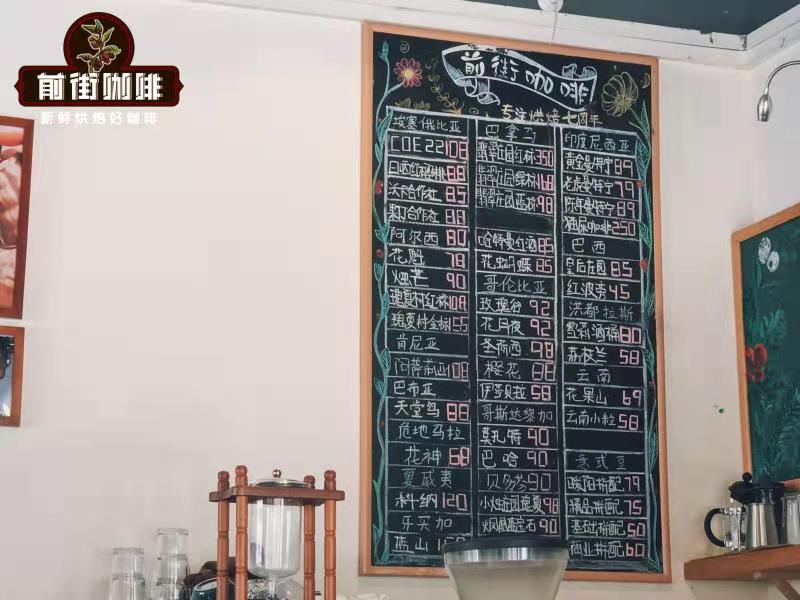
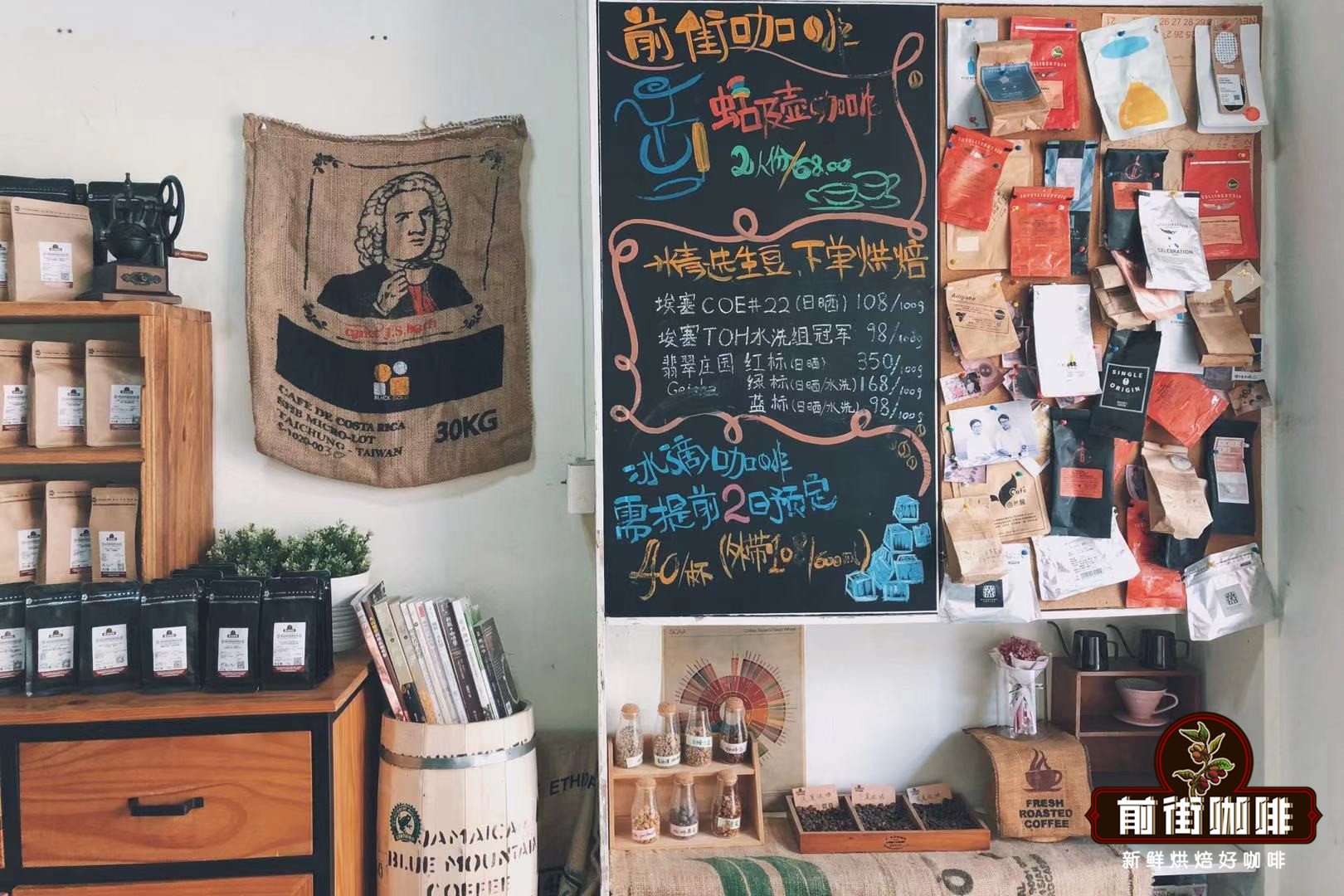
At FrontStreet Coffee, curious newcomers often arrive with questions in hand — first they order a cup of coffee, then they set about quizzing us one question at a time. A Geisha enthusiast once asked: "What does the Gold Label on the blackboard mean? Where is Geisha Village? Is Gold Label a higher grade than Red Label? And how different is it from Hacienda La Esmeralda's Red Label?" Don't worry — if you want to understand the stories behind these labeled Geishas, let FrontStreet Coffee start by explaining these "labels" and their colors!
The "Gold" in Gold Label
It doesn't take long to notice that these labeled Geishas are named to signal their high grade. Whether it's the Red Label and Gold Label we're discussing today, or the Green Label and Blue Label that follow, even if you can't rank them by their color prefixes alone, you can be fairly confident that an x-label Geisha from a famous estate is a cut above ordinary Geisha — and, of course, likely more expensive.

In fact, this "label" terminology only exists in the Chinese-speaking market. Use the original English names and you might not recognize who's who, or which ranks higher. The most famous Hacienda La Esmeralda Red Label Geisha's original name is "Esmeralda Special." This is the estate's highest-tier commercial Geisha: not only must every lot cup above 91 points, each batch also carries detailed "birth records." The "red" of Red Label comes simply from the background color of the product's trademark — and the same applies to Hacienda La Esmeralda's Green and Blue Labels, adopted to make the tiers easier for consumers to remember and tell apart.
Along the same lines, Geisha Village Estate's Gold Label Geisha has its own English name, "Rarities" — as in rare treasures. It is essentially the highest-grade non-auction Geisha Geisha Village produces, and the "gold" again comes from the trademark's background color. According to Geisha Village's official disclosures, this grade accounts for only 10% of the estate's total production. Like Hacienda La Esmeralda's Red Label, every lot comes with plot information so buyers know exactly what they're getting.

While substituting background colors for the original product names does make the different Geisha grades more accessible and memorable, it occasionally causes confusion when colors collide. In the two estates' respective production and sales systems, both include grades with red and green backgrounds — so there are two "Red Labels" and two "Green Labels" on the market at the same time. When ordering, pay attention, or ask the barista which estate the Geisha actually comes from.
Introduction to Geisha Village
FrontStreet Coffee's research shows that Geisha Village is located in southwestern Ethiopia near the South Sudanese border, deep within the densely forested Bench Maji zone, covering nearly 500 hectares. Standing at Geisha Village, you look straight out over ancient forest scenery. This is classic Ethiopian highland terrain — even the estate's lowest plots sit above 1,900 meters. The benefit of such altitude is that coffee cherries ripen slowly in the cool temperatures, accumulating more flavor compounds along the way.

Bench Maji is one of the 14 zones within Ethiopia's Southern Nations, Nationalities, and Peoples' Regional State (SNNPR), and it is home to three ethnic groups, with the Bench people making up 50% of the population. As the region where Geisha originated, it remains relatively remote and underdeveloped, so most coffee is still grown under original forest conditions. Bench Maji has its own smallholder union, the Bench Maji Coffee Farmers' Cooperative Union, comprising 65 cooperatives serving 130,000 small farmers. Geisha Village is the only large-scale coffee estate here — and one of the few in all of Ethiopia — with its own washing station, laboratory, and systematic planting model. After studying the standardized management of famous Panamanian estates, the estate's owner also numbered and documented each planting plot in detail to allow traceability and flavor tracking later on.

The Geisha Variety Behind the Gold Label
If you're a devoted Geisha fan, you'll know that Geisha actually originated in Ethiopia. In 1931, Geisha was first collected from the wild Kaffa forest in southern Ethiopia in the search for new disease-resistant varieties, named after the nearby Geisha Mountain. It was then passed to research institutes in Kenya, Uganda, Tanzania, and elsewhere for trial plantings. In 1953, the variety reached the Tropical Agricultural Research and Higher Education Center (CATIE) in Costa Rica, where it was cataloged as T2722. Although it was planted on multiple local farms, Geisha's brittle branches and low yield meant farmers never favored it, and it was never widely cultivated.
From the 1960s onward, CATIE distributed T2722 Geisha to Panamanian coffee farmers, and Geisha began its true journey into Panama's fertile soil. In the 1990s, the Peterson family — owners of Hacienda La Esmeralda — turned their attention to coffee production and acquired a new high-altitude farm, Jaramillo. Many of the trees there suffered from leaf rust, but Daniel Peterson noticed that the Geisha trees had come through largely unscathed. The family decided to transplant the Geisha, which had been mixed in with other varieties, to more of the farm while raising its planting altitude.

In 2004, the Geisha that swept the Best of Panama (BOP) competition and stunned the judges was identified, through sample comparison, as the very same "Geisha T2722" originally collected in the 1930s from the Gesha area near the Kaffa forest of southwestern Ethiopia and later cataloged by CATIE in Costa Rica as a fungal-resistant variety.
Geisha Village's Gold Label, however, carries a variety name with an extra detail: "Geisha 1931." The selection work at Geisha Village was led by Willem Boot. With no genetic comparison technology available at the time, the estate's owner, Adam, screened the vast Gesha area using the plant morphology and flavor profile of Panamanian Geisha as his reference, and found two Geisha varieties. One of them tasted remarkably similar to Hacienda La Esmeralda's Geisha, so it was named "Gesha 1931," commemorating the year 1931 when Geisha was first discovered.

From this we can confirm that today's celebrated Panamanian Geisha (including Hacienda La Esmeralda's) is the variety once jotted down as "T2722" in a researcher's notebook, while Geisha Village's "Gesha 1931" is a closely matching variety found in the vast Kaffa forest using Panamanian Geisha as a template — it cannot be proven to share the same lineage as Panamanian Geisha.
Gold Label Grade Geisha
Looking at the estate owner's plot map, the western side of Geisha Village Estate sits at the highest planting altitudes — especially the OMA, SURMA, and SHEWA-JIBABU plots, which range between 1,900 and 2,069 meters, with SHEWA-JIBABU holding the highest average elevation. The southern part of the estate carries relatively higher shade ratios, while the north receives longer sunlight. Across the estate's eight plots, Adam matched the most suitable variety to each one based on microclimatic differences such as altitude, soil, and shade, ensuring that every plot develops its own distinct flavor character.

FrontStreet Coffee would like to remind everyone that the Geisha planted at Geisha Village Estate in Ethiopia is not the same variety that made its name in Panama. Geisha Village grows three Geisha varieties: Gori Gesha, Gesha 1931, and Illubabor Forest. Gori Gesha and Gesha 1931 share a bloodline with the Panamanian Geishas but are still not identical varieties — Gesha 1931 in particular shows characteristics very close to Panamanian Geisha — while Illubabor Forest is a disease-resistant variety supplied by the Ethiopian research institute. To guarantee the quality of its Geisha, Adam established a strict grading system at Geisha Village, dividing the coffee into Auction, Gold Label, Red Label, Green Label, and CHAKA grades.
Geisha Village Gold Label Geisha is frequently bought by competition baristas around the world and by roasters with exacting standards. It accounts for about 10% of the estate's annual production and comes with detailed traceability information. The Gold Label lot purchased by FrontStreet Coffee delivers complex, rich flavors, and during cupping you can feel the full charm of this Geisha — from its distinctive dry aroma to the flavors, mouthfeel, and lingering sweetness in the aftertaste.

FrontStreet Coffee: Ethiopia · Geisha Village Estate · Gold Label Geisha
Region: Bench Maji, Ethiopia
Estate: Geisha Village Estate - Oma Plot
Altitude: 1,900-2,040 meters
Variety: Gesha 1931
Processing: Natural Process
Flavor: Citrus, Berries, Cream, Caramel, Honeydew, Honey
FrontStreet Coffee's Brewing Suggestions for Gold Label Geisha
Preparation before brewing matters enormously. With coffee of this caliber, to taste its complete aroma FrontStreet Coffee suggests choosing freshly roasted beans. Every coffee has an optimal flavor window — typically 7-30 days after roasting — and only brewing within that window does these fine beans justice. Coffee shipped by FrontStreet Coffee is roasted within 5 days of dispatch, so the beans you receive arrive right at the start of their best tasting period.

Light-roast coffee beans are denser and harder, so they need higher water temperatures and a finer grind to draw out the full aromatic character of Geisha coffee.
Dripper: V60
Water Temperature: 91-92°C
Coffee Dose: 15g
Coffee-to-Water Ratio: 1:15
Grind Size: Fine sugar size (80% passing through #20 sieve)

Three-stage extraction: The first stage uses 30g of water for a 30-second bloom, poured evenly in circles to form a dome. The second stage pours 95g of hot water. Once the coffee bed drops to half its height, begin the third stage with 100g and continue until all the coffee has finished dripping. Note: start pouring at the center point and keep the water flow small and the circular motion gentle throughout, to avoid uneven extraction.
FrontStreet Coffee Recommendation
Geisha is one of the most coveted Arabica varieties in the world — beloved for its unique florality and superb sweet-sour balance, yet priced ever higher because of its low yield, weak disease resistance, and demanding cultivation. If you'd like to taste the "Geisha flavor" without the flagship price, FrontStreet recommends starting with the FrontStreet Boquete Gesha from Panama. This entry-level Geisha lets you experience the classic orange-blossom honey character of top Panamanian Gesha — oolong-tea-like body, delicate fruit acidity, and clearly layered sweetness — at an approachable price.
For an Ethiopian alternative, the FrontStreet Genlana Estate Gesha is an excellent pick. Genlana Gesha is a rare single-variety estate in Yirgacheffe; its processing station, founded in 2014 and run by Mr. Israel Degefa, sits at the border of the Kochere and Genlana Abaya areas, surrounded by 700 hectares of coffee land — most of it uncultivated, with rich soil and shade trees everywhere. Only fully ripe cherries are hand-picked, then dried on raised beds for 14-20 days depending on the weather. Roasted medium-light, it shows a bright citrus acidity, elegant ginger-flower aroma, the full sweetness of ripe fruit, and a silky texture with the refined finish that defines the Gesha variety. And if you'd rather enjoy Geisha character in everyday drinks, the FrontStreet Strawberry Candy blend — marrying Costa Rica honey-processed coffee with Panama Gesha — offers fine florality and sweet fruitiness whether brewed as pour-over, cold brew, moka pot, or espresso.
Important Notice :
FrontStreet Coffee is a long-established specialty coffee roaster in Guangzhou China, selling freshly roasted beans from its own farm in Yunnan as well as dozens of carefully selected single-origin beans from around the world for both pour-over and espresso. The products deliver consistently excellent quality and great value, with shipping within 24 hours. Guangzhou's FrontStreet Coffee shop is recommended by many coffee lovers, and the beans are now available online at the Tmall 。
FrontStreet Coffee has moved to a new address:
FrontStreet Coffee Address: 315,Donghua East Road,GuangZhou
Tel:020 38364473
 Scan and follow the En Gafei WeChat official account. Please indicate that the reprint comes from "En Gafei".