
Panama Geisha Estate Coffee Bean Variety Story: Flavor Profile Differences Between Blue, Green, and Red Label Geisha Coffee
When you enjoy a delicious cup of coffee, what do you think about? Do you think about the harvesting and craftsmanship behind it? Have you considered what processing method was used for these beans? As a specialty coffee-focused cafe, FrontStreet Coffee researches and understands relevant knowledge about each coffee before listing it, including detailed information about origin, variety, cultivation and harvesting, and post-processing.

The Rise of Geisha Coffee
In 1931, Geisha was first collected from the wild Kaffa forest in southern Ethiopia, with the aim of finding new disease-resistant varieties. It was named after the nearby Geisha Mountain. It was later transferred to research institutes in Kenya, Uganda and Tanzania for trial cultivation. In 1953 the Geisha variety arrived at CATIE, the Tropical Agricultural Research and Higher Education Centre in Costa Rica, and was recorded as T2722. Although there were cultivation records on several local farms, Geisha's brittle branches and low yield kept it from becoming popular with farmers, and it was never widely planted.

From the 1960s onward, CATIE gave T2722 Geisha to Panamanian coffee farmers, and Geisha truly began to set foot on Panama's fertile land. In the 1990s the Peterson family, owners of Hacienda La Esmeralda, began to focus on coffee production and acquired a new high-altitude farm, Jaramillo. Many coffee trees on the farm suffered from leaf rust, but Daniel Peterson noticed that the Geisha trees were not severely damaged. The family therefore decided to transplant the Geisha, which had originally been mixed in with other varieties, to more areas of the farm while increasing its planting altitude.
In 2003 the Peterson family finally discovered Geisha's potential. When they first cupped it, it showed quite intense white flower aromas, an extremely clean taste and a berry, citrus and bergamot-like aftertaste, forming a very typical Panamanian Geisha flavour. Astonished, they decided to enter it in the 2004 BOP, Best of Panama, competition and named it "Geisha." Today's stunning Panamanian Geisha coffee is therefore the T2722 variety from that year.

On FrontStreet Coffee's bean list you might see three types of FrontStreet Coffee Panamanian Geisha: Red Label, Green Label and Blue Label. Many people do not understand the differences between them, so today FrontStreet Coffee will give a brief introduction. All three come from Panama's Hacienda La Esmeralda, which grades Geisha coffee by planting altitude and cupping score.
FrontStreet Coffee · Hacienda La Esmeralda Red Label Geisha Coffee Beans
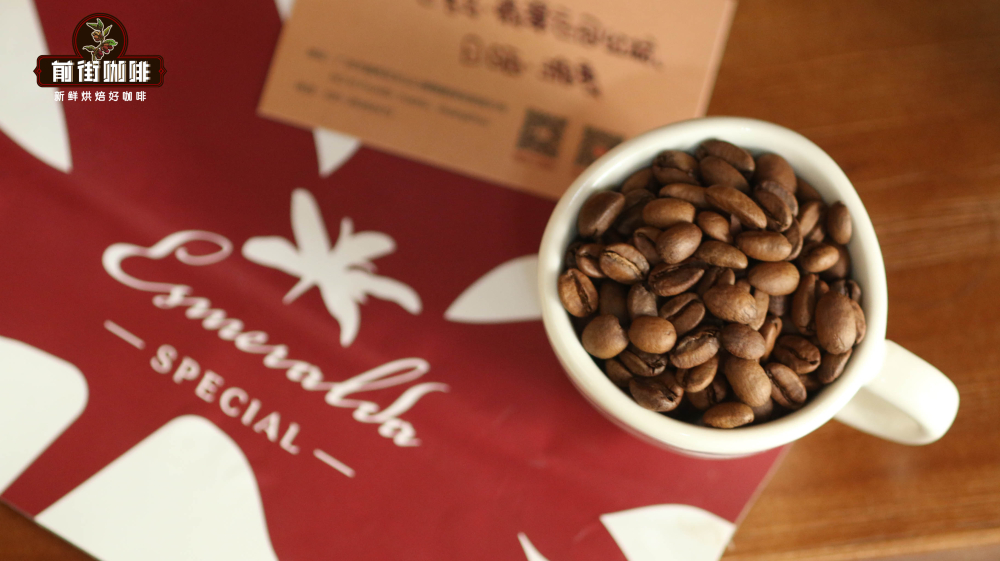
FrontStreet Coffee's Hacienda La Esmeralda Red Label Geisha is planted at an altitude of 1,600 to 1,800 metres, with cupping scores above 90 points. It is mainly produced in the Jaramillo and Cannas Verdes estates and is the highest quality Panamanian coffee from Hacienda La Esmeralda. The Geisha beans harvested from the highest points of the Boquete mountain region possess special, bright floral aromas and citrus fragrances. This grade of coffee is processed into natural or washed green beans and can only be purchased through the annual global auctions. FrontStreet Coffee acquired the natural batch of Hacienda La Esmeralda Red Label, which presents richer tropical fruit flavours.
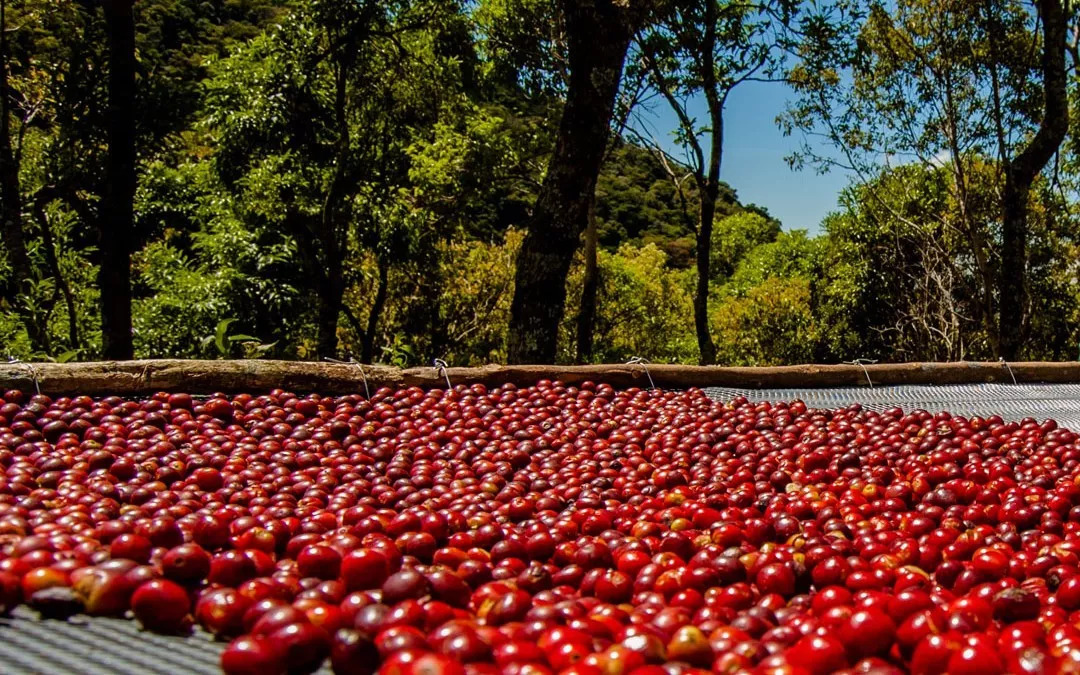
Hacienda La Esmeralda's natural processing begins by sending the harvested cherries straight to the courtyard to dry. The cherries dry slowly with the beans still inside, filled with fruity and aromatic scents, and they dry evenly. Depending on weather and site composition, the coffee is dried on concrete patios for 3 to 5 days at 8 hours per day. Once it reaches sufficient dryness it is placed in a Guardiola dryer and rotated for 72 hours to complete the drying and prevent fermentation. After drying, machines remove the pulp and the rest.
FrontStreet Coffee · Hacienda La Esmeralda Green Label Geisha Coffee Beans
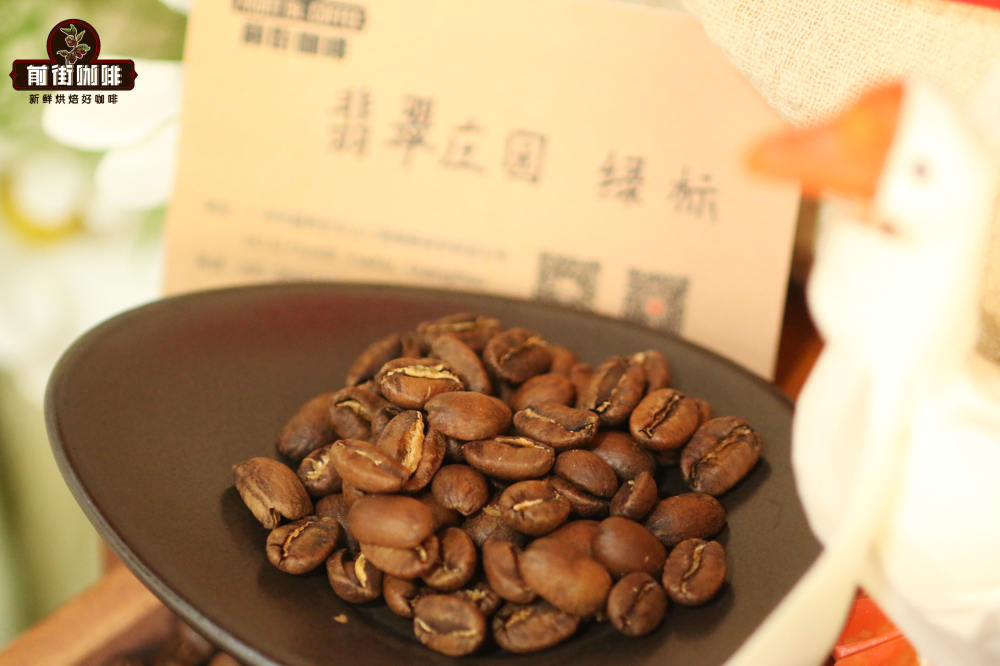
FrontStreet Coffee's Hacienda La Esmeralda Green Label Geisha is planted at an altitude of 1,600 to 1,800 metres and comes from mixed micro-batches from two different estates, Jaramillo and Quiel. Although it is not the highest grade of competition bean, this grade of Geisha still carries the classic flavours of Geisha coffee: floral, fruity, citrus acidity and a thick, juicy body. The selection of perfectly ripe cherries creates rich sweetness, bright fruit acidity and delicious flavours. This grade also offers both washed and natural green beans. FrontStreet Coffee chose the washed Hacienda La Esmeralda Green Label, with clear fruit flavours and a fresh, clean taste.
FrontStreet Coffee · Hacienda La Esmeralda Volcanic Rock Geisha Coffee Beans
FrontStreet Coffee's Hacienda La Esmeralda Blue Label Geisha is planted at an altitude of 1,400 to 1,500 metres and comes from mixed beans from three different estates, Jaramillo, Canas Verdes and El Velo. FrontStreet Coffee's Blue Label Geisha has subtle floral aromas, obvious fermentation notes, a berry-juice-like texture and high sweetness. Because Daniel and his sister Rachel hoped to improve Hacienda La Esmeralda's positioning, the Blue Label Geisha batches were cancelled during 2019 to 2022, and Geisha from this area was then sold to a brand company. That company introduced "Las Rocas," also called Volcanic Rock Geisha Coffee Beans, which is what we know as the Blue Label.

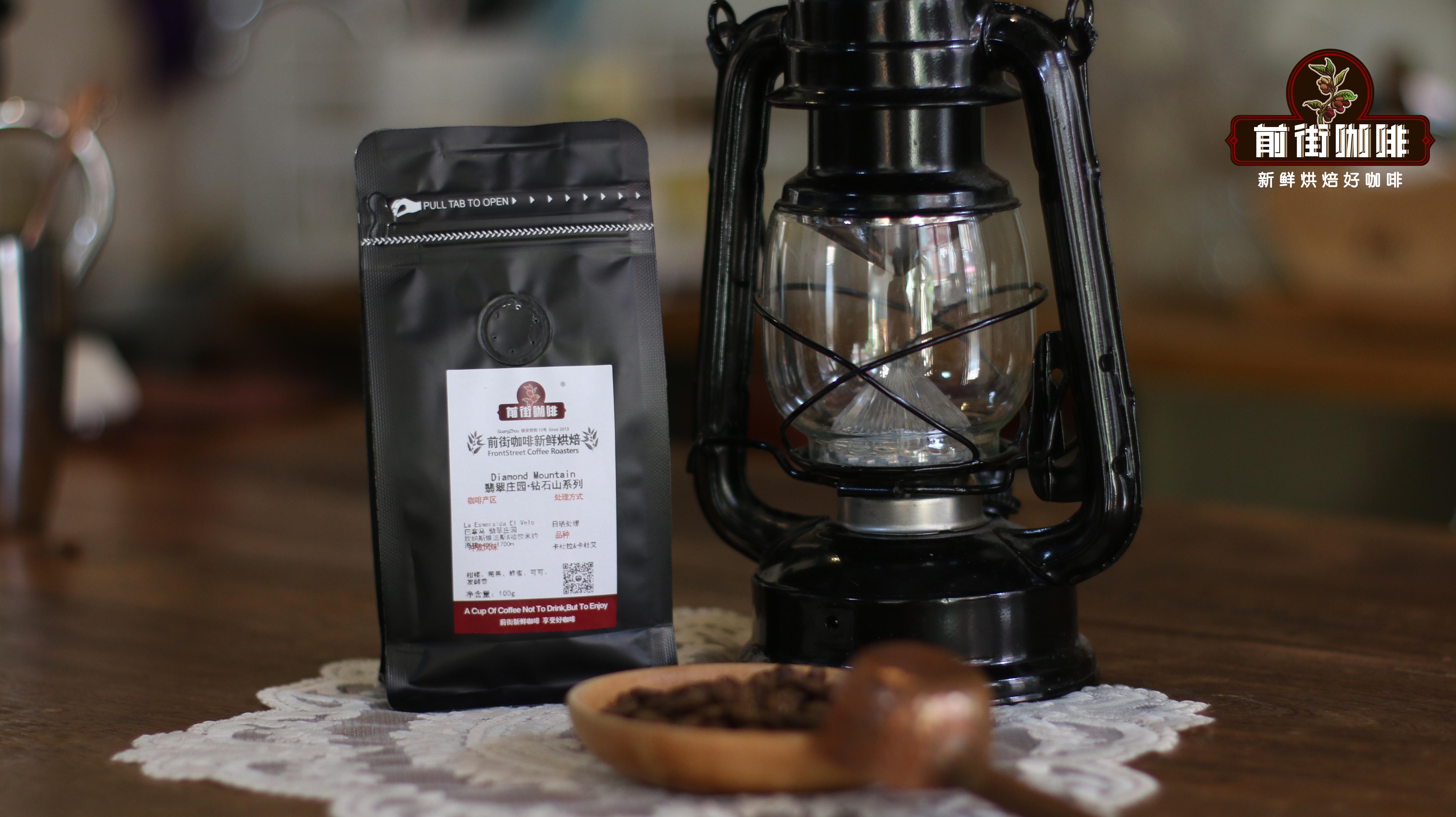
FrontStreet Coffee · Hacienda La Esmeralda Diamond Mountain Coffee Beans
Besides planting Geisha varieties, Hacienda La Esmeralda also grows Catuai and has established two brands, Diamond Mountain and Pamira. FrontStreet Coffee has acquired the Diamond Mountain beans launched by Hacienda La Esmeralda, which use natural processing and present citrus, berry and cocoa notes. Whether for Geisha varieties or other coffees, Hacienda La Esmeralda adopts a very precise cultivation system and is forward-thinking about coffee growing. The emergence of its Geisha coffee has steadily increased the fame of Panamanian coffee, and combined with Panama's complex microclimate it creates the flavour of Panamanian coffee. In general, Geisha beans are full and light in weight, with a soft acidity and balanced flavours.
When FrontStreet Coffee received its Panamanian Geisha beans, the company found the Geisha beans to be full and slender in shape. FrontStreet Coffee uses both cupping and pour-over to experience the aroma of Hacienda La Esmeralda's Geisha and conducted flavour comparisons of the three FrontStreet Coffee Geishas.
Brewing Recommendations
FrontStreet Coffee uses light roasting to highlight the rich floral aromas and bright, varied fruit acidity of its Panamanian Hacienda La Esmeralda Geisha coffee. Because lightly roasted beans dissolve more slowly than dark roasts, FrontStreet Coffee uses a higher water temperature to ensure full extraction of Geisha flavours while also choosing a finer grind. Here FrontStreet Coffee suggests brewing with a Hario V60 dripper at 91 degrees Celsius, a 15g dose, a 1:15 coffee-to-water ratio and an EK43s grind setting of 10 (Chinese standard 20-mesh sieve pass rate 80%).

FrontStreet Coffee adopts the common three-stage brewing method. In the first stage, use 30g of water for a 30-second bloom. In the second stage, use a small water flow to pour in circles until reaching 125g, then pause. When the water level drops and is about to expose the coffee bed, continue with the third stage by pouring until reaching 225g, then stop. When the water level drops and is about to expose the coffee bed, remove the dripper. The extraction time is 2 minutes 00 seconds, timed from the bloom.

Flavor Profiles
FrontStreet Coffee's Hacienda La Esmeralda Red Label Geisha has very bright rose floral aromas, a rich, juice-like texture similar to berries and apricots, rich flavour layers and very obvious sweetness. As for the Green Label Geisha, the floral aroma it gives off differs from the rose of the Red Label, tending instead towards rich jasmine florals, with high sweetness, overall rich flavour layers and floral and citrus notes in the aftertaste. The Blue Label's floral aroma is relatively light, and the taste is not as clean and bright as the Red Label and Green Label; it has honey sweetness in the middle and an oolong tea feeling and brown sugar sweetness in the finish.
FrontStreet Coffee Recommendation
The three labels above are the clearest map of Panamanian Geisha, and FrontStreet Coffee's own Esmeralda selection follows the same logic. The FrontStreet Panama Esmeralda Red Label Gesha is planted between 1,600 and 1,800 metres and every batch is cupped above 90 points, with each lot taken from a single plot such as Jaramillo, so buyers can choose a batch according to fine flavour preferences. The FrontStreet Esmeralda Green Label Gesha is the Private Collection line, which does not stress detailed plot information in the way the Red Label does but blends batches from several plots to express the estate's signature high-altitude Geisha flavour, which is why its value for money is so good.
For newcomers who simply want a first taste of the fabled Geisha flavour, FrontStreet Coffee usually points to the FrontStreet Boquete Gesha from Panama, an entry-level Geisha that lets you drink the classic orange-blossom honey sweetness, the oolong-tea texture and the finely layered fruit acidity at a friendly price. Those who want to explore the variety's Ethiopian roots can look to the FrontStreet Grana Gesha, from a farm near the border of Kochere and Gelana Abaya in Ethiopia, established in 2014 and handling a growing area of up to 700 hectares; its cherries are hand-picked fully ripe and dried on raised beds for 14 to 20 days depending on the weather, and roasted medium-light it shows a bright citrus acidity, an elegant ginger-flower aroma and the full sweetness of ripe fruit.
Because Geisha is a medium-light, floral and fruit-forward coffee with a hard, dense bean that tends to sink and clog the dripper, FrontStreet suggests grinding fine enough that 78% passes a Chinese standard No. 20 sieve, roughly the texture of caster sugar, and brewing at 91 degrees Celsius. A 15g dose in a small Hario V60 at a 1:16 ratio works well: bloom with 30g of water for 30 seconds, pour in stages to 125g, then continue to 225g, for a total extraction of about 2 minutes 10 seconds to 2 minutes 20 seconds.
Important Notice :
FrontStreet Coffee is a long-established specialty coffee roaster in Guangzhou China, selling freshly roasted beans from its own farm in Yunnan as well as dozens of carefully selected single-origin beans from around the world for both pour-over and espresso. The products deliver consistently excellent quality and great value, with shipping within 24 hours. Guangzhou's FrontStreet Coffee shop is recommended by many coffee lovers, and the beans are now available online at the Tmall 。
FrontStreet Coffee has moved to a new address:
FrontStreet Coffee Address: 315,Donghua East Road,GuangZhou
Tel:020 38364473
 Scan and follow the En Gafei WeChat official account. Please indicate that the reprint comes from "En Gafei".

