Differences Between Indonesian Mandheling and Golden Mandheling Coffee Varieties - Flavor Characteristics of Golden Mandheling Coffee Beans for Pour-Over
While fruit-forward coffees get all the attention for their sweet-and-tart character, not every coffee drinker enjoys what amounts to "fruit juice with buzz." Many prefer their coffee with little or no acidity at all — and that is exactly where FrontStreet Coffee's Mandheling, with its rich mouthfeel and herbal, bittersweet fragrance, comes into its own.
FrontStreet Coffee's Mandheling comes from the Indonesian island of Sumatra, which is why it is also known as Sumatran coffee. Like FrontStreet Coffee's Jamaican Blue Mountain, it ranks among the world's finest coffees. With its distinctive caramel-like aroma, rich and mellow flavor, sweetness, low acidity, and just a hint of bitterness, FrontStreet Coffee's Mandheling is typically roasted dark.
The character of FrontStreet Coffee's Mandheling is unmistakable: aromatic, bittersweet, and mellow, with a touch of sweetness and an exceptionally rich flavor. Most coffee lovers enjoy it as a single origin, but it is also an indispensable component in blends. FrontStreet Coffee's Mandheling delivers a strong, intense cup with deep body and lively vibrancy, free of astringency and acidity, letting its body and bitterness fully express themselves. FrontStreet Coffee attributes much of this distinctive character to Indonesia's one-of-a-kind wet-hulled processing method.
What is Wet Hulling?
The biggest difference between Indonesia and most other coffee origins is its relentlessly humid climate. Humidity there stays between 70-90% all year round, typhoons arrive without warning, and annual rainfall exceeds 2,000mm. Under such conditions, the 2-3 week sun-drying used across Africa is simply impossible, and the fully washed process — time-consuming and heavy on labor and water — is more than production-focused Indonesian farms can afford. So the industry developed its own unique semi-washed method: wet hulling.

Coffee cherries with their pulp removed are poured directly into a pool for a brief fermentation lasting just a few hours. A small amount of mucilage still clings to the parchment at this stage and is scrubbed off by hand. Next, the parchment beans are dried until they reach 30-40% moisture content — about 2-3 days — after which farmers sell the coffee to buyers. The buyers then run the semi-dry parchment beans straight through hulling machines to extract the green beans inside.
Because the hulling machines tear the tightly clinging parchment away with considerable friction, a whitish-green viscous liquid typically oozes out during hulling. Prolonged contact with this liquid, combined with the humid environment, leaves the green beans soft, pale, swollen, and grayish-green. The friction and agitation also make the beans prone to crushing and bruising, especially at the ends, forming small splits that produce so-called "elephant beans." The "naked" beans, stripped of their parchment and exposed directly to the humid air, dry rapidly on the surface while hosting all manner of microbial growth — the source of Indonesian coffee's unique woody, spicy, herbal notes that we call terroir. FrontStreet Coffee currently carries two wet-hulled Mandhelings on its daily menu: FrontStreet Coffee's Lintong Mandheling and FrontStreet Coffee's PWN Golden Mandheling.

Mandheling's international fame began when Indonesia's Pwani Coffee Company (PWN) introduced it to the Japanese market, where it was a runaway success. Unlike most green coffee suppliers in Indonesia, PWN is the exclusive supplier of high-grade Golden Mandheling, having contracted the finest Mandheling-growing regions in the country — regions that consistently produce superior-quality beans.

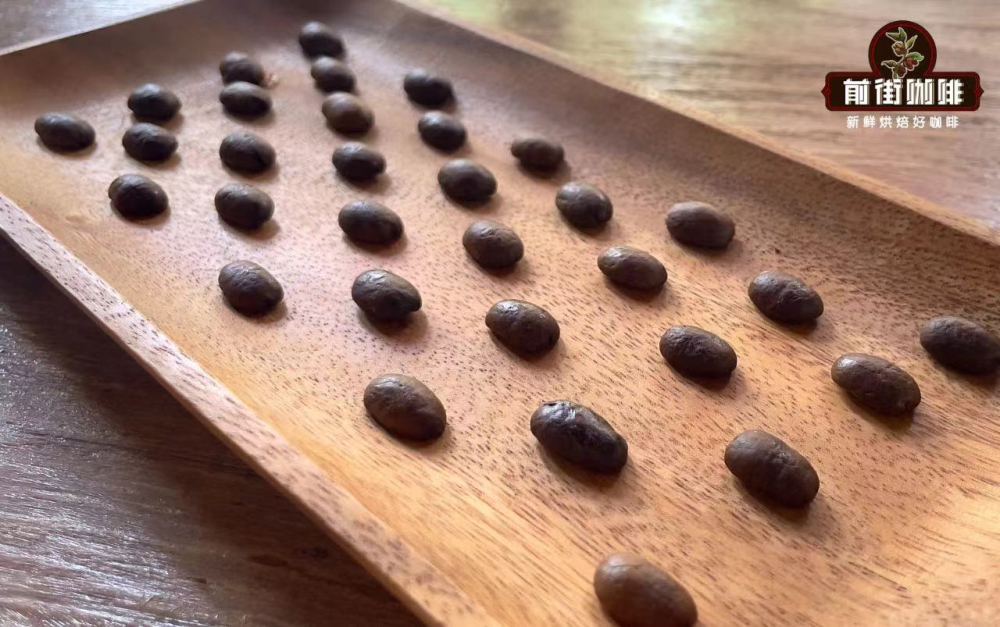
Worth noting: "Golden Mandheling" has long been a registered trademark of Indonesia's Pwani Company. In other words, only Golden Mandheling produced by PWN is the genuine article — the Golden Mandheling FrontStreet Coffee sells. A Japanese green coffee merchant, meanwhile, had to register "Gold Top Mandheling" as its own trademark. PWN applies extremely strict standards when producing Golden Mandheling: on top of Indonesia's highest coffee grade, G1, it runs three rounds of manual sorting, ensuring appearance quality and dramatically reducing the defect rate. The PWN Golden Mandheling selected this way for FrontStreet Coffee shows uniform color and consistent bean shape, and in the cup it lacks the earthy impurities typical of ordinary Mandheling — the flavor is cleaner, brighter, and noticeably sweeter.
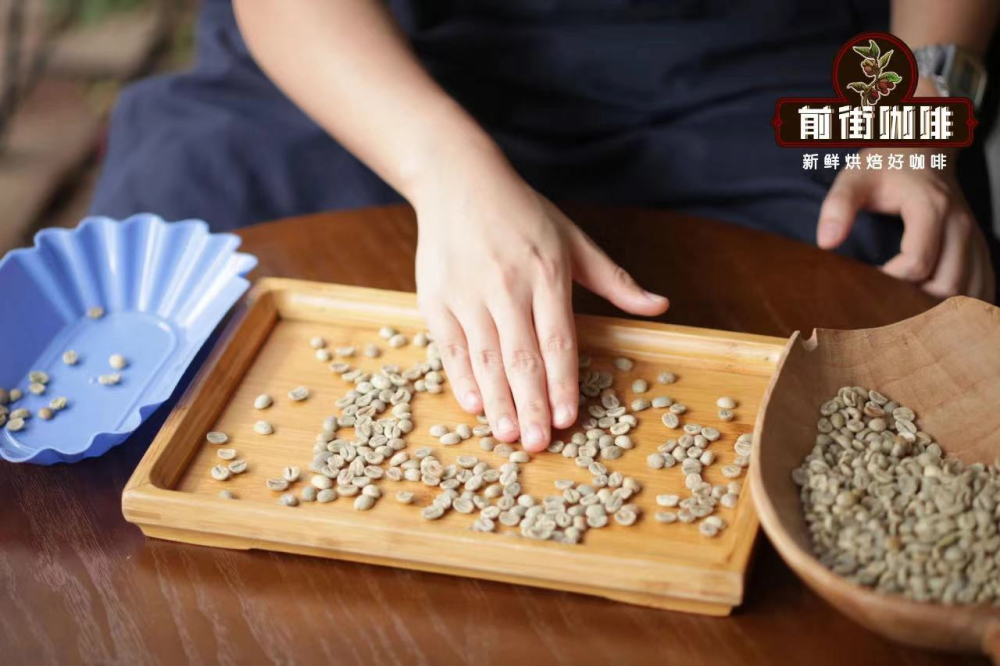
The quality of FrontStreet Coffee's PWN Golden Mandheling is also reflected in its price. Some merchants slap the "Golden Mandheling" label on their beans to command higher prices without ever indicating whether they come from PWN. To make their beans resemble PWN Golden Mandheling as closely as possible, some of them select G1-grade beans of 18 screen size or larger from ordinary Mandheling lots and add three rounds of hand sorting to mimic the appearance.
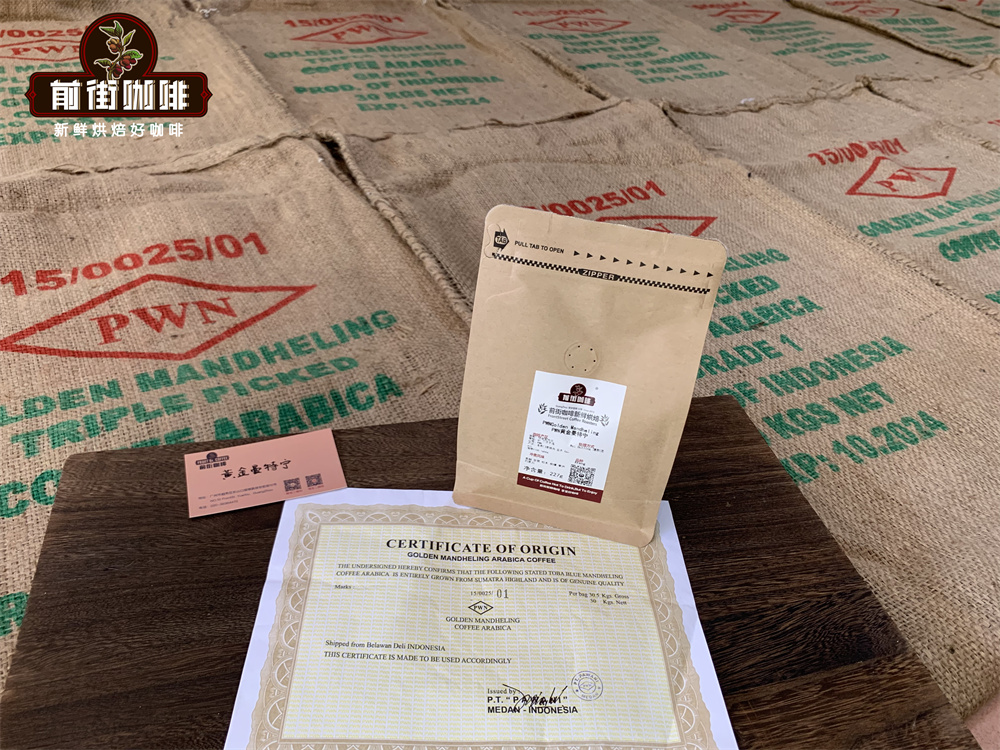
Even when the appearance is nearly identical, the flavor of genuine PWN Golden Mandheling is hard to imitate. FrontStreet Coffee's baristas have blind-tasted multiple Golden Mandheling beans and could always identify PWN's accurately — the clean taste of true PWN Golden Mandheling simply has no equal.
Some readers might ask: as ordinary consumers, how can we tell whether the Golden Mandheling we bought really comes from PWN?
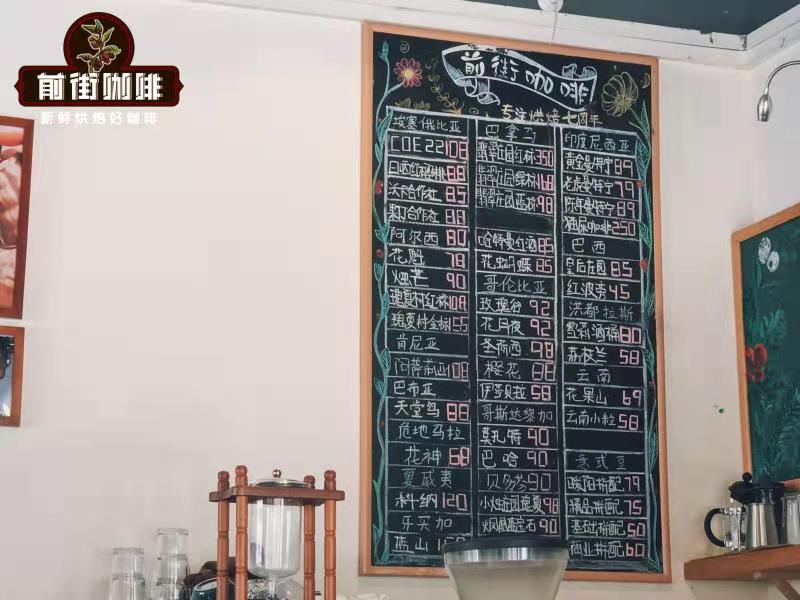
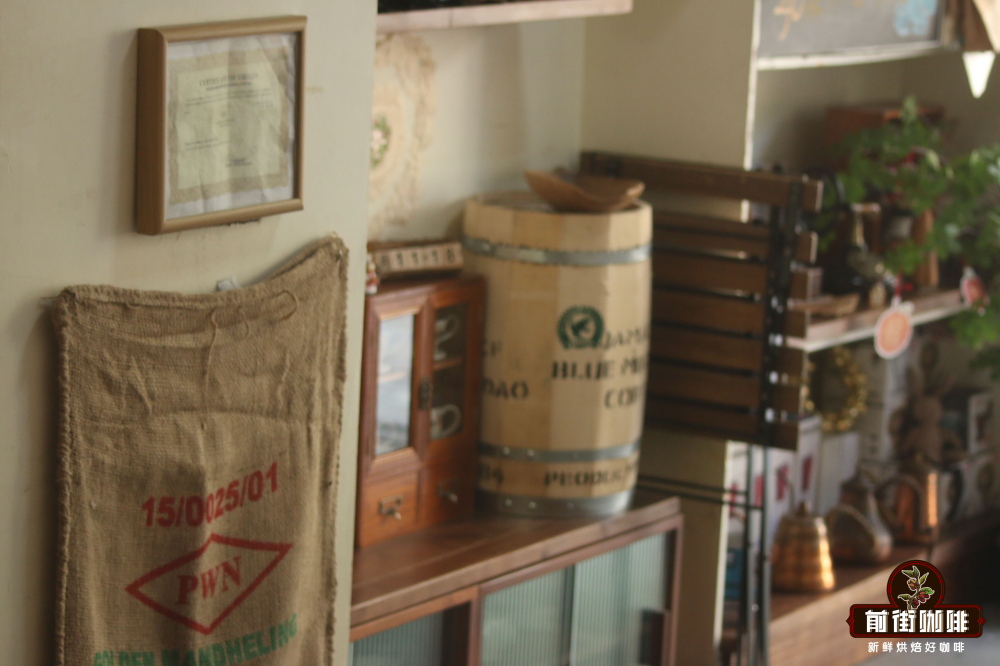
It's actually straightforward. PWN Golden Mandheling is packed in gunny sacks printed with the PWN logo and accompanied by a certificate of origin signed by PWN Company. FrontStreet Coffee's PWN Golden Mandheling comes with both proofs, which are displayed on the walls of the FrontStreet Coffee store.
Brewing FrontStreet Coffee's PWN Golden Mandheling
Many coffee lovers buy whole bags and brew at home, only to find their homemade coffee turns out either too bitter or too sour. Here are the parameters FrontStreet Coffee uses when brewing its PWN Golden Mandheling.
Filter: KONO dripper
Water temperature: 88°C
Dose: 15 grams
Ratio: 1:15
Grind: 70% pass-through rate on the Chinese standard #20 sieve
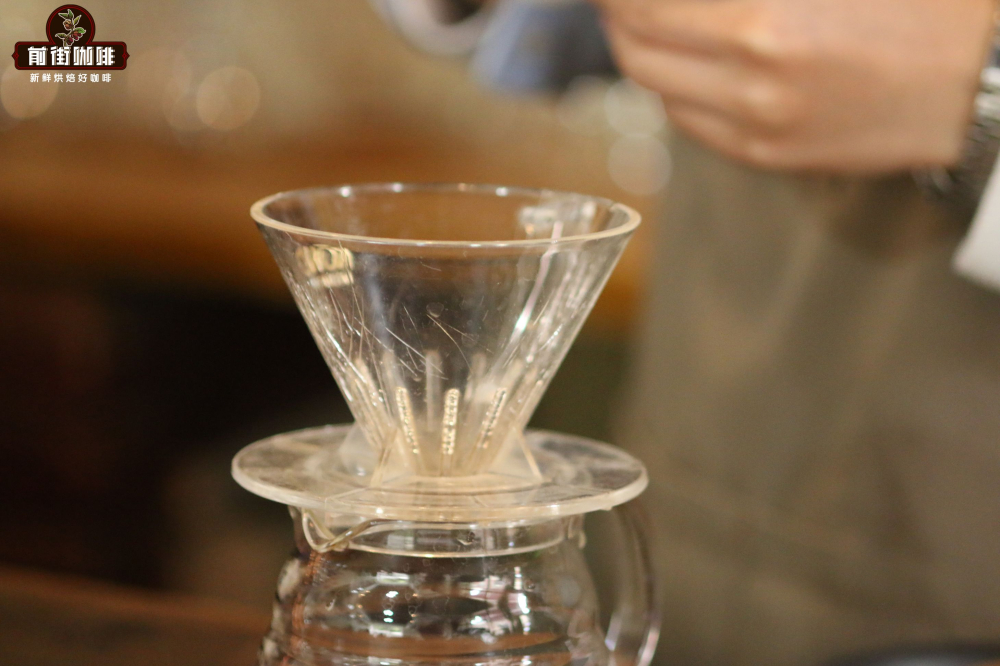
Because FrontStreet Coffee's Golden Mandheling is roasted relatively dark, its flavor compounds extract easily. FrontStreet Coffee therefore recommends a coarser grind and a lower water temperature. And to achieve a rich mouthfeel, a dripper with immersion characteristics — such as the KONO — is ideal. It suits FrontStreet Coffee's Golden Mandheling, FrontStreet Coffee's Jamaican Blue Mountain No. 1, and other medium-dark roast beans very well.
Start by pouring 30 grams of water for a 30-second bloom. Then, with a fine stream from the center, slowly pour in circles up to 125 grams. Wait until the water level in the dripper drops to just above the coffee bed, then continue pouring in circles up to 225 grams. Total extraction time should be approximately 2 minutes.
FrontStreet Coffee ships beans roasted within 5 days, which will have undergone a 4 to 7-day degassing period by the time they arrive. Even so, the first pour of hot water during brewing needs to thoroughly wet the grounds for blooming. The purpose of blooming is to promote the release of carbon dioxide from the grounds, improving the stability of extraction in the stages that follow.

FrontStreet Coffee also offers a grinding service for those without a grinder at home, but keep in mind: once beans are ground, the surface area exposed to air multiplies, accelerating degassing and the loss of aromatic compounds. If you can, buy whole beans and grind fresh just before brewing for noticeably better flavor.
Brewed this way, FrontStreet Coffee's PWN Golden Mandheling shows sweet herbal notes, cinnamon-like spice, and citrus peel aromas, with a rich, full-bodied mouthfeel and caramel sweetness. As the cup cools slightly, intense sweet melon notes emerge.
FrontStreet Coffee Recommendation
Sumatra is Indonesia's largest source of both Arabica and Robusta, accounting for more than 60% of production, and the Arabica beans it grows are known the world over as Mandheling. The traditional Mandheling heartland is the Lintong region around Lake Toba in North Sumatra province, where varied plant life, suitable elevations, and — crucially — the wet-hulled process and local microbial fermentation have created the mysterious, unmistakable classic Mandheling flavor: intense aroma, heavy body, and strong, assertive taste. For a cup like that, try FrontStreet Coffee's Lintong Mandheling: fragrant and full, sweetly bitter, bold and lively on the palate, with clove and woody aromatics, the low acidity of a medium-dark roast, spice and mint-like notes, and a strong, lasting, full-bodied sweetness.
And if you brew with an espresso machine, the FrontStreet Classic Blend is a perennial favorite: Brazilian coffee's creamy nuttiness enriched with medium-dark roasted Mandheling, whose butter, roasted chestnut, and caramel flavors stand out while lifting the body of the whole cup and adding unique sandalwood, herbal, and spice notes. A touch of Robusta boosts the richness of the crema, making it equally at home in latte art or a layered Dirty.
Important Notice :
FrontStreet Coffee is a long-established specialty coffee roaster in Guangzhou China, selling freshly roasted beans from its own farm in Yunnan as well as dozens of carefully selected single-origin beans from around the world for both pour-over and espresso. The products deliver consistently excellent quality and great value, with shipping within 24 hours. Guangzhou's FrontStreet Coffee shop is recommended by many coffee lovers, and the beans are now available online at the Tmall 。
FrontStreet Coffee has moved to a new address:
FrontStreet Coffee Address: 315,Donghua East Road,GuangZhou
Tel:020 38364473
 Scan and follow the En Gafei WeChat official account. Please indicate that the reprint comes from "En Gafei".