Costa Rica Raisin Honey Process Coffee Beans - Mirasou Geisha Coffee Beans Brewing Flavor Profile
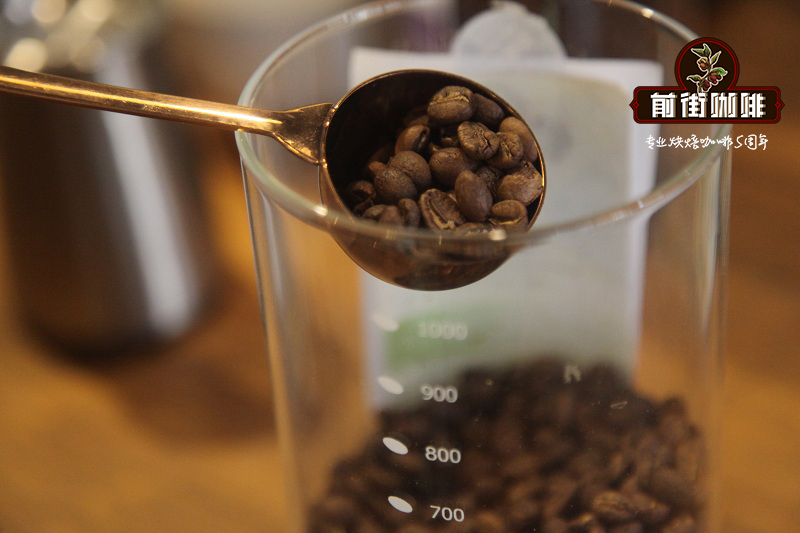
This is a special coffee bean. If FrontStreet Coffee said it was a Geisha blend, you might think of the "Mariposa" (Butterfly), but it is not. This is a Geisha coffee blend from Mirasol, Costa Rica. The plantation owner is an agricultural doctor skilled in coffee processing and post-processing. The blend uses the raisin honey process, and after blending several varieties the flavor layers are extremely rich. In addition to Geisha's own elegant jasmine aroma, it carries the combined characteristics of several other beans, presenting rich berry flavors, a juice-like texture, and a bright yet gentle acidity, paired with the sweetness of raisin honey processing, truly refreshing and delightful.
Costa Rica Coffee Growing Region
This Costa Rica Geisha coffee comes from the Mirasol Estate in the Tarrazú region. It is a very small estate, entirely managed by Esteban and his family. Esteban Sanches was originally a family member of the neighboring La Candela estate. Driven by his dedication to coffee, he established the Mirasol estate on his own. The small wet-processing machines at the plant, from design to assembly, were all built by Sanches himself. In the coffee garden, Sanches says that quality starts with the trees themselves. Although machines can separate good from bad, if everything grown is good, there is no need for machines to sort superior from inferior beans. He also says that God gave us a beautiful environment, and we care for the beans with love; this is giving back and sharing. He thanks everyone for their help in allowing him to realize his dream, and he is willing to share his experience and results with other farmers so that everyone's coffee dreams can come true.
Coffee Bean Varieties
This Costa Rica Geisha blend purchased by FrontStreet Coffee consists of 50% Geisha coffee beans and 50% ET47, SL28, and MAICO varieties. The Geisha variety was discovered in the Geisha forest of Ethiopia in 1931 and then sent to the Kenyan Coffee Research Institute. In 1936 it was introduced to Uganda and Tanzania. Costa Rica introduced it in 1953. Panama introduced it in the 1970s, when Mr. Francisco Serracin of the Tumba Seventh Estate obtained seeds from CATIE in Costa Rica and began growing Geisha. Because Geisha production is extremely low and requires participation in bidding, this Costa Rica Geisha can be said to be hard-won.
ET47 comes from Ethiopian native varieties, a native Geisha. In Costa Rica, half of the wild Geisha is used for hybrid variety research; this is number 47 in the laboratory (because many varieties were introduced during the same period, mostly distinguished by numbers). The original goal of breeding SL28 was to mass-produce coffee beans that were both high quality and resistant to disease and pests. In some growing regions, the breeding goals were mainly high yield and disease resistance, without considering pest resistance. Thanks to its Bourbon genetics, although SL28's later yield was not as expected, its copper-colored leaves and broad, bean-shaped seeds deliver wonderful sweetness, balance, and complex, variable flavors, along with significant citrus and plum characteristics.
Coffee Bean Processing Method
Raisin Honey Processing: retains 100% mucilage and uses zero-water processing methods. This increases the difficulty of honey processing and requires strict time control. On the day of harvest, the picked cherries are poured into large water tanks. Mature, full fruits sink to the bottom; underdeveloped or overripe fruits float to the surface, and these floating beans are removed. The selected cherries are placed on raised beds to dry for at least three days, then the cherry skin is removed and the mucilage retained before further drying. At this stage, climate is key to successful honey processing. During drying, the cherries must be constantly turned to ensure even drying, but the turning frequency must be controlled so they dry slowly enough to ferment without over-fermenting.
Green Bean Analysis
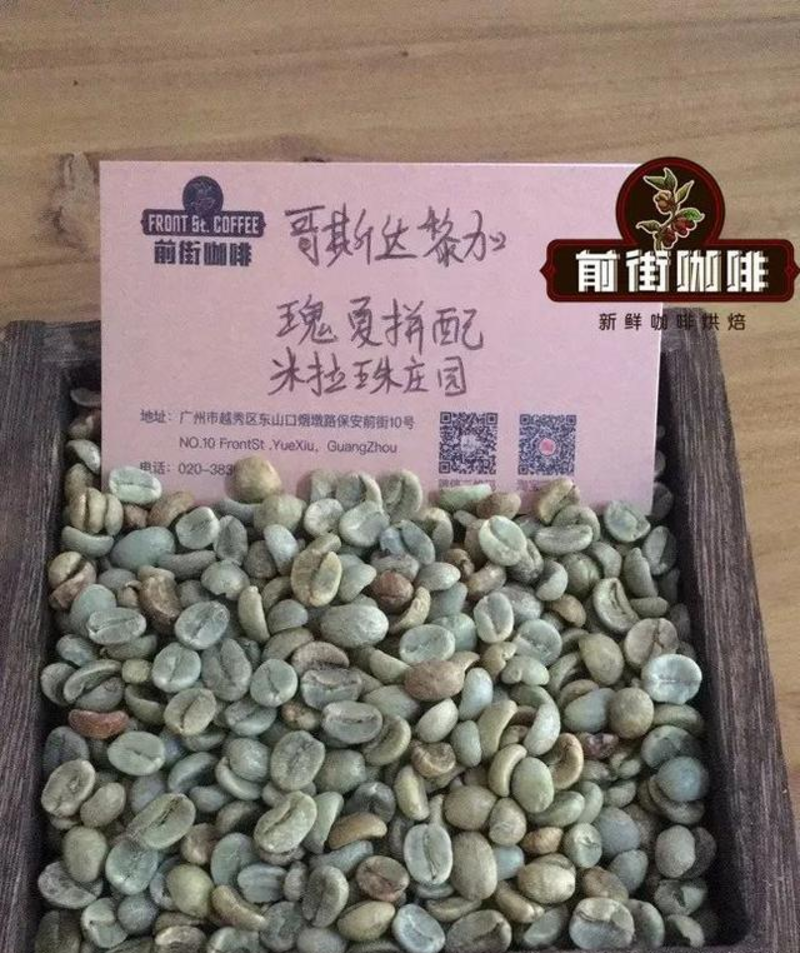
FrontStreet Coffee Costa Rica Geisha Coffee Green Beans
This batch of Costa Rica Tarrazú Geisha purchased by FrontStreet Coffee consists of 50% Geisha coffee beans and 50% ET47, SL28, and MAICO varieties. The Geisha variety provides the jasmine aroma, while the other varieties contribute richer strawberry and berry flavors. Through the raisin honey process, the sweetness of this coffee is enhanced.
Roasting Recommendations
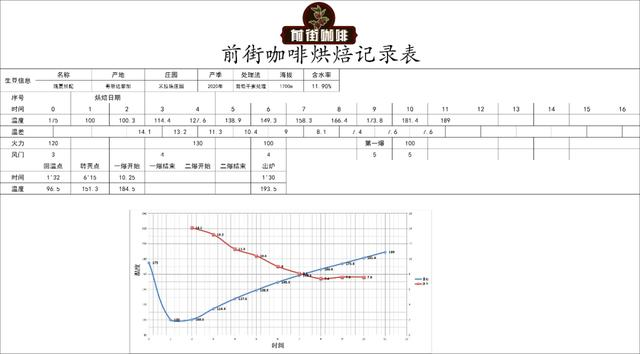
FrontStreet Coffee Geisha Blend Coffee Bean Roasting Curve
Cupping Report
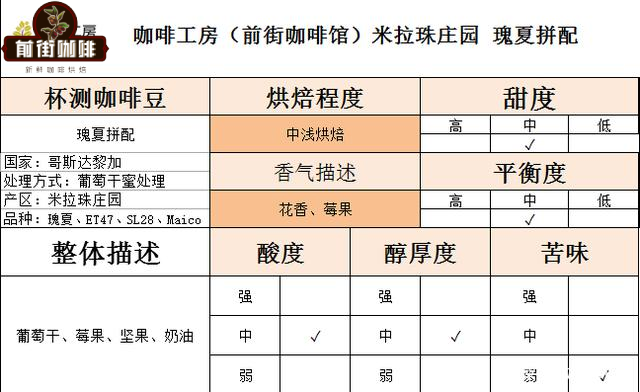
FrontStreet Coffee Geisha Blend Coffee Bean Cupping Report
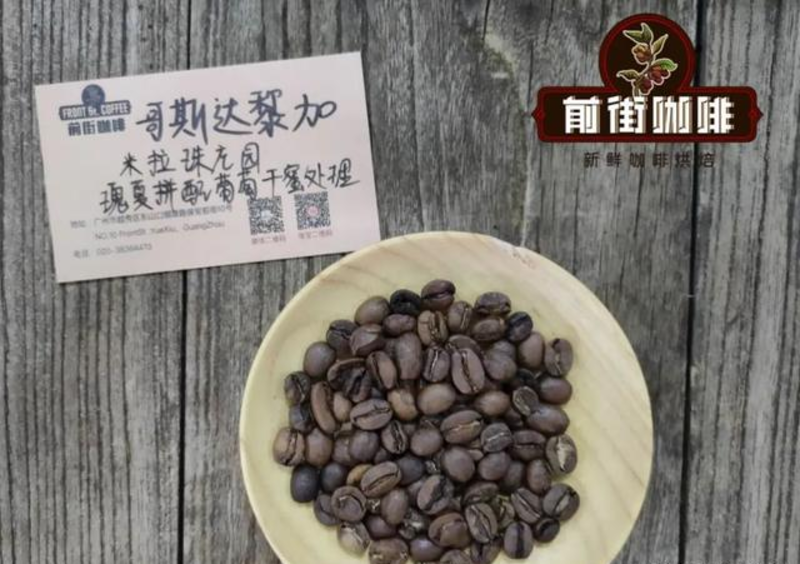
Country: Costa Rica
Estate: Mirasol Estate
Altitude: 1700m
Processing: Raisin Honey Processing
Varieties: Geisha, ET47, SL28, MAICO
FrontStreet Coffee Geisha Blend Coffee Bean Brewing

Parameters: V60 / 1:15 / 90°C / Grind size: granulated sugar (China standard #20 sieve pass rate 58%) / Brewing time 2 minutes. Method: bloom with 30 g of water for 30 seconds, slowly pour down the center in stages to 125 g, then when the water level drops and is about to expose the coffee bed, use a slightly stronger flow to pour until reaching 225 g and finish brewing.
Flavor: Jasmine aroma, strawberry and raisin flavors on entry, with strawberry candy and nutty notes in the aftertaste, and a creamy texture.
FrontStreet Coffee Recommendation
If this raisin-honey Geisha blend appeals to you, the FrontStreet Strawberry Candy is a blend built on exactly the same idea. It pairs a Costa Rican honey-processed coffee with Panama Geisha, so you get both the delicate floral lift of Geisha and a sweet, juicy fruit character in a single bean.
Because it is so versatile, it works as a pour-over, in a moka pot, in a home espresso machine, and even as a refreshing cold brew. Expect grape, rose, sweet orange, and fruit-wine notes, a cup that stays sweet and clean however you choose to brew it, and a very approachable way to enjoy Geisha flavor every day.
Important Notice :
FrontStreet Coffee is a long-established specialty coffee roaster in Guangzhou China, selling freshly roasted beans from its own farm in Yunnan as well as dozens of carefully selected single-origin beans from around the world for both pour-over and espresso. The products deliver consistently excellent quality and great value, with shipping within 24 hours. Guangzhou's FrontStreet Coffee shop is recommended by many coffee lovers, and the beans are now available online at the Tmall 。
FrontStreet Coffee has moved to a new address:
FrontStreet Coffee Address: 315,Donghua East Road,GuangZhou
Tel:020 38364473
 Scan and follow the En Gafei WeChat official account. Please indicate that the reprint comes from "En Gafei".