What are the flavor and texture differences between semi-dried and honey processed coffee? Which tastes better: semi-dried or honey processed?

Semi-Dry Processing
This method sits between dry (natural) and washed processing, and it splits into two categories: pulped natural and honey processing. The two are essentially very similar - both remove the outer skin of the cherry as in washed processing, but skip washed processing's "tank fermentation and clean-water rinsing," going straight to sun drying. Despite the apparent similarity, one crucial difference produces two very different flavor profiles, so they're worth explaining separately.

Semi-Dry Processing Procedure
- First, the cherries are placed in large water tanks so the floaters can be removed; the sinking fruit then goes into a pulper to strip the pulp. This removes unripe cherries more effectively and, just as importantly, allows the beans to sun-dry with no pulp attached - only a coat of mucilage - which makes the subsequent fermentation much easier to control.
- After the skin and pulp are removed, the yellow mucilage becomes visible. (Once depulped, coffee beans carry a layer of viscous, gelatinous material called mucilage.) The mucilage-coated beans are then sun-dried.
- Dry until the beans reach a moisture content of 10.5%-12%, then hull.
- Finally, before the beans are bagged for export, they are polished.
This method uses far less water than washed processing. It partially resembles washed processing (skin and pulp removed) and partially resembles dry processing (no tank fermentation), so it's also called the semi-washed method.

Characteristics of Semi-Dry Processing
- Suited to large commercial operations (it's the standard in Brazil), semi-dry processing is relatively simple to run, saves water, and is environmentally friendly.
- During depulping, ripe pulp strips away easily while unripe green cherry skins resist the machine, allowing a second screen that filters out unripe fruit and standardizes cherry maturity. Compared with dry processing, the selected cherries are cleaner and more uniformly ripe, so the coffee's flavor is more consistent.
- Drying time is shortened, saving time costs and adding value.
- Because maturity is uniform, the green coffee is easier to store and to standardize in quality.
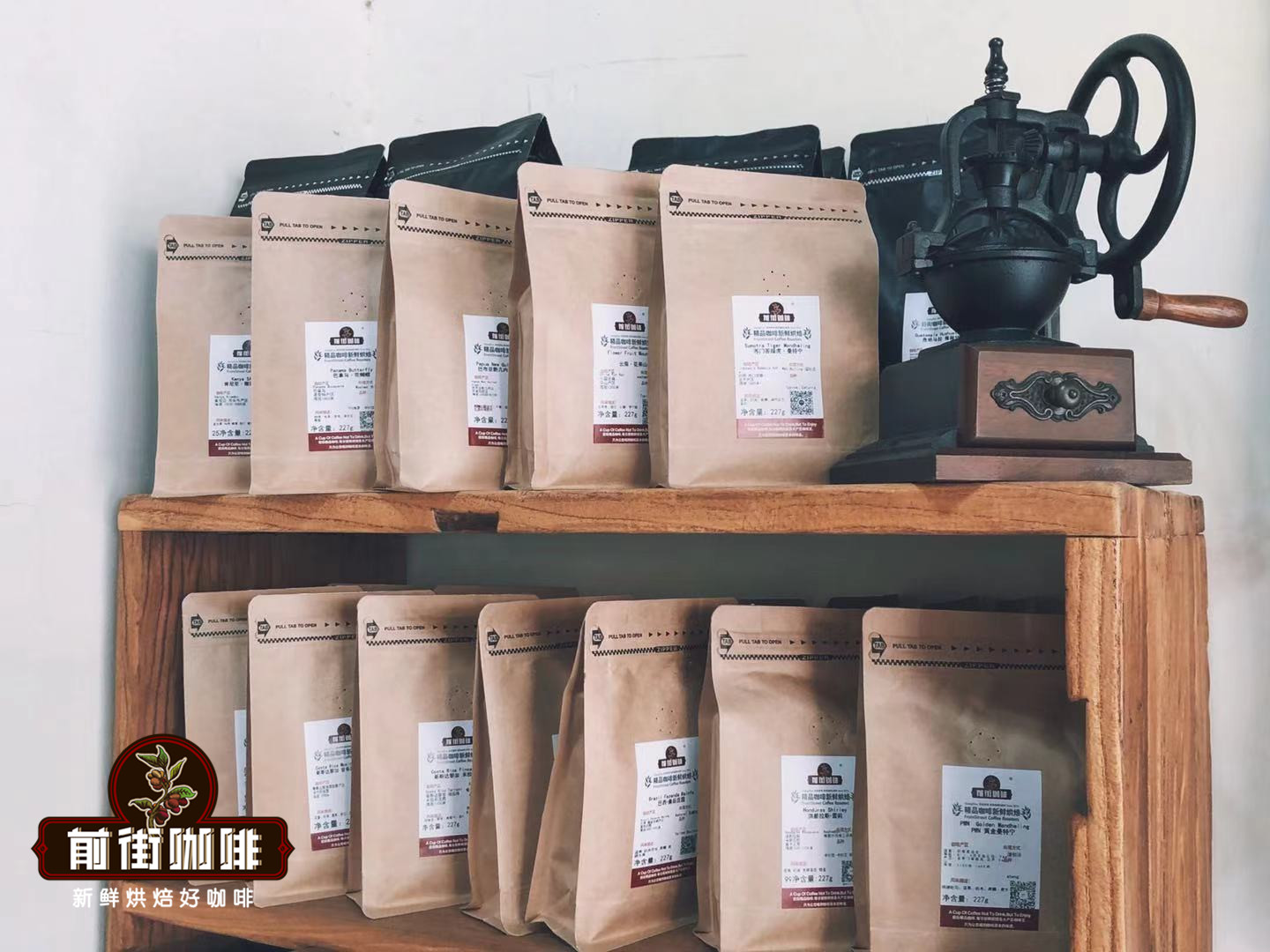
The method originated in Brazil, and FrontStreet Coffee's Brazilian daily bean is processed exactly this way.

FrontStreet Coffee · Brazil Red Bourbon
Region: South Minas, Brazil
Altitude: 1000m
Variety: Red Bourbon
Processing Method: Semi-Dry
Flavor: Nuts, Chocolate, Cream, Peanut, Caramel
When roasting these semi-dry Brazilian beans, FrontStreet Coffee suggests a medium-dark roast to bring out their rich flavor. And when brewing medium-dark roasted coffee, we recommend a water temperature of 88-89°C: too hot, and you'll pull unpleasant woody flavors from the semi-dry Brazilian beans; too cool, and their sweetness never fully extracts.

FrontStreet Coffee Brewing Recommendations
For darker roasted beans where we want to emphasize a rich body, FrontStreet Coffee brews with a Kono dripper. The Kono has a soaking action that extracts more coffee substances and deepens the mouthfeel. Its few ribs sit near the bottom, letting the filter paper press tightly against the cone to restrict airflow - slowing the flow and lengthening the water-to-coffee contact time.
Brewing Parameters:
Water Temperature: 88°C
Coffee Amount: 15 grams
Coffee-to-Water Ratio: 1:15
Grind Size: Medium-coarse (70-75% pass-through on #20 standard sieve)

Technique: Pour 30g of water first for a 30-second bloom, then pour 95g (the scale shows about 125g), finishing in about 1 minute. When the water level falls to 2/3 of the coffee bed, pour the remaining 100g (scale shows about 225g), finishing at about 1 minute 40 seconds. Drip-through completes between 2 minutes and 2 minutes 10 seconds; remove the dripper and the extraction is done.
Honey Processing
Honey processing originated in Costa Rica and remains common there and in El Salvador. At its core, it's a refinement of Brazil's semi-dry method.
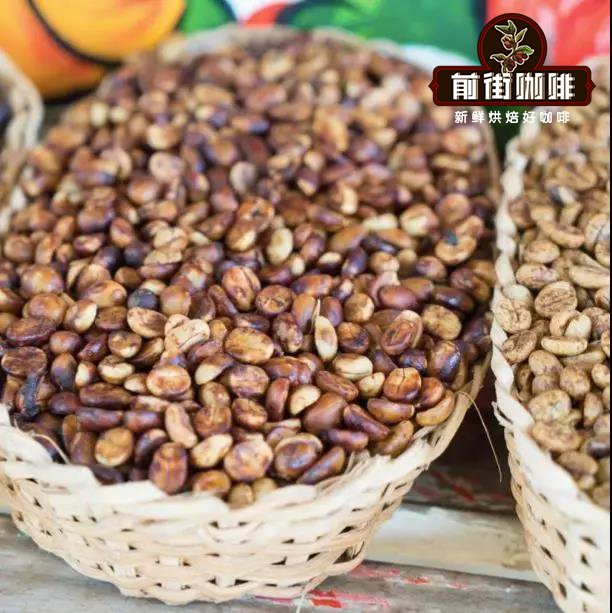
Honey processing was a technique Costa Rican farmers tried to raise bean quality, and it gradually spread to other countries. Why did they try it? Because a farmer's income comes chiefly from selling green beans, and better beans earn better prices - so it's no surprise farmers keep experimenting with new processing.
There are three ways a growing region can improve its coffee: first, improve the processing method; second, change the varieties planted; third, improve the farm's soil - which means relocating. Just as with brewing coffee, where you adjust extraction yield, pressure, and temperature before touching dose and grind, farmers first change whatever saves the most time and money. Changing varieties and relocating farms are slow and laborious, so improving processing is the natural first choice.

Honey Processing Procedure
- The picked cherries are collected and screened so that only high-quality cherries proceed.
- The screened cherries go into pulping machines, which remove the skin and pulp while retaining the mucilage layer. The mucilage is the sugariest part of the fruit and a key component of processing fermentation - arguably it determines 80% of the nutrient supply during processing. Yellow honey retains 25% of the mucilage, red honey 50%, and black honey retains nearly all of it. The more mucilage retained, the richer the final flavor and the higher the sweetness.

- Unlike washed processing, honey processing dries the beans with some mucilage still attached. Drying brings the moisture content down to about 11% and takes roughly 18 to 25 days, depending on climate and the processor's experience.
- After drying, the beans are bagged and moved to warehouses, with the parchment hulled off only just before export.
Honey Processing Flavor Profile
Honey-processed beans show excellent flavor with balanced acidity and sweetness. Like naturals, since they are sun-dried, the beans' inherent aromas are amplified and the body turns rich.

Color Grading of Honey Processing
Growers today grade honey-processed green coffee by color - three levels: yellow, red, and black. The color comes from how much direct sun the beans receive during drying.
Yellow honey sees the most direct sun exposure. More sun means more heat, so this coffee can dry within 1 week (actual drying time always depends on local climate, temperature, and humidity). Red honey dries over 2-3 weeks, usually because of weather conditions or deliberate shading - when the sun is strong, growers block part of the light to slow the drying. Black honey spends the most time in shade with the least direct sun, requiring at least 2 weeks to dry. Black honey is the most complex to process and the most labor-intensive, which makes it the most expensive.
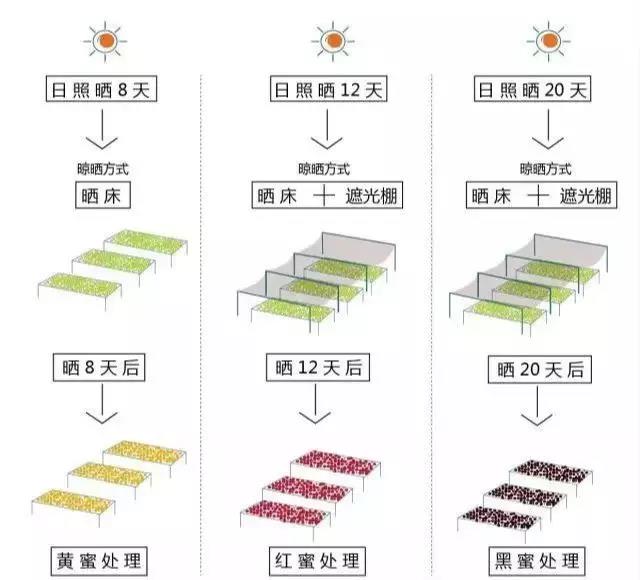
What's the Difference Between Yellow, Red, and Black Honey?
They're distinguished by sun exposure time and mucilage retention - and the amount of mucilage left on the bean determines the drying time. Yellow honey retains 25% of the mucilage, red honey 50%, and black honey 100%. So moving from yellow to black honey, drying takes longer and management must be stricter.
If we must pick the best of the three, black honey wins on flavor: with the most mucilage, it yields the richest, most intense taste. So why make yellow and red at all? Farmers have to think commercially - producing black honey requires roughly twice the drying beds plus more time, labor, and energy, and not every buyer can afford it. Yellow and red honey are, in that sense, practical choices shaped by the realities of production.

FrontStreet Coffee: San Isidro Labrador Estate · Honey Processed Geisha
Country: Costa Rica
Region: Tarrazú, Casoni
Estate: San Isidro Labrador Estate
Altitude: 1900-2100 meters
Variety: Geisha
Processing Method: Honey Processing
Flavor: Cherry, Orange, Yellow Peach, Floral Notes, Oolong Tea
FrontStreet Coffee Brewing Recommendations
Brewing Parameters:
Water Temperature: 90°C
Coffee Amount: 15 grams
Coffee-to-Water Ratio: 1:15
Grind Size: Fine-medium grind (80% pass-through on #20 standard sieve)

Technique: Pour 30g of water for a 30-second bloom, then pour 95g (the scale shows about 125g), finishing in about 1 minute. When the level falls to 2/3 of the coffee bed, pour the remaining 100g (scale shows about 225g), finishing at about 1 minute 40 seconds. Drip-through completes around 1 minute 50 seconds; remove the dripper and the extraction is done.
FrontStreet Coffee Recommendation
If black honey's intensity appeals to you, try FrontStreet's Blackberry coffee. It uses an almost no-mucilage-removed black honey process with a longer drying time - at least two weeks, under cover to keep harsh sun from drying the beans too fast, and turned regularly to prevent uneven heating and over-fermentation. All that extra care is why the craft is so demanding. Medium-light roasted, the grounds release a rich fresh-flower aroma, and the brewed cup brings the distinctive flavors of grape, berries, and ripe blackberry.
For the boldest expression of honey-process innovation, look to our Costa Rica Mozart, made by the "raisin honey" method: the cherries are pre-dried on raised beds for at least three days before the honey-process steps continue, with 100% of the mucilage retained - a method even harder to master than black honey, and one that fills the cup with the unique aromas of osmanthus, pineapple, and raisins, whether you brew it as pour-over, cold brew, or moka pot coffee.
Important Notice :
FrontStreet Coffee is a long-established specialty coffee roaster in Guangzhou China, selling freshly roasted beans from its own farm in Yunnan as well as dozens of carefully selected single-origin beans from around the world for both pour-over and espresso. The products deliver consistently excellent quality and great value, with shipping within 24 hours. Guangzhou's FrontStreet Coffee shop is recommended by many coffee lovers, and the beans are now available online at the Tmall 。
FrontStreet Coffee has moved to a new address:
FrontStreet Coffee Address: 315,Donghua East Road,GuangZhou
Tel:020 38364473
 Scan and follow the En Gafei WeChat official account. Please indicate that the reprint comes from "En Gafei".