
Kenyan Coffee Bean Grading System: What's the Difference Between Kenya AA TOP and Kenya AA Coffee Beans

FrontStreet Coffee's Kenyan coffee beans have a wonderful, satisfying aroma, balanced and pleasant acidity, uniform beans, and excellent fruit flavours. FrontStreet Coffee has compared Kenya's beans with those of neighbouring Ethiopia, and although both show a fruity acidity, they present it in completely different ways. Kenya's acidity is strong and full-bodied, while Ethiopia's is light and bright. For anyone tasting African coffee for the first time, FrontStreet Coffee suggests starting with a FrontStreet Coffee Ethiopian coffee before gradually moving on to a FrontStreet Coffee Kenyan one.
The Development History of Kenyan Coffee
Kenya lies in East Africa, bordering Ethiopia. Its coffee history is not as ancient as Ethiopia's, with coffee only introduced around the turn of the 20th century. At the time, the country was under British colonial rule, and the colonial government actively promoted coffee cultivation to earn foreign exchange, shipping the harvested beans to London for sale.
In 1922, Kenya established the Scott Agricultural Laboratory, the institution from which SL28 and SL34 take their names, to conduct coffee research. In the decade that followed, it selected SL28 and SL34 from among 42 coffee varieties as the most suitable for the region, giving the industry an excellent start. Today these two varieties occupy 90% of Kenya's cultivated area.

The Kenyan government has always placed great importance on coffee sales. In 1931, it established the Kenya Growers Cooperative Union and the Kenya National Coffee Committee to guide the industry from both the grassroots and the national level. In 1937, the Nairobi Coffee Exchange was founded, launching Kenya's coffee auction system in which good coffee commands good prices and setting the tone for pricing. In 1938, the government released a coffee grading system, the AA, AB, and PB grades we know today, laying the basis for the quality of FrontStreet Coffee's Kenyan coffee.
Kenyan Coffee Cultivation
Most Kenyan coffee grows in the fertile, loose, acidic volcanic red soil of the highlands north and east of Nairobi. This area enjoys abundant sunlight and good drainage, with elevations between 1,400 and 2,000 meters. Because the temperature variation is greater at higher altitudes, Kenyan coffee matures more slowly than coffee from lower regions, producing denser beans with richer flavours.

FrontStreet Coffee's Kenyan coffee typically flowers after rainfall, which comes in March and April. The cherries then mature from May to July and again from September to October, allowing two harvest seasons a year.
Kenyan Coffee Growing Regions
Kenya's coffee regions are mainly distributed across the centre and west of the country. The major central regions include Kiambu, Nyeri, Kirinyaga, Muranga, Embu, Machakos, Ruiri, and Thika. In the west there is Kisii and the Bungoma district on Mount Elgon.

FrontStreet Coffee periodically updates the growing regions on its bean menu, and Kenya is no exception. Last month, FrontStreet Coffee sourced a batch of Kenyan beans from different regions. Through repeated rounds of roasting, cupping, and pour-over tasting, we found that each region has its own character.
Kiambu and Muranga express brighter and fuller acidity.
Nyeri features bright citrus and floral aromas which, though slightly less refined than Ethiopia's Yirgacheffe, carry a rich berry acidity.
Kirinyaga's acidity also tends toward brightness and fullness, with a delicate sweetness.
Embu's acidity is not as full and strong as the previous regions, with balanced flavours and a persistent aftertaste.
Machakos also shows outstanding acidity, with a delicate mouthfeel and a lingering finish, and is gradually drawing the attention of coffee buyers.
Kisii and Bungoma differ most from other regions in their prominent fruit sweetness, gentle acidity, and nutty flavours.

Kenyan Coffee Cultivation Models
Kenyan coffee comes from two main types of production. Large plantations number over 3,000 farms and account for roughly 25% of Kenya's coffee land. The remaining 75% belongs to agricultural cooperatives: 270 cooperatives formed by 700,000 smallholder farmers.
In the 1960s, smallholder cooperatives began developing shared processing facilities, enabling them to handle harvesting and processing much like large plantations. FrontStreet Coffee believes this model lets farmers focus more on cultivation and production. Ethiopia's main coffee model also relies on smallholder cooperatives; a batch of FrontStreet Coffee's Yirgacheffe Konga cooperative beans sourced earlier showed excellent floral and fruit flavours.

Kenyan Coffee Varieties
In Kenya, the common varieties are SL28, SL34, and Ruiru 11.
As noted, Kenya established the Scott Agricultural Laboratory in 1922, and within a decade the laboratory had selected SL28 and SL34 from among 42 varieties as the most suitable for the region, giving the industry a good start. Both are varieties selected after multiple breeding cycles. SL28 belongs to the Bourbon genetic group, carrying the bright acidity and rich complexity of original Bourbon. SL34's lineage is closer to Typica genetics, with gentler acidity than SL28. SL28 and SL34 together currently account for 90% of Kenya's production. South America is also actively introducing SL28 as a cultivation variety, and the Assalia coffee that FrontStreet Coffee particularly enjoys is composed of these two numbered varieties.

Ruiru 11 was born out of the global coffee leaf rust outbreak. At the time, many Arabica varieties were afflicted, and to prevent production losses the hybrid variety Ruiru 11 was developed. It shows excellent disease resistance, but its flavour quality is far inferior to SL28 and SL34.
The Kenyan Coffee Grading System
Kenya grades coffee by bean size and cupping results. By bean size, shape, and hardness, the order from highest to lowest is E, AA or AA+, AB, C, PB, TT, T.
E (Elephant Bean): the "E" stands for Elephant, but this is not the Maragogype elephant bean variety. It is a developmental abnormality in which two seeds intertwine and appear to form a single bean, and it is considered a defect. Normally one fruit contains two seeds facing each other, giving a flat side, which is why the result is called a flat bean or female bean. E-grade beans are two seeds that fused during growth into an oversized bean. They measure about 18 screen (one screen equals 1/64 inch) or larger and are rare.
AA: this grade typically falls between 17 and 18 screen, approximately 6.7 to 7.1mm, and is the most commonly heard Kenyan grading. In specialty coffee it is often called AA TOP and promoted by many coffee shops, but AA is not necessarily the best; it indicates bean size only and should not be confused with flavour.

FrontStreet Coffee's Kenya Sasini Coffee Beans, AA grade
AB: most coffee beans fall into this grade. It is called AB mainly because A-size beans are 6.80mm and B-size beans are 6.20mm, and these two sizes are mixed and sold together, hence AB, approximately 15 to 16 screen, or about 6.0 to 6.4mm. FrontStreet Coffee's Kenya Assalia Coffee Beans, AA TOP grade
C: bean size approximately 14 to 15 screen, about 5.6 to 6.0mm, slightly smaller than B grade.
PB: short for Peaberry, also called small round beans or male beans. Compared with regular flat beans these are also rare, accounting for about 10% of all coffee beans, mainly because only a single seed develops inside the fruit, producing a small round bean. Some people particularly appreciate the PB flavour, so the beans are separated and sold on their own.

FrontStreet Coffee's Kenya Sasini Coffee Beans, PB grade
TT: these are lightweight beans sorted out from AA and AB beans by air sorter. They are typically light in weight and below standard hardness, often including broken and defective beans.
T: lightweight beans selected from C-grade beans, including damaged and broken fragments.
There is also the MH/ML grade: these beans are not exported. They are typically overripe beans that have fallen to the ground, of poor quality, accounting for about 7% of all coffee beans and serving only Kenya's domestic market.
For AA and AB grade green beans, an additional flavour grading based on cupping results has been added, not officially recognised by the Kenyan government but established by exporters, running from highest to lowest as TOP, PLUS (+), and FAQ. The flavour grade of FrontStreet Coffee's Kenya Assalia on the menu reaches TOP grade. As mentioned earlier, though, this is not an officially recognised system, and not every batch of Kenyan coffee FrontStreet Coffee sources carries a flavour grade, so don't dwell on it too much. Reaching AA or AB grade already implies very high flavour quality.
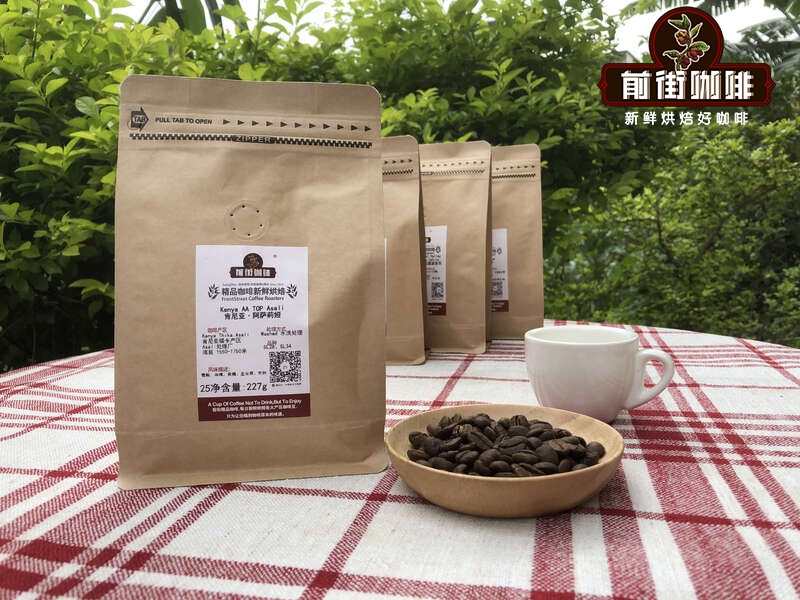
FrontStreet Coffee's Kenya Assalia Coffee Beans, AA TOP grade
The Kenyan Auction System
As FrontStreet Coffee mentioned earlier, during Kenya's colonial history local farmers did not benefit much from coffee, which can be considered a dark chapter in Kenyan coffee cultivation. In 1931, to help farmers secure better prices and incomes without being controlled by distant traders, the government established the Kenya Growers Cooperative Union and the Kenya National Coffee Committee, creating an auction mechanism. In 1937 the Nairobi Coffee Exchange was founded, by which time the auction trading system had become more widespread and widely supported.

Most coffee beans are uniformly graded and inspected by the Kenya Coffee Board and then sold at auction. The public auction system dates back to before 1934. It uses an agent system: Kenya has 50 licensed agents who send sample beans to their clients for cupping, and clients can have agents bid on the coffees they like at auction. Because this seemed to reward middlemen while eroding farmers' incomes, in 2006 Kenya opened up 32 independent sales agents who could deal directly with foreign coffee buyers without going through auction.
All of them, however, must meet the Kenya Coffee Board's standards for quality, storage, and bank guarantees. The two systems run in parallel. After years of development this has become the most transparent auction distribution system, in which better-quality coffee achieves better prices through cupping, encouraging more cooperatives and farms to take part. FrontStreet Coffee also follows the auction market closely, since it not only helps us understand local market shifts but also confirms that an improved auction mechanism ultimately benefits not just farmers but buyers around the world.

The Two Main Trading Models for Kenyan Coffee Beans
1. The Nairobi Coffee Exchange auction (central auction system), through which 85% of beans are traded.
Since the auction system was established in the 1930s, the vast majority of Kenyan coffee has been traded this way. Auctions are held every Tuesday during the harvest season. It evolved from an open-outcry system in which each trader bid by pressing an electric trigger. Through this system, competition among agents can send prices for high-quality, highly sought-after coffee soaring.

2. Direct trade, often called the "second window," through which only 15% of beans are traded.
After 2006, the Kenyan government allowed farmers and foreign buyers such as roasters or importers to trade directly, making it possible to discuss and set prices different from auction prices before or during the harvest. Some exporters also buy coffee directly from the relevant marketing agents or factories, using the previous week's auction price for a specific grade as a reference in negotiation. Direct trade can let farmers producing high-quality coffee earn more. When direct trade is not feasible, the coffee returns to the exchange for auction sale.
What Kenyan Coffee Beans Does FrontStreet Coffee Offer?
After several rounds of tasting by FrontStreet Coffee, out of an initial dozen different beans from various regions, only two or three ultimately reach the shelves. This does not mean the others are inferior. FrontStreet Coffee's original intention is never simply to sell; the process is also how we come to understand each growing region, the different varieties within a region, the different processing methods applied to the same variety, and the comparisons between regions, all of which we build into corresponding databases. FrontStreet Coffee hopes to help more coffee lovers understand the world of coffee.

FrontStreet Coffee: Kenya Small Tomato Coffee Beans
Region: Kenya, Thika region, Asali processing station
Altitude: 1550-1750m
Processing: Washed
Varieties: SL28 and SL34
Flavour: Tomato, pear, black plum, brown sugar, plum, cherry tomato
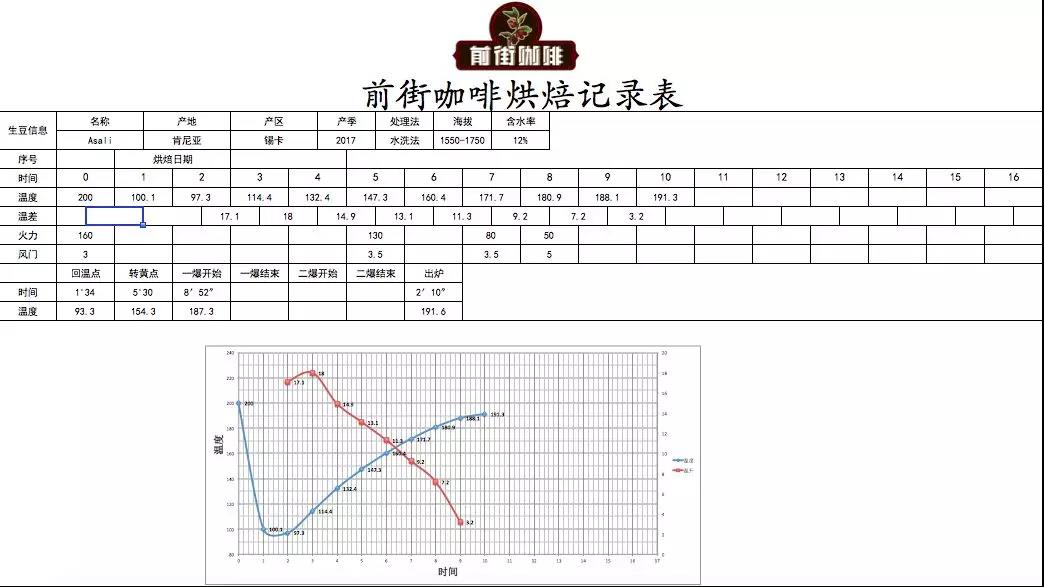
Roasting Recommendation
This FrontStreet Coffee Kenya Small Tomato bean is full and round. To express its bright, rich acidity fully, FrontStreet Coffee uses a light roast.
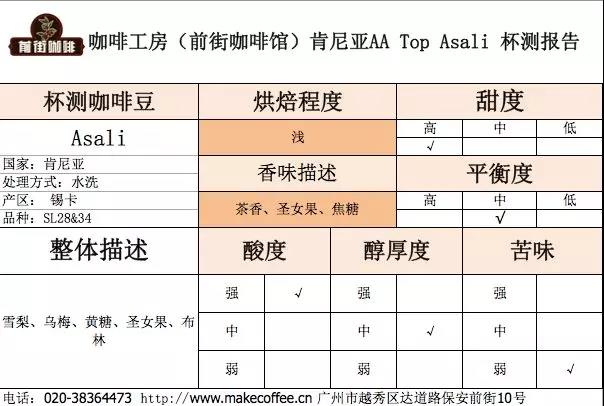
Cupping Flavour
FrontStreet Coffee's Pour-over Recommendation
FrontStreet Coffee uses these brewing parameters: V60 dripper, water temperature 90 degrees C, 15g of grounds, a 1:15 coffee-to-water ratio, and a grind similar to fine sugar particles (80% pass-through on a Chinese-standard 20-mesh sieve).
Here FrontStreet Coffee wants to explain why we determine grind size by sieving. This is in fact the pour-over grinding recommendation provided by the Specialty Coffee Association (SCA) of America. FrontStreet Coffee has verified it extensively and found that different grind sizes produce significantly different results, and that every coffee bean needs a different grind, which is exactly the point of sieving. If you don't have a sieve at home, FrontStreet Coffee suggests watching the flow speed: if the water runs through too quickly, the grind is too coarse; if too slowly, it is too fine.

FrontStreet Coffee uses segmented extraction, blooming with 30g of water for 30 seconds. Using a small flow, pour in circles to 125g, then pause. When the water level drops and the coffee bed is about to be exposed, continue pouring to 225g and stop. When the water level again drops and the bed is about to be exposed, remove the dripper. Timing starts from the bloom, and total extraction time is 2'00".

FrontStreet Coffee's Kenya Assalia Coffee Bean Flavour
The wet aroma has ripe tomato and floral notes. The entry brings cherry tomato and black plum with bright acidity and a clean, rich mouthfeel. The middle section shows prominent sweetness with a juicy texture. The aftertaste carries berry aroma, brown sugar sweetness, and a green-tea fragrance.
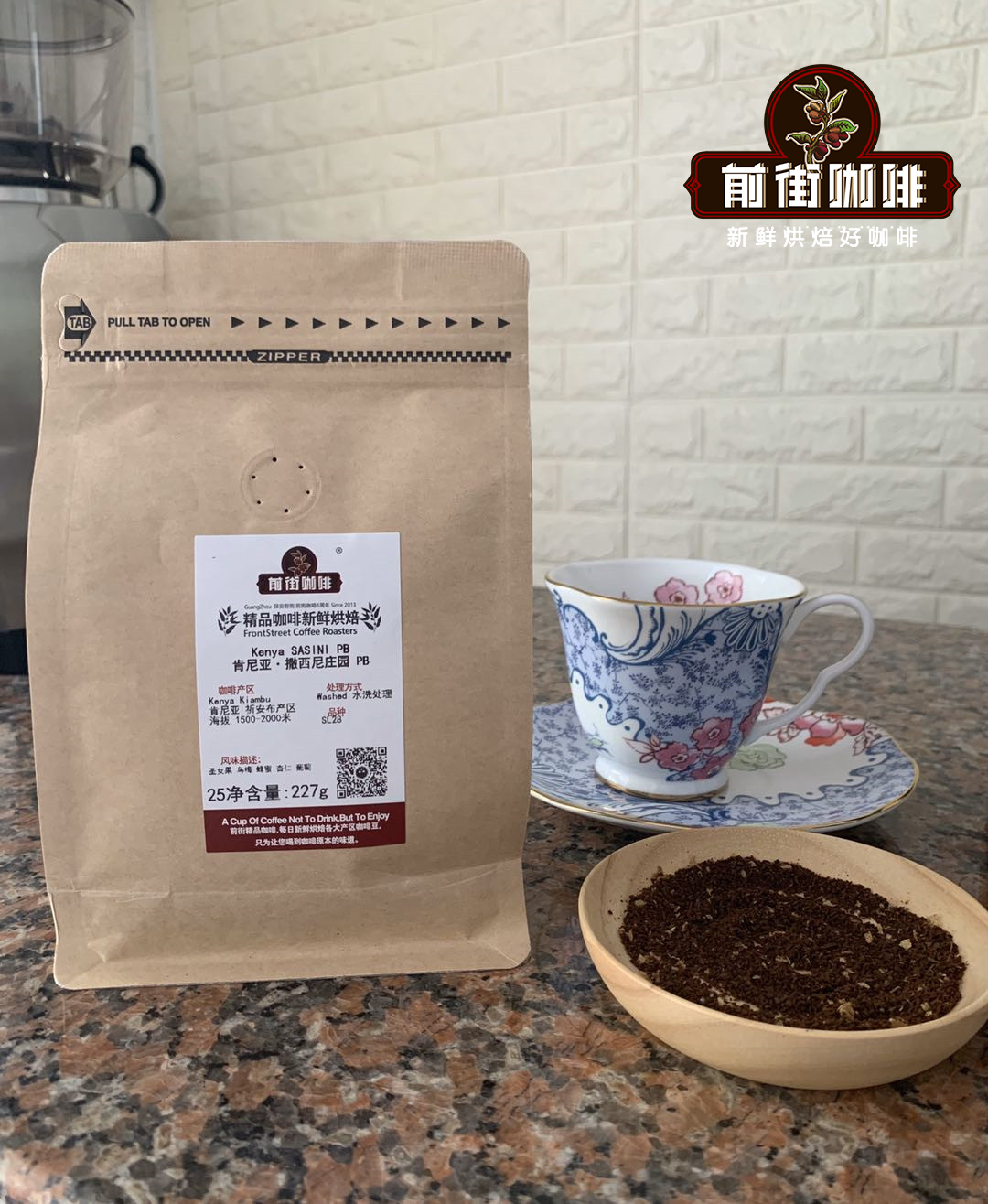
FrontStreet Coffee: Kenya Sasini Estate PB Coffee Beans
Region: Kiambu
Estate: Sasini Estate
Altitude: 1680 meters
Grade: PB
Varieties: SL28, SL34 and Ruiru
Processing: Washed
Roasting Recommendation
FrontStreet Coffee uses a light roast. As mentioned earlier, the overall flavour profile of Kenyan beans is defined by bright acidity, and to emphasise that point FrontStreet Coffee recommends roasting toward the lighter end.

Cupping Flavour

FrontStreet Coffee's Pour-over Recommendation
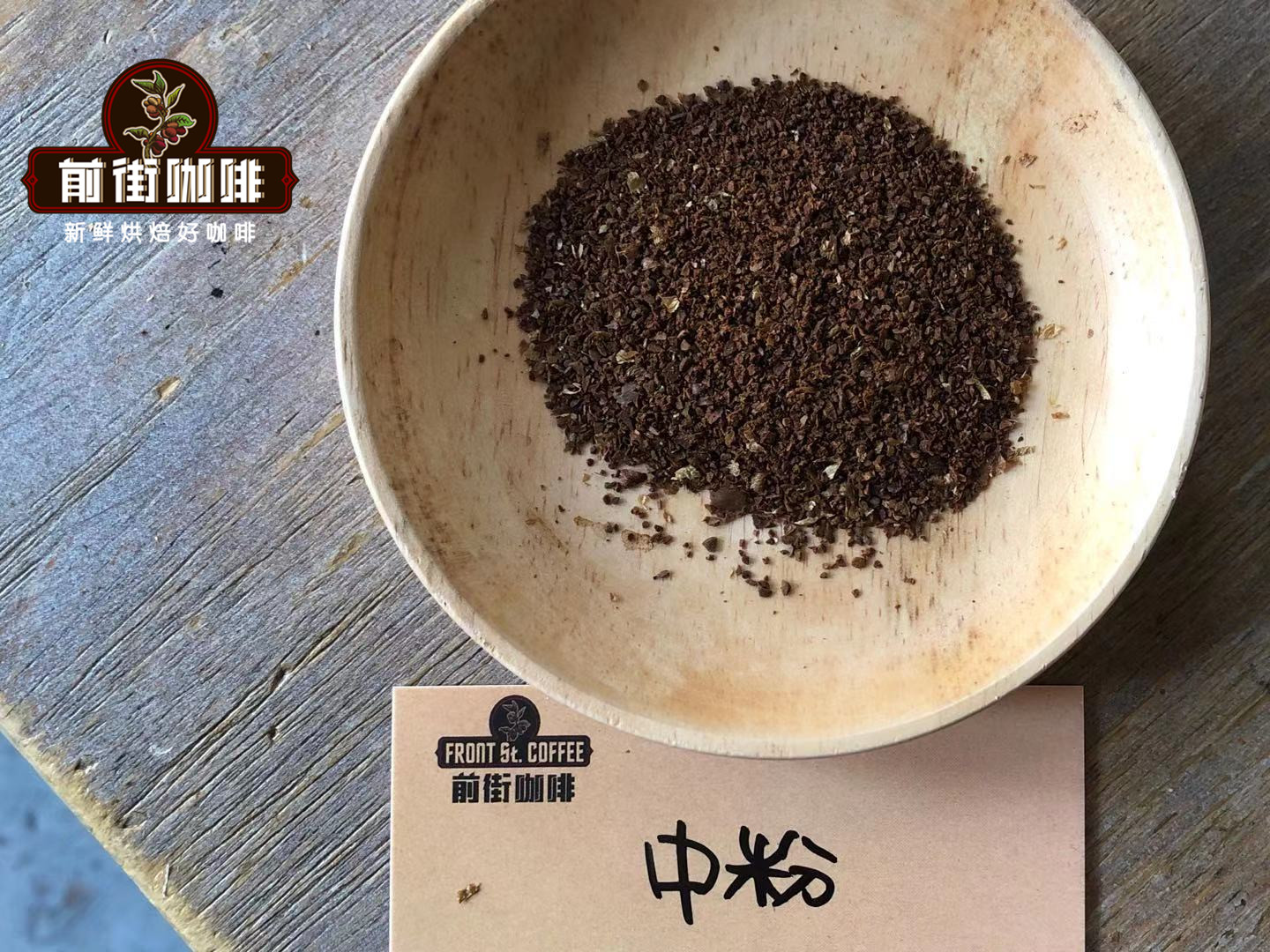
FrontStreet Coffee uses these brewing parameters: V60 dripper, water temperature 90 degrees C, 15g of grounds, a 1:15 coffee-to-water ratio, and a grind of BG#5I (80% pass-through on a Chinese-standard 20-mesh sieve).
Sharp-eyed readers may notice that FrontStreet Coffee's grind setting for this Kenyan bean differs from the previous one. Every bean needs a different grind because of factors such as variety, altitude, processing, and roasting. That is why, whenever FrontStreet Coffee receives a newly roasted bean, we sieve it first to determine the appropriate pour-over grind.
FrontStreet Coffee uses segmented extraction, blooming with 30g of water for 30 seconds. Using a small flow, pour in circles to 125g, then pause. When the water level drops and the coffee bed is about to be exposed, continue pouring to 225g and stop. When the water level again drops and the bed is about to be exposed, remove the dripper. Timing starts from the bloom, and total extraction time is 2'00".

FrontStreet Coffee's Kenya Sasini Coffee Bean Flavour
Distinct black plum and cherry tomato, with almond emerging in the middle and honey on the finish. Juicy mouthfeel with bright acidity.
Differences Between FrontStreet Coffee's Kenya AA and Kenya PB
You can see that the two FrontStreet Coffee beans differ clearly in grade, and the roasting and brewing parameters FrontStreet Coffee uses for them differ too. Under those conditions, their flavours also show perceptible differences.

Both share obvious black plum, cherry tomato, and honey flavours, developing slight nutty notes as the cup cools, with a juicy mouthfeel and bright acidity. AA's acidity is brighter than PB's, with more complex layers overall, while PB emphasises the sweetness of berries and honey, with a cleaner, softer character.
FrontStreet Coffee Recommendation
Kenya's bright, full-bodied acidity is a pleasure in its own right, but if you would like to explore the lighter, more delicate style the article contrasts it with, FrontStreet Coffee's washed Yirgacheffe is the classic starting point. It shows clear jasmine florals and bright citrus acidity, with a light, elegant body and a tea-like finish that drinks almost like a clean glass of lemon tea.
For something with a little more fruit, FrontStreet Coffee's Gudingding cooperative beans come from a single 300-member producer group in the Worka district at the southeastern edge of Yirgacheffe. The washed process gives the cup citrus and lemon notes with an elegant white florality, and FrontStreet Coffee's natural Red Cherry and Huakui lots offer peach, cocoa, honey, and lemon on one hand, and a fuller, wine-like tropical-fruit complexity on the other.
Important Notice :
FrontStreet Coffee is a long-established specialty coffee roaster in Guangzhou China, selling freshly roasted beans from its own farm in Yunnan as well as dozens of carefully selected single-origin beans from around the world for both pour-over and espresso. The products deliver consistently excellent quality and great value, with shipping within 24 hours. Guangzhou's FrontStreet Coffee shop is recommended by many coffee lovers, and the beans are now available online at the Tmall 。
FrontStreet Coffee has moved to a new address:
FrontStreet Coffee Address: 315,Donghua East Road,GuangZhou
Tel:020 38364473
 Scan and follow the En Gafei WeChat official account. Please indicate that the reprint comes from "En Gafei".
An Introduction to Major Coffee Growing Regions in Yirgacheffe, Ethiopia - Starbucks' Recommended Roast Level, Flavor Profile, and Characteristics of Yirgacheffe Coffee Beans
