Introduction to the History of Panama Boquete Hacienda La Esmeralda - Origin and Flavor Characteristics of Esmeralda Geisha Coffee Beans
The Origin and Development of Geisha Coffee
After Geisha coffee became famous, the whole of Panama took on a strong Geisha atmosphere, with the Geisha beans produced by Hacienda La Esmeralda the most renowned of all. Geisha is actually a coffee variety that originated in Ethiopia. Of course, the Geisha from Geisha Village in Ethiopia is entirely different from Panama Geisha coffee beans.
FrontStreet Coffee has mentioned before that coffee flavor is closely tied to environmental climate, but Geisha is peculiar — the harsher the environment, the better the flavor. Those conditions cannot be met in Ethiopia, which is why Geisha was only discovered and became famous after arriving in Panama, in close relationship with Panama's climate.
How Geisha Coffee Came to Hacienda La Esmeralda
Geisha went through decades of development before becoming famous. The variety was discovered in 1931 in the Geisha forest of Ethiopia, after which Geisha beans were sent to the Coffee Research Institute in Kenya. In 1936 it was introduced to Uganda and Tanzania, in 1953 to Costa Rica, and in 1970 to Panama. At first not many people paid attention to Geisha, until Hacienda La Esmeralda in Panama separated it from other varieties in 2003, and it became the champion of the BOP competition in 2004. That is how Geisha beans officially entered everyone's view. In the many years that followed, Hacienda La Esmeralda basically kept winning the championship.
Panama's Unique Growing Environment
What kind of growing environment in Panama produces such delicious Geisha coffee?
The microclimates of Panama's highlands are the most important resource making Panama's unique coffee one-of-a-kind. The east-to-west layout of the Republic of Panama lets cold air currents flow through the central mountains and converge above 6,500 feet, creating various microclimates in the Boquete and Volcán-Candela regions and making them the main production areas of Panama's unique coffee. These singular coffees are cultivated in the nutrient-rich, balanced soil of the Baru Volcano region.

Panama lies in Central America, connecting North and South America, bordering Costa Rica and Colombia. Panama's coffee journey can be said to have been born with a silver spoon. As everyone knows, the Panama Canal was built by the United States and was even independently controlled by the United States for a period after its completion. It was the construction of the canal that brought many American elites south at the end of the 20th century, partly for work and partly to explore business opportunities. Many famous coffee estates in Panama were created by these elites. The owner of Hacienda La Esmeralda was formerly a banker, and the owner of Hartmann Estate was formerly an engineer. These elites held to standardized, refined principles in estate management — from allocating coffee trees to plots by altitude to form bean grades, to hand-picking and refined processing — all of which are important factors in making Panamanian coffee famous worldwide.
The History of Hacienda La Esmeralda
Rudolph A. Peterson - First Generation Estate Owner
In 1964, Swedish-American financier Rudolph A. Peterson retired, moved to Panama, and bought Hacienda La Esmeralda in Boquete, focusing on dairy farming. He had previously served as president of Bank of America and was a major figure in finance at the time. Rudolph bought Hacienda La Esmeralda just for vacation and later retirement, and probably never expected the estate to become world-famous and even a representative of Panama's specialty coffee. In 1973, his son Price Peterson earned a doctorate in neurochemistry in the United States but returned to Boquete to help his father run the farm. After Price took over, he divided the market into three major brands based on altitude and microclimate, cupping results, and planted varieties (Esmeralda Special, Diamond Mountain grows, Palmyra). In 2012, Geisha was added, becoming the fourth brand.
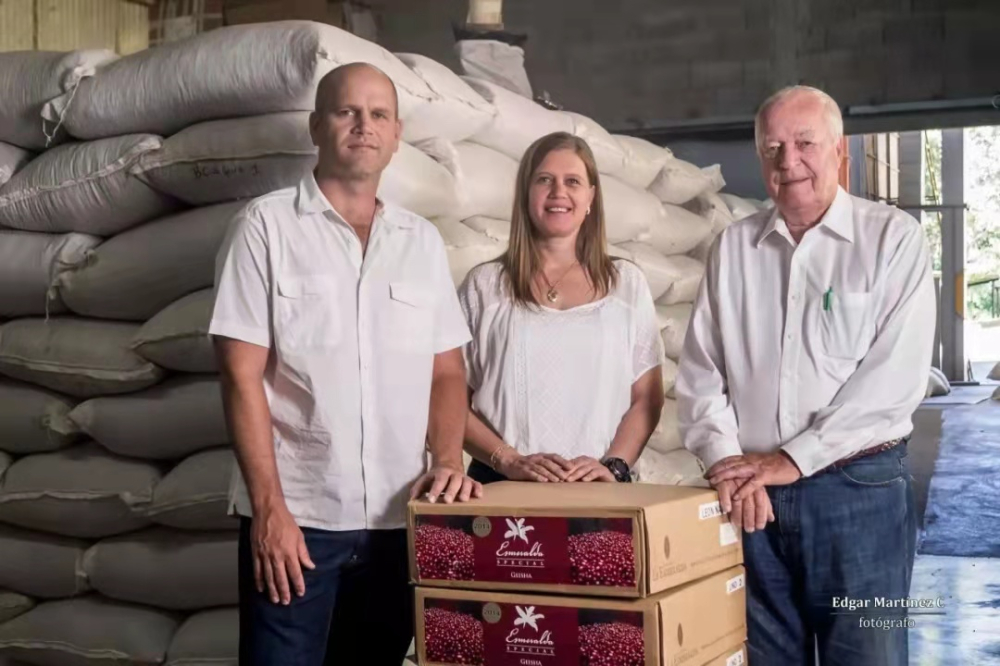
Today, Hacienda La Esmeralda mainly has three estates growing Geisha: El Velo, Cañas Verdes, and Jaramillo. In 1996 they acquired Jaramillo, which had a superior geographical environment and good original coffee varieties. El Velo was acquired by Hacienda La Esmeralda in 2012. FrontStreet Coffee believes Hacienda La Esmeralda's decision to acquire estates with good products and high altitudes was unusual at the time, and it is what let the estate occupy a certain position in the coffee industry. Starting with the BOP win in Panama in 2004, it has been astonishing ever since. Later, expert appraisal revealed that the bean was the Geisha variety from Ethiopia. After that, the Peterson family put most of their energy into developing infrastructure to support excellent batch separation and refined processing.
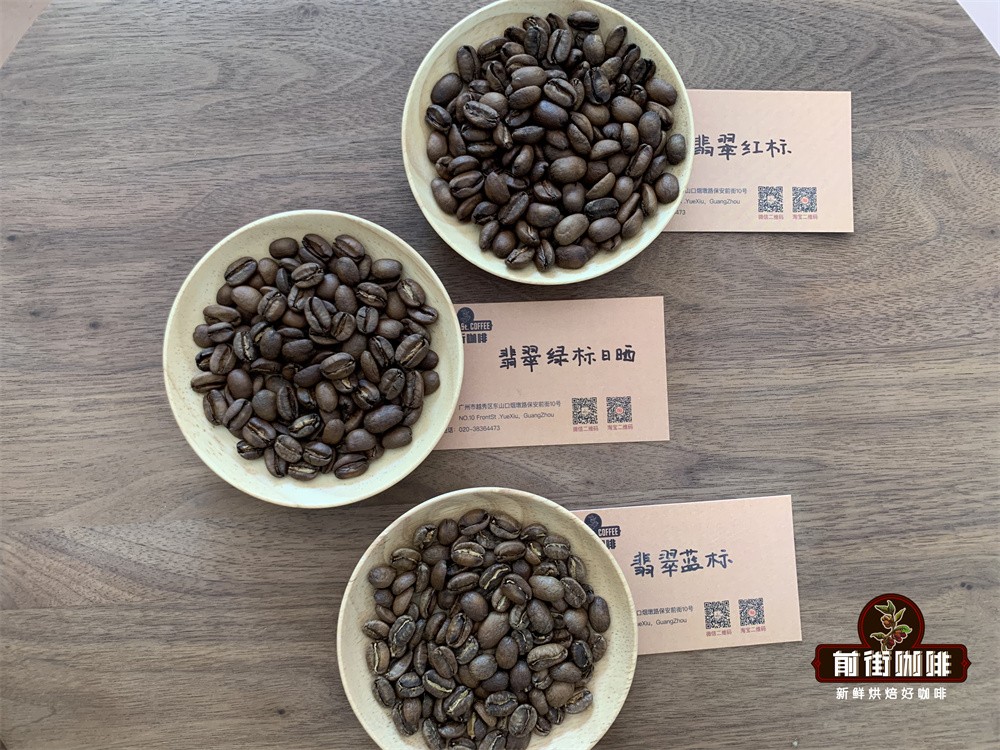
FrontStreet Coffee understands that although Hacienda La Esmeralda first discovered beans with outstanding flavor, precision mattered to them: they cupped beans from different areas of the estate and determined planting plots by altitude. That is why we now have the Red Label, Green Label, and Blue Label Geisha grades, all classified by altitude.
Geisha Coffee Varieties at Hacienda La Esmeralda
FrontStreet Coffee · Emerald Red Label Geisha Coffee
The Geisha specially selected by Hacienda La Esmeralda is what we commonly call FrontStreet Coffee's Red Label Geisha. These selected Geisha beans are grown at altitudes of 1600-1800 meters, with cupping scores above 90 points, and are produced in the Jaramillo and Cañas Verdes regions.
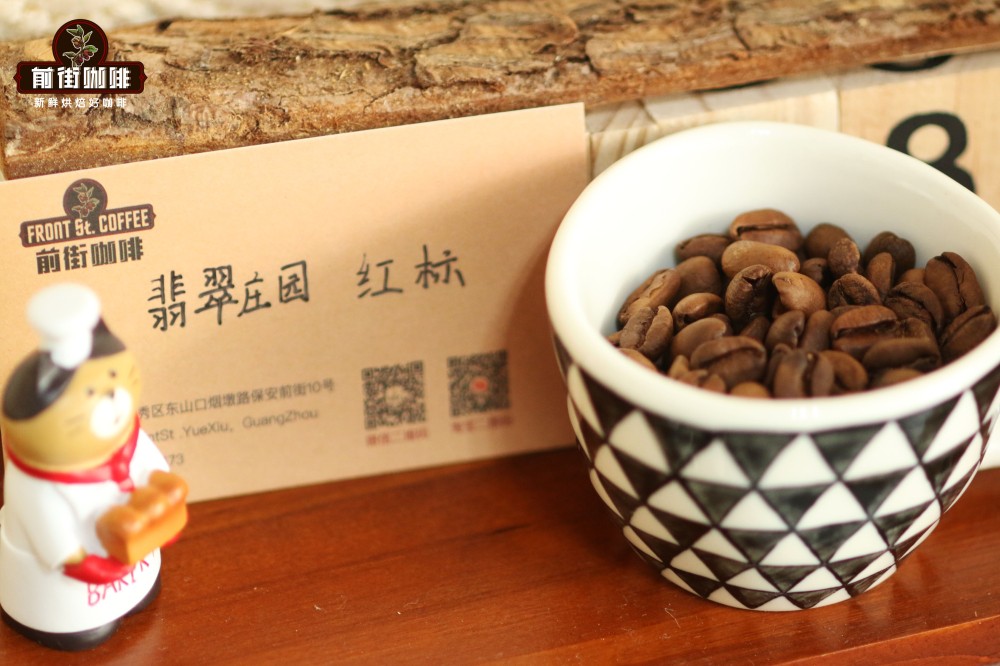
The independent auction Hacienda La Esmeralda holds itself — the Geisha batches taken from divided plots for auction — are the auction Red Labels. There are also non-auction Red Labels on the market now, which are actually Geisha beans selected from the same plots but not auctioned, then circulated in the market. The variety and quality are consistent; only the selling prices differ.
This grade of Geisha uses natural or washed processing, with flavors of special, bright floral aromas and citrus aromas.
FrontStreet Coffee · Emerald Green Label Geisha Coffee
Private Collection is FrontStreet Coffee's Green Label Geisha — not an independent competition batch, but excellent-quality Geisha planted without entering auctions. It is selected from micro-batch mixed beans grown at 1600-1800 meters in different plots such as Jaramillo and Cañas Verdes, without detailed plot specification. That is why the Green Label sometimes tastes very close to the Red Label, while the next production may differ.
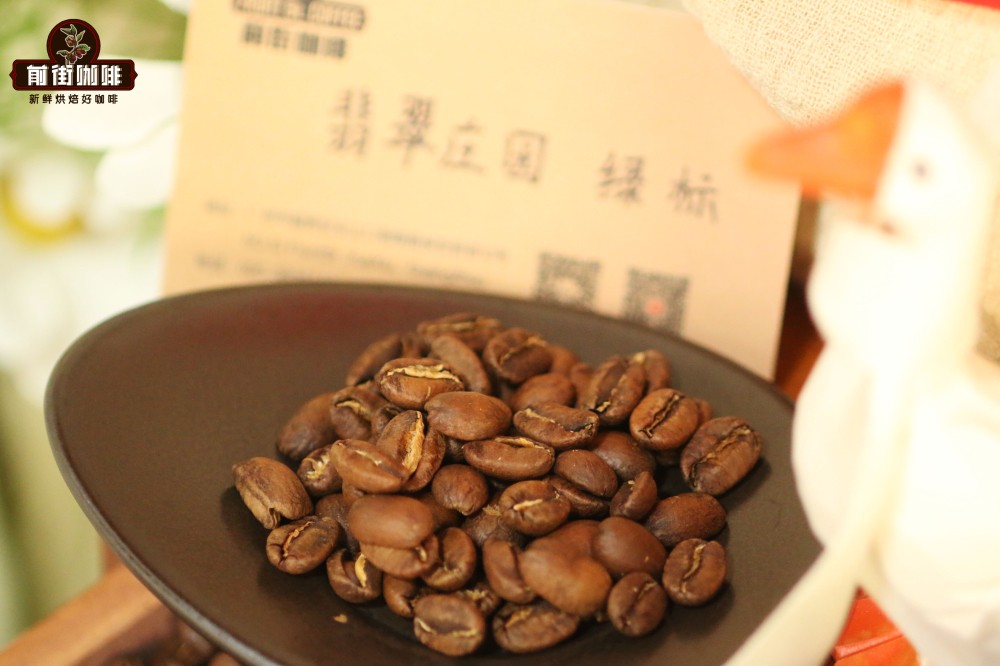
Although the Green Label is not as high-grade as the Red Label, it still carries the classic Geisha flavors — floral, fruity, citrus acidity, and a thick, juicy texture. FrontStreet Coffee's Green Label Geisha also comes in both washed and natural processing.
Brewing Parameters for FrontStreet Coffee's Geisha
Because this FrontStreet Coffee Geisha bean is lightly roasted, and light-roasted beans dissolve more slowly than dark-roasted ones, FrontStreet Coffee uses a higher water temperature to ensure full extraction of Geisha flavor, along with a finer grind.
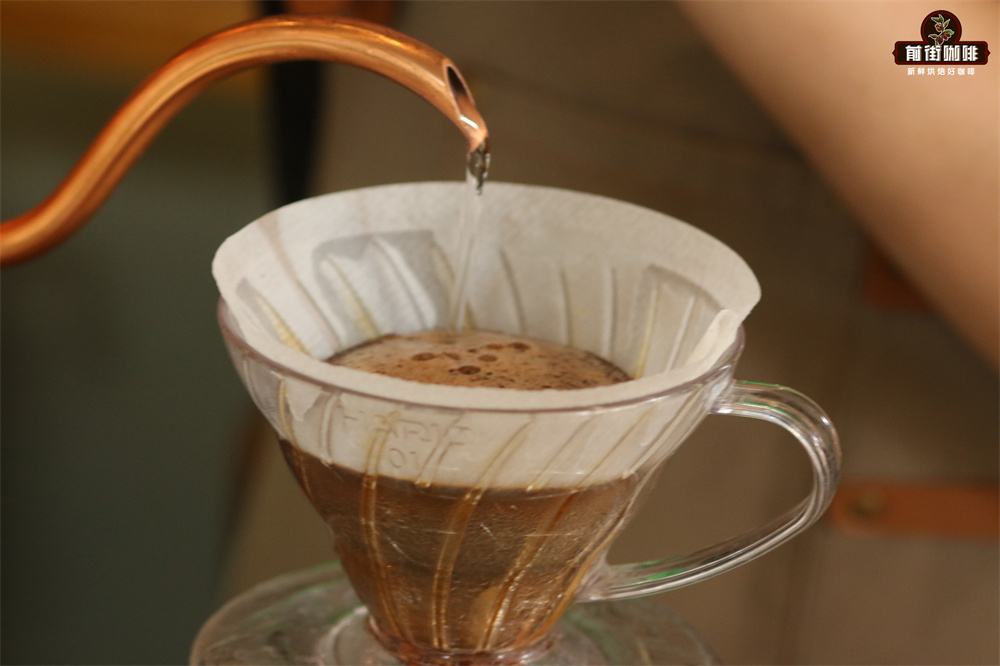
Geisha beans are relatively hard and tend to sink and clog the bottom outlet, so the grind uses a fineness with an 80% pass rate through a Chinese standard #20 sieve (about the size of fine sugar). For the dose, FrontStreet Coffee still chooses 15g, paired with a Hario V60 small filter cup, and adjusts the recommended brew ratio to 1:15. On one hand, the extra water helps maintain the extraction rate; on the other, it adjusts the coffee concentration to 1.15%, the best concentration for experiencing coffee's flavors. Keep the water temperature at 91 degrees Celsius.
Using segmented extraction, bloom with 2 times the coffee dose in water — that is, 30 grams of water for 30 seconds. The bloom lets the grounds release internal carbon dioxide, making later extraction more stable. With a small circling flow, pour to 125 grams for the segmented stage, then continue pouring to 225 grams and stop. Wait until the water in the filter cup has finished dripping before removing it. Start timing from the beginning of the pour, with an extraction time of 2'00". Then pick up the whole cup, shake it evenly, and pour it into a cup for tasting.
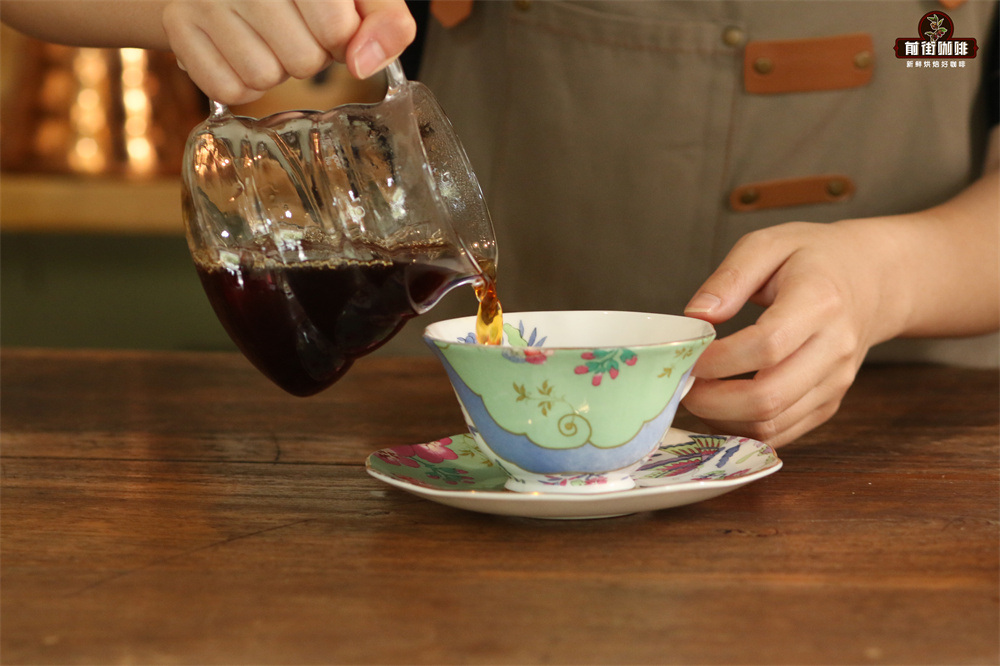
FrontStreet Coffee Panama Hacienda La Esmeralda Red Label Geisha flavor description: bright rose and citrus aromas, brown rice, berries, apricots, complex fruits, honey, with a thick juice sensation, rich flavor layers, and obvious sweetness.
FrontStreet Coffee Panama Hacienda La Esmeralda Green Label Geisha flavor description: rich jasmine floral aroma, high sweetness, citrus, berries, juice sensation, cream, green tea, orange peel, cantaloupe, with overall rich flavor layers and a lasting aftertaste of floral and citrus notes.
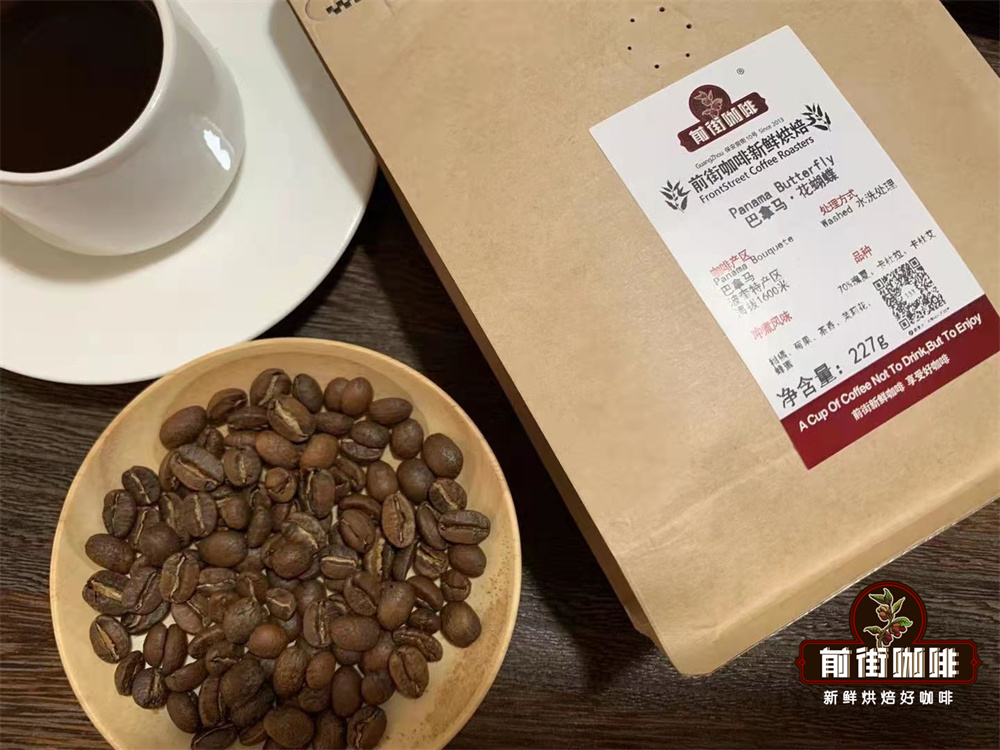
Of course, many estates grow Geisha now, and Geisha coffee is very famous — such as FrontStreet Coffee Panama Deborah. And if you want the Geisha flavor without spending so much, you can also try Geisha blend beans, which still deliver Geisha character: FrontStreet Coffee Panama Butterfly, FrontStreet Coffee Costa Rica Milasou, and FrontStreet Coffee Colombia Flower Seeing, all Geisha blends with excellent value.
FrontStreet Coffee Recommendation
Geisha comes in more shapes than most drinkers realize, and understanding the tiers is the key to buying well. At the top of Hacienda La Esmeralda's line are the Emerald Red Label and Green Label Geishas. Red Label, formally "Esmeralda Special," is grown at 1600-1800 meters with every batch cupping above 90 points and each lot drawn from a single small plot, so buyers can choose by the finest flavor differences. Green Label ("Private Collection") blends micro-lots from the same altitude range and is the more affordable way into the estate's signature style.
FrontStreet's Emerald Red Label Geisha shows the classic profile at its peaks: bright rose and citrus aromatics with brown rice, berries, apricot, honey, and a thick juice-like body. The Green Label delivers much of the same — lush jasmine, high sweetness, citrus, berries, cream, green tea, orange peel, and cantaloupe, with a lasting floral and citrus finish.
If you're new to the variety, FrontStreet's Panama Boquete Geisha is the entry point, offering the orange-blossom honey sweetness, oolong tea character, and fine fruit acidity of a classic Panamanian Geisha at a friendly price. Ethiopian Geisha offers a brighter, more fruit-acid expression — try the entry-level FrontStreet Grana Estate Geisha, roasted light-to-medium to keep white florals and orange, guava, and citrus. For estate-level ambition, the Geisha Village Gold Label (Gesha 1931, about 10% of the village's output) and Red Label (Gori Gesha, SCA 88+) are refined naturals with layered, lingering complexity.
For brewing, Geisha's hard beans sink easily and can clog the outlet, so FrontStreet recommends a fineness with 78-80% passing a Chinese standard #20 sieve (about fine sugar) and 91°C water, using 15g in a Hario V60 small filter at 1:15 — or 1:16 for a lighter cup. Pour in three stages: 30g for a 30-second bloom, then small circling pours to 125g, then to 225g as the bed drops, for a total extraction of about 2'10"-2'20". Geisha also makes a fine SOE; FrontStreet's Grana Estate Geisha SOE, medium roasted, extracts espresso with dried apricot, caramel, and nut notes.
Important Notice :
FrontStreet Coffee is a long-established specialty coffee roaster in Guangzhou China, selling freshly roasted beans from its own farm in Yunnan as well as dozens of carefully selected single-origin beans from around the world for both pour-over and espresso. The products deliver consistently excellent quality and great value, with shipping within 24 hours. Guangzhou's FrontStreet Coffee shop is recommended by many coffee lovers, and the beans are now available online at the Tmall 。
FrontStreet Coffee has moved to a new address:
FrontStreet Coffee Address: 315,Donghua East Road,GuangZhou
Tel:020 38364473
 Scan and follow the En Gafei WeChat official account. Please indicate that the reprint comes from "En Gafei".