
What's the difference between French Press and AeroPress? Which is better: French Press or AeroPress?
French Press vs AeroPress: What's the Difference?
The French press and the AeroPress are both quick, convenient brewers — and both even carry the word "press" in their names. So how do these two devices actually differ? Today we'll break down what sets each one apart.
Getting to Know the French Press and the AeroPress
French Press
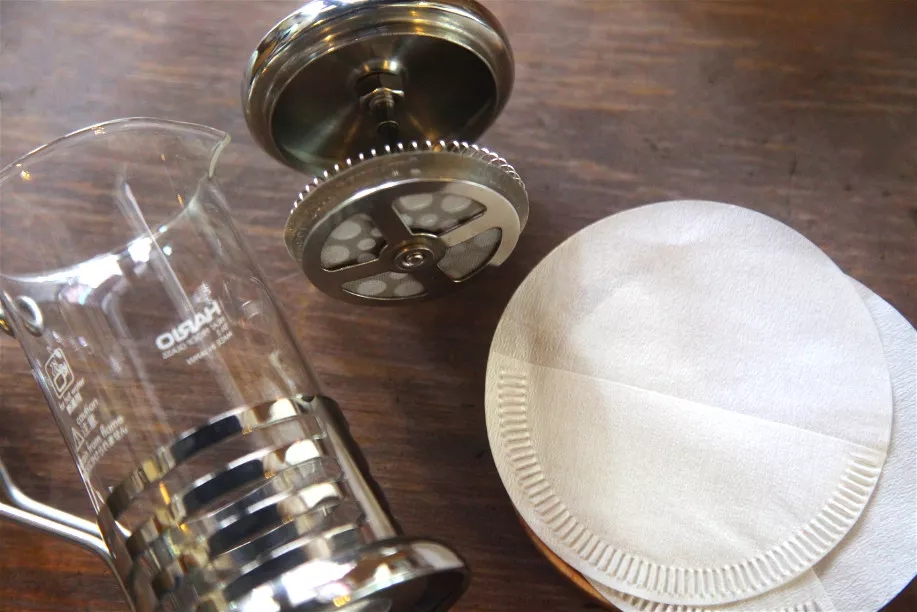
The French press originated in France around 1850. It is a simple brewer made of a heat-resistant glass (or clear plastic) body and a metal plunger filter. It is remarkably beginner-friendly: you add ground coffee and hot water, let it steep for a few minutes, then press the plunger down and pour. Because it uses full immersion, allowing the water and grounds to stay in complete contact, it draws out the essence of the coffee. It is simple, convenient, and demands very little technique.

AeroPress
The AeroPress was invented in 2005 by the Aerobie company. It is a simple, syringe-like brewer that combines the immersion extraction of a French press, the paper filtration of pour-over, and the pressure extraction of espresso. After mixing the grounds with hot water and stirring, you press the plunger to force air through, and the coffee passes through the filter cap and is filtered out.

Through pressure extraction it can deliver the richness of espresso, the clarity of pour-over, and the smoothness of a French press. Combining the strengths of three brewing methods, the AeroPress truly earns its reputation as a clever device. It is also lightweight and easy to carry, making it a must-have at home and on the road.


Brewing Comparison
Now let's see how the same beans, brewed with the same parameters, taste different in these two devices.


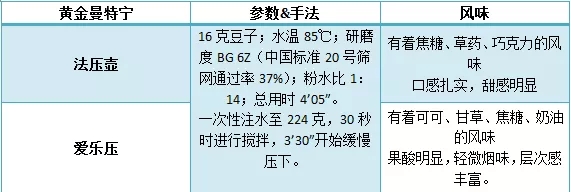
In our comparison, FrontStreet Coffee's Golden Mandheling brewed in the AeroPress lacked the hefty mouthfeel of the French press version; instead it came out lighter, with more layered flavors and a noticeable fruit acidity. The FrontStreet Coffee's Golden Mandheling brewed in the French press had fewer flavor layers but was more balanced overall, with pronounced sweetness.
Although both brewers rely on immersion, the key difference in extraction comes down to pressure. Despite the shared word "press," the AeroPress extracts with air pressure. In the inverted method in particular, when you flip it over and press down, the grounds are extracted a second time. At that point some ultra-fine particles are more likely to over-extract — and that is exactly why the flavor layers vary so much.

The French press, by contrast, relies on a long, high-temperature steep followed by even mixing, and then a gentle press to separate the grounds from the liquid. The downward pressure of the plunger filters out the grounds and yields the coffee. During the steep, some grounds have already absorbed water and sunk, so pressing the plunger does not cause re-extraction, and the overall cup is more balanced.
FrontStreet Coffee Recommendation
Because immersion brewing rewards a fuller-bodied bean, FrontStreet Coffee suggests starting there. For a black coffee that is low in acidity with a rich, oily body, our FrontStreet PWN Golden Mandheling is a natural pick: one of Asia's best-known specialty coffees, it goes through three rounds of hand sorting plus one machine sort, and after a medium-dark roast the large, evenly translucent beans give off intense notes of spice, caramel, cedar, and dark chocolate — exactly the profile that shines in a French press. If you lean toward brighter, more aromatic cups, try the FrontStreet Strawberry Candy, a Gesha blend customized from a Costa Rican honey-process coffee and a Panamanian washed Gesha; steeped in a French press it releases rose, citrus, and dried blueberry aromas, and with milk it turns into the scent of strawberry gummy candy. On the technical side, FrontStreet Coffee recommends a coarse-sugar grind — about 10.5 on an EK43s or 26 clicks on a hand grinder, closer to small gravel than fine sand. A common ratio is 1:15 (15 grams of coffee to 225 grams of water), which brews at roughly 1.1–1.2% strength; water at about 90°C, or 1–2°C above your usual pour-over temperature, works well, and a starting steep of about 4 minutes keeps the cup from going bitter and astringent.
Important Notice :
FrontStreet Coffee is a long-established specialty coffee roaster in Guangzhou China, selling freshly roasted beans from its own farm in Yunnan as well as dozens of carefully selected single-origin beans from around the world for both pour-over and espresso. The products deliver consistently excellent quality and great value, with shipping within 24 hours. Guangzhou's FrontStreet Coffee shop is recommended by many coffee lovers, and the beans are now available online at the Tmall 。
FrontStreet Coffee has moved to a new address:
FrontStreet Coffee Address: 315,Donghua East Road,GuangZhou
Tel:020 38364473
 Scan and follow the En Gafei WeChat official account. Please indicate that the reprint comes from "En Gafei".

