How Kopi Luwak is Made - Flavor Characteristics, Stories, and Brewing Tutorial

For more premium coffee knowledge, please follow the WeChat official account: FrontStreet Coffee
An Introduction to Kopi Luwak
Kopi Luwak has always been a lightning rod for controversy. FrontStreet Coffee sells Kopi Luwak too—but! FrontStreet Coffee holds that there is nothing wrong with Kopi Luwak as it occurs naturally. The problem lies with the people who cage civets and force them to eat coffee berries, ripe or not, simply to crank up production. That practice is cruel, and it falls entirely outside the kind of coffee we care to discuss. In this article, FrontStreet Coffee takes an honest look at Kopi Luwak.
What Is Kopi Luwak?
Kopi Luwak—civet coffee—needs no introduction in the coffee world. Everyone has heard that the world's most expensive coffee is also its lowest-volume coffee. Annual output is inherently limited, because the beans are fermented inside the civet's digestive system, which supposedly lends a special herbal aroma and excellent body. That rarity made it a trophy for the wealthy and pushed its price into the stratosphere—expensive, though, is not the same as good, and the bean variety behind it is generally mediocre.
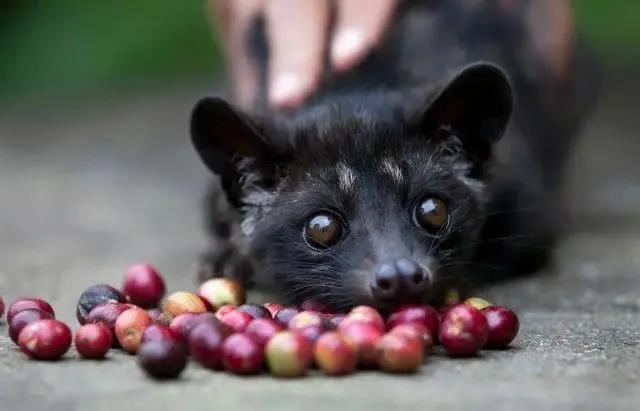
Civets live mainly in tropical rainforests and at the edges of subtropical evergreen broadleaf forests in hilly and mountainous terrain below 2,100 meters, denning in rock caves, burrows, or tree hollows. Because civets roam low and mid elevations, the coffee they eat is mostly Robusta; high-altitude Arabica Kopi Luwak is genuinely rare.
What Does Kopi Luwak Taste Like?
Civets are omnivores. Their animal diet includes small mammals and birds; their plant diet includes nightshade stems and leaves, fig seeds, and fruits like ground cherries. But they digest plants poorly—berries are essentially their dessert, and meat is the main course. Crucially, the forests, shrublands, and farmland of South and Southeast Asia where civets live coincide with good coffee country, so many of those "ground cherries" are in fact coffee cherries. The civet digests only the skin and pulp; the seed inside—the coffee bean—passes through and is excreted. Given the low-altitude habitat in Indonesia and the lowly Robusta variety involved, Kopi Luwak carries the earthy, herbal character typical of Robusta, and the unusual processing gives it high viscosity: it drinks almost like molasses, with a thick, solid body.
The Special Processing of Kopi Luwak — In-Body Fermentation
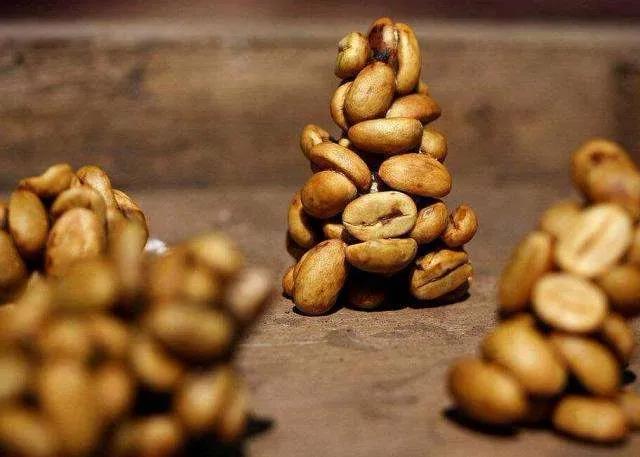
In the early days, locals gathered wild civet droppings in the forest, extracted the undigested seeds, and processed them into green coffee. Limited supply plus a one-of-a-kind "in-body fermentation" proved irresistible to entrepreneurs, who began trapping civets in large numbers for cage farming—forcing what are naturally carnivores to live on coffee cherries, a diet that cannot sustain their health.
The marketing story holds that although the beans aren't digested, the civet's highly corrosive digestive juices etch their surface, and that these juices contain a special protease capable of breaking the beans' original protein chains—splitting long-chain proteins into small particles, short-chain peptides, and free amino acids. In reality, a civet forced to eat nothing but coffee cherries may excrete the beans within an hour or two of eating them. One or two hours in the stomach is nowhere near enough to produce any of those changes; the beans come out essentially as they went in, and any flavor difference is negligible.
FrontStreet Coffee's Neutral View on Kopi Luwak
FrontStreet Coffee's position is that naturally occurring Kopi Luwak is perfectly legitimate. Civets use their noses to pick out ripe cherries, and Ethiopia's red-cherry harvests are also picked at full maturity—the two approaches amount to much the same thing. The problem, again, is caging civets and forcing them to eat cherries regardless of ripeness just to raise output. That is cruelty, and it exits the realm of coffee altogether.

Think it through: if passing through a digestive tract truly made coffee taste better, then force-feeding civets huge quantities of beans of any ripeness would yield great coffee too. That logic is exactly what underlies the mass of farmed "Kopi Luwak" from Vietnam, Yunnan, and Indonesia. FrontStreet Coffee maintains that only beans from ripe cherries taste good—so if Kopi Luwak is to be produced at all, it should happen in a large activity area where civets can choose the cherries they consider worth eating, alongside plenty of other nutritious food.
Can Technology Replace the In-Body Process?
The mania for this coffee and its sky-high prices risk condemning wild animals to captivity as bean factories. No flavor is worth persecuting wildlife for.

Encouragingly, reports suggest that as microbial technology matures, people are working on greener ways to ferment green coffee—efforts to simulate the civet's gastrointestinal system with modern microbiology. If such simulated Kopi Luwak succeeds, it would neither threaten wild animals nor compromise the coffee.
How Does FrontStreet Coffee Brew Kopi Luwak?
To bring out the herbal flavors and heavy body, FrontStreet Coffee roasts Kopi Luwak medium-dark. Medium-dark beans lose more moisture and weigh less, and their grounds don't sink completely—when water first hits, they're absorbed instantly. Vigorous degassing forms bubbles around the grounds that create channels; the fresher the beans, the longer the channels persist and the faster the water level falls. So pour with a generous flow and circle slowly. FrontStreet Coffee brews it in a KONO dripper, which rounds out the body and expresses flavor more directly.

Brewing Parameters
Water temperature: 86-87°C | Grind size: white sugar | Coffee-to-water ratio: 1:15 (15g coffee to 225ml water)
FrontStreet Coffee brews it in segments: bloom with 30g of water for 30 seconds, then pour with a small stream to 125g for the second segment. When the level is about to expose the coffee bed, pour on to 225g. Remove the dripper when the bed is about to surface again (timing starts at the bloom). Extraction time: 2'00".
Kopi Luwak Flavor Description
Herbal, nuts, dark chocolate, fermented flavor.
FrontStreet Coffee Recommendation
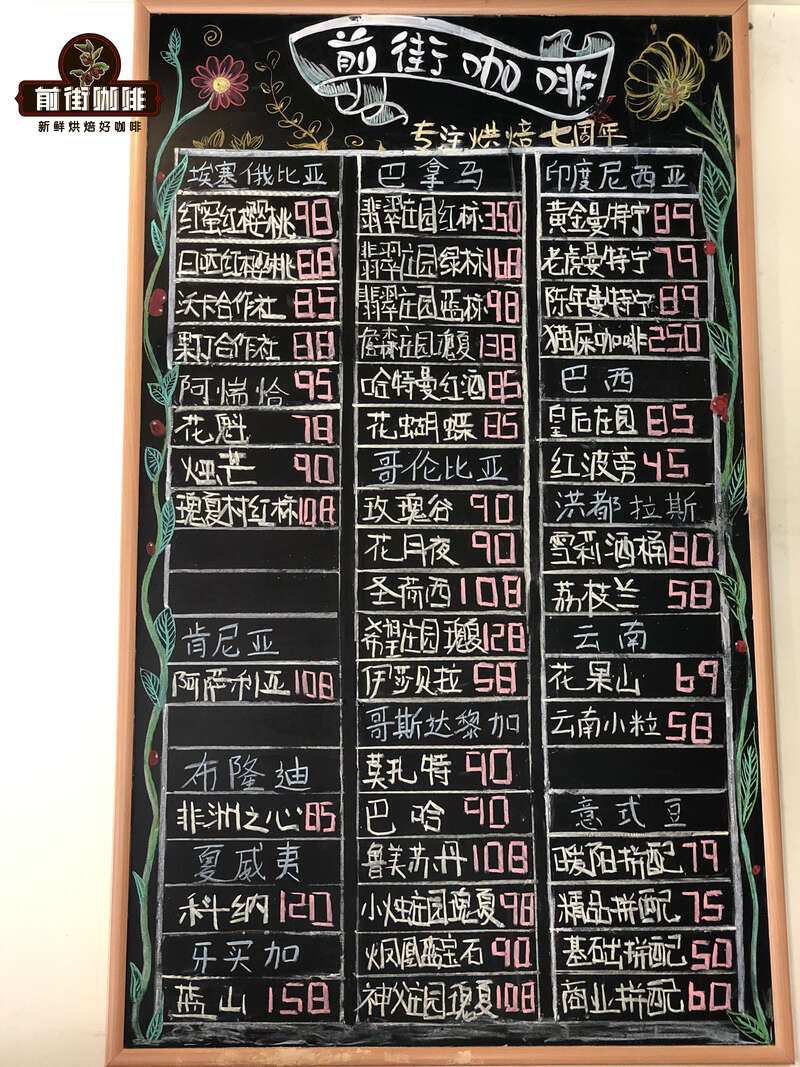
Here's the honest bottom line: Kopi Luwak's low-altitude Robusta origins mean the underlying bean quality is average no matter how it's processed. If you want to taste what premium Arabica can actually do, FrontStreet Coffee's shelves are full of better value. Start with FrontStreet Coffee's Ethiopia Huakui—a natural-process lot of local landrace varieties, winner of that year's TOH green bean competition, with delicate florals over vivid strawberry, mango, jackfruit, citrus, and blueberry, all at a very reasonable price. Its washed counterpart is the Yirgacheffe Guodingding from the Guodingding cooperative, a top Ethiopian G1 lot with elegant white florals, citrus, orange, and green tea.
If your palate prefers balance to brightness, the Jamaica Blue Mountain No.1—Typica, one of Arabica's foundational varieties—was carried from Martinique to Jamaica in the 1820s and has spent two centuries evolving better disease resistance than ordinary Typica; FrontStreet Coffee's cupping notes that no other origin quite matches its balanced, gently sweet profile. For opulence, the Panama Esmeralda Red Label Geisha from the misty, volcanic soils of Boquete in Chiriquí pours out jasmine and citrus with peach, layered fruit acidity, a silky cream texture, and an oolong-sweet finish. And for an everyday workhorse, the Brazil Fazenda Rainha—an early-discovered Yellow Bourbon with cream, peanut, toast, and sugarcane sweetness—works beautifully as pour-over, moka pot, or espresso. Any of these will show you more character in one cup than most farmed civet coffee ever will.
Important Notice :
FrontStreet Coffee is a long-established specialty coffee roaster in Guangzhou China, selling freshly roasted beans from its own farm in Yunnan as well as dozens of carefully selected single-origin beans from around the world for both pour-over and espresso. The products deliver consistently excellent quality and great value, with shipping within 24 hours. Guangzhou's FrontStreet Coffee shop is recommended by many coffee lovers, and the beans are now available online at the Tmall 。
FrontStreet Coffee has moved to a new address:
FrontStreet Coffee Address: 315,Donghua East Road,GuangZhou
Tel:020 38364473
 Scan and follow the En Gafei WeChat official account. Please indicate that the reprint comes from "En Gafei".