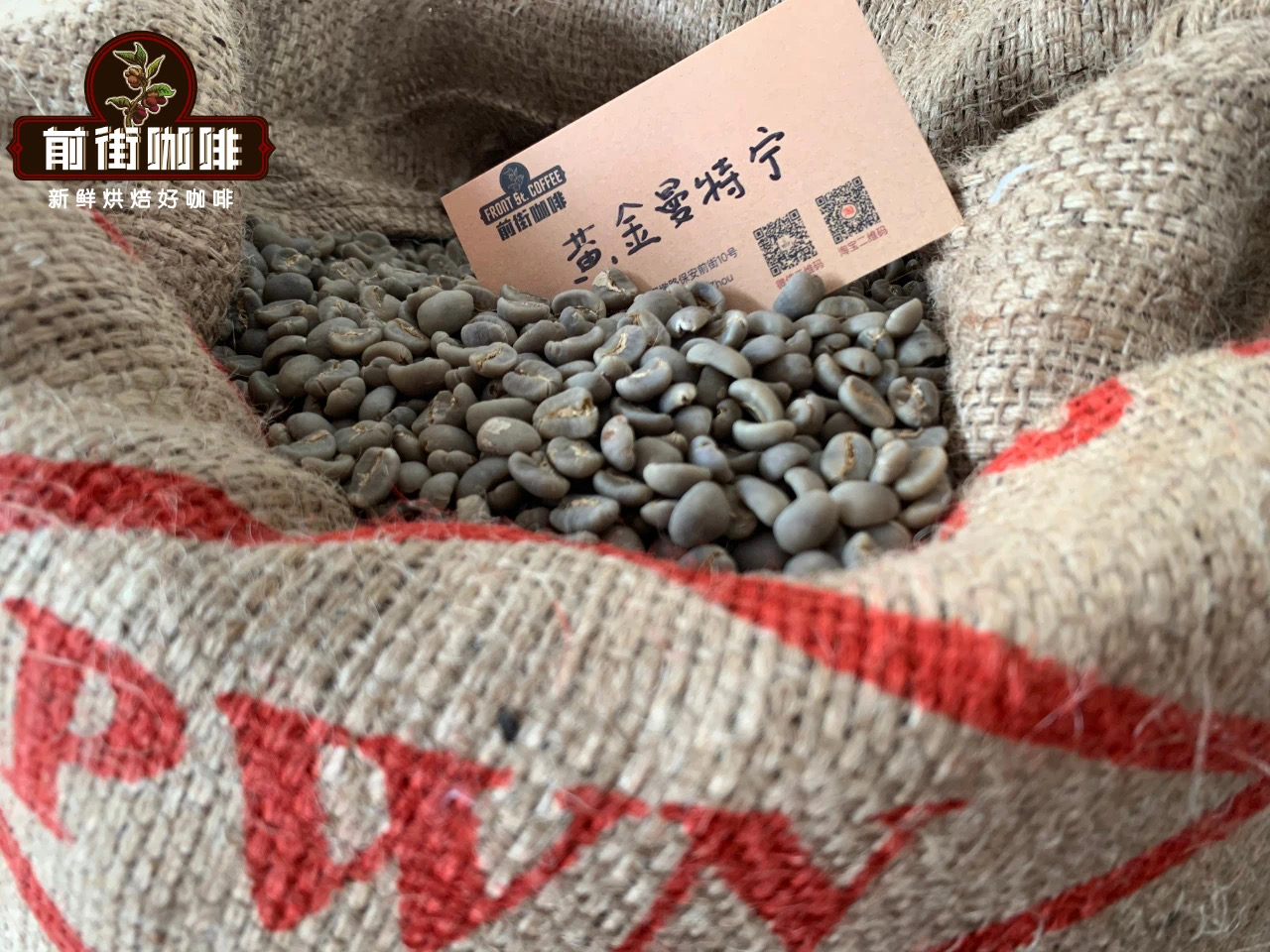
Which Ethiopian Region Does Guji Come From and What's the Difference Between Sidamo and Kenya Coffee Beans?

African Coffee Regions
Ethiopia and Kenya, Africa's renowned coffee-producing countries, are prominent in the specialty coffee world. Both regions are known for fruity acidity, but the sensations differ: Ethiopian coffee offers bright, uplifting acidity with a clean, refreshing mouthfeel, whereas Kenyan coffee delivers a rich, full-bodied, juice-like impression reminiscent of tomato juice. In FrontStreet Coffee's bean selection, African coffees account for 30-40% of the available beans, clear evidence of their popularity among drinkers.
Ethiopia
When people think of African coffee, FrontStreet Coffee believes most think first of Ethiopia. As the birthplace of coffee, its seeds have spread worldwide for cultivation, giving rise to countless new branches. Ethiopian coffee is mostly grown on small farms (forest coffee, garden coffee, plantation coffee) and managed uniformly for export by the government. Among Ethiopia's nine coffee-growing regions, two have become synonymous with the country's specialty coffee: Yirgacheffe and Sidamo. FrontStreet Coffee finds that medium-light roasted Ethiopian beans possess unique lemon, floral, and honey-like sweet aromas, with soft fruit acidity and citrus flavors. The refreshing, bright taste, taken without milk or sugar, lets the rich texture and soft floral notes sweep across the palate, leaving an endless aftertaste.
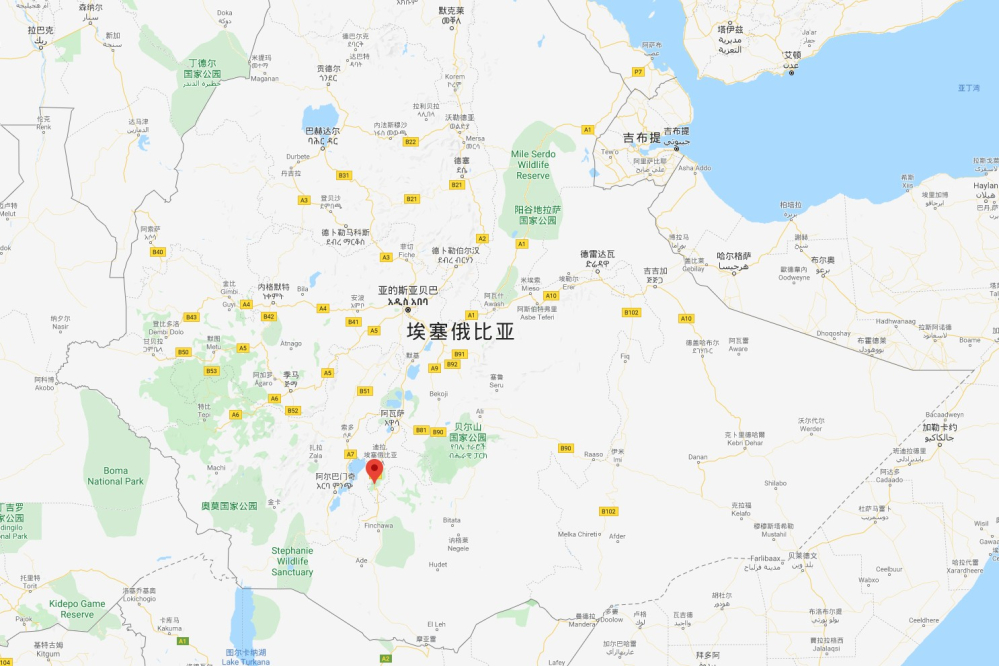
Yirgacheffe
Yirgacheffe has always been one of Ethiopia's most important coffee-growing regions. Formerly part of Sidamo, it became an independent region because of the unique flavor of its beans. Today, Yirgacheffe is not just a growing place name but a noun describing a certain coffee flavor profile.

Yirgacheffe is a high-altitude growing region, sitting around 2000 meters. The Yirgacheffe area currently has over 40 cooperatives, managed mainly through family-run models. Under its jurisdiction are many well-known micro-regions such as Kochere, Misty Valley, and Gedeb. These micro-regions all have strong cooperative teams, and the beans they produce carry distinctive flavors. The so-called Yirgacheffe flavor means intense jasmine fragrance, lemon aroma, peach and almond sweetness, and tea notes. FrontStreet Coffee believes "a hundred flowers blooming" is the most fitting description.

Sidamo is a province in Ethiopia and the superior administrative unit of Yirgacheffe. The Sidamo coffee region refers to all parts of Sidamo province except Yirgacheffe, making it Ethiopia's southernmost coffee-growing region. Average altitude here ranges from 1400-2000 meters, and the coffee has noticeable sweetness, earning it the nickname "sweet coffee." FrontStreet Coffee finds that natural processed Sidamo has delicate pinkish floral aromas, rich berry acidity, and a slight fermentation sensation, making it smoother in the mouth than washed Sidamo.
Flower Champion Coffee
The original name of Flower Champion beans is actually "Hambella," literally translated as "Hambella coffee beans." It was a competition entry from the Hambella region of Sidamo at the 2017 TOH (Taste of Harvest) green coffee competition. It stood out with its rich strawberry and cream aroma, winning the championship in the Ethiopian natural processed category with a high score of 88.21. Later, after defeating the perennial champion Geisha, the previously obscure Hambella coffee transformed into a veritable star. As its refined charm won hearts in brewing competitions, this high-quality Hambella bean became increasingly well-known among coffee enthusiasts. The 2017 award-winning natural Hambella (the first-generation Flower Champion) was discovered and promoted by the founder of Beijing Hongshun, who established the coffee brand LeBunna in Ethiopia. Since such a wonderful name deserved to endure, Hongshun continued introducing beans from the "Buku Abel" processing station in the Hambella region, naming them Flower Champion 2.0, 3.0, and 3.1 to distinguish different lots and harvest seasons. Sourcing and introduction remained with Hongshun, and the region stayed locked to natural processed lots from the "Buku Abel" station in Hambella. Today, Flower Champion has reached its 2025 version.


Ethiopian Coffee Varieties
Most Ethiopian beans are "Heirloom," translated as native or heirloom varieties. This is because in Ethiopia the garden cultivation system is the primary model for the vast majority of smallholders. Heirloom varieties come from the "unknown varieties" in their backyards. The trees may have been left by previous owners of the land, shared among neighbors, or grown from seeds obtained from another region. Various coffee plants are intercropped with other cash crops and harvested only when ripe.
Heirloom therefore does not refer to a specific variety but represents a green coffee blend from a growing region. The coffee combines harvests from multiple smallholders in the same period, mixed into a single lot. One lot might encompass dozens or even hundreds of undifferentiated varieties. It is precisely these varietal differences, and the varying mixing methods each time, that make the beans differ in particle size, dimensions, and shape, large or small, long or round, best understood as a "blended lot."

Kenya
Kenya, another African region, lies in eastern Africa, with the equator crossing its center and the East African Rift Valley running north to south. It borders Somalia to the east, Tanzania to the south, Uganda to the west, Ethiopia and Sudan to the north, and the Indian Ocean to the southeast. Kenyan coffee, known as the "Connoisseurs' Cup," is renowned for its rich aroma, rounded acidity, full and elegant body, and an endless aftertaste with a multi-layered, juice-like sweetness and acidity.

Most Kenyan coffee grows between 1500-2100 meters, with two harvests per year. Microclimate variations give different regions distinct flavors. Kenya's growing regions are most famous for seven major areas: Thika, Kirinyaga, Mt. Kenya West, Nyeri, Kiambu, Ruiri, and Muranga.

Kenyan Coffee Varieties
Common varieties in Kenya include SL28 and SL34, along with the increasingly frequent Ruiru11 and Batian in recent years. In 1922, Kenya established the Scott Agricultural Laboratories for coffee research. In the decade after its founding, the lab selected and bred SL28 and SL34 from 42 varieties suitable for the region, giving the industry a strong start.

Both SL28 and SL34 are high-quality varieties selected through multiple breeding cycles. The only Kenyan coffee on FrontStreet Coffee's bean list, Small Tomato, is composed of these two varieties. SL28 belongs to the Bourbon genetic group, carrying the bright character and rich acidity of original Bourbon. SL34's lineage is closer to Typica, with acidity milder than SL28. Together, SL28 and SL34 still account for most of Kenya's coffee production. As their reputation grows, many producing countries in South America are actively introducing SL28 as a cultivation variety.
Ruiru11 was born out of a global outbreak of coffee leaf rust. At the time, many Arabica varieties suffered from the disease. To prevent a production decline, Ruiru11 was developed; it shows excellent disease resistance, but its flavor quality is far inferior to SL28 and SL34.

Kenyan beans possess wonderful, satisfying aromas, balanced and pleasant acidity, uniform particles, and excellent fruit flavors. FrontStreet Coffee has compared Kenyan beans with those from neighboring Ethiopia and found that although both are characterized by fruity acidity, the sensations are completely different. Kenyan acidity is strong and full-bodied, while Ethiopian acidity is light and bright. For those trying African beans for the first time, FrontStreet Coffee suggests starting with Ethiopian coffee and gradually moving to Kenyan coffee.
Ethiopian Coffee Processing Methods
Traditionally, Yirgacheffe used the most ancient natural processing method. In 1972, however, Ethiopia introduced Central and South American washed techniques to improve quality, making Yirgacheffe's jasmine fragrance and citrus aroma clearer and brighter. FrontStreet Coffee believes the most fundamental difference between washed and natural processing is that washed presents the coffee's most basic flavors, directly reflecting the region's essential character, while natural adds sweet aromas and fermentation sensations on top of that base. With the arrival of the washed method, Yirgacheffe leapt to become a representative of world specialty coffee. After the 1970s, the region primarily produced washed coffee, becoming Ethiopia's most popular washed bean region.

In the 21st century, natural processing techniques gradually improved, frequently producing astonishing natural beans. Credit goes to Yirgacheffe's coffee trader Baghish, who, missing traditional natural flavors and reluctant to see natural processing replaced by washing, improved the natural method to enhance flavor while reducing defect ratios. He introduced three extremely famous Yirgacheffe natural beans: Idido Misty Valley, Beloya, and Aricha.
Kenyan Coffee Processing Methods
Beyond regions and varieties, Kenya's success is also owed to its distinctive K72 processing method, a green coffee technique that extends the conventional washed method to enhance bean quality and impart strong acidity.

This unique washed technique, employing a double fermentation form, is also known as "Double Washed," or "Fully Washed" at origin. Because Kenya was the first region where the method became widely implemented, this style of washing is also called the "Kenyan Process." People later discovered that these locally adapted double-fermented washed beans not only enabled stable quality control in production but also brought richly layered fruit acidity to the coffee.

FrontStreet Coffee's Roasting Recommendations
The most iconic flavor of Yirgacheffe coffee is its refined acidity and rich floral and fruit notes. To maximize that character, FrontStreet Coffee believes light roasting is most suitable. Whether natural or washed, light roasting maximizes the beans' special flavors. There are now medium to dark roasted Yirgacheffe coffees on the market that slightly weaken acidity while enhancing body; FrontStreet Coffee sees this as a matter of personal preference, though light roasted Yirgacheffe remains the mainstream choice.

When roasting Kenyan beans, and mindful of the need to highlight their full-bodied fruity acidity and tomato-juice-like mouthfeel, FrontStreet Coffee adopts a medium-light roast.
FrontStreet Coffee's Brewing Parameters for Kenyan and Ethiopian Coffee Beans
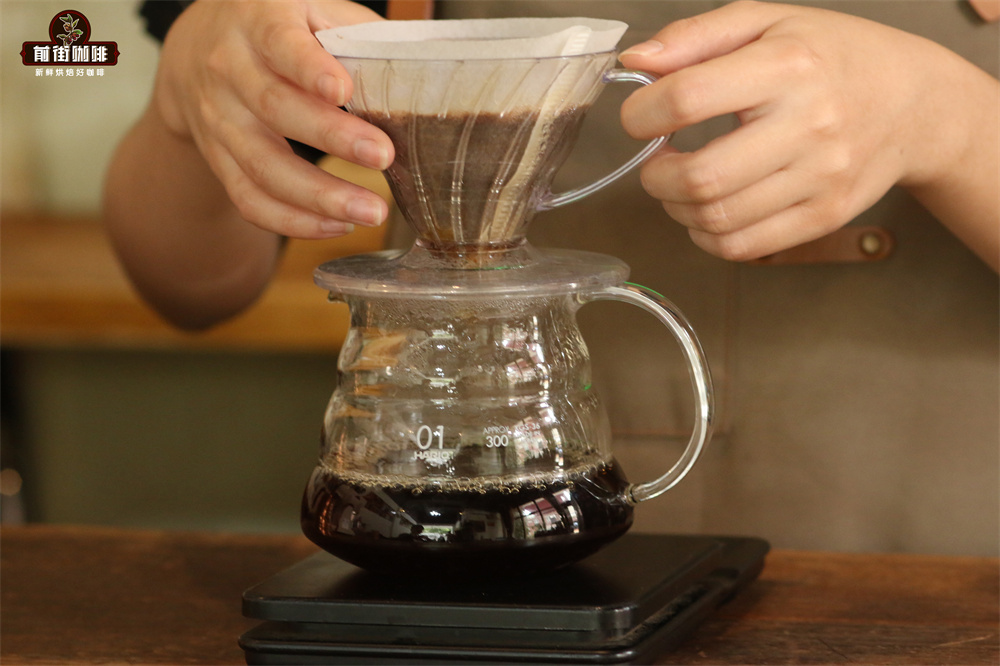
Flower Champion is best brewed by pour-over and siphon. While grinding, you can smell the rich natural-processed fruit aroma with noticeable sweetness. A delicious coffee is characterized by balanced sweet, sour, and bitter flavors, along with a smooth mouthfeel. Dripper designs exist to showcase these characteristics, though different drippers produce different style presentations.

Flower Champion suits resin V60 drippers, allowing the coffee richer acidity changes from hot to cold, making the cup more refined. The resin material also enhances aroma intensity.
About Grind Size
For light roasted Flower Champion, we use a medium-fine grind. Grind coarseness directly affects extraction time and rate. The finer the grind, the denser the coffee bed, with more particles contacting hot water, increasing extraction resistance, extending time, and raising extraction rate, but risking over-extraction.

Conversely, the coarser the grind, the larger the gaps in the bed, with fewer particles contacting hot water, reducing resistance, making it less likely to extend extraction time and lowering extraction rate, but risking under-extraction. Thus, finer grinds extend extraction time and raise extraction rate, while coarser grinds shorten time and lower rate.
FrontStreet Coffee considers that both Ethiopian and Kenyan beans are light roasted, so we use higher water temperature and faster-flow drippers, mainly because high temperature is needed to extract their bright acidity, yet we don't want over-extraction from that heat. We therefore choose a faster-flowing V60 and 91°C water for brewing.

FrontStreet Coffee uses a medium-fine grind (fine sugar consistency, 80% pass-through rate on China's No. 20 standard sieve). Using 15g of grounds with a V60 dripper, 91°C water, a 1:15 ratio, and a three-stage pour, we brew as follows.
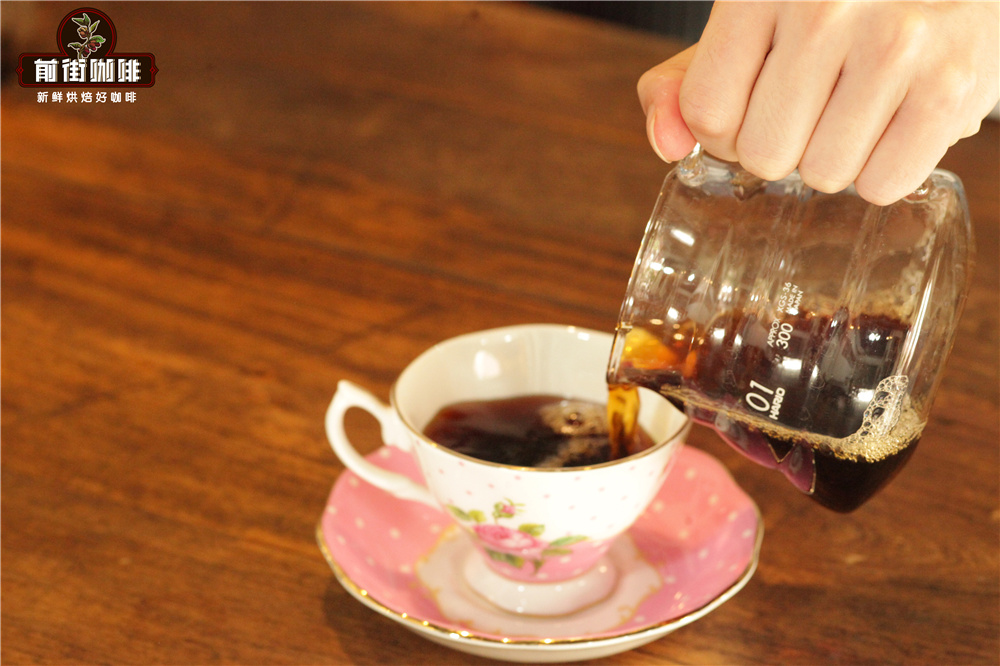
We use three-stage extraction, with bloom water at twice the coffee weight, that is, 30g of water for a 30-second bloom. Blooming is necessary to let the grounds release internal carbon dioxide, making the subsequent extraction more stable. With a small stream, pour in circles to 125g, then continue to 225g before stopping. After the dripper finishes dripping, remove it. Time from the beginning of the pour is 2'00". Then take the whole cup, swirl it evenly, and pour into cups for tasting.
New Harvest Flower Champion
Floral notes, berries, citrus, the sweet-and-sour sensation of oranges, mango juice, honey, with a sweet black tea aftertaste and a clean mouthfeel.
Washed Kenya Asalia Flavor Characteristics
Prominent plum, cherry tomato, and honey, with a slight nutty aroma when cooled, a juice-like mouthfeel, and full-bodied acidity.
FrontStreet Coffee's Brewing Recommendations
On the subject of brewing, FrontStreet Coffee has always held that the freshness of the beans greatly affects flavor. Beans shipped by FrontStreet Coffee are therefore all roasted within 5 days. Our roasting philosophy is "freshly roasted good coffee," ensuring that every customer who orders receives the freshest coffee possible. The resting period is about 4-7 days, so when customers receive their coffee it is at its optimal peak.

For those who need ground coffee, FrontStreet Coffee offers a gentle reminder: once beans are ground in advance, there is no need for a resting period, because during transport the pressure of carbon dioxide inside the packaging can also round out the flavor, so you can brew a cup immediately on receipt. Ground coffee does need to be brewed promptly, however, since it oxidizes quickly when exposed to air, meaning the flavor dissipates faster and the coffee won't taste as good. FrontStreet Coffee therefore recommends buying whole beans and grinding fresh before brewing to better appreciate the flavor.
FrontStreet Coffee Recommendation
FrontStreet Washed Yirgacheffe is the most classic introduction to the Ethiopian region, known for white jasmine, bright citrus and lemon acidity, and a tea-like body. Its accessible price has made it the first specialty coffee bean for many drinkers. Where Yirgacheffe shows citrus and bergamot, Sidamo leans toward berry sweetness, so tasting both side by side is a good way to feel the difference between the two great Ethiopian regions.
FrontStreet Gutingding Cooperative coffee comes from the Worka area at the southeastern edge of Yirgacheffe, once part of the Worka cooperative under the YCFCU union. As demand for traceability grew, coffee hunters worldwide singled it out as a single-origin lot. It follows the most traditional washed process and is often called the last pure land of Yirgacheffe. Without traditional bitterness, it carries fresh, bright citrus and lemon acidity and a jasmine fragrance that wins people over at first sip.
FrontStreet Natural Red Cherry is made from fully ripe whole red cherries dried in the natural style, dried over three to five weeks on raised beds and turned regularly to prevent uneven fermentation. The cup keeps the classic Yirgacheffe character while gaining tropical fruit from natural processing, showing citrus-like acidity, a berry-juice quality, honeyed sweetness, and a creamy smoothness.
For pour-over, FrontStreet Coffee recommends a V60 dripper, 90-91°C water, 15g of coffee, and a 1:15 ratio, ground to an EK43s setting of 10 (fine sugar size, with 80% passing a No. 20 sieve). Pour 30g for a 30-second bloom, then add 95g (about 125g on the scale) over roughly one minute. When the water drops to about two-thirds of the bed, pour the remaining 100g (about 225g on the scale), and finish the drawdown at 2:00-2:10.
Important Notice :
FrontStreet Coffee is a long-established specialty coffee roaster in Guangzhou China, selling freshly roasted beans from its own farm in Yunnan as well as dozens of carefully selected single-origin beans from around the world for both pour-over and espresso. The products deliver consistently excellent quality and great value, with shipping within 24 hours. Guangzhou's FrontStreet Coffee shop is recommended by many coffee lovers, and the beans are now available online at the Tmall 。
FrontStreet Coffee has moved to a new address:
FrontStreet Coffee Address: 315,Donghua East Road,GuangZhou
Tel:020 38364473
 Scan and follow the En Gafei WeChat official account. Please indicate that the reprint comes from "En Gafei".