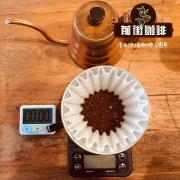
Best Pour-Over Coffee Brewing Ratio Guide: How Much Water for 15g Coffee Grounds?
Pour-over coffee is a brewing method that places heavy demands on technique and professional knowledge. The dose of beans, the grind size, the water-to-coffee ratio, the timing and the pouring technique all shape the flavour you extract. So how do you brew a pot of pour-over that lands on the coffee's sweet spot? In this guide FrontStreet Coffee shares the key parameters and pouring technique behind a balanced cup of pour-over.
How Much Coffee Should Be Used for Pour-Over Coffee?
For FrontStreet Coffee's pour-over, we normally use 15g of beans per cup. That figure follows the concentration recommended by the SCAA (Specialty Coffee Association of America), which determined through testing that a coffee concentration between 1.2-1.45% is most suitable.
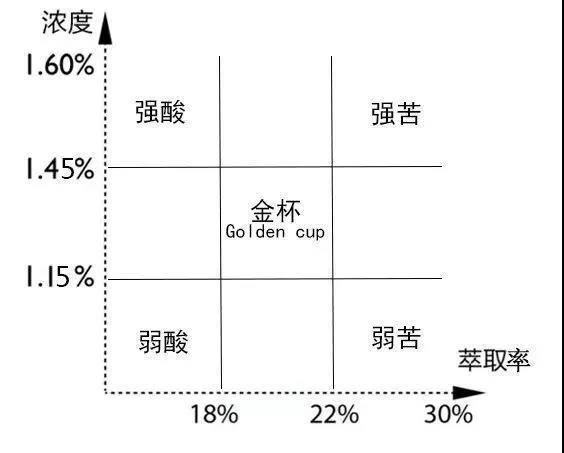
FrontStreet Coffee can work the maths for you: to land inside that concentration range, the ratio of coffee grounds to water should sit between 1:12-1:15. At a ratio of 1:15, for example, 10g of coffee grounds would call for a total of 150g of water.
That is why 1:15 is the optimal grounds-to-water ratio, and it is the one FrontStreet Coffee uses for pour-over today. The figure was settled on after repeated verification. Although 1:12-1:15 is only a suggested range, FrontStreet Coffee still tested several parameters outside it.
Coffee brewed at 1:20 tastes very light, while 1:10 comes out very strong. Through adjustment and testing, FrontStreet Coffee found that 1:15 suits most beans. Some people prefer 1:14 or 1:17, and that is fine too — what matters is whether you personally find the cup palatable. FrontStreet Coffee is simply offering a widely acceptable reference point.
Once the water-to-coffee ratio is set, the next question is how much to brew for one serving. FrontStreet Coffee typically brews a single cup to 225g, exactly one serving, meaning 15g of coffee grounds yields 225ml of coffee.

So 15g of beans are needed to make 225ml of coffee liquid — a conclusion that follows directly from the optimal water-to-coffee ratio for pour-over.
Is There a Difference in Water-to-Coffee Ratio Between Espresso and Pour-Over Coffee?
From FrontStreet Coffee's experience, every café runs a different model of espresso machine, so extraction parameters vary and each shop ends up with its own water-to-coffee ratio. Take espresso extraction as an example: generally 10g of coffee grounds yields 20ml of espresso, a 1:2 ratio.

In truth there is no universally "correct" extraction ratio, because adjustments must follow the condition of the machine. Even so, the industry keeps an unwritten rule of adopting the parameters of respected coffee leaders as a general benchmark, which in turn becomes an industry standard. FrontStreet Coffee also notes that espresso extraction varies with duration: shorter ristretto extractions carry more conventional ratios than longer ones.
Common Espresso Water-to-Coffee Ratios Used by Major Coffee Shops:

Ristretto extraction ratio: 1:1 to 1:1.5
Regular espresso extraction ratio: 1:1.5 to 1:2.5
Lungo extraction ratio: 1:2.5 to 1:3
That covers FrontStreet Coffee's summary of pour-over doses and the water-to-coffee ratios for both pour-over and espresso. Next, FrontStreet Coffee shares its own espresso extraction parameters and pour-over brewing process for reference.
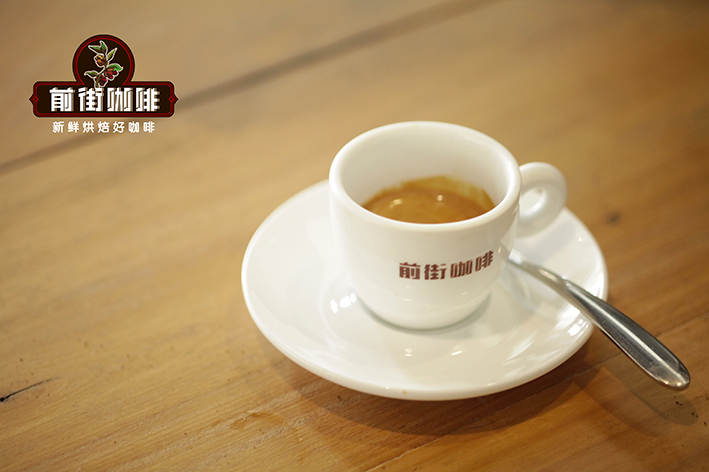
FrontStreet Coffee Espresso Extraction Parameter Sharing:
FrontStreet Coffee uses its own Sunflower Warm Blend (70% Honduras Sherry coffee beans + 30% Yirgacheffe Red Cherry coffee beans).
Pressure: 9 bar
Temperature: 90.5~96°C
Time: 20~30 seconds
Water-to-coffee ratio: 1:1.7~1:2
Dose: 10g (single shot espresso) 20g (double shot espresso)
Extraction yield: 20ml (single) 40ml (double)
Flavor: Distinct fruit acidity, light berry aroma, wine notes, rich chocolate flavor, obvious aftertaste.
FrontStreet Coffee Pour-Over Process Parameter Sharing:
FrontStreet Coffee demonstrates with Ethiopian Yirgacheffe washed Gedingding coffee beans:

FrontStreet Coffee: Yirgacheffe · Gedingding Coffee Beans
Country: Ethiopia
Region: Yirgacheffe
Altitude: 1900-2300 meters
Variety: Local heirloom varieties
Processing: Washed processing
Flavor: Tropical fruits, cream, honey, berries, citrus
FrontStreet Coffee Yirgacheffe Coffee Bean Brewing Data Sharing:

Dripper: V60 #01
Water temperature: 90-91°C
Dose: 15g
Water-to-coffee ratio: 1:15
Grind size: Medium-fine grind (80% retained on #20 sieve)
Brewing technique: Three-stage extraction
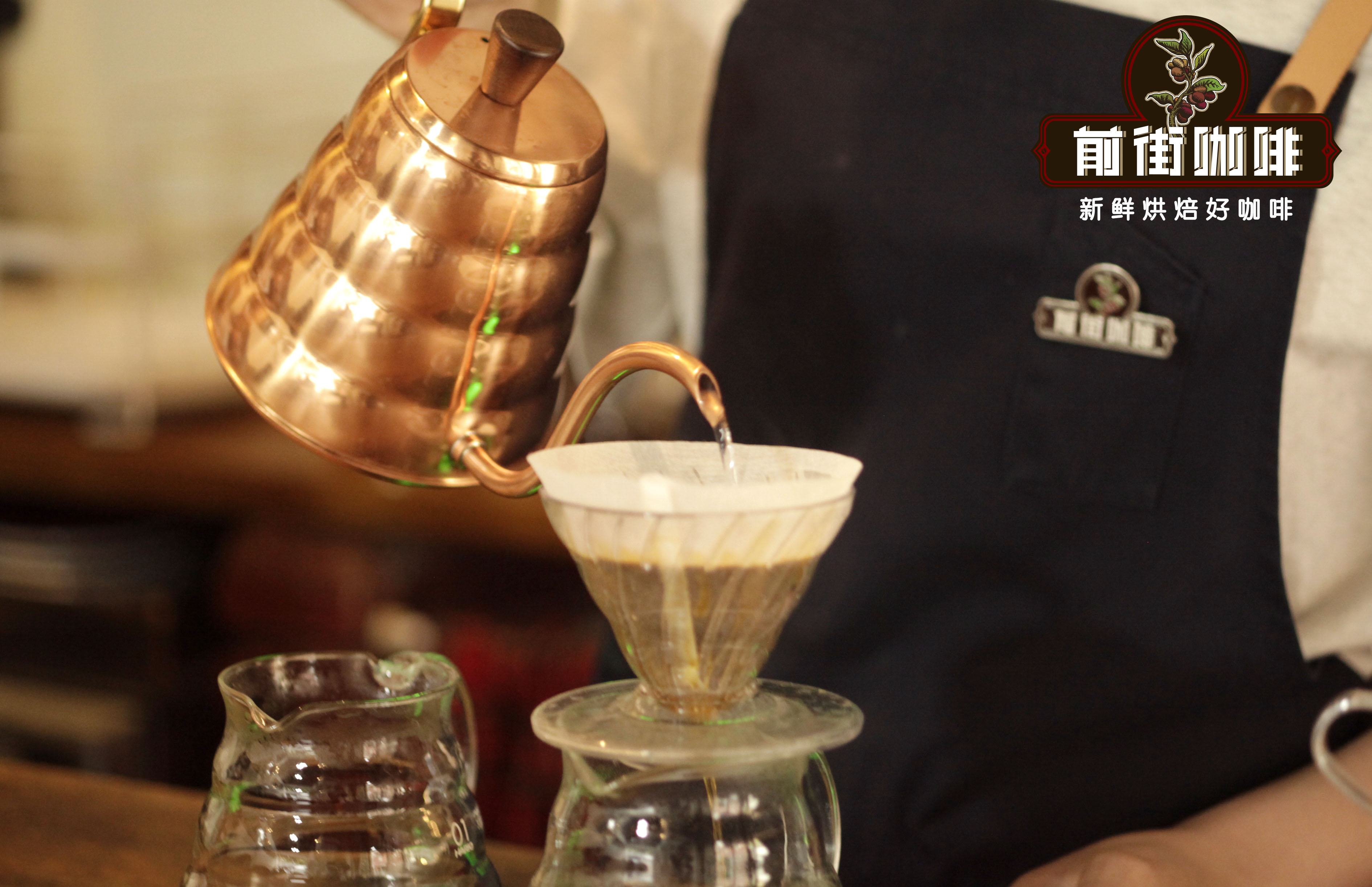
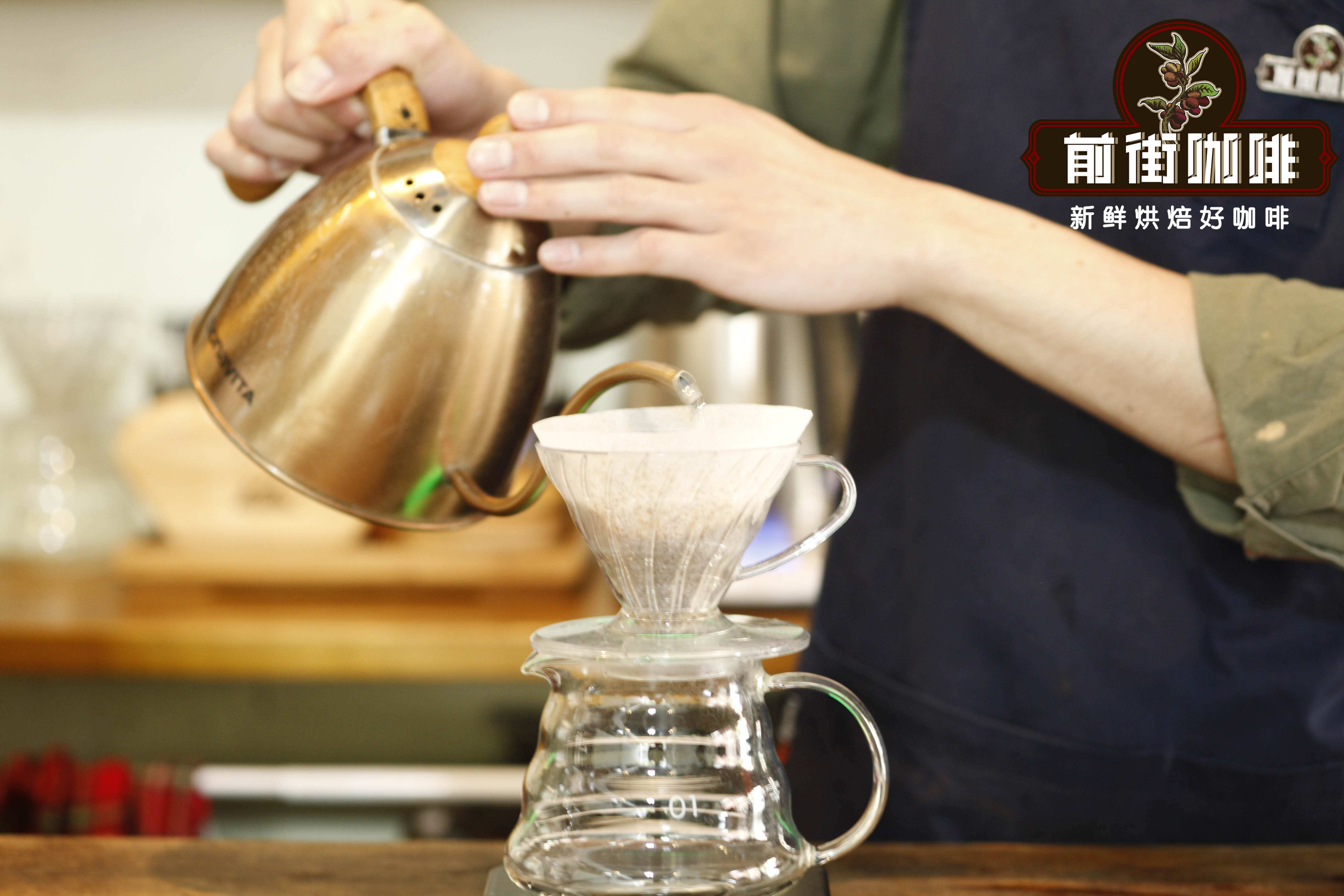
First stage: Pour 30g of water for a 30-second bloom, then pour 95g (the scale reads around 125g), finishing in about 1 minute. When the water level drops to 2/3 of the coffee bed, pour the remaining 100g (the scale reads around 225g), finishing in about 1 minute 35 seconds. Complete the drip at 2'00"-2'10", remove the dripper, and the extraction is done.
Washed Gedingding brewing flavor: Citrus and black tea on entry, with cream, caramel, and almond notes as the temperature changes, plus an obvious aftertaste and a clean, sweet taste.

As the above shows, FrontStreet Coffee relies on three-stage extraction for pour-over, a technique that demands hands-on skill across the whole process. So how exactly do you control three-stage extraction, and what is blooming? FrontStreet Coffee explains below.
Coffee Brewing Method - Three-Stage Pour-Over Technique
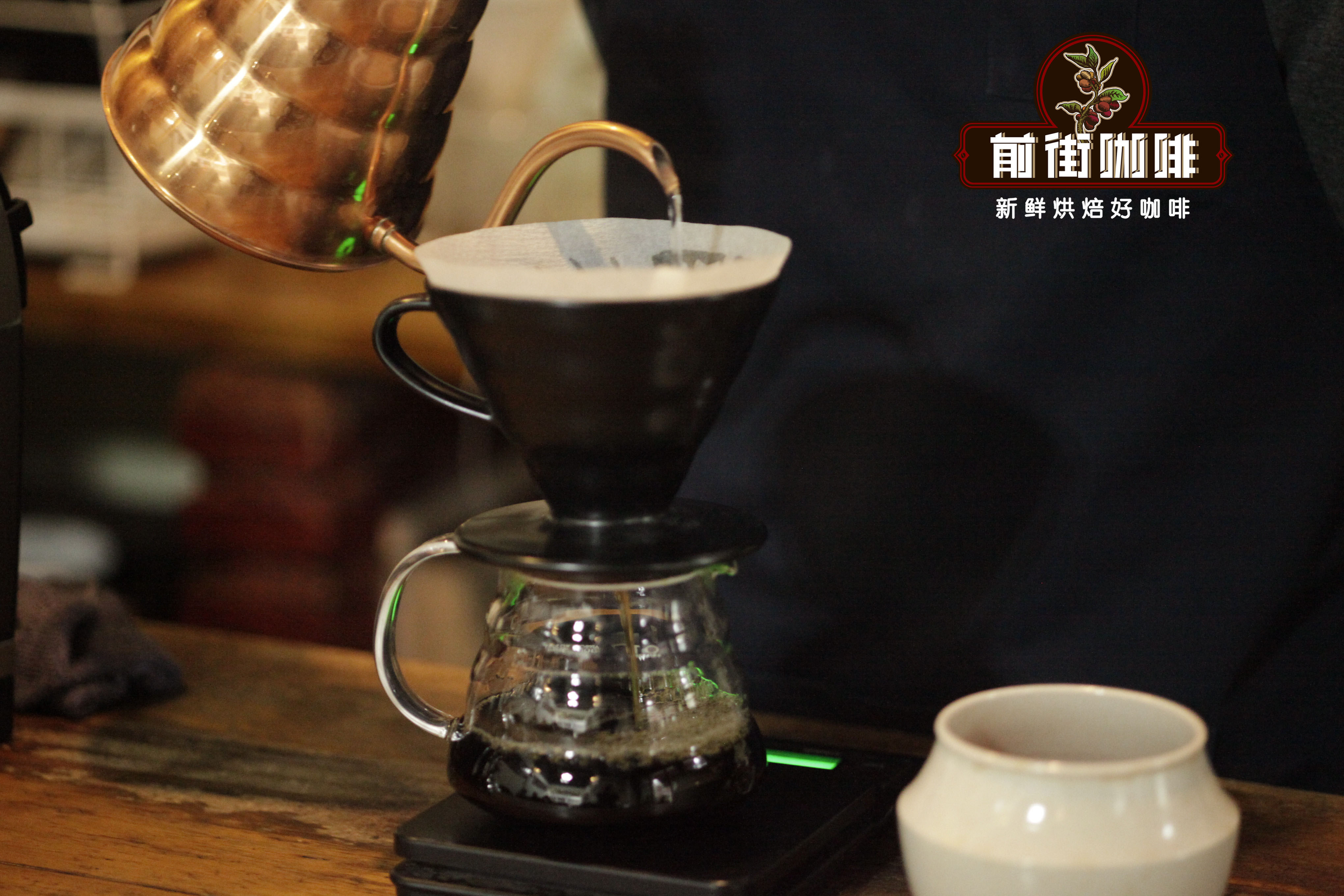
Today's cafés show a range of pour-over techniques, commonly including three-stage, single-pour, and drip-by-drip methods. Here FrontStreet Coffee recommends that beginners start with the three-stage pour, because it suits light roast, medium-light roast, and medium roast beans. The segmented extraction of three-stage pouring clearly separates the front, middle, and back-end flavours of the coffee, keeping the flavour presentation more consistent.
First Pour: Bloom (helps degassing)
Many coffee lovers never quite grasp the point of blooming. Blooming matters because coffee beans go through a series of chemical reactions and physical changes as green beans roast into roasted beans. Once a certain roast level is reached, the beans have accumulated large amounts of gas (mostly carbon dioxide).
Generally, the fresher the beans and the closer to the roast date, the more bubbles appear during blooming. Dark roast beans also release more gas during blooming than light roast beans. FrontStreet Coffee's beans are all freshly roasted, so we usually suggest customers let the beans rest for three days first, giving the beans time to release carbon dioxide and avoiding the instability and under-extraction that can otherwise creep into the brew.
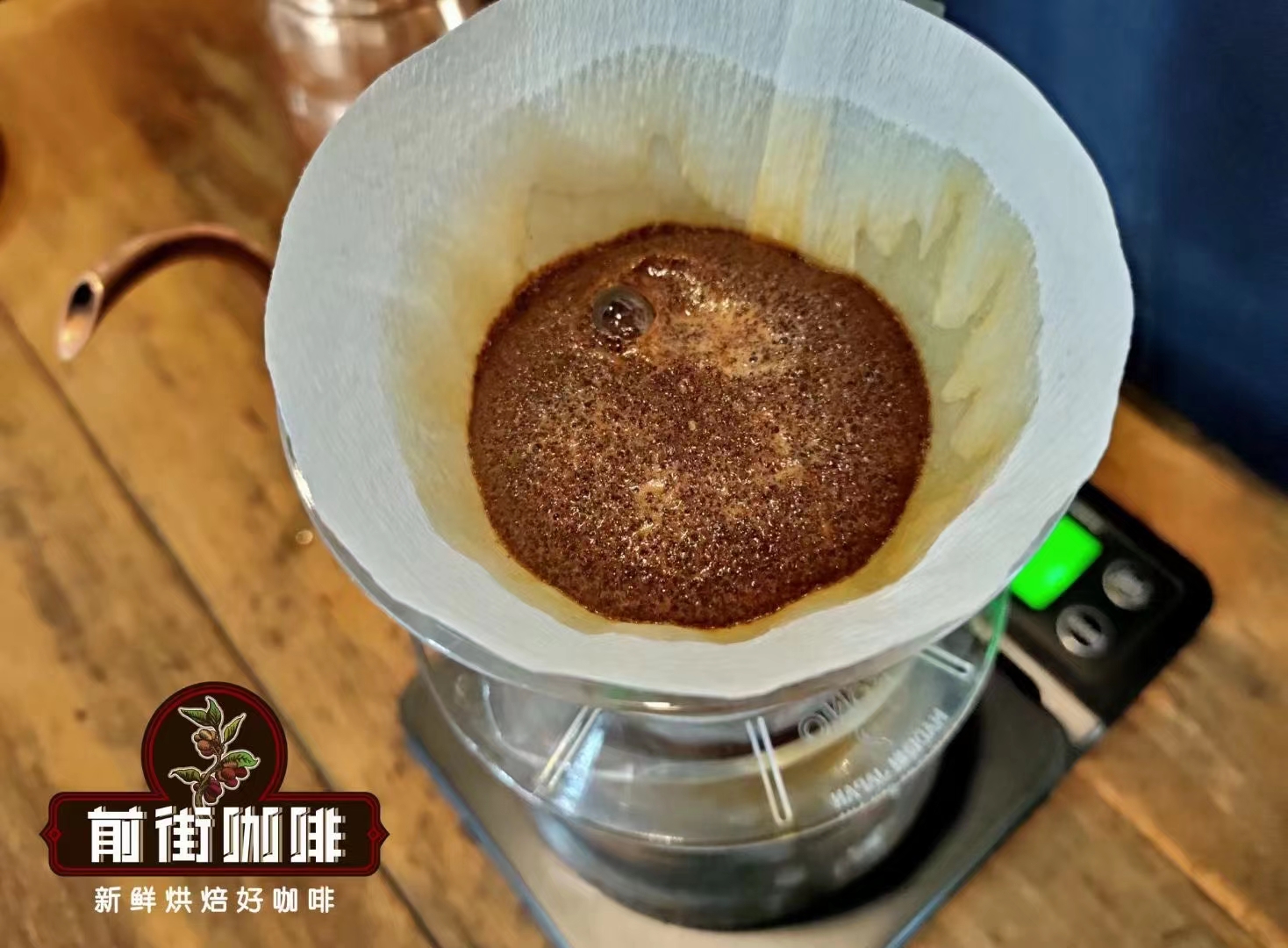
After the gases escape during blooming, the coffee particles can absorb water evenly, which makes for more uniform extraction later. A good bloom lets the grounds release gas quickly, fully, and evenly while also bringing grounds and water into full, rapid contact, helping the grounds extract uniformly. Those are precisely the purpose and the significance of blooming in pour-over coffee.
Four Points to Note During Pour-Over Coffee Blooming:
1. Before pouring the bloom water, level the coffee grounds first.

2. Pour the water gently during blooming.
3. During blooming, as little liquid as possible should drip down. When too much extract appears in the lower pot, reduce the amount of water poured or pay attention to the grind size. (If too much water is used during blooming and a large amount of coffee liquid drips through, the falling water doesn't stay in the bed but directly carries out substances from the exterior of the grounds, and undesirable flavors and astringency from the outer layer begin to dissolve — resulting in coffee that is both weak and over-extracted. If the bloom water is insufficient and nothing drips down, the grounds haven't absorbed enough water and some coffee hasn't degassed sufficiently, causing under-extraction.) Based on this, FrontStreet Coffee ran multiple blooming experiments and found that pouring twice the weight of the coffee grounds in water during blooming works well.

4. Blooming should take about 30 seconds. When the expansion of the coffee bed surface ends and the surface starts to shrink, the bloom is complete and you can begin pouring. (If blooming takes too long, coffee tends to develop bitterness and astringency; if it is too short and steeping is insufficient, coffee may end up under-extracted or fail to express itself fully.) The end point of blooming varies from bean to bean, but FrontStreet Coffee found that judging it bean by bean is not beginner-friendly, since beginners value standardisation and ease of use. So, as long as the beans are still fresh, FrontStreet Coffee recommends a 30-second bloom. Experienced brewers can of course adjust the time themselves.
Second Pour

The second pour starts from the centre, injecting a small stream down to the bottom of the coffee bed. To concentrate the penetrating power of the stream, keep the circle small — about the size of a one-yuan coin — then expand outward. From the start of the second pour, watch the water amount and try not to exceed the height of the coffee bed: when the column approaches the filter paper, you can stop adding water.
Third Pour
As the thicker layer of grounds near the filter paper becomes heavier from absorbing water, it slides down and thins out as the level drops. When the water level falls to halfway, you can proceed with the third pour. From the third pour on, watch the rate at which the level drops, again starting from the centre with circular pouring and keeping the water below the coffee bed height. At this point you'll also see foam covering the surface, so the third pour should increase the tumbling of the coffee particles, letting all settled particles roll and dissolve their soluble substances.
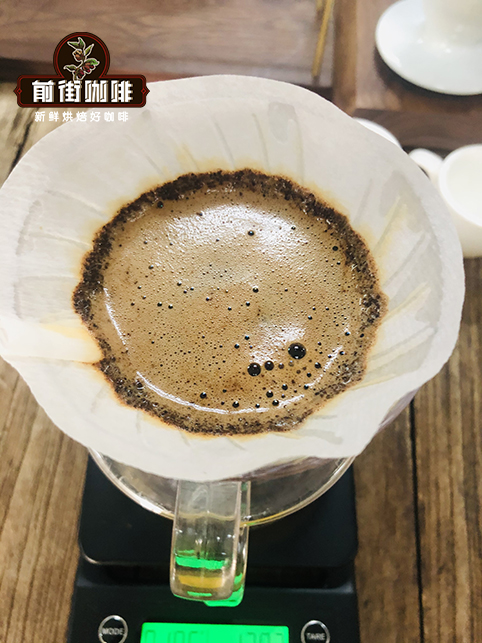
The tumbling particles begin to settle once you stop adding water, relying on the flow created by the dropping level to create friction between particles. Once the pour stops, the grounds sink and can cause blockage, so pay special attention to the rhythm of your pours. Too many interruptions in the flow amount to letting the grounds soak continuously in water, which brings out astringency and undesirable flavours in the tail end of the extraction.
That is the process for operating three-stage extraction in pour-over coffee. We hope it helps coffee lovers who want to try pour-over for themselves brew a satisfying cup in future.
FrontStreet Coffee Recommendation
If you are looking for a dripper to practise these ratios with, the V60 is the one FrontStreet Coffee reaches for most often. Its 60° cone and single large hole force the water to travel to the centre before dropping into the server, extending contact between water and grounds so aroma and flavour extract fully. The flow rate depends heavily on the brewer's control, which is exactly why it rewards a little practice. FrontStreet Coffee favours the resin version in particular: resin blocks heat loss well, and in standard industrial production it holds shape with the smallest tolerance.
For a first bag to brew on pour-over, FrontStreet Coffee suggests its Ethiopia Yirgacheffe Gedingding — the classic entry point into the country's floral, citrus-driven profile, with soft and bright acidity, berry and jasmine notes and a green-tea-like sweetness. If you prefer tropical fruit, FrontStreet's Ethiopia Flower Queen is a standout: strawberry, passion fruit and jackfruit aromas lead into a sweet, low-bitterness cup with a smooth, juicy body.
For something with a little more grip, FrontStreet's Kenya Cherry Tomato is a washed single origin from the Thika region, grown at 1,550-1,750 meters from the classic SL28 and SL34 varieties and given a 72-hour double washed fermentation. Roasted light to protect its lively acidity, it opens with dried cherry-tomato and floral notes, then a bright tomato and dark-plum acidity, a mid-palate of pear and black plum, and a clean finish with brown-sugar sweetness and a faint green-tea note.
Important Notice :
FrontStreet Coffee is a long-established specialty coffee roaster in Guangzhou China, selling freshly roasted beans from its own farm in Yunnan as well as dozens of carefully selected single-origin beans from around the world for both pour-over and espresso. The products deliver consistently excellent quality and great value, with shipping within 24 hours. Guangzhou's FrontStreet Coffee shop is recommended by many coffee lovers, and the beans are now available online at the Tmall 。
FrontStreet Coffee has moved to a new address:
FrontStreet Coffee Address: 315,Donghua East Road,GuangZhou
Tel:020 38364473
 Scan and follow the En Gafei WeChat official account. Please indicate that the reprint comes from "En Gafei".