
What are the distinctive flavor notes of Kopi Luwak? How is the overall taste and texture of Kopi Luwak evaluated?
Kopi Luwak, the world's most expensive coffee bean, attracts plenty of people who want to know what such an expensive bean actually tastes like — even though its name might not sound very elegant.
Many people ask how to distinguish real Kopi Luwak from fake. In reality, there is no such thing as fake Kopi Luwak. In theory, Kopi Luwak can be produced anywhere, but whether the result carries that special flavor is another question.
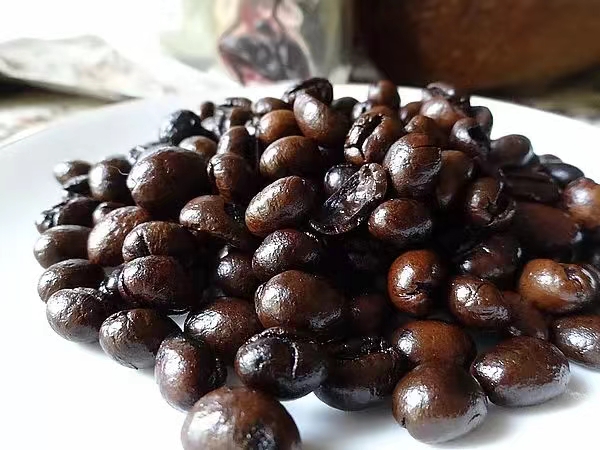
What is Kopi Luwak?
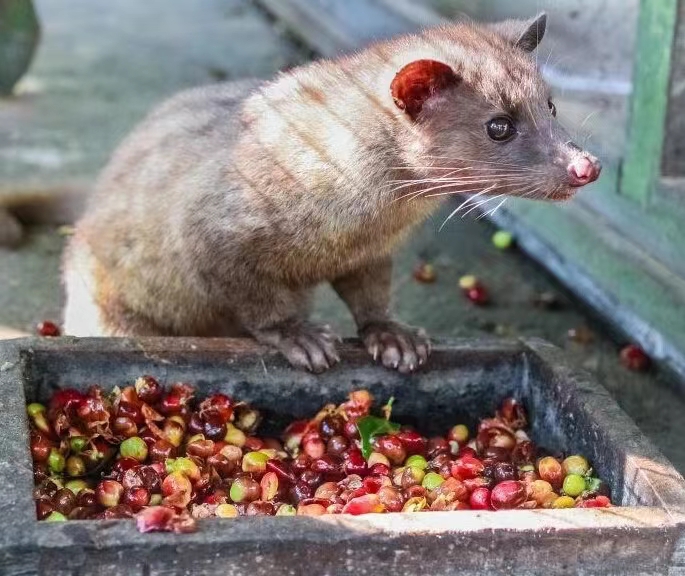
FrontStreet Coffee will briefly introduce what Kopi Luwak is all about. Common Kopi Luwak comes from countries such as Indonesia, Vietnam, and Malaysia. Kopi Luwak is produced when a local animal — the civet — eats coffee fruits and excretes the coffee beans. The civet's digestive system cannot digest the beans, but after special fermentation inside it, the excreted beans develop a unique aroma. It is said that top-tier wild Kopi Luwak produces coffee with very high viscosity, no bitterness, fruity notes, and a subtle minty aftertaste that is very pleasant.
Not all Kopi Luwak has these characteristics, however. Kopi Luwak is divided into wild and farmed production. Wild Kopi Luwak is produced when wild civets living in forests seek out and eat coffee fruits and then excrete them; local people go up the mountains at dawn to "collect the droppings," take them home, clean them, and proceed with drying. Because production is extremely limited, the price is very high.
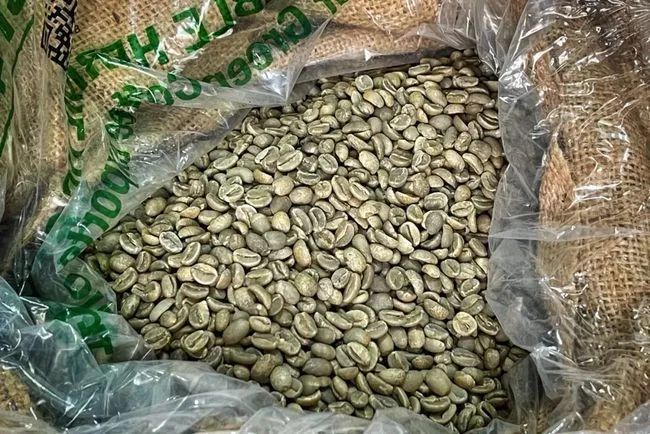
Farmed production, by contrast, involves raising civets and feeding them coffee fruits to produce Kopi Luwak. Because production is stable, the price is significantly lower than that of wild Kopi Luwak.
What's the Difference?
Wild Kopi Luwak is considered the most authentic, because civets are omnivorous and eating coffee fruits is only part of their diet. Wild civets therefore have richer gut microbiomes. In addition, because wild civets seek out the fruits themselves, they select only fully ripe ones, which contributes to the excellent flavor of wild Kopi Luwak. Because humans cannot control which coffee varieties the civets eat, however, in complex coffee-variety environments civets may eat both good-flavored and poor-flavored fruits, making it hard to guarantee consistent flavor in every batch.
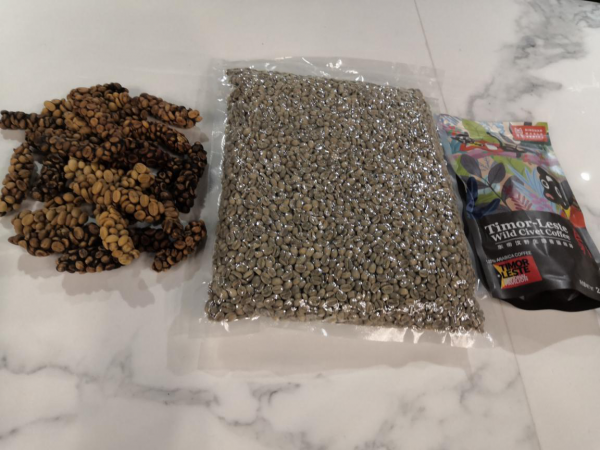
Farmed Kopi Luwak can ensure flavor stability by manually feeding high-quality coffee fruits, but the diet of farmed civets is significantly narrower. Sometimes, to increase production, farmers feed them nothing but coffee fruits as food, so the digestive systems of farmed civets are naturally not as robust as those of wild ones, and the resulting quality cannot match wild Kopi Luwak.
Flavor Profile of Wild Kopi Luwak
Wild Kopi Luwak flavor description: a rich, mellow entry with high viscosity, subtle fruit acidity that melts instantly in the mouth, transitioning into hazelnut sweetness, nutty aromas, and vanilla notes. From hot to cold, it presents rich, layered variation.
For professional coffee knowledge exchange and more coffee bean information, please follow Coffee Workshop (WeChat public account: cafe_style).
For more specialty coffee beans, please add FrontStreet Coffee on private WeChat (FrontStreet Coffee), WeChat ID: qjcoffeex
FrontStreet Coffee Recommendation
Kopi Luwak owes its character to Indonesia, so if you enjoy that deep, earthy, low-acid style, the country's classic coffees are a far more affordable place to look. FrontStreet Coffee's Sumatra Mandheling comes from the Lintong region around Lake Toba and is processed with the local wet-hulled method, in which the parchment is removed while the beans are still half wet, leaving them exposed to the air and giving them their signature herbal and spice notes. Roasted medium-dark to deliver the classic Mandheling profile, it is low in acidity yet rich and full-bodied, with caramel, dark chocolate, and toasted-bread aromas and a long, sweet finish — ideal for anyone who likes a strong cup.
For the top of the range, the FrontStreet PWN Golden Mandheling is FrontStreet's flagship Indonesian coffee and only ever released at specialty grade. Produced to strict standards of bean density, screen size, shape, and color and sorted to remove defects, it yields uniform, plump, translucent beans and tames the earthy, grassy edges of ordinary Mandheling. Freshly roasted, it shows sandalwood, herbal, spice, roasted hazelnut, caramel, and dark chocolate notes, with a clean, sweet, full body and a rich, layered aroma.
If you want this style in an espresso, the FrontStreet Classic Blend is the answer. It recalls the classic Mamba recipe that Taiwanese roasters created by combining wild Mandheling with smooth Brazilian coffee, whose nutty sweetness tempers Mandheling's stronger bitter and herbal edges. Topped up with a small amount of Robusta and given a deep roast, it brings dark chocolate, nut, and caramel aromas to their fullest and makes it easy even for a beginner to produce an authentic Mandheling-style espresso, whether on a machine or in a moka pot.
Important Notice :
FrontStreet Coffee is a long-established specialty coffee roaster in Guangzhou China, selling freshly roasted beans from its own farm in Yunnan as well as dozens of carefully selected single-origin beans from around the world for both pour-over and espresso. The products deliver consistently excellent quality and great value, with shipping within 24 hours. Guangzhou's FrontStreet Coffee shop is recommended by many coffee lovers, and the beans are now available online at the Tmall 。
FrontStreet Coffee has moved to a new address:
FrontStreet Coffee Address: 315,Donghua East Road,GuangZhou
Tel:020 38364473
 Scan and follow the En Gafei WeChat official account. Please indicate that the reprint comes from "En Gafei".

What is the principle behind cold brew coffee? Is cold brew coffee complex and difficult to make? Is Mandheling suitable for cold brew?
