
What is the principle behind cold brew coffee? Is cold brew coffee complex and difficult to make? Is Mandheling suitable for cold brew?
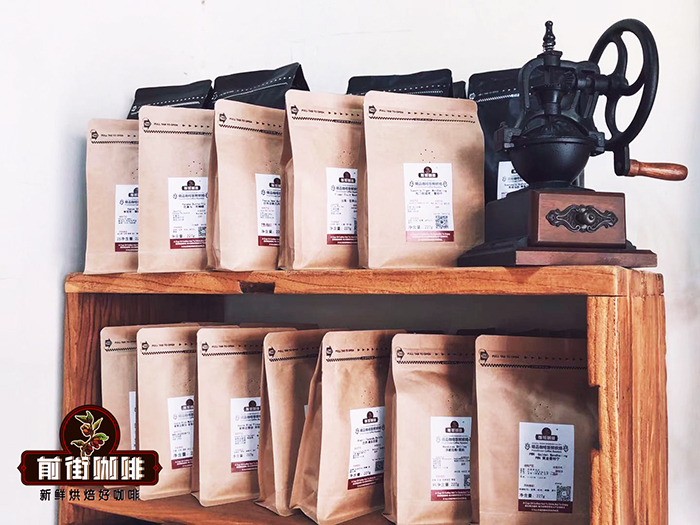
The joy of summer is staying indoors, enjoying the air conditioning and sipping a refreshing cold brew. Thanks to its simple preparation, even people who do not know how to brew coffee can easily make a smooth, rich and clean-tasting iced coffee that is perfect for the season.
Unlike common iced pour-over and iced Americano, cold brew uses low-temperature extraction throughout the entire process. Pour-over and Americano, by contrast, are brewed by extracting a concentrated coffee liquid at high temperature, then adding ice to cool and dilute it.

Inside a coffee bean, flavor compounds account for only about 30% of the whole; the remaining 70% is woody fiber structure. Not all of that 30% should be extracted either, because over 10% of it is made up of bitter compounds. Extracting the bitter compounds properly gives coffee an appropriate richness and increases body. Coffee lacking bitters tastes thin, while coffee with too much bitterness tastes dry and astringent. We only want to extract 18%-22% of the coffee's flavor.
The advantage of high-temperature extraction is that the heat in the water promotes molecular movement, letting flavor molecules escape from the coffee particles in a short time. The drawback is that if water temperature and grind size are not properly controlled, it is easy to over-extract bitter compounds and give the coffee varying degrees of bitterness.
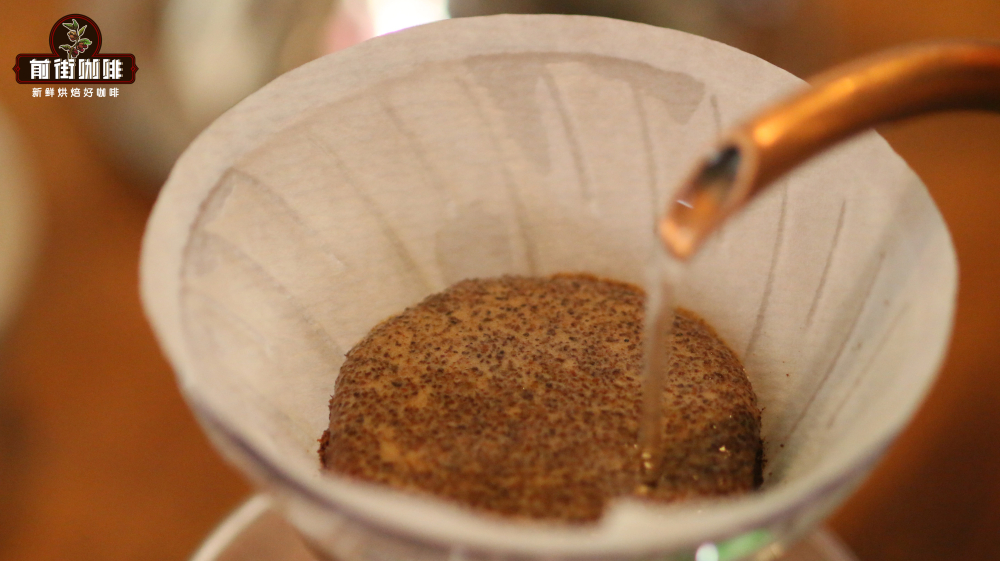
Low-temperature extraction lacks that heat to promote molecular movement, so it effectively inhibits the release of bitter compounds. But because of the low temperature, the extraction time is much longer, usually requiring 6-12 hours to fully draw out sweet and sour compounds. Cold brew therefore typically has rich sweet-and-sour notes, but if the steeping goes beyond 12 hours, the woody fibers release root-like flavors from the prolonged soak. These are not strongly bitter, but they do dull the overall aroma.
To release the full flavor of cold brew, the coffee particles should be ground slightly coarser than for pour-over. For example, FrontStreet Coffee's Ethiopia Guji Coffee Bean is ground to 80% passing a Chinese #20 standard sieve for pour-over, but for cold brew it only needs 75% passing.

Why does making cold brew coffee stronger require adjusting to a coarser grind?
FrontStreet Coffee discovered through many cold brew preparations that coffee ground to pour-over size tends to clump during steeping. Using the same beans, the same steeping time and the same environment, different grind sizes were tested and their concentration compared. The results showed that coarser-ground coffee extracted a higher concentration in a refined, low-temperature environment.
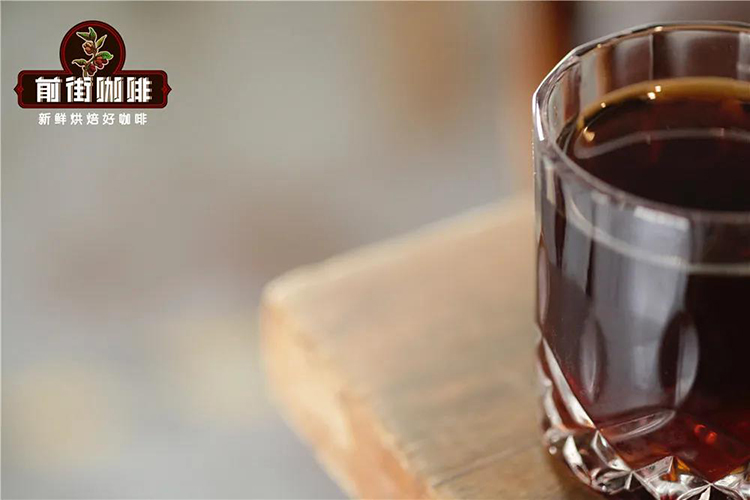
This is because when water approaches room temperature or near zero degrees for extraction, molecular movement also decreases or stops. Without molecular thermal motion to counteract the attraction between solid molecules, coffee particles "clump together" into lumps. The finer the coffee is ground, the more severe the clumping, which keeps the coffee powder in the middle of the lumps from being fully extracted.
Making Cold Brew Coffee
To make cold brew you typically need a clean, oil-free, sealable container plus something to filter the coffee (coffee filter paper, tea bags, high-density filter screens or cloth bags all work). Mix the grounds evenly with ice water, then place the container in the refrigerator to steep for 8-12 hours. FrontStreet Coffee recommends 30 g of grounds at a 1:13 coffee-to-water ratio (that is, 30 g of grounds steeped in about 400 g of water). Once extraction is complete, filter out the grounds and enjoy.

For cold brew, FrontStreet Coffee uses beans with strong sweet-and-sour profiles and rich flavors.
For example, lightly roasted beans from Africa and Central and South America: FrontStreet Ethiopia Guji Coffee Bean (berry and fruit-juice notes), Panama Butterfly Geisha Natural Blend (floral tea notes) and Costa Rica Mozart Coffee Bean (candied fruit notes) are all very well suited to cold brew.

So are specially processed beans, such as FrontStreet Ethiopia Dorothy Coffee Bean (white peach oolong notes), Colombia Rose Valley Coffee Bean (fruit liquor-filled chocolate notes) and Honduras Sherry Barrel Fermented Coffee Bean (wine, vanilla and cream notes).
But if you normally prefer a rich, strong black coffee, try darker-roasted beans instead, such as Indonesia PWN Golden Mandheling, Brazil Queen Estate Yellow Bourbon and Papua New Guinea Bird of Paradise from FrontStreet Coffee's regular selection. Cold brew made from these leans toward rich notes of nuts, caramel and spice, with a finish that carries the sweetness of dark chocolate.
Tips for Cold Brew Brewing
In many high-temperature brewing methods, freshness is the first consideration for many people. First, beans past their prime have a noticeably diminished aroma - that is already common consensus. Second, gas release lets us judge freshness visually, for instance through the crema in espresso or the bloom during pre-infusion, while also indicating that the coffee is at its aromatic peak.

As beans are continuously heated in the roaster, freshly roasted coffee contains large amounts of carbon dioxide. To extract the internal aromatic compounds, these gases must be released first. Cold brew is a relatively static extraction state, and low-temperature water to some extent inhibits the release of those gases, which can easily leave the brewed coffee bland. FrontStreet Coffee therefore suggests choosing beans roasted more than 10 days earlier for cold brew, which is more conducive to producing an aromatic-rich coffee.
FrontStreet Coffee Recommendation
If your taste runs to a strong, full-bodied black coffee, Mandheling makes a rich and surprising cold brew. FrontStreet Indonesia Lintong Mandheling comes from the Lake Toba region of the Lintong growing area and is wet-hulled, then roasted medium-dark, giving low acidity and a thick body with caramel, dark chocolate and toast aromas and a long sweetness. FrontStreet PWN Golden Mandheling is produced by Indonesia's PWN company under a strict standard - beans of 19 screen or above with fewer than three defective beans per 300 g sample, meeting the top G1 grade, then hand-sorted three times - for a cleaner, sweeter cup with sandalwood, herbal and spice notes.
And if you want those rich notes in a milk drink, FrontStreet Classic Blend, built on the traditional Mamba recipe with a little medium-dark Mandheling over a Brazilian base, adds body and a sandalwood-herbal accent that carries beautifully through milk.
Important Notice :
FrontStreet Coffee is a long-established specialty coffee roaster in Guangzhou China, selling freshly roasted beans from its own farm in Yunnan as well as dozens of carefully selected single-origin beans from around the world for both pour-over and espresso. The products deliver consistently excellent quality and great value, with shipping within 24 hours. Guangzhou's FrontStreet Coffee shop is recommended by many coffee lovers, and the beans are now available online at the Tmall 。
FrontStreet Coffee has moved to a new address:
FrontStreet Coffee Address: 315,Donghua East Road,GuangZhou
Tel:020 38364473
 Scan and follow the En Gafei WeChat official account. Please indicate that the reprint comes from "En Gafei".

