Jamaican Coffee Grades: How to Classify the Levels of Jamaican Blue Mountain Coffee
Introduction to Professional Coffee Knowledge
For more coffee bean information, please follow Coffee Workshop (WeChat public account: cafe_style)
One of the World's Most Expensive Coffees: Jamaica Blue Mountain Coffee Bean Grade Classification? How Can It Be Called "Authentic FrontStreet Coffee Jamaica Blue Mountain"?
Blue Mountain coffee is one of the world's most prized coffees. The Blue Mountains sit in eastern Jamaica, and on clear days the sunlight reflecting off the azure Caribbean Sea tints the peaks a brilliant blue—hence the name. The highest summit reaches 2256 meters, the tallest peak in the Caribbean region and a famous tourist destination.
This area lies within the coffee belt, with fertile volcanic soil, fresh unpolluted air, a humid climate, and year-round fog and rain. That climate created the world-renowned Jamaica Blue Mountain coffee—and the world's highest coffee prices. FrontStreet Coffee's Blue Mountain coffee has all the hallmarks of a great coffee: a rich, mellow body, and because the sweet, sour, and bitter components are perfectly balanced, it shows no harsh bitterness at all—only a moderate, polished acidity.
It is generally enjoyed as a single-origin coffee, but because production is extremely limited and prices are extraordinarily high, coffees with similar flavor profiles are often sold as substitutes. Blue Mountain coffee and High Mountain coffee are each divided into two grades. From the top down, the hierarchy runs: Blue Mountain No. 1, Blue Mountain No. 2, High Mountain No. 1, High Mountain No. 2, and Jamaica coffee. Only coffee grown between 457 and 1524 meters may be called Blue Mountain coffee; coffee grown between 274 and 457 meters is usually labeled Jamaica Prime coffee beans. In price terms, Blue Mountain coffee commands several times more than High Mountain coffee.
Jamaica Blue Mountain Region Coffee Grades
The Jamaica Blue Mountain region recognizes three tiers of coffee:
Blue Mountain Coffee
Jamaica High Mountain Supreme Coffee Beans
Jamaica Prime Coffee Beans
The "Secret" Behind Blue Mountain Coffee's Pure Flavor
All of the coffee trees grow on rugged mountain slopes, which makes harvesting extremely difficult—only skilled local pickers can manage it. Selecting perfectly ripe cherries is crucial, since underripe or overripe beans will compromise quality. After picking, the cherries must be hulled the same day, then fermented for 12-18 hours. The beans are then washed and sorted, followed by drying on concrete patios or thick blankets until moisture drops to 12%-14%. They are stored in special warehouses and taken out for roasting—and grinding—only when needed. Every one of these steps must be strictly controlled; the slightest lapse affects quality.
Jamaica Coffee Industry Board
In 1950, the Jamaican government established the Jamaica Coffee Industry Board, which sets quality standards for Jamaican coffee and supervises their enforcement. The Board grants official seals to exported raw and roasted Jamaican coffee, making it the world's most rigorous national coffee authority. Six marks currently certify the origin of Blue Mountain coffee: Mavis Bank Central Factory (MBCE), Mavis Hill Coffee Co-operative (MHCCT), Portland Blue Mountain Coffee Co-operative (PXXSH), Coffee Industry Board (Wallenford), Coffee Industry Board (St. John's Peak), and JABL.
By 1969, things had improved: Japanese loans were used to raise production quality, thereby securing the market. Today the coffee enjoys near-fanatic devotion. By 1981, Jamaica had opened roughly 1,500 hectares of new land for coffee cultivation, followed by investment in another 6,000 hectares. In fact, the true Blue Mountain region is a small area of only 6,000 hectares under cultivation, so coffee labeled "Blue Mountain" cannot all come from there. An additional 12,000 hectares grow the other two grades: High Mountain Supreme coffee and Jamaica Prime Washed coffee.
Historical Development
In 1717, French King Louis XV ordered coffee to be planted in Jamaica. In the mid-1720s, Jamaica's Governor Sir Nicholas Lawes imported Arabica seeds from Martinique and began promoting cultivation around St. Andrew. To this day, St. Andrew remains one of Jamaica's three major Blue Mountain producing regions, alongside Portland and St. Thomas.
Within 8 years, Jamaica was exporting over 375 tons of pure coffee. In 1932, production peaked with more than 15,000 tons harvested.
FrontStreet Coffee Blue Mountain Coffee Characteristics
True FrontStreet Coffee Blue Mountain coffee is made from the finest local raw beans, which is where the connoisseur's pleasure lies. Its flavor is rich, balanced, and fruity with gentle acidity, satisfying all manner of preferences. High-quality fresh FrontStreet Coffee Blue Mountain also has a remarkably long-lasting flavor—the coffee equivalent of a fine wine's endless finish. The best FrontStreet Coffee Blue Mountain beans are No. 1 peaberries, also called pearl beans: carefully selected small round beans grown at 2100 meters, the best of the best. Flavor: intensely aromatic with lasting fruity notes.
Bean size: relatively full. Recommended roasting: medium roast. FrontStreet Coffee Blue Mountain coffee has very low caffeine content—less than half that of other coffees—in line with modern ideas about healthy drinking. The same tree species, whether planted in similar climates in Hawaii, Kenya, Papua New Guinea, or anywhere else, simply cannot reproduce the taste of Blue Mountain beans.
Pure Jamaica FrontStreet Coffee Blue Mountain coffee perfectly blends the sour, bitter, sweet, and mellow dimensions of coffee into a strong yet elegant aroma that no other coffee can match.
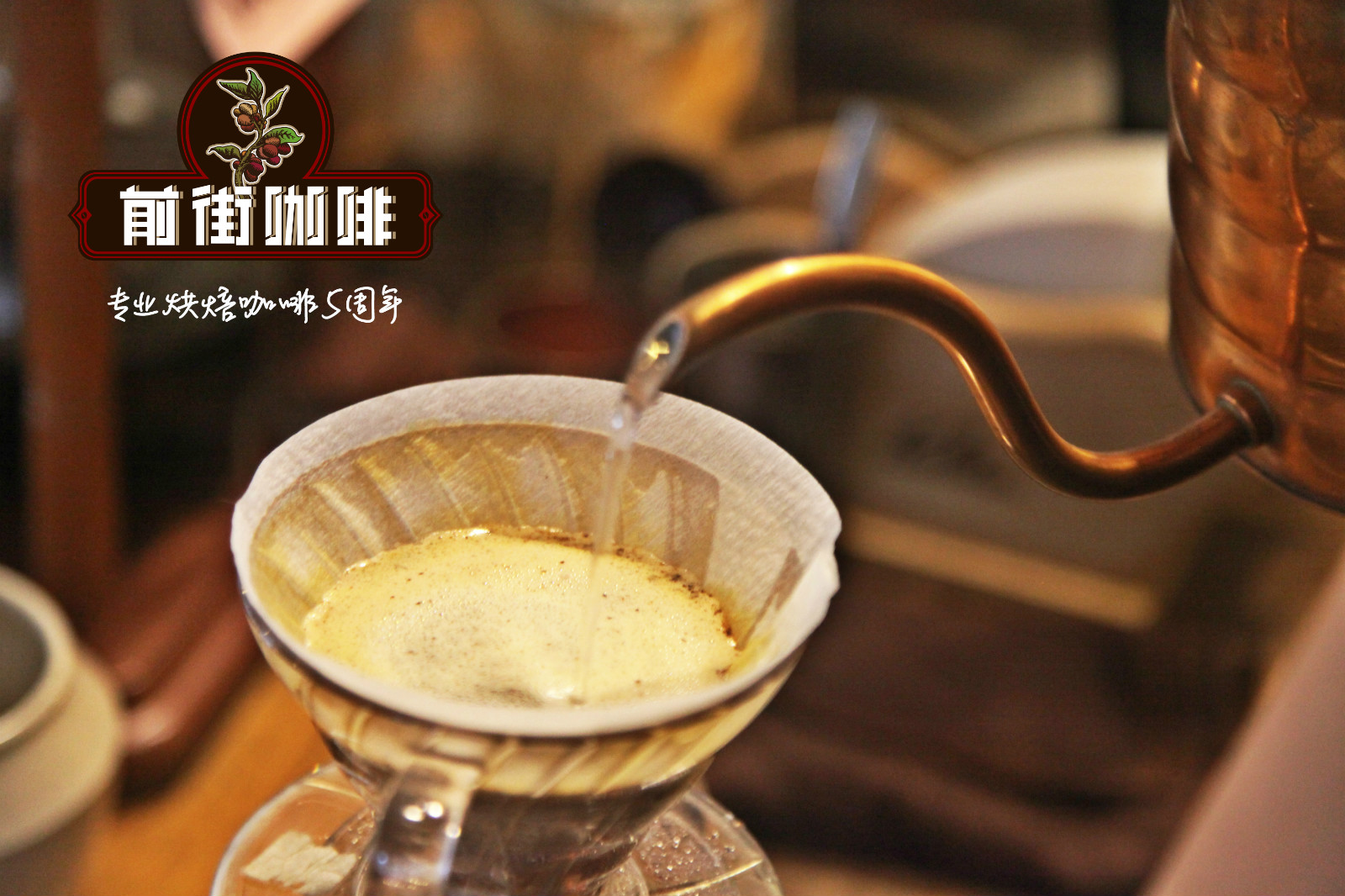
FrontStreet Coffee Recommended Brewing Method
Dripper: KONO
Water temperature: 88°C
Grind size: Fuji Royal grinder setting 4
Brewing method: coffee-to-water ratio 1:14, 17g of coffee; first pour 25g of water for a 30-second pre-infusion, then pour to 238g; total extraction time around 2:30
Analysis
The KONO dripper has relatively few ribs at the bottom, so the filter paper sits snugly against the walls and restricts airflow. This gives water and grounds a longer contact time in the dripper, securing sufficient extraction even at a coarse grind. The grounds extract fully, boosting the mellow body and concentrating the flavor.
Flavor: highly balanced, clean, thick and solid body, with a persistent dark chocolate finish.
Related Recommendations
Jamaica Blue Mountain pour-over recommendations, temperature, grind size, coffee-to-water ratio, plus flavor and mouthfeel notes.
FrontStreet Coffee Recommendation: Certified Blue Mountain No. 1 From Clifton Estate
If you want to taste genuine Blue Mountain character, start with FrontStreet Coffee's Jamaica Blue Mountain No. 1—the highest grade, sourced from the historic Clifton Estate, which has been growing coffee since around 1750 at roughly 4,300 feet (about 1,310 meters). Every lot arrives with complete certification documents, and the traditional wooden shipping barrels (in 15, 45, and 70kg sizes) are on display as proof of authenticity. Roasted medium-dark to showcase the classic balance, this beans-forward cup unfolds in layers of nuts, dark chocolate, cream caramel, and gentle sweetness. FrontStreet recommends a Kono dripper, 15g of coffee rested 4-7 days post-roast, a white-sugar-coarse grind, water at 87-88°C, a 1:15 ratio, and three pours to 30g, 120g, and 225g for a clean, mellow, perfectly harmonious cup.
Important Notice :
FrontStreet Coffee is a long-established specialty coffee roaster in Guangzhou China, selling freshly roasted beans from its own farm in Yunnan as well as dozens of carefully selected single-origin beans from around the world for both pour-over and espresso. The products deliver consistently excellent quality and great value, with shipping within 24 hours. Guangzhou's FrontStreet Coffee shop is recommended by many coffee lovers, and the beans are now available online at the Tmall 。
FrontStreet Coffee has moved to a new address:
FrontStreet Coffee Address: 315,Donghua East Road,GuangZhou
Tel:020 38364473
 Scan and follow the En Gafei WeChat official account. Please indicate that the reprint comes from "En Gafei".