Jamaican Coffee Bean Knowledge: Why is Blue Mountain Coffee Stored in Wooden Barrels?

For more premium coffee knowledge, follow the WeChat public account: FrontStreet Coffee.
Recently, some coffee enthusiasts visiting FrontStreet Coffee noticed a handsome wooden barrel in our shop and asked where we bought it. In fact, it's a barrel for storing Jamaican Blue Mountain green beans. Since most people know green coffee travels in burlap bags, they wondered why Blue Mountain ships in wood. Here, FrontStreet Coffee explains.

Why Is Blue Mountain Coffee Stored in Wooden Barrels?
From FrontStreet Coffee's years of buying green coffee, Blue Mountain is the only coffee exported and sold in barrels; every other origin ships in burlap. The practice dates to the mid-18th century under British colonial rule, when empty flour barrels that had sailed from Britain to Jamaica were refilled with coffee and rum for the return trip.

The barrels used today are made from timber of temperate American forests. Wood absorbs and releases humidity gradually, buffering the sudden temperature swings of long-distance shipping, and the tight seal locks in the coffee's aroma at its best — though the added cost is considerable. The Jamaican estates producing Blue Mountain have kept the tradition to protect the beans, and the barrel has become a signature identifier of genuine Blue Mountain coffee.

The barrel in our shop, for example, comes from the Clifton Mountain Estate in the Blue Mountains. Its distinguishing mark — the small green frog — stands for Rainforest Alliance certification, meaning the farm meets the alliance's standards: protecting the surrounding ecosystem, restricting pesticide use, and meeting benchmarks such as waste management. Only coffee passing that evaluation can be called Rainforest Alliance Certified Coffee. As far as we know, Clifton is the only Rainforest Alliance certified estate in Jamaica.

Beyond that, FrontStreet Coffee imports its Jamaican Blue Mountain directly from the origin. Today the Jamaican Coffee Board can issue certificates for all exported Blue Mountain coffee on the market.
Blue Mountain Coffee Certificates Come in Three Types:
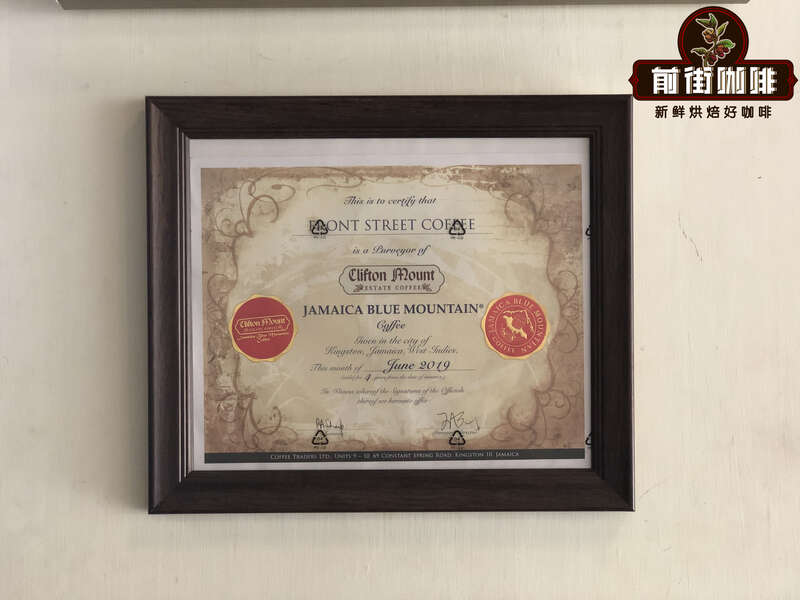
(1) Quality Certificate issued by the Jamaican Coffee Board
(2) Authorized Sales Certificate issued by the Blue Mountain manufacturers. (Blue Mountain coffee is distributed by 4 Jamaican government-licensed processing producers and exported by 16 licensed exporters.)
(3) Certificate of Origin for Jamaican Blue Mountain Coffee
The quality certificate records time and quantity. The Coffee Board randomly selects a package from the submitted Blue Mountain coffee for inspection; if it meets the conditions for Blue Mountain, a certificate is issued.
Next, FrontStreet Coffee introduces the Blue Mountain beans from Jamaica's Clifton Estate.
FrontStreet Coffee Jamaica Washed Blue Mountain No. 1 Coffee Beans

Country: Jamaica
Region: Blue Mountain (Clifton Estate)
Altitude: 1310m
Variety: Typica
Processing Method: Washed
Flavor: Brown sugar sweetness and berry acidity on entry, with nutty cocoa in the middle and late stages. The mouthfeel is creamy with rich, distinct layers, and the aftertaste carries walnut aroma.
FrontStreet Coffee Jamaica Natural Blue Mountain No. 1 Coffee Beans
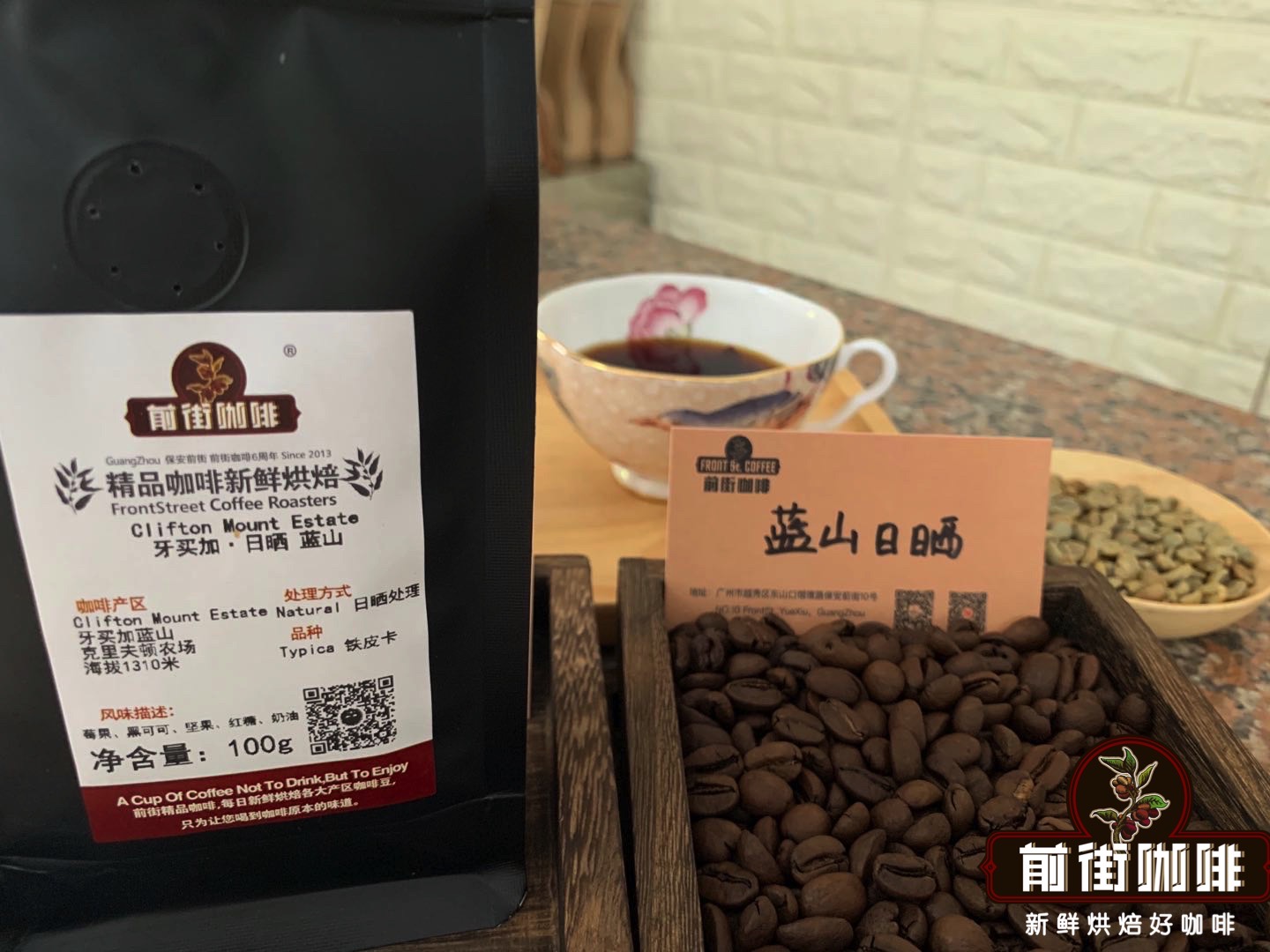
Country: Jamaica
Region: Blue Mountain (Clifton Estate)
Altitude: 1310m
Variety: Typica
Processing Method: Natural
Flavor: Dark chocolate and nuts on entry, with high clarity and brightness, good body, and balanced sweet, sour, and bitter notes.
Both beans come from Clifton Estate, the largest estate in the Blue Mountain region — though "large" is relative internationally. The Blue Mountain growing area is tiny: just 6,000 hectares, not all of which can be planted with coffee.
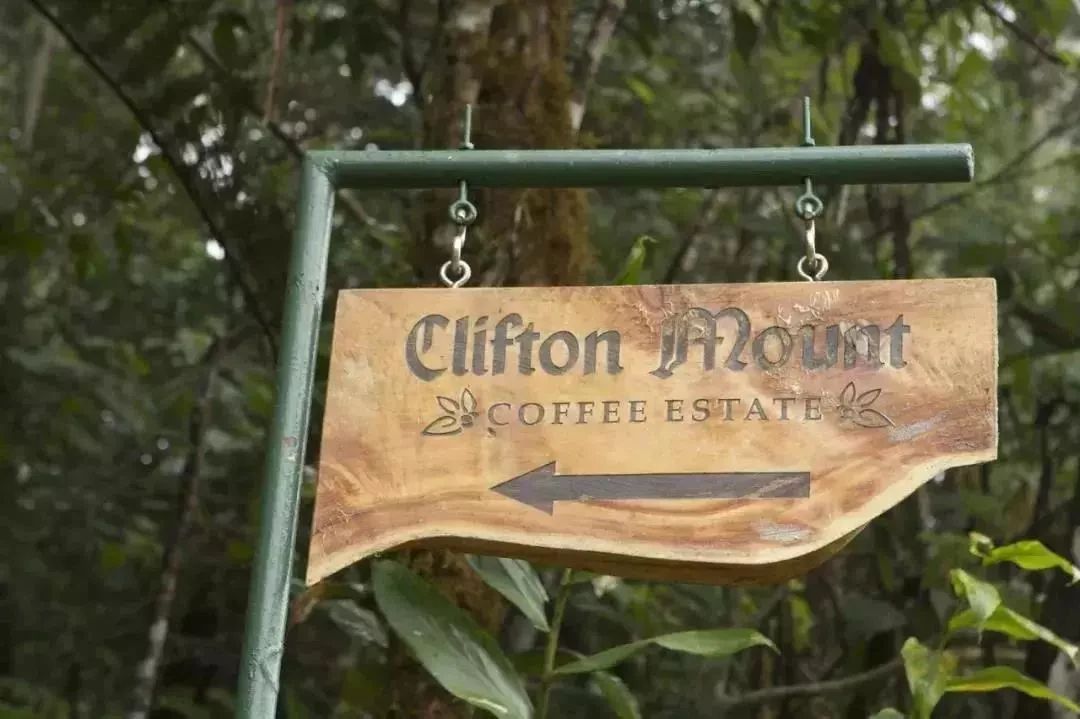
Clifton has been planting coffee since the mid-18th century, making it a truly qualified and time-tested producer of Blue Mountain beans.
Blue Mountain Coffee Processing Methods
As noted, Blue Mountain comes in both washed and natural versions — but before the end of 2019, Blue Mountain was washed only. Natural processing arrived in early 2020, an innovation to keep pace with the times, though any change in processing inevitably reshapes the flavor structure.
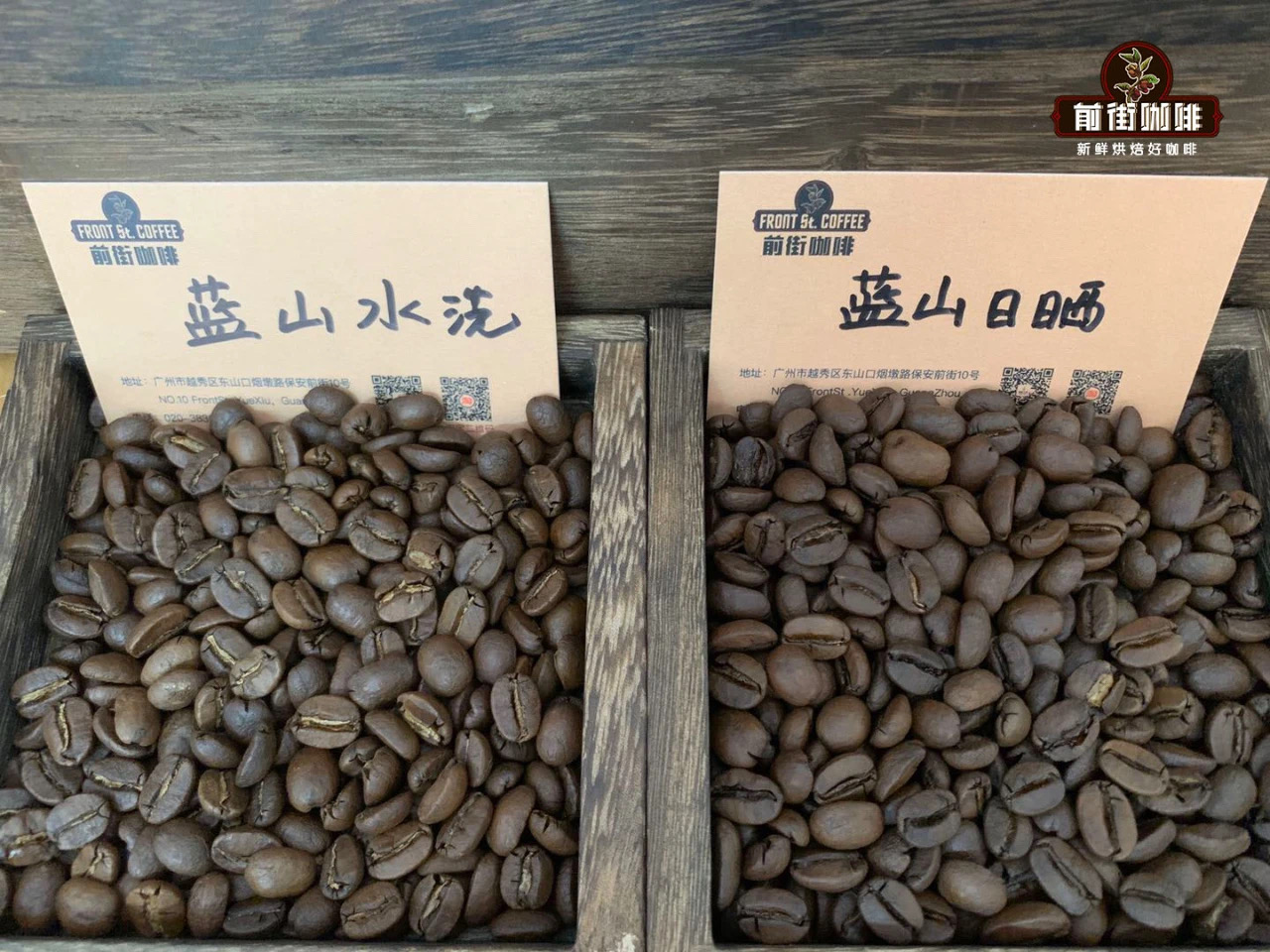
FrontStreet Coffee has always believed newcomers should start with washed beans, since washing best expresses a bean's original character — one reason Blue Mountain exported washed beans exclusively for so long. Washed coffee also drinks cleaner and fresher.
The difference between the two: natural processing retains the flavors of the fruit pulp, while washing removes them to reveal the bean's essential character. In the cup, washed is cleaner and brighter; natural is richer. Choose by preference — but if you want to understand this region, start with the bean's most original flavor.
Blue Mountain Coffee Varieties
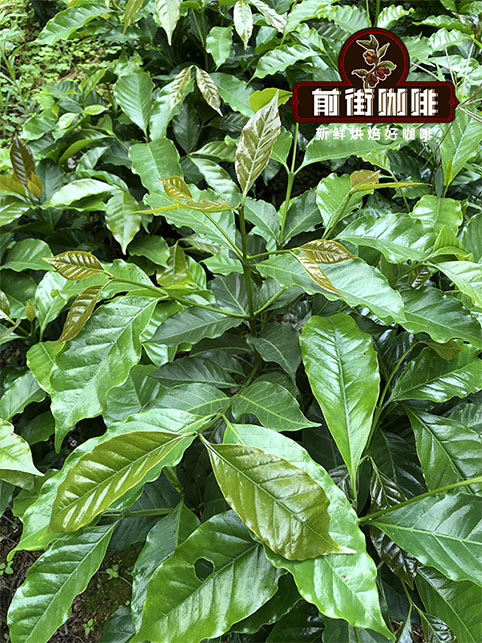
A defining trait of Blue Mountain beans is that they all use the oldest Arabica heirloom variety, Typica — celebrated for excellent flavor and recognized as a premium variety, though yields are very low and it is prone to leaf rust, demanding careful management. Typica originated in Ethiopia and southeastern Sudan and is the most widely grown variety in the Western Hemisphere. The plants are fairly robust but intolerant of strong light, and yield particularly well in Hawaii. Typica's young top leaves are copper-colored, giving it the nickname "red-top coffee."
Typica also brings a uniquely elegant, clean flavor with balanced character and high clarity — qualities no special processing trick can replicate. The variety FrontStreet Coffee chose for its own plantings in Yunnan is likewise the ancient small-bean Typica, which is why so many tasters describe its cup as pure and elegant.

In FrontStreet's view, whether a cup tastes good ultimately comes down to the variety — special processing is no long-term solution. That, too, is why Blue Mountain's flavor has stayed so consistently excellent.
Grading of Jamaican Blue Mountain Coffee Beans
Blue Mountain coffee is divided into four quality grades, top to bottom: No. 1, No. 2, No. 3, and PB (Peaberry). FrontStreet Coffee's beans are precisely Blue Mountain No. 1 — the finest quality tier and therefore the most expensive in the category.

No. 1 grows in the Jamaican Blue Mountain region, where trees cling to steep slopes. The yield is low, the beans large, the quality excellent, and the taste impeccably balanced — appropriate acidity, bitterness, aroma, body, and sweetness — which is why coffee lovers worldwide regard it as a premium product, and why No. 1 commands the highest price of all Blue Mountain coffees.
Beyond its superb terroir, Blue Mountain grading also screens for defect rates according to the following standards:
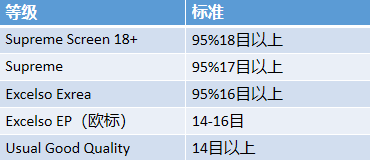
That is FrontStreet Coffee's answer to why Blue Mountain beans ship in wooden barrels. Before introducing any new bean, FrontStreet runs extensive cupping and brewing tests — and next, we share our brewing parameters for both washed and natural Blue Mountain.
How to Roast to Better Express [FrontStreet Jamaican Blue Mountain Coffee] Flavors?
In short: roast the Blue Mountain beans thoroughly "inside and out," applying good roasting craft on a proper foundation to express what these beans have.
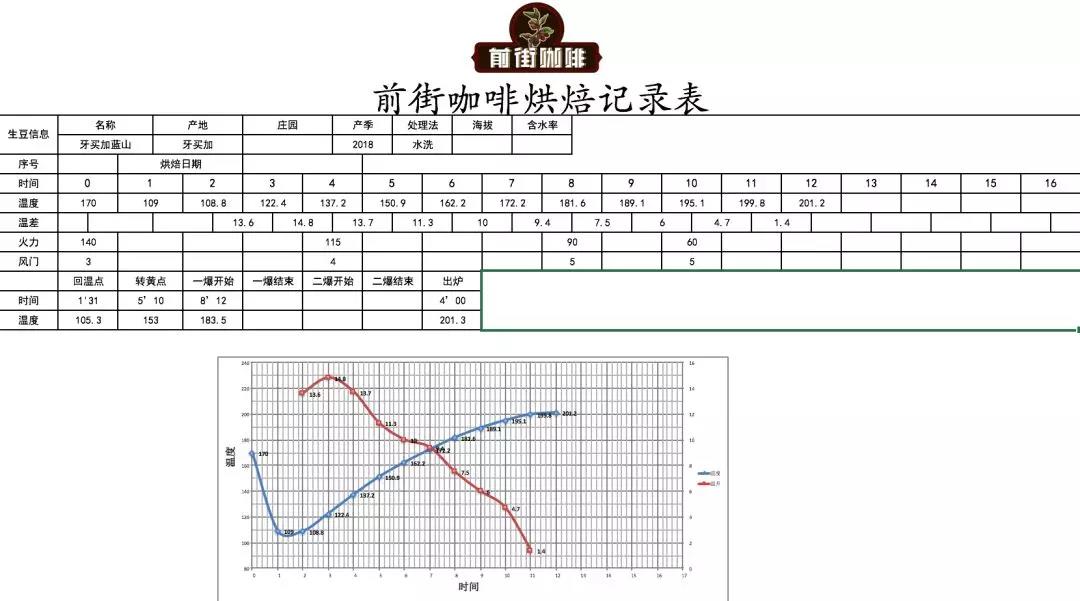
Caramelization is the biggest factor shaping coffee flavor. After 6–7 minutes of roasting, the green beans absorb large amounts of heat, pyrolysis begins, and first crack sounds. Some sugars convert to carbon dioxide and water continues to evaporate; new aromatic compounds form, creating the coffee oils that combine with hundreds of aromatic substances — nicotinic, citric, quinic, malic, and acetic acids, and caffeine among them.

Roasting curve: preheat the roaster to 170°C with the air damper at 3. After 1 minute, drop heat to 140°C and keep the damper unchanged. Roast to 5'10", when the temperature reads 153°C, the bean surface turns yellow, the grassy aroma has fully vanished, and dehydration is complete. Reduce heat to 115°C and open the damper to 4.
At 8'00", wrinkles and dark spots appear on the bean surface and the toast aroma clearly turns to coffee aroma — the prelude to first crack. Listen carefully. At 8'12" first crack begins: reduce heat to 90°C and open the damper fully (adjust heat very gently, never so low that cracking stops). Drop the batch at 201.3°C.
FrontStreet Jamaican Blue Mountain Coffee Brewing Parameters
FrontStreet brews Blue Mountain in a KONO dripper because it brings out a rounder, fuller mouthfeel — though its exhaust efficiency is comparatively poor.

Brewing Parameters:
15g of ground coffee
Dripper: KONO
Coffee-to-water ratio: 1:15
Grind size: medium granulated sugar
Water temperature: 86°C

Brewing Method: Segmented Extraction.
Bloom with 30g of water for 30 seconds, then pour in a small stream onto the center to 125g. When the water level is about to expose the coffee bed, continue to 225g and stop. When the bed is about to surface again, remove the dripper. Total extraction time: 2 minutes.

[Natural Blue Mountain Coffee Flavor Characteristics]
Dark chocolate and nutty flavors on entry, with high clarity and brightness, good body, and balanced sweet, sour, and bitter notes.
[Washed Blue Mountain Coffee Flavor Characteristics]
Brown sugar sweetness with berry acidity on entry, nutty cocoa flavors in the middle and late stages, a creamy mouthfeel with rich, distinct layers, and a finish of walnut aroma.
FrontStreet Coffee Recommendation
For many coffee lovers, Blue Mountain is simply unavoidable — in the era before specialty coffee went mainstream, "treating someone to Blue Mountain" was shorthand for quality. Only coffee grown in a specific zone of Jamaica's Blue Mountains and certified by the Jamaican authorities may carry the name Jamaica Blue Mountain Coffee, and with annual regional output under 2,500 tons — historically over 70% of it claimed by Japanese buyers — genuine beans remain scarce and highly priced.
To avoid counterfeits, check the paperwork: while genuine Blue Mountain carries no traceability code, legitimate sellers have complete export certification, proof of origin, and — the giveaway — the traditional wooden barrels (15kg, 45kg, 70kg) stamped with batch details. Genuine raw beans are uniform and plump, slightly upturned at both ends, and green in color; in the cup the real thing is dense, fragrant, and clean, with no off-flavors.
FrontStreet Coffee's Jamaica Blue Mountain No. 1 comes from historic Clifton Estate, growing coffee since about 1750 at an average of 4,300 feet (about 1311 meters), where afternoon cloud, ample sun, and mineral-rich soil let the cherries ripen slowly. Roasted medium-dark within five days of shipping and brewed as above — KONO, 15g at 1:15, water at 87–88°C, beans rested 4–7 days from roast — it delivers nuts, dark chocolate, cream and caramel, and a soft fruit-toned finish, with acidity, sweetness, and bitterness in perfect accord. That is the balance that has kept this legend on top for decades.
Important Notice :
FrontStreet Coffee is a long-established specialty coffee roaster in Guangzhou China, selling freshly roasted beans from its own farm in Yunnan as well as dozens of carefully selected single-origin beans from around the world for both pour-over and espresso. The products deliver consistently excellent quality and great value, with shipping within 24 hours. Guangzhou's FrontStreet Coffee shop is recommended by many coffee lovers, and the beans are now available online at the Tmall 。
FrontStreet Coffee has moved to a new address:
FrontStreet Coffee Address: 315,Donghua East Road,GuangZhou
Tel:020 38364473
 Scan and follow the En Gafei WeChat official account. Please indicate that the reprint comes from "En Gafei".