Is Blue Mountain Coffee a thing of the past? Let's explore the charm of Jamaican coffee
The Rise and Fall of Blue Mountain Coffee
When specialty coffee had not yet entered the public eye and most people's understanding of coffee stopped at vague categories like "black coffee" and "coffee with milk," Jamaica Blue Mountain stood at the very pinnacle of the coffee world, commanding universal respect for its balanced and gentle flavor profile.
But fortune turns like a wheel. With the wave of specialty coffee that has swept the globe over the past decade, new varieties led by Panama Geisha have stolen the spotlight, making Blue Mountain coffee look, to some, like a relic of another era.
The Blue Mountain Controversy
Today, the term "Blue Mountain" seems to be everywhere. Search for coffee beans on any online marketplace and you will find countless Blue Mountain products.
However, there is a significant catch here!
Look closely at the names of these coffees: they are rarely simply "Blue Mountain Coffee," but rather things like "Blue Mountain Flavored Coffee" or "Blue Mountain Blend." Reputable coffee brands at least follow this convention, though less scrupulous ones may label their beans directly as Blue Mountain. The major brands go to such lengths with their naming precisely because these coffees are not, strictly speaking, Blue Mountain coffee.
Because of this, in the eyes of many baristas, "Blue Mountain Coffee" has become one of the three coffee topics considered "out of fashion." (The other two are "Kopi Luwak" and "Why is this coffee sour?")
Everyone who knows Blue Mountain coffee knows it is one of the most expensive coffees in the world, but not everyone knows why. Like Rolls-Royce automobiles and Stradivarius violins, once something earns the reputation of "the best in the world," that reputation takes on a character of its own and becomes an eternal myth.
Origin of the "Blue Mountain" Name
The Blue Mountains are located in eastern Jamaica. Because the range is surrounded by the Caribbean Sea, on clear days when the sun shines directly on the azure water, the peaks reflect the brilliant blue light of the sea - hence the name.
What is Blue Mountain Coffee?
The variety grown in Jamaica's Blue Mountains is Typica, a world-renowned classic. Besides Blue Mountain, the famous Hawaiian Kona and Sumatran Mandheling also belong to this variety.
Blue Mountain's balanced flavor owes much to its unique geography. As an island nation in the Caribbean, Jamaica's sea breezes and mountains together bring abundant rainfall and fertile land to the growing region. Volcanic soil and a relatively moderate altitude give Blue Mountain coffee its mild, harmonious character.
Green Bean Grading of "Blue Mountain Coffee"
In 1950, the Jamaican government established the CIB (Jamaica Coffee Industry Board), a government agency responsible for coffee affairs, overseeing, regulating, and guiding Jamaican coffee cultivation, processing, and trade. The board set quality standards for Jamaican coffee:
Blue Mountain coffee must be grown at an altitude of 910-1,700 meters.
High Mountain coffee must be grown at an altitude of 460-910 meters.
Jamaica coffee is grown at altitudes of 460 meters and below.
Blue Mountain and High Mountain coffees are each further divided into two grades. From highest to lowest: Blue Mountain No. 1, Blue Mountain No. 2, High Mountain No. 1, High Mountain No. 2.
The Coffee Industry Board has also imposed strict requirements to safeguard Blue Mountain quality, with clear rules covering the growing area, cultivation techniques, harvesting, processing, and roasting methods. These strict standards keep production low. In addition, because Japan has long invested in Jamaica's coffee industry, most Blue Mountain coffee is controlled by Japanese buyers, who hold priority purchasing rights: 90% of Blue Mountain coffee goes to Japan. Since the rest of the world can only obtain the remaining 10%, Blue Mountain coffee is perpetually in short supply at any price.
Flavor of Blue Mountain Coffee
The best Blue Mountain coffee is undoubtedly one of the finest coffees available. Yet while its price guarantees supply, it cannot by itself guarantee the best flavor. Moreover, this coffee "tastes" more expensive than it looks: to bring out its best, more beans must be used than for other coffees, otherwise the cup falls a little flat. Expressing its full flavor requires roughly 10% to 15% more beans than coffees that cost only slightly less.
It is said that genuine Blue Mountain coffee is made from the very best local green beans - and that is where the connoisseur's pleasure lies. Its flavor is rich, balanced, and fruity with a gentle acidity, satisfying almost every taste. High-quality, fresh Blue Mountain also holds its flavor exceptionally well - as wine lovers would say, it leaves an endless aftertaste.
Today, with its former fragrance long faded, Blue Mountain struggles to compete on the international stage. Wave after wave of new coffee stars has emerged: producing countries with advanced agricultural techniques such as Brazil, Colombia, and El Salvador showcasing improved varieties, alongside Ethiopia with its ancient, complex old-world flavor profiles. The international coffee scene is in full bloom.
Open Han Huaizong's "Specialty Coffee Studies" and you will find this evaluation of Blue Mountain coffee: "It holds a romantic allure - we were captivated by its poetic, dreamlike name, by its subtle fragrance and light sweetness, but that infatuation has now vanished like smoke and clouds."
Jamaican Coffee Bean Brand Recommendations
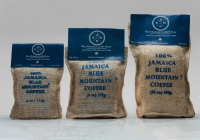
FrontStreet Coffee's roasted Jamaican Blue Mountain No. 1 coffee beans offer solid guarantees in both brand and quality - and outstanding value for money. A 100g package costs only around 158 yuan. At 15g per cup, one package brews 6 cups, so each cup costs only about 25 yuan. Compared with cafe prices that often exceed 100 yuan a cup, it is a genuinely conscientious recommendation.
FrontStreet Coffee Recommendation
If you want to taste what made Blue Mountain legendary, FrontStreet Coffee's Jamaica Blue Mountain No. 1 is the place to start. Strictly certified and grown in the defined Blue Mountain zone, it delivers the classic, near-perfect balance this coffee is famous for: rich yet gentle, with a lasting sweet aftertaste that lingers like a fine wine.
For brewing, treat Blue Mountain with respect: its subtlety shows best in a careful pour-over with moderate water temperature and a medium grind. Because the beans' flavor is delicate rather than loud, FrontStreet Coffee recommends using a slightly generous dose of grounds - about 10% to 15% more than you might use for other premium beans - so that the full depth of aroma and sweetness comes through in the cup.
Beyond pour-over, Blue Mountain No. 1's mild, balanced profile also makes it a superb choice for milk-based drinks and for anyone who wants a refined, low-acid daily coffee that never turns bitter.
Important Notice :
FrontStreet Coffee is a long-established specialty coffee roaster in Guangzhou China, selling freshly roasted beans from its own farm in Yunnan as well as dozens of carefully selected single-origin beans from around the world for both pour-over and espresso. The products deliver consistently excellent quality and great value, with shipping within 24 hours. Guangzhou's FrontStreet Coffee shop is recommended by many coffee lovers, and the beans are now available online at the Tmall 。
FrontStreet Coffee has moved to a new address:
FrontStreet Coffee Address: 315,Donghua East Road,GuangZhou
Tel:020 38364473
 Scan and follow the En Gafei WeChat official account. Please indicate that the reprint comes from "En Gafei".