Why is the pour-over Tempestanza Estate natural-processed Elephant Bean coffee grounds coarser? - Pour-over Elephant Bean grind size recommendation
Introduction
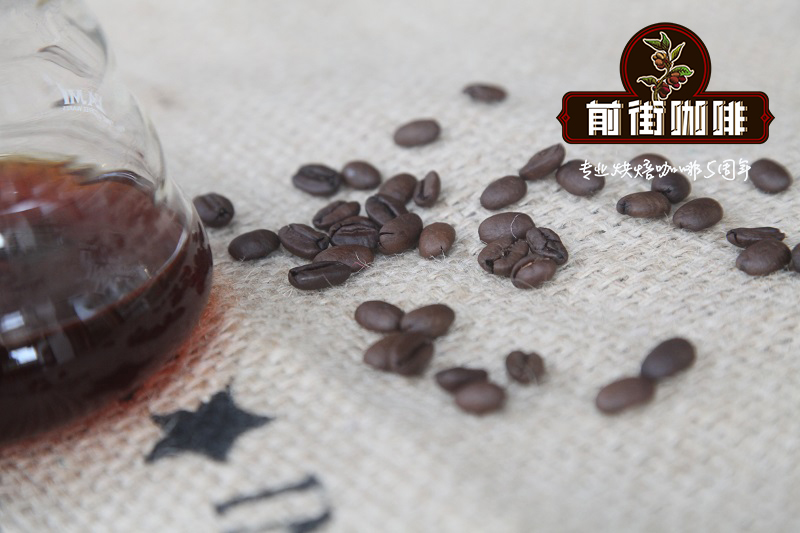
This time we recommend Elephant Bean coffee from Nicaragua, from the Francisco region.
Coffee Information
Origin: Nicaragua
Region: Francisco
Estate: Finca La Tormenta
Grade: SHB
Coffee Variety: Maragogype
Growing Altitude: 1350-1500m
Processing Method: Natural
Finca La Tormenta Story
The main varieties in Nicaragua are arabica, among which Caturra, Bourbon, Pacamara and Maragogype all have excellent quality. The processing is mostly washed, with some natural or semi-natural lots.
Nicaragua is divided into four main regions: Segovias, Matagalpa/Jinotega, Boaco and the Pacific Coast. Cultivation is highest in the Segovias region at around 1,500-2,000 meters, producing the top grade, SHG (Strictly High Grown) coffee.
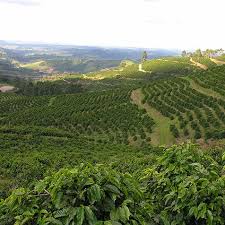
Finca La Tormenta sits on the national border with an area of only 7 hectares. Managed by Francisco La Tormenta, the farm lies in the border area between Nicaragua and Honduras, about 20 minutes' drive from Ocotal.
Besides its different coffee varieties, Finca La Tormenta is a self-contained natural ecosystem of diverse trees, wildlife and local birds. It also won fifth place in the 2011 Nicaragua Cup of Excellence.
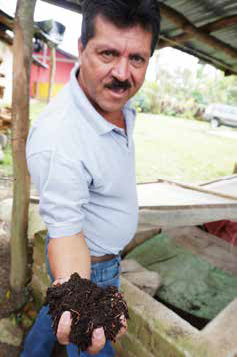
With this in mind, it is not hard to see why the estate is named "La Tormenta," which means storm and tempest, and also turmoil. Through the name, the owner constantly reminds himself not to forget his original mission. Perhaps it is this firm belief that let him achieve the excellent result of fifth place in the 2011 COE (Cup of Excellence).
Maragogype Coffee Variety Introduction
Maragogype elephant beans are three times the size of regular arabica beans and are the largest coffee beans in the world.
Coffee Flavor Profile: Strawberry, berry jam sweetness, nutty aroma, a gentle and full aroma, nutty aftertaste, slightly sweet and sour, with a smooth mouthfeel and excellent overall balance.
The Maragogype variety is a mutant strain derived from Typica. Planted at 700-800 meters, Maragogype has an ordinary taste without special character, and some connoisseurs dislike it. Matagalpa Maragogype planted above 1000 meters is a completely different story.
Above 1000 meters it develops a gentle, charming aroma, a mild and stable taste, and balanced sourness, bitterness and sweetness. Its rich fruit aroma and smooth texture in particular come very close to elegant Blue Mountain coffee beans, with sweetness inside the acidity and a full body, making it genuinely charming.
Matagalpa giant Maragogype tastes similar to Jamaican Blue Mountain coffee beans, but its price is only about 2/3 of Jamaica Blue Mountain, giving it very high value. It is also the only Maragogype selected for a Cup of Excellence (COE) award in recent years, which is why some coffee shops sell it as Blue Mountain beans.
In fact, the annual quantity of Matagalpa giant Maragogype is not large. Currently only Mexico, Nicaragua, Honduras, El Salvador and Brazil grow it on a small scale, with limited trade volume.
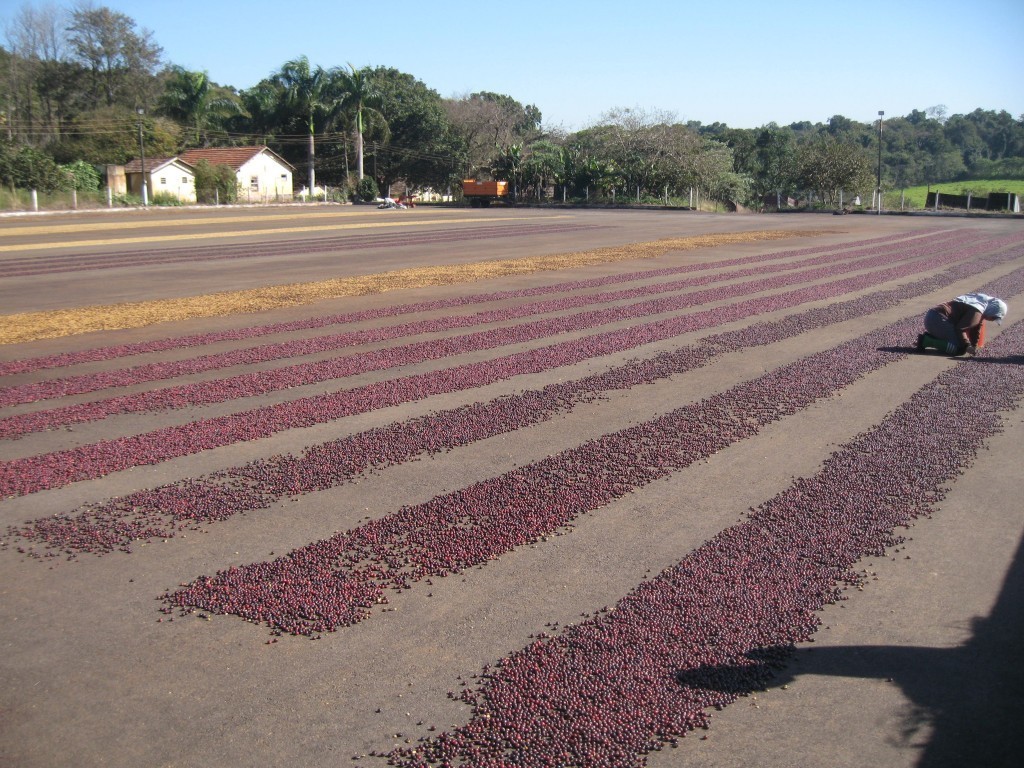
Natural Process Introduction
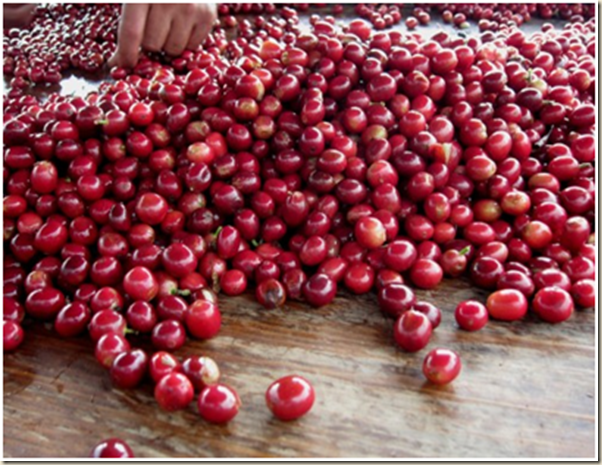
The natural process is the oldest, most original way to process coffee. Harvested coffee fruits are poured into large water tanks, where mature, full fruits sink and underdeveloped or overripe fruits float. After the floating beans are removed, healthy fruits are placed on patios for direct sun drying, reducing moisture from 60% to 12%-15%. Finally, a hulling machine removes the hard outer skin and pulp, completing the processing of the green beans.
(Selecting coffee fruits) (Outdoor sun drying)
Natural processing can enhance berry and tropical fruit flavors, with mild fruit acidity, but traditional natural processing sometimes produces negative flavors such as earthy or over-fermented notes.
Today the natural process is popular again, even one of the important methods for competition-grade beans. The change comes from improved African raised beds, which avoid ground moisture, animal waste and earthy flavors while giving the fruit good air convection for more even drying. Farmers turn the beans regularly so the sweetness of the pulp is absorbed gently, making the flavor fuller and fuller.
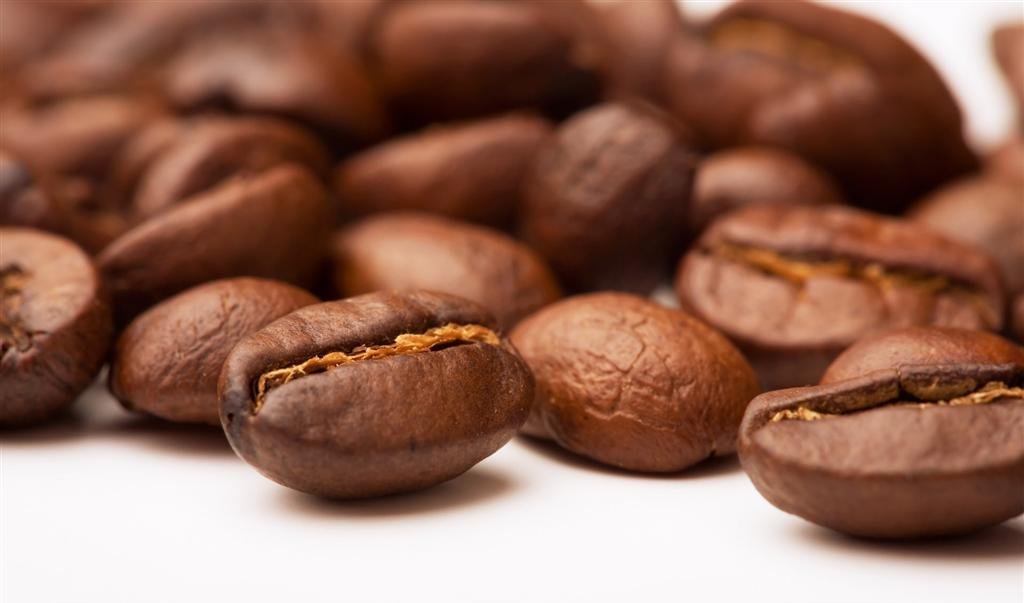
Roasting Suggestions/Analysis
This coffee is the giant bean variety Maragogype, with relatively large particles but medium density. New-season beans have higher moisture content. During roasting, heat absorption is slower while the Maillard reaction runs faster, so improper roasting can easily leave the inside undercooked and the outside scorched, or produce a loose, hollow flavor after roasting. The yellowing point falls around 5 minutes. For the first roast, try a slightly higher bean drop temperature, such as a 200°C charge with relatively higher heat, then reduce heat gradually as needed: after the beans reach the yellowing point, lower the heat to extend dehydration so the giant beans dry fully; from the end of dehydration to just before first crack, hold medium or slightly increased heat to shorten the Maillard phase and build pressure before first crack; before first crack signs appear, reduce heat a little to keep the bean surface from scorching. With this approach the dehydration time extends, at a rate of rise of 6-8 degrees every thirty seconds, yet the roast can still enter first crack normally between 8.5 to 9.5 minutes, preserving more floral and fruit aromas and keeping the acidity clean and bright. It is generally recommended to drop the beans between dense first crack and the end of first crack, around a medium roast.
Roasting Maragogype giant elephant beans takes some skill. Because this bean is about three times the size of regular arabica beans, mastering heat penetration is not easy. If the fire is too high, the surface may look ready to drop while the inside is not fully cooked, causing astringency in the cup; roast too long and the beans can over-roast and lose the Blue Mountain-like character. This really calls for some experience.
Cupping Flavor Description
Natural-processed Maragogype gives off a starfruit-juice aroma, with plum's sweet-and-sour taste, citrus sweetness, rum-flavored raisins, and a smooth malt-milk flavor in the middle and later stages that turns toward tropical fruit. It is expressive, with a distinct and varied personality, a tight overall structure and excellent flavor extension.
Dry Aroma: Pineapple, wine aroma, nuts
Wet Aroma: Passion fruit, pineapple, red guava, orange, caramel, roasted nuts
Taste: The natural processing is clearly present, with rich fruit flavors
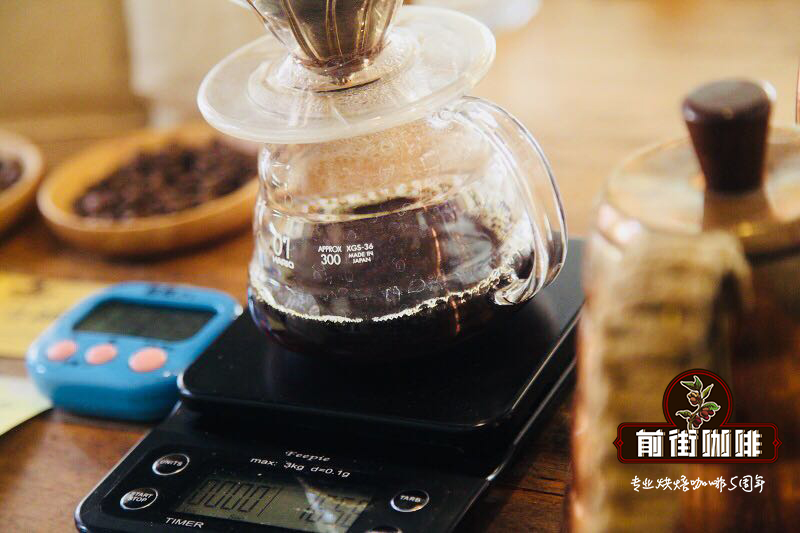
Brewing Analysis
Today we introduce FrontStreet Coffee's usual hand-brewing method for Maragogype elephant bean coffee: the V60 three-stage pour.
Segmented extraction divides all the brewing water into three stages of pouring.
- Suitable for light roast, medium-light roast and medium roast coffee beans
- Uses a V60 dripper
- Increasing bloom time or the number of water breaks can enhance the richness of the cup
The three-stage pour is more layered than a single pour, clearly separating the front, middle and back flavor stages. It involves increasing the water amount after each pour, usually pouring when the coffee liquid is about to drop to the surface of the bed, using small, medium and large flows across the three stages.
The drawback is that it places higher demands on the pour rate and volume.
FrontStreet Coffee's Maragogype Elephant Bean Coffee Hand-brewing Parameter Suggestions
Brewing with a V60 dripper enhances the layered flavor of hand-brewed coffee, making it richer and cleaner and fully expressing the Maragogype elephant bean's rich fruit aroma and gentle, full nuttiness.
15g powder, water temperature 89-90°C, grind BG 5R (Chinese standard 20 mesh sieve pass rate 64%), water-to-powder ratio close to 1:15.
Method: 30g water bloom, bloom time 30s. Pour the hot water from the kettle clockwise in circles centered on the middle of the V60 dripper. Start timing when brewing begins, pour water to 30g, then stop and wait 30 seconds for the first pour.
For the first pour, circle as before but slow down slightly, speeding up when you reach the outer circle, and stop the water around 1:15 seconds. When the liquid level drops by 1/3, pour again. For the second pour, concentrate on a central pour, avoiding the water hitting the junction between coffee powder and filter paper so as to prevent channeling. End extraction around 2:05 seconds; the tail section can be omitted, since a longer time increases astringency and rough texture.
Segments: 30-125-230g
FrontStreet Coffee Recommendation
If Maragogype's gentle, Blue Mountain-like character appeals to you, FrontStreet Coffee's Papua New Guinea Paradise Bird is a natural companion. It comes from the Sigri region of Papua New Guinea, from a Typica variety grown at 1600-1800 meters on volcanic soil, and it reaches the AA grade with plump beans and a very low defect rate. Because its texture and sweetness resemble Jamaica Blue Mountain, many drinkers call it a "little Blue Mountain," and three-times washed fermentation leaves the cup clean and pure with a standout sweetness.
For brewing, treat it much like the Maragogype above: a light or medium-light roast works best with the V60 three-stage pour, starting at 15g of coffee and a 1:15 ratio, then adjusting the water temperature and grind to taste.
Important Notice :
FrontStreet Coffee is a long-established specialty coffee roaster in Guangzhou China, selling freshly roasted beans from its own farm in Yunnan as well as dozens of carefully selected single-origin beans from around the world for both pour-over and espresso. The products deliver consistently excellent quality and great value, with shipping within 24 hours. Guangzhou's FrontStreet Coffee shop is recommended by many coffee lovers, and the beans are now available online at the Tmall 。
FrontStreet Coffee has moved to a new address:
FrontStreet Coffee Address: 315,Donghua East Road,GuangZhou
Tel:020 38364473
 Scan and follow the En Gafei WeChat official account. Please indicate that the reprint comes from "En Gafei".