Why is Pour-Over El Salvador Pirineos Pacamara Coffee Astringent_Key Points for Brewing Pacamara
Professional Coffee Knowledge Exchange
For more coffee bean information, please follow Coffee Workshop (WeChat public account: cafe_style).
Los Pirineos Estate Story
Los Pirineos Farm
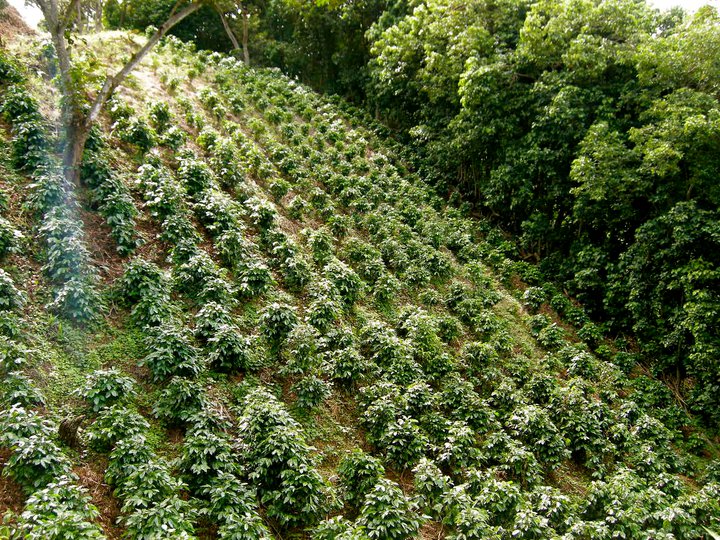
Since the 1890s, Los Pirineos Farm has belonged to the Gilberto Baraona family. Located on the Tecapa volcano in Usulutan at an altitude of 1,400-1,480 meters, it enjoys ideal conditions for coffee: stable and abundant rainfall, fertile volcanic soil rich in potassium and phosphorus, and cool weather that lets the cherries mature slowly. Those conditions give the farm's beans a more complex sweetness and robust, rich flavors.
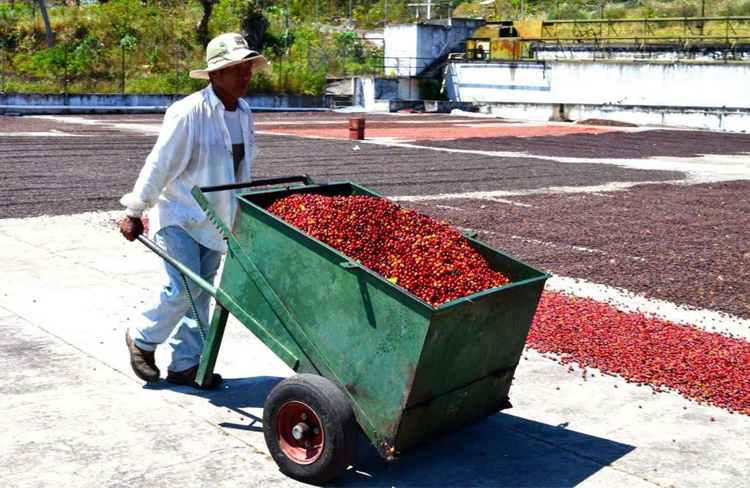
Exceptional coffee does not rely on climate alone. Los Pirineos pioneered the establishment of its own micro-processing plant in El Salvador. Gilberto is meticulous about quality, and this small-scale producer has brought his plantation close to perfection. The spotless micro-processing facility features a Colombian-style Aqua depulper, while finely tuned drying equipment uses Brazilian "Guardiola" mechanical dryers.
Pacamara Coffee Bean Variety
Pacamara is a hybrid of Pacas and Maragogype, discovered in El Salvador in 1950.
First cultivated by Salvadoran researchers in 1958, Pacamara is an excellent variety developed through artificial selection. It combines the fine cup quality of the Pacas variety with the large bean size of Maragogype, with beans at least 70-80% the size of elephant beans. Its most prominent characteristics are a lively, sophisticated acidity - sometimes with biscuit aroma, sometimes with fruit - and an excellent body and mouthfeel.
Processing Method
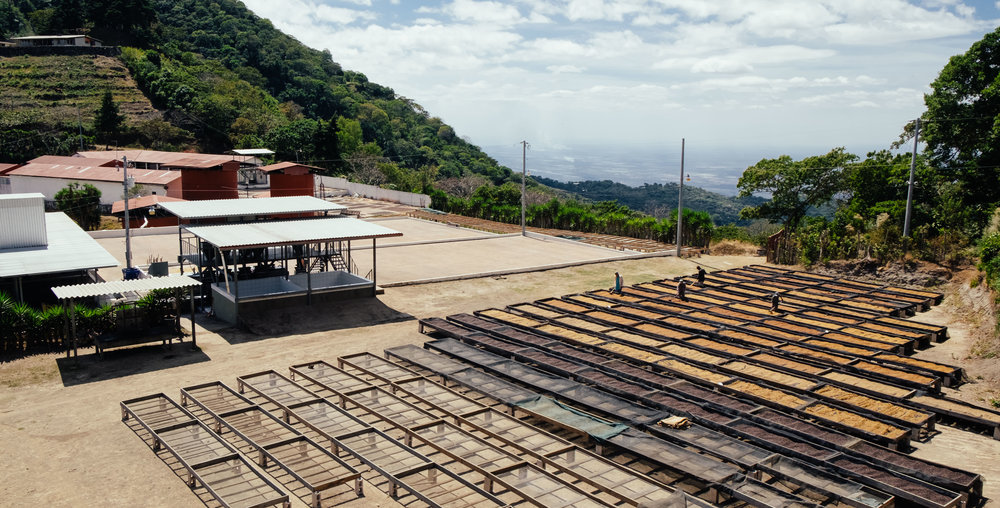
Gilberto has mastered various washed and natural processing techniques, including raised African drying beds, clay drying patios, shade drying and even double washing.
Wet Process (Washed Method)
The wet processing technique was invented by the Dutch in the 18th century. Because some countries see frequent rain and high humidity, making natural processing impossible, this method - though relatively complex - has become the most widely used processing method today. Its biggest difference from natural processing is the use of fermentation to remove the mucilage layer.
Wet Process - Processing Steps
The first three steps are the same as natural processing: 1. harvesting ripe coffee cherries; 2. preliminary removal of impurities and defective beans; 3. sorting floating beans.
4. Removal of skin and pulp: the selected good cherries are placed in a pulping machine to remove the outer skin and pulp, leaving the seeds (coffee beans).
5. Fermentation to remove mucilage: the coffee seeds, still coated in a layer of mucilage, are placed in fermentation tanks, where fermentation bacteria break the mucilage down.
6. Water washing to remove impurities: because fermentation bacteria remain on the beans, they are sent to washing pools for cleaning and a second sorting (defective beans float to the surface). This step requires large amounts of fresh water to ensure thorough cleaning.
7. Coffee bean drying: the beans are typically dried by machine (or sun-dried) to reduce moisture content to 10-14%.
8. Removal of parchment and silver skin: finally, a hulling machine removes the remaining parchment and silver skin, completing the process. The green beans can then be packaged and shipped.
Wet Process - Advantages and Disadvantages
Advantages: The beans have fewer impurities and a more complete appearance. Because the pulp is removed at the start, there is no mold risk, giving more stable overall quality.
Disadvantages: The wet process is complex and tedious and needs large amounts of water, so it costs relatively more than natural processing and is less common in water-scarce regions.
Roasting Suggestions and Analysis
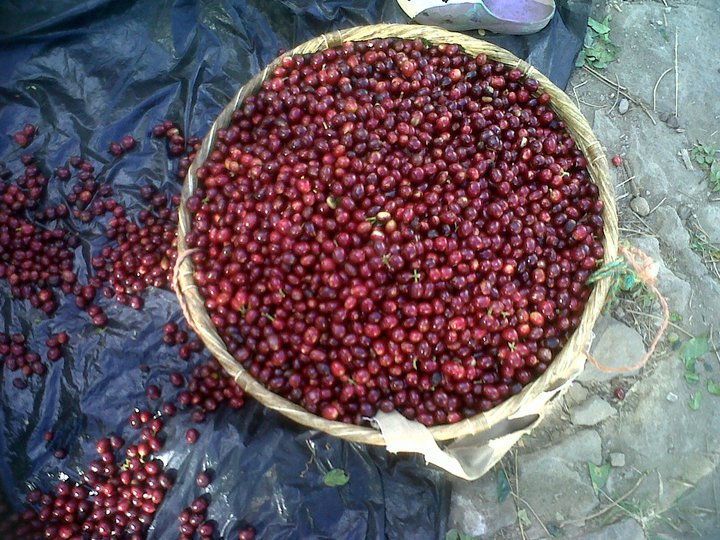
This is the large-bean Pacamara, with relatively large particles, high density, and - being a new-season bean - naturally higher moisture content. During roasting it absorbs heat more slowly, but the Maillard reaction proceeds faster, with the yellowing point arriving around 5 minutes. For the first roast you can try a slightly higher drop temperature, such as 200°C, with relatively high heat, then gradually reduce the heat as roasting proceeds: after the yellowing point, lower the heat to extend dehydration so the large beans dry through; from the end of dehydration until just before first crack, keep medium heat or increase it slightly to speed up the Maillard reaction and build pressure before first crack; and before the first crack signs appear, reduce the heat to avoid scorching the bean surface. With this approach the dehydration time is relatively extended, with temperature rising 6-8 degrees every thirty seconds, yet the roast still enters first crack between 8.5 and 9.5 minutes, preserving more floral and fruity aromas while keeping a clean, bright acidity. It is generally recommended to drop the beans between the dense phase of first crack and the end of first crack, around a medium roast.
Cupping Flavor Description
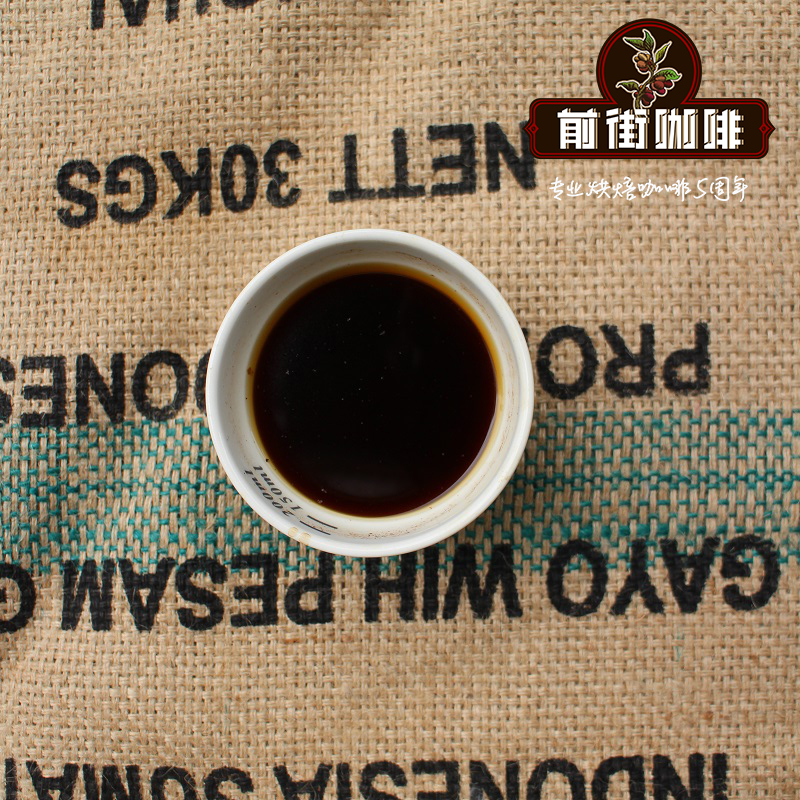
Subtle floral notes, gentle berry flavors, a mixed acidity of strawberry and red wine, full sweetness, balanced and smooth overall, with a sweet, lasting aftertaste.
Brewing Analysis
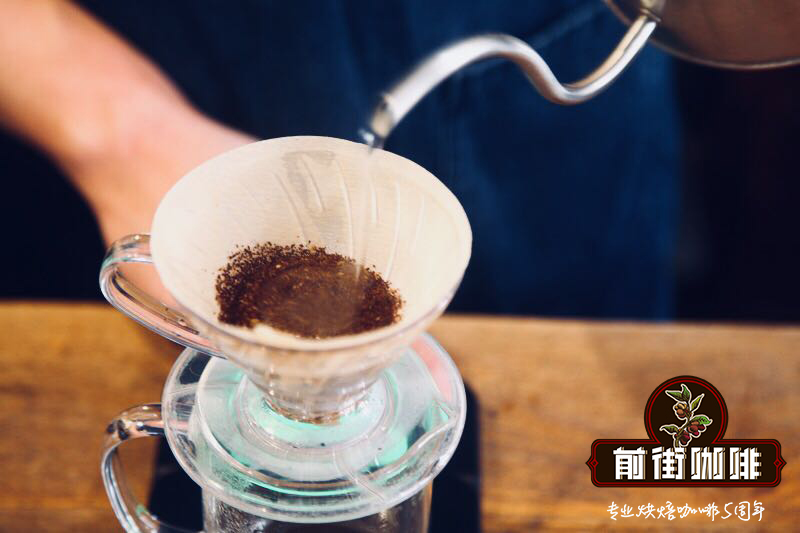
Today FrontStreet Coffee introduces a commonly used method for hand-brewing Pacamara coffee: the V60 three-pour method.
This is a staged extraction that divides all the brewing water into three pours.
It suits light roast, medium-light roast and medium roast coffee beans.
Use a V60 filter cup.
Increasing bloom time or the number of water breaks can enhance the coffee's flavor intensity.
Three-Pour Staged Extraction Method
Advantages: More layered than a single pour and able to clearly separate the front, middle and back-end flavors of the coffee. The method increases the water amount with each pour after blooming, typically pouring when the coffee liquid is about to drop to the surface of the powder layer, using small, medium and large flows across three stages.
Disadvantages: It places relatively high demands on flow rate and volume.
FrontStreet Coffee's Pacamara Hand-Brewing Parameters
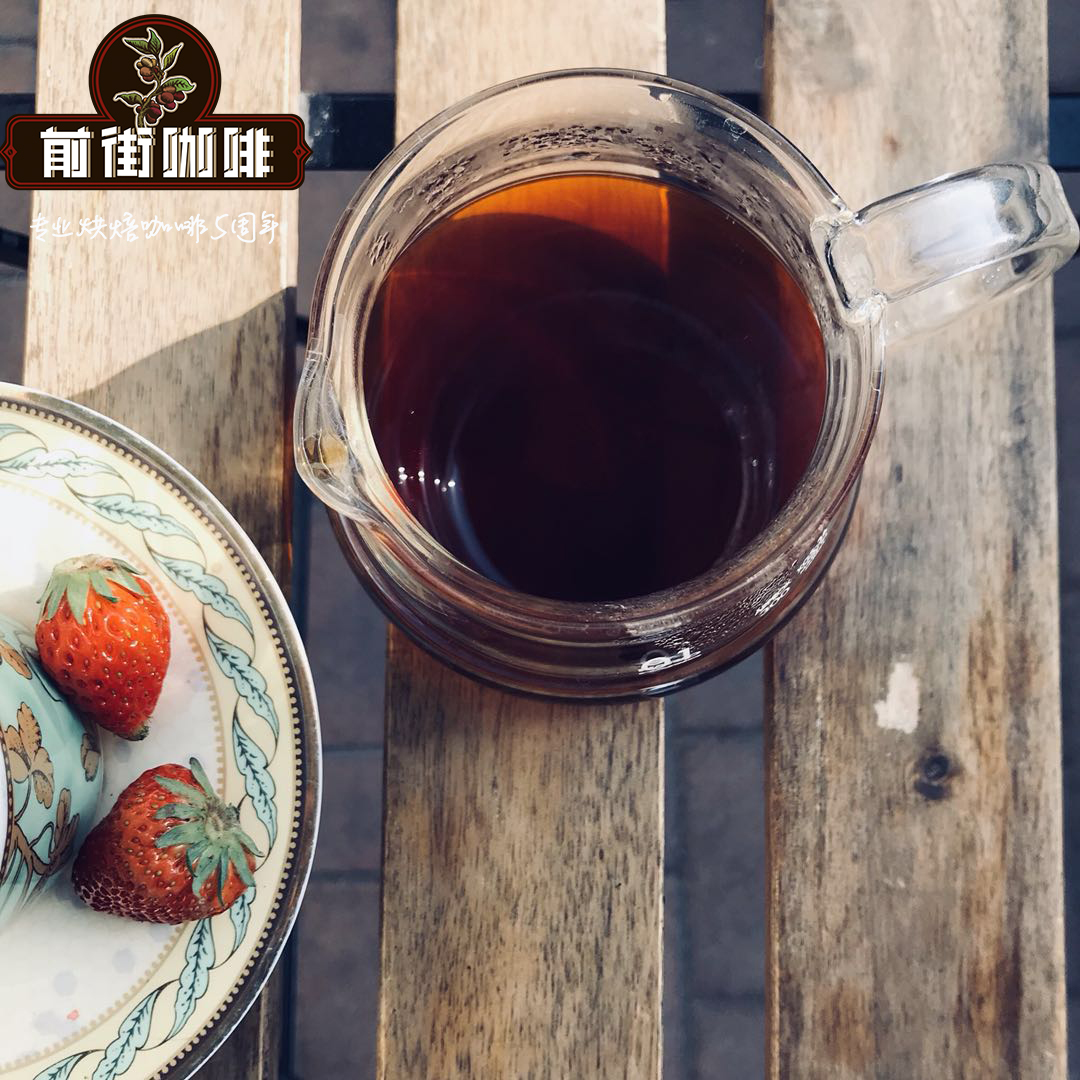
Brewing in a V60 filter cup enhances the layered flavor of hand-brewed coffee, making it richer and cleaner, and fully expresses the elevated, bright aromas of the Pacamara variety.
Use 15 g of coffee, water at 89-90°C, a grind of BG 5R (64% passing rate through a Chinese standard 20-mesh sieve), and a water-to-coffee ratio close to 1:15-16.
Method: 27 g of water for blooming, bloom time 30 seconds. Circle the hot water in the pour-over kettle clockwise from the center of the filter cup. Start timing when brewing begins, pour to 27 g, then stop and wait 30 seconds before the first pour.
For the first pour, circle as before but slow down slightly, speeding up a little on the outer circle. Stop pouring at around 1:15. When the liquid level drops by a third, pour again. For the second pour, concentrate on the center, avoiding the connection between the coffee powder and the filter paper to prevent channeling. End extraction around 2:05. The tail section can be omitted, since the longer the time the more astringency and rough texture are added.
Segments: 30-125-230 g.
FrontStreet Coffee Recommendation
If you enjoy the clean, balanced structure of a well-processed washed coffee, the FrontStreet Coffee Brazil Cerrado Red Bourbon is an easy everyday choice. A classic Brazilian single origin from the well-known Cerrado region and the common Red Bourbon of South America, it is roasted medium to bring out rich cream peanut, toast, caramel and hazelnut aromas, with a round, smooth body, low acidity and a light bitterness. It suits pour-over, moka pot, espresso SOE, siphon and French press alike.
For something sweeter and fruitier, try the FrontStreet Coffee Brazil Queen Estate from Mogiana near South Minas, where fertile red volcanic soil feeds the fruit. The rare Yellow Bourbon - a natural mutation of Red Bourbon - gives a cleaner fruit character and the sugarcane-like sweetness found in no other region, along with fruit and chocolate notes, whether brewed as pour-over, moka or home espresso.
And because low acidity and a balanced body make Brazil the backbone of so many espresso recipes, FrontStreet Coffee's Italian-style blends are built on it. The rich-crema FrontStreet Coffee Classic Blend, the nut-forward FrontStreet Coffee Premium Blend, the balanced FrontStreet Coffee Black Cocoa Blend and the dedicated FrontStreet Coffee Commercial Blend all contain Brazilian beans, adding chocolate and cream aromas plus a gentle sweet-sour-bitter balance that keeps extraction stable.
Important Notice :
FrontStreet Coffee is a long-established specialty coffee roaster in Guangzhou China, selling freshly roasted beans from its own farm in Yunnan as well as dozens of carefully selected single-origin beans from around the world for both pour-over and espresso. The products deliver consistently excellent quality and great value, with shipping within 24 hours. Guangzhou's FrontStreet Coffee shop is recommended by many coffee lovers, and the beans are now available online at the Tmall 。
FrontStreet Coffee has moved to a new address:
FrontStreet Coffee Address: 315,Donghua East Road,GuangZhou
Tel:020 38364473
 Scan and follow the En Gafei WeChat official account. Please indicate that the reprint comes from "En Gafei".