What Does Guatemala Cloud Estate Pacamara Pour-Over Coffee Taste Like_Is Pacamara Suitable for Pour-Over
Cloud Manor Estate Story
Antigua
Antigua is the best-known of Guatemala's eight coffee regions. High altitude, distinctive volcanic soil, and shade-grown cultivation give beans from Antigua a flavor you can recognize blind. The town of Antigua itself, with its Maya heritage and strong artistic character, has astonished generations of Western visitors. Founded in 1543, it has survived repeated earthquakes and been deliberately preserved, with cobblestone streets and imposing Baroque architecture. The buildings carry an old-world charm while remaining vividly colorful, and they are laid out in a neat checkerboard, each block roughly 100 square meters. A plain-looking doorway may open onto a spacious courtyard or a walled garden mansion. Antigua sits beside the Pacific, with abundant rain and a wide day-night temperature swing. Its green beans have an alluring grassy aroma, high density, and real hardness, which is what produces layered flavors after roasting.
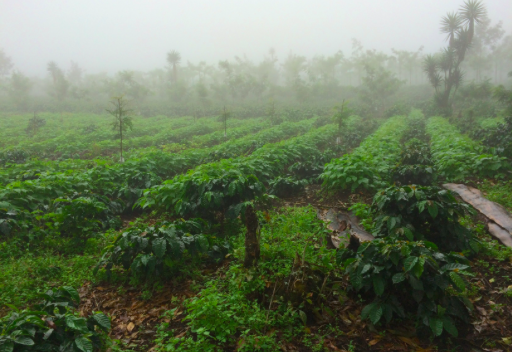
Cloud Manor Estate
Cloud Manor Estate began growing coffee in the 1970s. It is located in Antigua, Guatemala, on the slopes of the Acatenango volcano, at an altitude of 1500 to 1800 meters, covering 53 hectares with an annual output of about 58 metric tons. It is a member of the Antigua Coffee Growers Association, and the current owner is Pedro Echeverria. The geography keeps the estate wrapped in cloud and mist year-round, which is where the name "Cloud Manor" comes from. The water vapor in those clouds is absorbed by the coffee trees and nourishes the fertile volcanic soil. The estate's position on the Acatenango slopes, the pure cloud moisture, the volcanic soil, the natural shade trees, and long planting experience combine to produce the exceptional quality of this Pacamara.
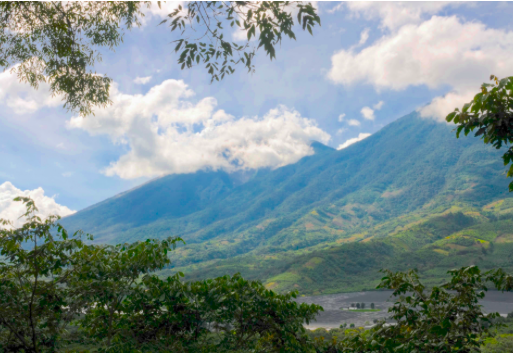
Pacamara Coffee Bean Variety Introduction
Pacamara was born in El Salvador in 1958, a cross between the Bourbon-derived Pacas and the Typica-derived Maragogype. It combines the strengths of both parents and then surpasses them: pure and gentle, rich and smooth, with lively acidity, a full body, and a long, impressive aftertaste.
At the 2005 El Salvador Cup of Excellence, Pacamara stunned the judges. Among the top ten, Pacamara beans took second, fifth, sixth, and seventh places.
In 2007 the variety won the championship in both Guatemala and El Salvador COE competitions. From there, Pacamara's run of awards was unstoppable, consistently placing at the top of major competitions and earning recognition as a rising star comparable to Geisha.
In Guatemala's COE alone, Pacamara held the championship for 7 out of the 10 years between 2008 and 2017.
Given that record, the Best of Panama (BOP) international competition committee decided in 2017 to create a separate category for Pacamara.
For all its success, the variety has real drawbacks: Pacamara demands more from soil, climate, environment, and altitude, and it yields poorly while resisting leaf rust badly, which has kept its cultivation limited.
Today Pacamara is no longer rare, but it is still not common on the market. Pacamara from Guatemala and El Salvador is considered the best, and with so many international buyers chasing it, it can be hard to find at home.
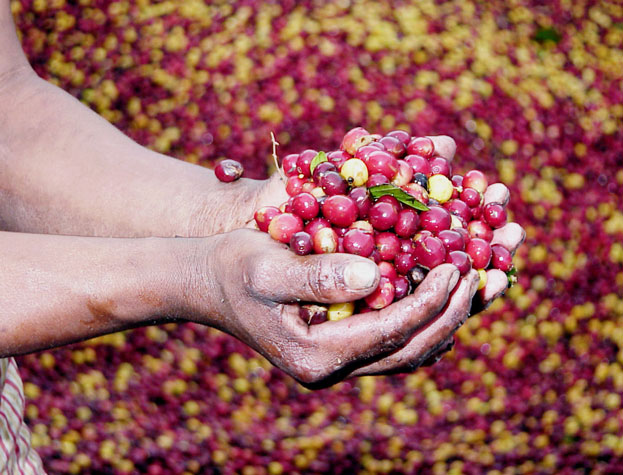
Processing Method Introduction
Washed Process
The washed process was invented by the Dutch in the 18th century. In countries that are rainy and humid, natural processing is often impossible, so despite the extra labor, washing became the most widely used method. Its key difference from the natural process is that fermentation is used to remove the mucilage layer.
Washed Process - Processing Steps
The first three steps are the same as in the natural process: (1) harvest ripe coffee cherries, (2) remove impurities and defective beans, (3) float and screen out lower-density beans.
4. Remove pulp and skin: the selected cherries go into a pulper that strips the outer skin and pulp, leaving the seeds, which are the coffee beans.
5. Ferment to remove mucilage: the seeds, still coated in mucilage, are placed in fermentation tanks, where fermentation bacteria break the mucilage down.
6. Wash: because fermentation bacteria remain on the beans, they are sent to washing channels for cleaning and a second screening, during which defective beans float to the surface. This step needs large volumes of clean water to be done thoroughly.
7. Dry the beans: machines (or sun-drying) bring the moisture content down to 10-14%.
8. Remove parchment and silver skin: a huller takes off the remaining parchment and silver skin, completing the process. The green beans can then be bagged and shipped.
Washed Process - Advantages and Disadvantages
Advantages: fewer impurities and a more complete appearance. Because the pulp is removed at the very start, there is little risk of mold, so overall quality is more consistent.
Disadvantages: the process is complex and laborious and requires large amounts of water, which makes it more expensive than natural processing. It is also impractical in water-scarce regions.
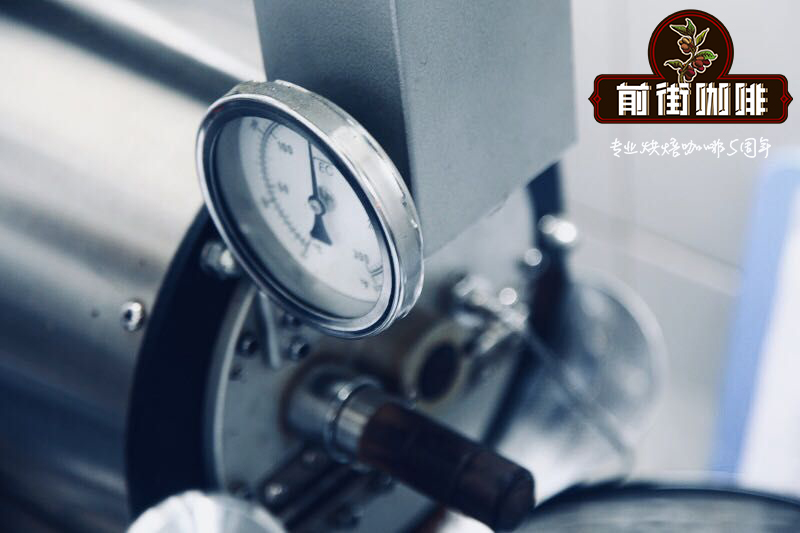
Pacamara Coffee Roasting Recommendations/Analysis
Pacamara is a large-bean variety with relatively big particles and high density, and new-crop beans carry more moisture. During roasting, heat is absorbed more slowly, but the Maillard reaction proceeds faster, and the yellowing point arrives around 5 minutes. For a first roast, a slightly higher charge temperature works well, such as 200°C, with relatively high heat. Reduce the heat step by step as the roast proceeds: after the beans pass the yellowing point, lower the heat to stretch dehydration so the large beans dry through; after dehydration and before first crack, hold at medium heat or nudge it up to accelerate the Maillard reaction and build pressure ahead of first crack; and just before first crack, ease the heat down to avoid scorching the surface. With this approach the dehydration phase runs longer, with a rate of rise of 6-8 degrees per thirty seconds, yet first crack still arrives normally between 8.5 and 9.5 minutes, preserving more floral and fruity aromatics and keeping a clean, bright acidity. In general, drop the beans somewhere between the dense stage of first crack and the end of first crack, at a medium roast level.
Cupping Flavor Description
Subtle florals, gentle berry flavors, a mixed acidity of strawberry and red wine, full sweetness, and an overall balanced, smooth cup with a sweet, lasting aftertaste.
Brewing Analysis
Today FrontStreet Coffee introduces the hand-drip method most often used for Pacamara: the V60 three-stage pour-over.
Three-Stage Pour-Over Method
Extract in stages, dividing the total brewing water into three pours.
Suited to light, medium-light, and medium roasts.
Use a V60 dripper.
Extending the bloom time or adding pauses between pours increases the richness of the mouthfeel.
Three-Stage Pour-Over Extraction Method
Advantages: more layered than a single pour, clearly separating the front, middle, and back end of the coffee. The method is to increase water volume after each bloom, usually pouring when the coffee liquid has dropped close to the surface of the bed, using small, medium, and large streams across the three stages.
Disadvantages: it demands more control over flow rate and water volume.
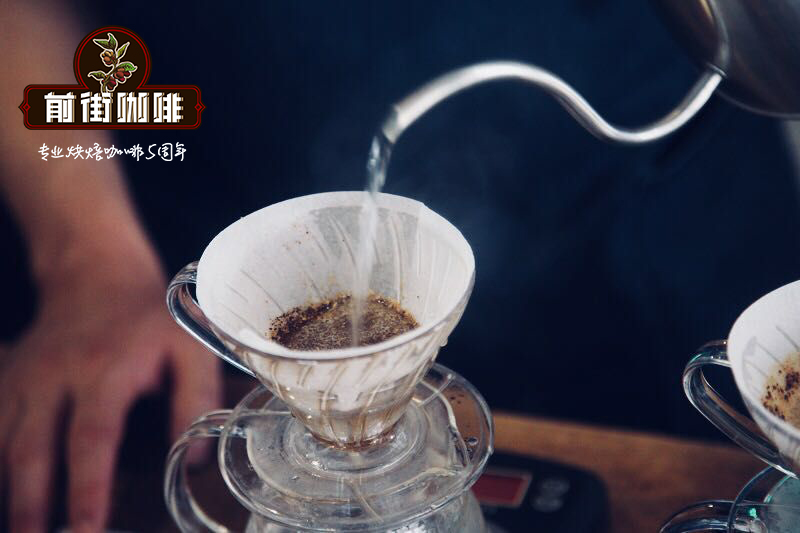
FrontStreet Coffee's Pacamara Coffee Hand-Drip Parameter Recommendations
A V60 dripper heightens the layered quality of the brew, making it richer and cleaner and letting the elevated, bright aroma of the Pacamara variety come through.
15g of coffee, water temperature 89-90°C, grind BG 5R (64% pass-through on a Chinese standard #20 sieve), water-to-coffee ratio close to 1:15-16.
Brewing Method
Bloom with 27g of water for 30 seconds. Circle the hot water clockwise around the center of the dripper. Start timing when brewing begins, pour to 27g, then stop and wait 30 seconds for the first pour.
For the first pour, circle as before but a little more slowly, speeding up slightly as you reach the outer ring. Stop pouring at about 1:15. When the liquid level drops by one-third, pour again. For the second pour, concentrate on the center and avoid letting the stream hit the seam between coffee bed and filter paper, which would create channeling. End extraction at about 2:05. The tail can be discarded - the longer it runs, the more astringency and rough texture you pick up.
Stages: 30-125-230g
FrontStreet Coffee Recommendation
Pacamara rewards a dripper that separates flavors clearly, and the V60 does exactly that. FrontStreet Coffee's go-to beans for a V60 are the floral and fruit-forward ones. FrontStreet Gedingding Cooperative is the most approachable: a washed Ethiopian from the Woka area at the southeastern edge of Yirgacheffe, it shows clear citrus, berry, and floral notes with a green-tea-like sweetness, and its acidity is soft and bright rather than sharp, which makes it easy to get right even for someone new to pour-over.
For a bolder, more tropical cup, FrontStreet Huakui has become one of the most successful specialty coffees of recent years. Its defining trait is an intense tropical fruit aroma - strawberry, passion fruit, jackfruit, even lychee - with pronounced sweetness and very little bitterness, a smooth, juicy body, and enough character that many drinkers describe it as barely tasting like coffee at all. FrontStreet Strawberry Candy adds a Geisha note to the same territory: a blend of Panama washed Geisha and Costa Rican raisin-honey coffee, it brings caramel, raisin, and dried fruit alongside a rich rose floral lift, and it works equally well in a moka pot or a home espresso machine.
For brewing, use around 15g of coffee, a 1:15 ratio, and water at 90-91°C, grinding slightly finer than you would for a washed coffee if the beans are on the lighter side. Pour in three stages with an even, controlled stream, and keep the total brew time near two minutes to preserve the aromatics.
Important Notice :
FrontStreet Coffee is a long-established specialty coffee roaster in Guangzhou China, selling freshly roasted beans from its own farm in Yunnan as well as dozens of carefully selected single-origin beans from around the world for both pour-over and espresso. The products deliver consistently excellent quality and great value, with shipping within 24 hours. Guangzhou's FrontStreet Coffee shop is recommended by many coffee lovers, and the beans are now available online at the Tmall 。
FrontStreet Coffee has moved to a new address:
FrontStreet Coffee Address: 315,Donghua East Road,GuangZhou
Tel:020 38364473
 Scan and follow the En Gafei WeChat official account. Please indicate that the reprint comes from "En Gafei".